Laurence Cossé: Le Coin du Voile
Laurence Cossé’s 1996 novel Le coin du voile (A corner of the veil) describes the effects of a new and irrefutable proof for the existence of God. A priest who had resigned his calling to spend months in prayer and abstinence submits the proof for publication in Outlooks, the lay journal of the French Casuists. All those who read it are completely convinced. On seeing its effects, the Provincial of the Casuists decides to keep the proof secret until its effects can be more clearly understood. Finally, the Secretary of State at the Vatican arranges for all those who had read the proof to retire from any contact with the public and for the proof to be kept hidden. The proof becomes a pontifical secret – “a piece of information the Holy Father must not learn under any circumstance.”
The novel, published by Gallimard in 1996, received generally positive reviews, and won several French literary prizes. Readers were charmed by the story but had some difficulty deciding on its basic nature: was it a philosophical fable, a religious thriller, a gentle satire, or an outright farce? The book touches lightly on serious matters: Burns. (1999) called it “casually profound” and Dumort (1997) considered it an “un opéra-bouffe sans la musique.” Cobb (2005, p 156) complimented the author for her “insightful reflections on the moral springs that move real human beings.” Some critics would have preferred more depth (Eder, 1999; McInerny, 1999), but this seems akin to wishing that Voltaire wrote like Diderot.
The book has been translated into English (A Corner of the Veil), German (Der Beweis, The Proof), Italian (La sesta prova, The Sixth Proof; La prova nascosta, The hidden proof) and Spanish (La punta del velo). The following illustration shows some of the covers. The French paperbacks use details from paintings by Paul Gauguin (Self Portrait with the Yellow Christ, 1891) and Michelangelo (Separation of the Earth from the Waters, Sistine Chapel, 1512). The cover of the English translation shows the ceiling of a gothic cathedral (Exeter) with a corner being pulled back to reveal the radiance of heaven.

The Casuists
The Novel begins one evening with Father Bertrand Beaulieu, editor of the Casuist journal Regards (translated as Outlooks by Linda Asher), going through his correspondence. The Casuists are clearly the Jesuits, and the journal is clearly the publication Études, established in 1856 by the French Jesuits.
The Society of Jesus was founded in Paris in 1534 by the Spanish nobleman Ignatius of Loyola and six fellow students at the University of Paris. The largest of the Catholic religious orders, it is widely involved in education, missionary work, and humanitarian activities.
Soon after the order was established, the Council of Trent (1545-1563) revised the Catholic Church’s position on the Sacrament of Penance and the process of confession. Sinners were no longer able to purchase indulgences to escape the consequences of their sins. Instead, priests listened to sinners’ confessions, assessed their remorse, provided absolution, and outlined appropriate acts of penance to make amends. This led to a need for more sophisticated moral reasoning, since many human acts cannot easily be judged according to the commandments available in the scriptures. Several Jesuits contributed extensively to the new moral philosophy, most especially Antonio Escobar y Mendoza (1589–1669) who treatise Summula casuum conscientiae (1627) outlined how moral judgments could be made on a case-by-case basis by applying knowledge of the law, ethics, and scripture. This approach came to be known as casuistry, and the Summula became the confessor’s handbook.
Unfortunately, some of the casuist proposals, most particularly concerning the differentiation between intentions and acts, could easily lead to moral laxity. Sinners could be excused for the bad consequences of their acts because their intentions had been good. Escobar was a strict adherent to the Jesuit rules of poverty, chastity and obedience, but sinners found it easy to abuse his moral reasoning. Thus it was said that Escobar “purchased heaven dearly for himself, but gave it away cheap to others.” Blaise Pascal (1623-1662) took Escobar to task in his Lettres Provinciales. For example, he pointed out that the casuist could reason that although it is wrong to kill someone because of hatred, one could do so blamelessly if one professed fear for one’s own safety. Escobar’s logic was no match for Pascal’s wit. “Casuistry” soon came to mean the use of clever but unsound reasoning to excuse moral culpability; indeed, “Jesuitical” took on the same connotation The following illustration shows Escobar on the left and Pascal on the right:
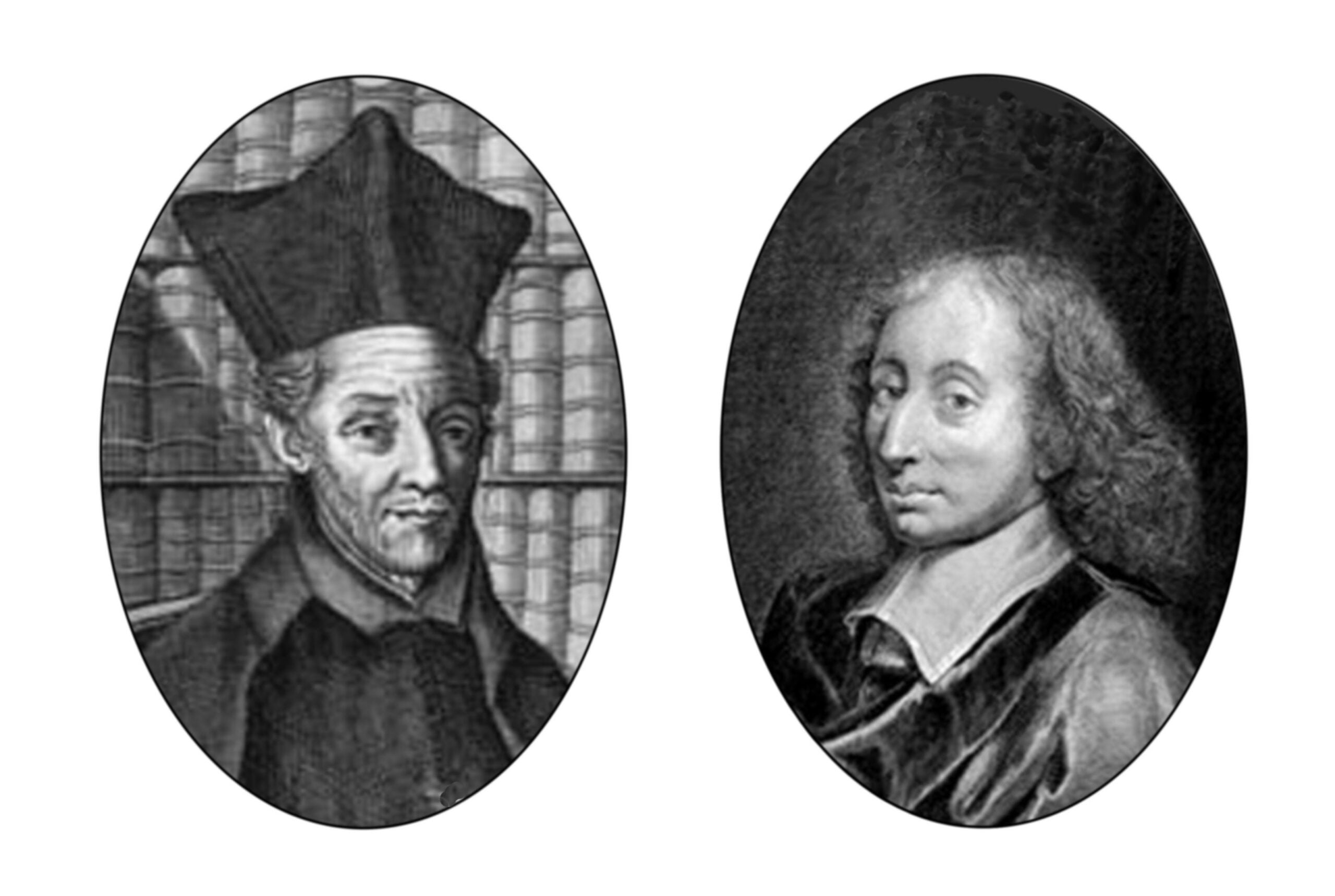
Nowadays, however, casuistry has returned to favor as a way to approach complex moral decisions (Jonson, 2005).
Six Pages in a Brown Envelope
In his pile of correspondence, Father Beaulieu recognizes the crazy writing on a cheap brown envelope. The sender had written to him multiple times before, each time with a different proof for the existence of God, each time failing to convince anyone. Beaulieu puts the envelope at the bottom of the pile, but later that evening finally opens it, and dutifully reads the contents:
Dix heures vingt-cinq. Enfin. Il ne restait plus que la lettre brune. Beaulieu l’ouvrit, exaspéré d’avance. Mon Dieu, le nombre de cinglés que Vous mettez au monde. L’écriture était effrayante, une espèce de broderie ne laissant pas la moindre marge à droite ni à gauche, pas plus qu’en haut ni en bas. Il n’y avait que six feuillets, ce soir, moins que les autres fois. Beaulieu prit un carré de chocolat dans le tiroir de son bureau et commença à lire.
Six pages plus loin, il tremblait. Cette fois la preuve n’était ni arithmétique, ni physique, ni esthétique, ni astronomique, elle était irréfutable. La preuve de l’existence de Dieu était faite.
[Ten twenty-five. Finally. Only the brown letter left to go. Beaulieu opened it, already exasperated. Dear God, the number of madmen You put into the world. The handwriting was dreadful, a kind of embroidery that left no margin right or left, top or bottom. There were only six sheets tonight, fewer than the other times. Beaulieu took a square of chocolate from the desk drawer and started reading.
Six pages farther, he was trembling. This time the proof was neither arithmetical, nor physical, nor esthetical, nor astronomical; it was irrefutable. The proof of God’s existence had been achieved. (p 15)]
Beaulieu is overwhelmed. He prostrates himself on the floor as he did on the day of his ordination. After an hour he rises and visits his friend Hervé Montgaroult, a Jesuit professor whose specialty is cataphatic ontology. “Cataphatic” (from Greek cata an intensifier and phanai speak) deals with the affirmative description of the divine (e.g., God is love) as opposed to “anaphatic” (apo other) which uses negative descriptions (e.g., God is unknowable).
Proof for the Existence of God
When Beaulieu presents the professor with the proof, Montgaroult protests that “No proof of the existence of God has ever held up,” and begins to review all the historical proofs. Beaulieu finally stops him, and leaves his with the six handwritten pages, insisting that he just read.
The most famous of the historical proofs for the existence of God are the Five Ways of Thomas Aquinas (1225-1274), an Italian Dominican who taught at the University of Paris (Pasnau, 2024). These five proofs are included in both his Summa Theologica and in his Summa contra Gentiles.
Aquinas’ first proof, which argues for God as the “prime mover,” derives from Aristotle. Things are in motion; whatever is in motion must have been put into motion by something else, which itself must have been moved by something else, and so on. Since this chain of events cannot go on forever, there must be a prime mover that can move things without being moved. This must be God.
Aquinas therefore contradicted the claims of Ibn Rushd (1126-1198, also known as Averroes), a Muslim commentator on Aristotle, who argued that the chain of events does go on forever, and that God created a world that is eternal (Ben Ahmed & Pasnau, 2025; Dales, 1990, p 45). In 1484 painting by Benozzo Gozzoli, The Triumph of Thomas Aquinas, now in the Louvre, celebrates Aquinas’ victory over Averroes:
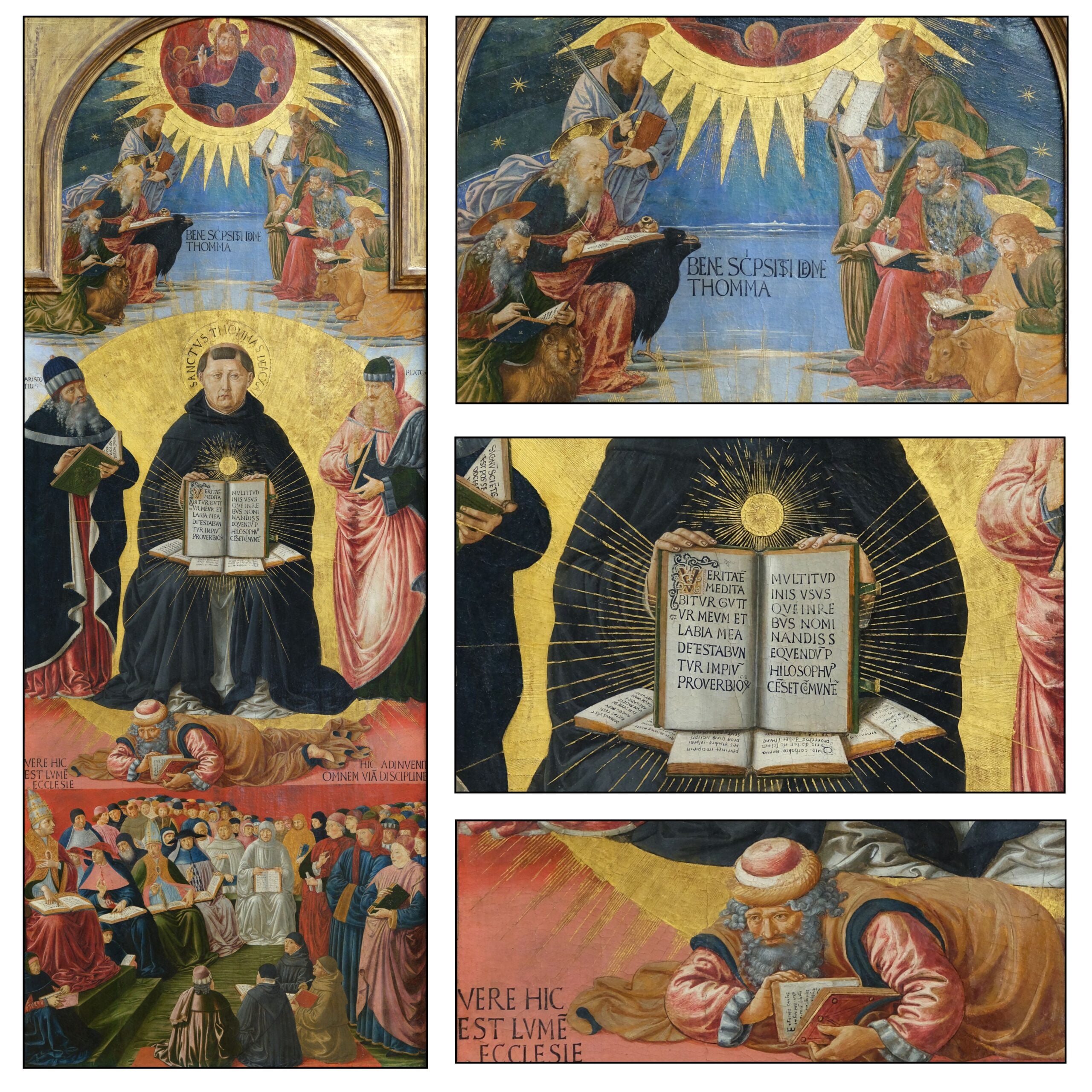
The painting derives its iconography from an earlier work probably painted in about 1330 by Lippo Memmi (Polzer, 1993) to celebrate the canonization of Thomas Aquinas in 1323.
The upper section of the painting shows God blessing those that have revealed the truth: the Apostle Paul with the sword, Moses with the tablets and the four Evangelists who wrote the gospels, each with their symbolic creature (angel, lion, ox, eagle). Gods states:
Bene scripsisti de me, Thomma [You have written well about me, Thomas].
In the center of the painting Thomas Aquinas, flanked by Aristotle and Plato, holds his Summa contra Gentile, which begins with an epigraph from Proverbs 8:7:
Veritatem meditabitur guttur meum et labia mea de testabuntur impium. [For my mouth shall speak truth; and wickedness is an abomination to my lips]
The first words of the Summa are
Multitudinis usus, quem in rebus nominandis sequendum philosophus censet, com muniter” obtinuit, ut sapientes dicantur qui res directe ordinant et eas bene gubernant [The usage of the multitude, which, according to the Philosopher (Aristotle) is to be followed in giving names to things, has commonly held that they are to be called wise who order things rightly and govern them well.]
The books below the central book show quotations from the Summa Theologica (see Polzer, 1993, p 43, for details).
Below Aquinas lies the vanquished Averroes. His book states:
Et faciens causas infinitas in primum librum Aristotelis physicorum [And making infinite causes in the first book of Aristotle’s Physics]
Below him is written
Vere hic est lumen ecclesie [Truly this is the light of the church]
And below this, Pope Pius II and his clergy teach the revelations of Aquinas to the assembled believers.
Aquinas is right and Averroes is wrong. Not because of logic, but because Aquinas’ conclusions fit with the teachings of the Church.
The other four proofs of Aquinas are:
Causality: God is the first cause that prevents an infinite chain of cause and effect.
Contingency: God is the necessary being from which all other derive
Degree: God is the criterion by which one can determine what is good, beautiful and true.
Teleology: God is the ultimate end to which the universe is progressing.
Another famous proof for God, which Aquinas disputed, is the Ontological Proof of Anselm of Canterbury (1033-1109). Since everyone can conceive of a being than which no greater can be thought, such a being must exist since existence is necessary to greatness.
Many other logical proofs for the existence of God have been proposed (Restivo, 2021, pp. 99-112). In a recent novel, Rebecca Goldstein (2010) considered 36 different arguments for the existence of God.
However, it is doubtful that anyone has ever been convinced to believe in God because of logical argument. Rather such proofs are a put together subsequent to belief:
A proof of God’s existence ought really to be something by means of which one could convince oneself that God exists. But I think that what believers who have furnished such proofs have wanted to do is give their “belief” an intellectual analysis and foundation, although they themselves would never have come to believe as a result of such proofs. (Wittgenstein, 1980, 85e)
Nevertheless, after Beaulieu leaves, the skeptical Montgaroult reads the six pages, and is instantly convinced. He spends the night wandering around the streets of Paris in a mystical daze. He is particularly happy about how the new proof solves the age-old problem of evil.
God was no longer mysterious. Evil was no longer a mystery. God was no longer either heart-breaking or heartbroken, and the question that for centuries had woken men in the night would no longer arise, the hideous question of whether He had or had not a role in evil. (p 29)
Religious Qualms
The next morning, Beaulieu and Montgaroult meet with Hubert Le Dangeolet, the Provincial of the Casuists in France. He is skeptical. His first impression is that his two visitors have lost their minds. He decides not to read the proof, and locks it up in his safe. He arranges for two other Casuists, internationally known theological experts, one from Belgium and one from Switzerland, to come to Paris the next day to assess the proof.
Beaulieu visits Martin Mauduit, the author of the proof. The name “Mauduit” is not far removed from maudit (cursed or damned). Once a priest, Martin had resigned his vocation because he felt that he could discover a new understanding of God through thought. He realized that his first attempts at new proofs for the existence of God, which he had submitted to the journal Outlooks, were abject failures. But then, after weeks of prayer and abstinence, he had woken one morning to find on his floor a six-page proof that he had no memory of writing. The proof had not been reasoned out; it had simply been revealed.
Mauduit is described as
A small man in his sixties, frail and bald. His smile and his eyes, the assurance and joy in these features alone, recalled someone—Bertrand remembered whom almost instantly: Bishop Gaillot. The churchman about whom every French person, even his warmest supporters, had wondered in 1995 whether he was Saint Francis of Assisi or Narcissus. (pp 60-61)
 Bishop Jacques Gaillot (1935-2023) was Bishop of Évreux from 1982 to 1995, at which time he was removed from his position by Pope John Paul II because of his unorthodox and outspoken positions on abortion, immigration, homosexuality, and Palestine. He came to be known as the ‘Red Cleric.’
The next day, the two experts come to Paris, read the proof, are completely convinced, and weep tears of joy. Le Dangeolet realizes that the proof is real but still remains cautious.
I’ve got to keep a cool head and a free mind. The people who have read the proof are immediately possessed by it. They no longer have the slightest objectivity. I’ve seen four of our colleagues topple over, one after the other. We can’t have our whole Casuist province in France slipping into a way of life that is positively Franciscan, and the ecstatic branch at that. (p 112)
He contacts Waldemar Waldenhag, the Father General of the Jesuit Order.
Political Upheavals
Secrets are hard to keep. Before long the government becomes aware that the Casuists possess a new proof for the existence of God. The Prime Minister of France, Jean-Charles Petitgrand, pays a clandestine visit to Le Dangeolet. He is shown the proof. He does not read it, but is completely convinced of its veracity simply by being in its presence. He decides to change his life. He retires from politics:
For the ten or fifteen years he had left to live, he would praise the Eternal One, simply, through love for his roses, for his wife, and for his fellow man. (p 107)
He issues a press release describing his resignation as due to “a sudden irruption of meaning into my life” (p 261). An advisor summarizes for the cabinet ministers what the future might hold:
Within six months, within a year, we have to imagine France as one huge monastery. Everything that today is the motivating force of the advanced liberal societies—the spirit of enterprise, the quest for wealth, the concern for efficiency, the work ethic . . . briefly, what others might call the every-man-for-himself, the activism, the copycat greed, money as guiding light—at the announcement of the proof that God exists, all of that will no longer seem important to our fellow citizens. God becomes a certainty in our midst. How do we react? We spend all our time on Him. We just about cease to work. We earn much less money, but what does it matter? We no longer yearn to change apartments, go off on vacation, send our children to American business schools. We no longer chase after money. If we do work, it’s just enough for what we need to eat and be clothed, to have a roof over our heads. Most of our time we spend meditating, praying. We study Scripture. We succor the poor, we comfort the lonely. We gaze on nature. We feel we’re opening our eyes for the first time. We breathe. (pp 146-147)
The ministers are aghast; the reader is amused. However, this description of a society concerned only with God is not an exaggeration. It must give us pause. Whatever our religious beliefs, do we really wish to put an end to human striving?
Other problems are also considered. The proof was given to the Christians, and apparently the God whose existence is now verified is the Christian God. What will those who profess belief in other Gods think of this?
The politicians confer with Le Dangeolet. A decision is made to keep the new proof secret until the Church and the State can assess its possible effects.
A Visit to Rome
Le Dangeolet, Mauduit, and the four casuists who have read the proof travel to Rome to meet with Father General Waldemar Waldenhag. He is cautious about the proof.
Doubt about the existence of God was the only formula viable for mankind. People who wanted to believe could believe; those who preferred not to didn’t have to. No greater certainty for the one than for the other. A mutual respect—except for the periods of certainty. Certainty, on whichever side, breeds fanaticism. That’s not all it breeds, but it never fails to breed that. Look at the Crusaders, the Inquisitors, as well as the atheist revolutionaries: all of them slashed and burned and guillotined, completely confident they were doing the right thing. In the end, doubt is the only counterweight to human madness. It’s reason, that’s what doubt is. (pp 232-233)
Nevertheless, Waldenhag ultimately decides to read the six pages. He really wishes to know if the proof might solve the age-old problem of evil. How does a priest explain to someone subject to undeserved suffering how an omnipotent and benevolent God has allowed this to happen?
I want to know why, how, and in the name of what superior plan the good and all-powerful God of the Gospel lets nations tear each other’s guts out, lets the earth crack open in the middle of cities, and lets children die of hunger. I’ve ‘explained’ it a thousand times, using those enormously sophisticated arguments inherited from Thomism that you know as well as I do, and I’ve done it with such assurance that I must have convinced people sometimes. But for me, the mystery of evil sticks in my craw. (p 237)
And after reading the pages he is as convinced as the others. The problem of evil in the universe appears to be explained
The Problem of Evil
When we consider the arguments for and against the existence of God, the problem of evil (and the suffering that it causes) is generally the atheist’s most effective argument (Mackie, 1982; van Inwagen, 2006; Speak, 2014; Perrine, 2025). If God is omniscient, he cannot be unaware of our suffering; if He is omnipotent, he must be able to intervene in the world; if He is omnibenevolent, he should act to prevent our suffering. If we accept these characteristics of God, the very fact that there is suffering in our world is incompatible with His existence. If he truly were omniscient, omnipotent and omnibenevolent, there would be no suffering.
In his Dialogues Concerning Natural Religion (1779), David Hume described the problem of evil by referring back to ancient Greek philosopher Epicurus (341-270 BCE)
Epicurus’s old questions are yet unanswered. Is he willing to prevent evil, but not able? then is he impotent. Is he able, but not willing? then is he malevolent. Is he both able and willing? whence then is evil? (Hume, 1779, part X)
Over the years theists have proposed many different arguments for the existence of evil. These justifications (or exonerations) of God go by the name of “theodicies.” None of these are convincing (Picton, 2013, pp 361-364). Ultimately, one is left with the idea that God operates at levels beyond human comprehension. We are not able to see the grand scheme of things. Nevertheless, He has assured us through scripture that he knows what is best, and that he will take care of us.
Panentheism
The next morning Waldenhag tells Le Dangeolet some snippets of what was in the six pages proving the existence of God. This is the only time in the book that the reader is given any idea of what is in the proof:
With the world God created totality of being.
Everything that is has no other meaning but being.
Through the Creation, God explores in Himself the free play of being, of all being: good, evil, sense and nonsense, splendor and horror mixed.
What is, is nothing else but God in the process of being.
We are grounded in God, each person for what he is.
These principles are closely related to the process theology of Alfred North Whitehead (1861-1947) and to the panentheism of Charles Hartshorne (1897-2000) and Arthur Peacocke (1924-2006) – illustrated from left to right in the following figure.
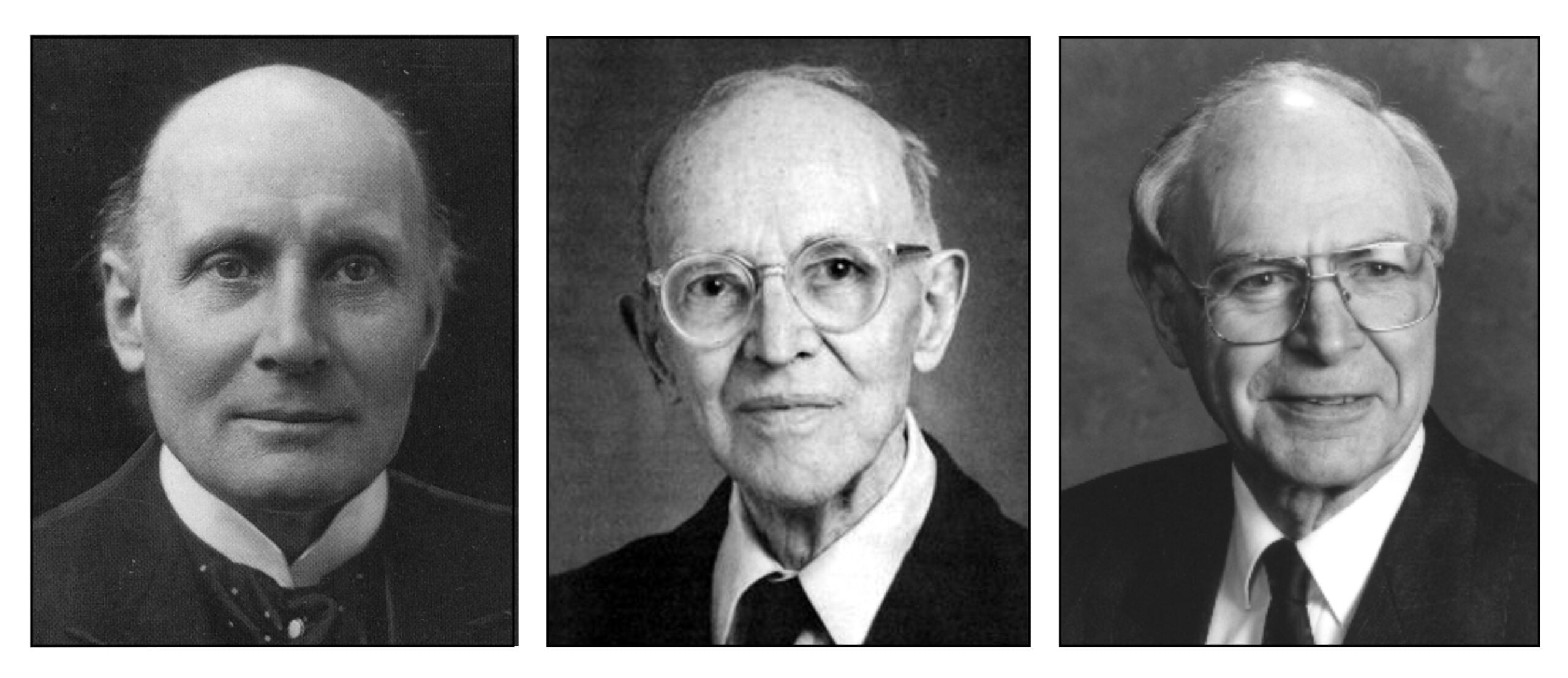
The main idea of process theology is that God is the universe becoming itself. This occurs through an outpouring of God’s love and goodness into the world. Since the process is intelligible rather than mysterious, science becomes the study of God in all his manifestations. Process theology also provides a way of reconciling the existence of God with the presence of suffering in the world. God and the universe are in the process of becoming. Evil and suffering are present to the extent that this process is as yet incomplete. The following quotation is from Whitehead’s Process and Reality (1929, p 532):
There are thus four creative phases in which the universe accomplishes its actuality. There is first the phase of conceptual origination, deficient in actuality, but infinite in its adjustment of valuation. Secondly, there is the temporal phase of physical origination, with its multiplicity of actualities. In this phase full actuality is attained; but there is deficiency in the solidarity of individuals with each other. This phase derives its determinate conditions from the first phase. Thirdly, there is the phase of perfected actuality, in which the many are one everlastingly, without the qualification of any loss either of individual identity or of completeness of unity. In everlastingness, immediacy is reconciled with objective immortality. This phase derives the conditions of its being from the two antecedent phases. In the fourth phase, the creative action completes itself. For the perfected actuality passes back into the temporal world, and qualifies this world so that each temporal actuality includes it as an immediate fact of relevant experience. For the kingdom of heaven is with us today. The action of the fourth phase is the love of God for the world. It is the particular providence for particular occasions. What is done in the world is transformed into a reality in heaven, and the reality in heaven passes back into the world. By reason of this reciprocal relation, the love in the world passes into the love in heaven, and floods back again into the world. In this sense, God is the great companion — the fellow-sufferer who understands.
Panentheism is a type of pantheism wherein God exists both within and beyond the world (Clayton & Peacocke, 2004, Attfield, 2019; Culp, 2023). Evil exists but only to the extent that the universe is as yet incompletely actualized. Burns (2019) proposes that God exists in two ways – one as the force that causes the actualization of the universe (“God the World”) and the second as the force that maximizes the good in the world (“God the Good”). This approach provides some purpose to the world and to human striving. Everything moves towards the good. Without this aspect process theology can become heartless. To return to Hume we might have a very pessimistic view of our world:
Look round this universe. What an immense profusion of beings, animated and organised, sensible and active! You admire this prodigious variety and fecundity. But inspect a little more narrowly these living existences, the only beings worth regarding. How hostile and destructive to each other! How insufficient all of them for their own happiness! How contemptible or odious to the spectator! The whole presents nothing but the idea of a blind Nature, impregnated by a great vivifying principle, and pouring forth from her lap, without discernment or parental care, her maimed and abortive children! (Hume, 1979, part XI)
The Biblical text justifying process theology and panentheism comes from Paul’s sermon on the Hill of Mars in Athens
God that made the world and all things therein, seeing that he is Lord of heaven and earth, dwelleth not in temples made with hands;
Neither is worshipped with men’s hands, as though he needed any thing, seeing he giveth to all life, and breath, and all things;
And hath made of one blood all nations of men for to dwell on all the face of the earth, and hath determined the times before appointed, and the bounds of their habitation;
That they should seek the Lord, if haply they might feel after him, and find him, though he be not far from every one of us:
For in him we live, and move, and have our being; as certain also of your own poets have said. (Acts 17:24-28)
In A Corner of the Veil, Waldenhag interprets what he has read in terms of the God the Father and God the Son
The Father accepts everything, since He is the source of everything. But He suffers everything. There is no distance between the suffering of man and the suffering of God. And the Father risks everything in His creation. Because it is totality, creation carries within itself the germs of its own destruction. The Father is at stake there. The Son saves not only mankind, but in some way He also saves the Father. He justifies the Father’s creation. (pp 254-255)
Although convinced by the proof, he still has concerns
Man informed of the proof will finally be free, his consciousness much elevated and his actions disinterested. On the other hand, knowing that God is in everything carries the risk of legitimizing any and all behavior. . . . the brute may be confirmed in his brutality, the sadistic husband confirmed in his sadism, and so on. Amorality could take hold of mankind. (p 255)
This concern might perhaps be alleviated if we agree with Burns’ concept that God is both the world becoming itself and the world becoming good.
Epilogue
At the end of the book, the Casuists present the proof to the Secretary of State for the Vatican. The final decision is not the publish the proof. All those who have read the proof will be enjoined not to repeat it to anyone. The marvelous new proof will become a pontifical secret:
Qu’est-ce qu’un secret pontifical? — C’est une information que le Saint-Père ne doit connaître sous aucun prétexte.
[What is a pontifical secret? A piece of information the Holy Father must not learn under any circumstances. (p 269)]
References
Attfield, R. (2019). Panentheisms, creation and evil. Open Theology, 5(1), 166–181.
Ben Ahmed, F. & Pasnau, R. (2025). Ibn Rushd [Averroes]. The Stanford Encyclopedia of Philosophy.
Burns, E. (1999). Apocalypse now. New York Times Book Reviews. August 1, 1999
Burns, E. D. (2019). How to prove the existence of God: an argument for conjoined panentheism. International Journal for Philosophy of Religion, 85(1), 5–21.
Clayton, P., & Peacocke, A. R. (Eds). (2004). In whom we live and move and have our being: Panentheistic reflections on God’s presence in a scientific world. William B. Eerdmans.
Cobb, K. (2005). The Blackwell guide to theology and popular culture. Blackwell
Cossé, L. (1996). Le coin du voile. Gallimard.
Cossé, L. (translated by Asher, L., 1999). A corner of the veil. Scribner.
Culp, J. (2023). Panentheism. The Stanford Encyclopedia of Philosophy
Dales, R. C. (1990). Medieval discussions of the eternity of the world. E.J. Brill.
Dumort, J. (1997), Le coin du voile. La Jaune et la Rouge. No 523.
Eder, R. (1999). A Corner of the Veil: Proof of God in a Small Brown Envelope. New York Times. (18 July)
Goldstein, R. (2010). 36 arguments for the existence of God: a work of fiction. Pantheon Books.
Hume, D. (1779, reprinted 2006). Dialogues Concerning Natural Religion. Dover Publications.
Jonsen, A. R. (2005). Practical reasoning and moral casuistry. In Schweiker, W. (Ed.) The Blackwell companion to religious ethics. (pp 53-60). Blackwell.
Mackie, J. L. (1982). The miracle of theism: arguments for and against the existence of God. Clarendon Press.
McCombie, (1999). A Question of Faith: A new French novel slyly probes the limits of faith in our modern world. The Free Library (September, 1, 1999).
McInerny, R. (1999). End Notes: Martyrum Candidatus Laudat Exercitus. Crisis Magazine (February 1, 1999).
Pasnau, R. (2024). Thomas Aquinas. The Stanford Encyclopedia of Philosophy
Perrine, T. (2025). Humean arguments from evil against theism. Internet Encyclopedia of Philosophy.
Picton, T. W. (2013). Creature and Creator: intersections between science and religion. Picton.
Polzer, J. (1993). The “Triumph of Thomas” panel in Santa Caterina, Pisa. Meaning and date. Mitteilungen Des Kunsthistorischen Institutes in Florenz, 37(1), 29–70.
Restivo, S. P. (2021). Society and the death of God. Routledge.
Speak, D. (2014). The problem of evil. Polity Press.
Van Inwagen, P. (2006). The problem of evil. Oxford University Press.
Whitehead, A. N. (1929). Process and reality, an essay in cosmology. Macmillan.
Wittgenstein, L. (translated by P. Wench & edited by Wright, G. H. von, 1980). Culture and value. University of Chicago Press.