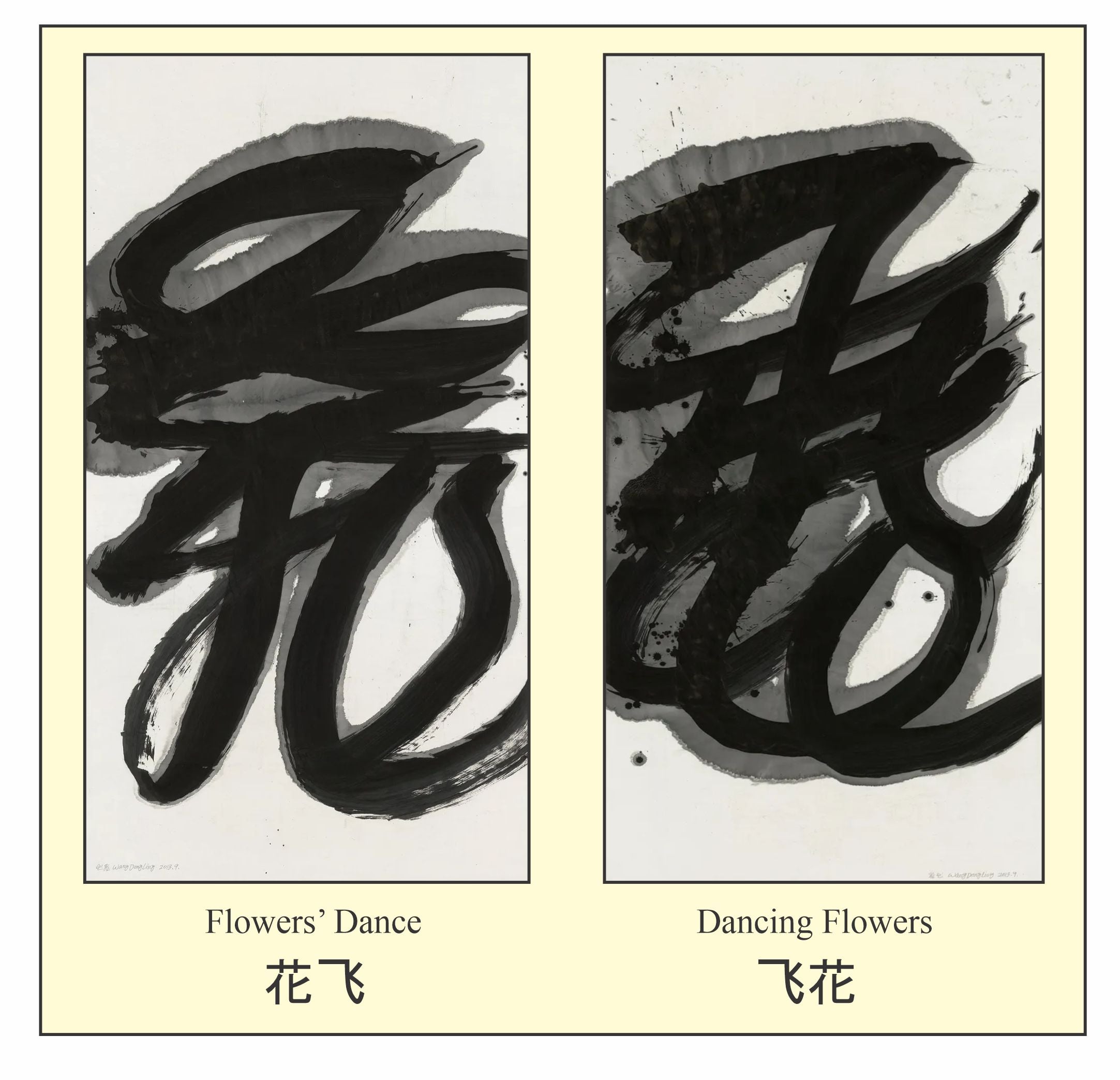
Wu Wei: Effortless Action

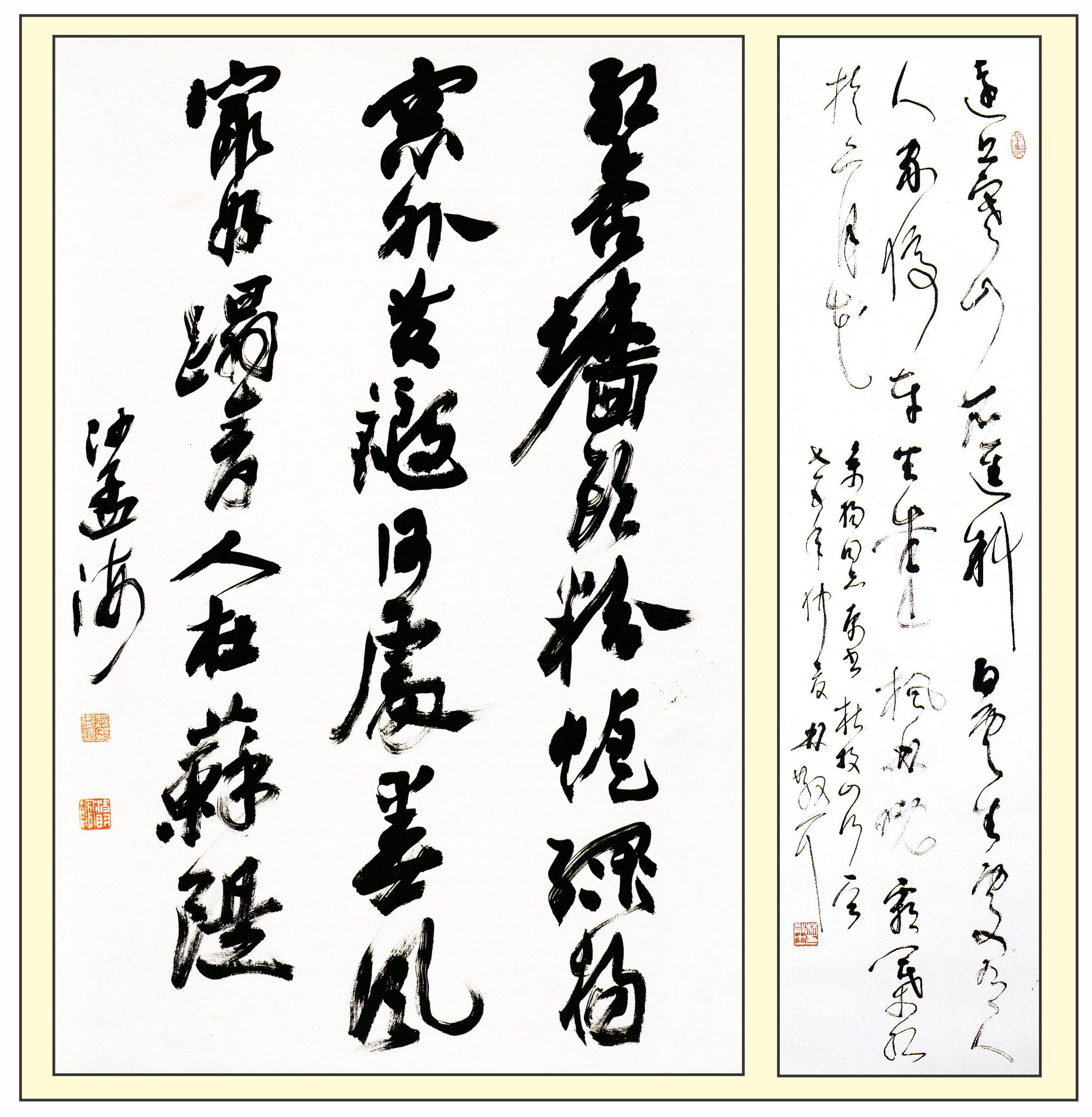
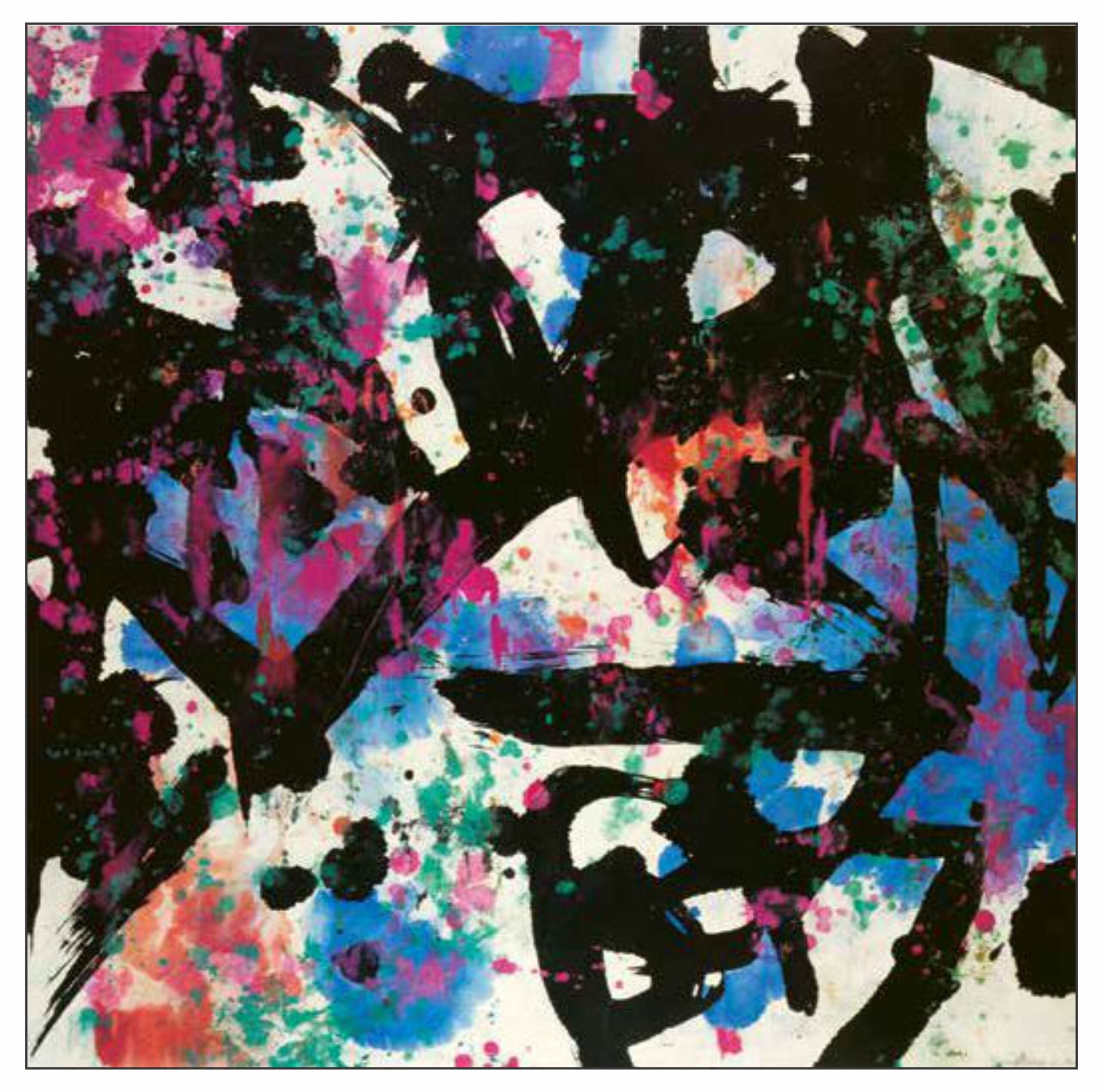
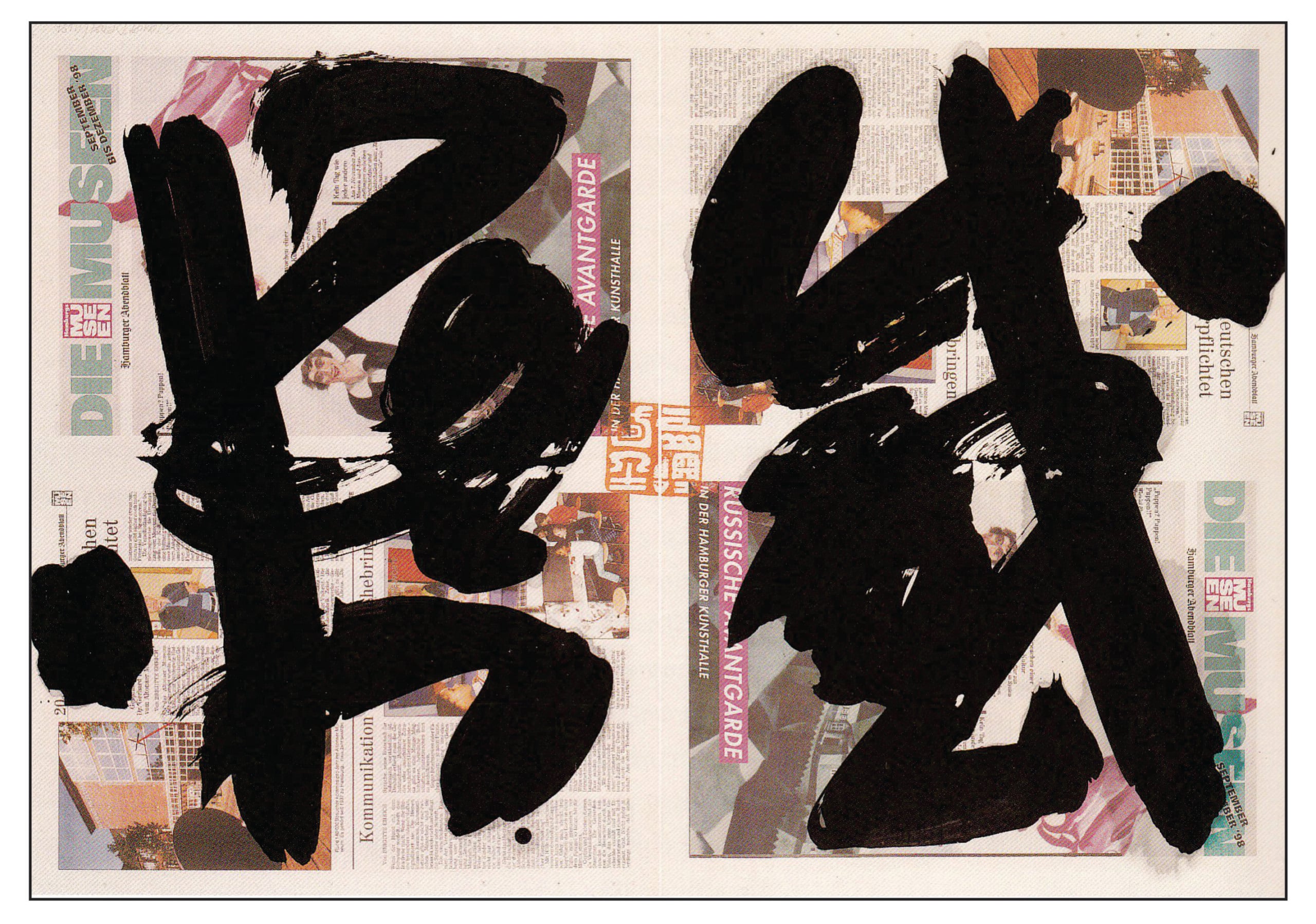
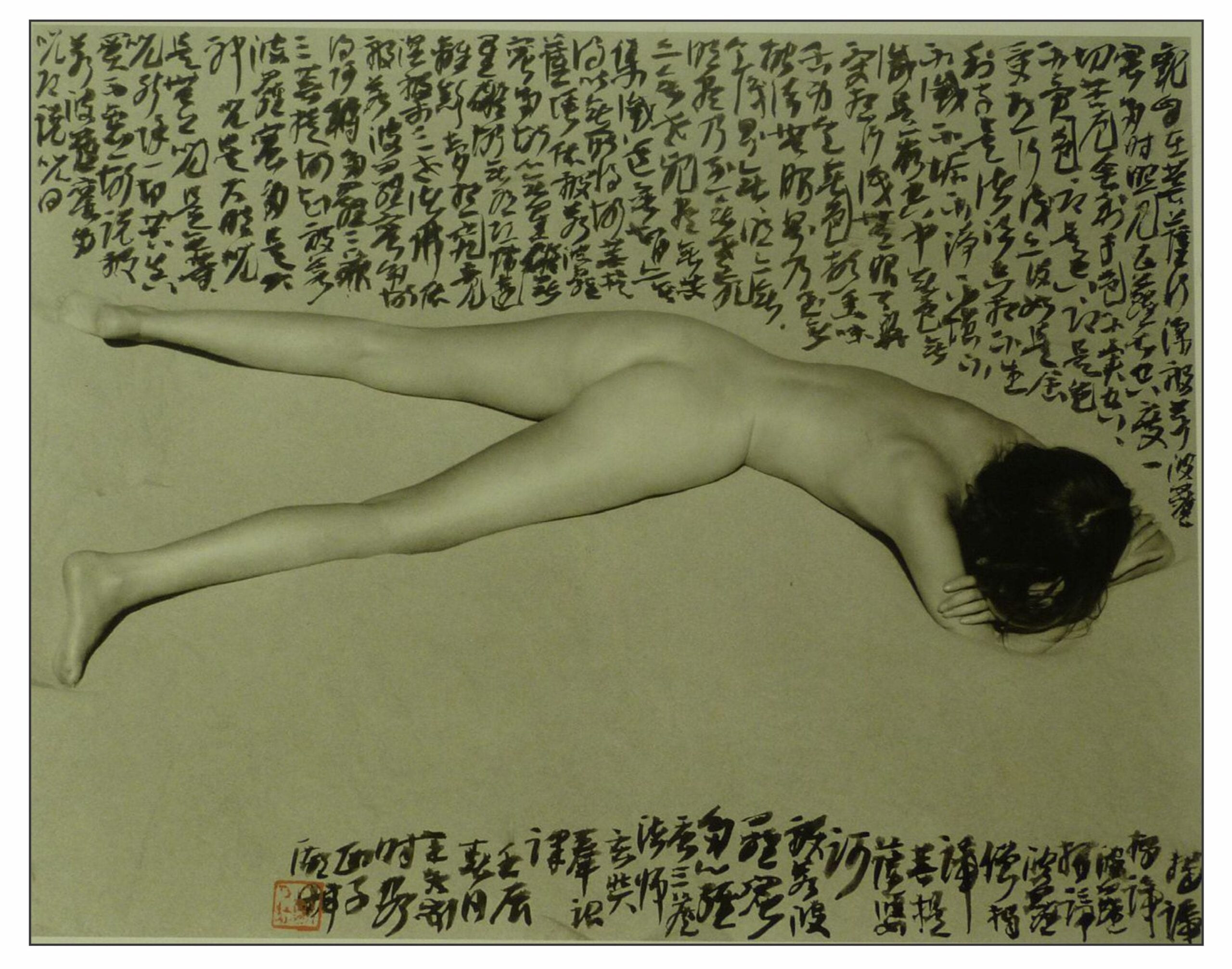
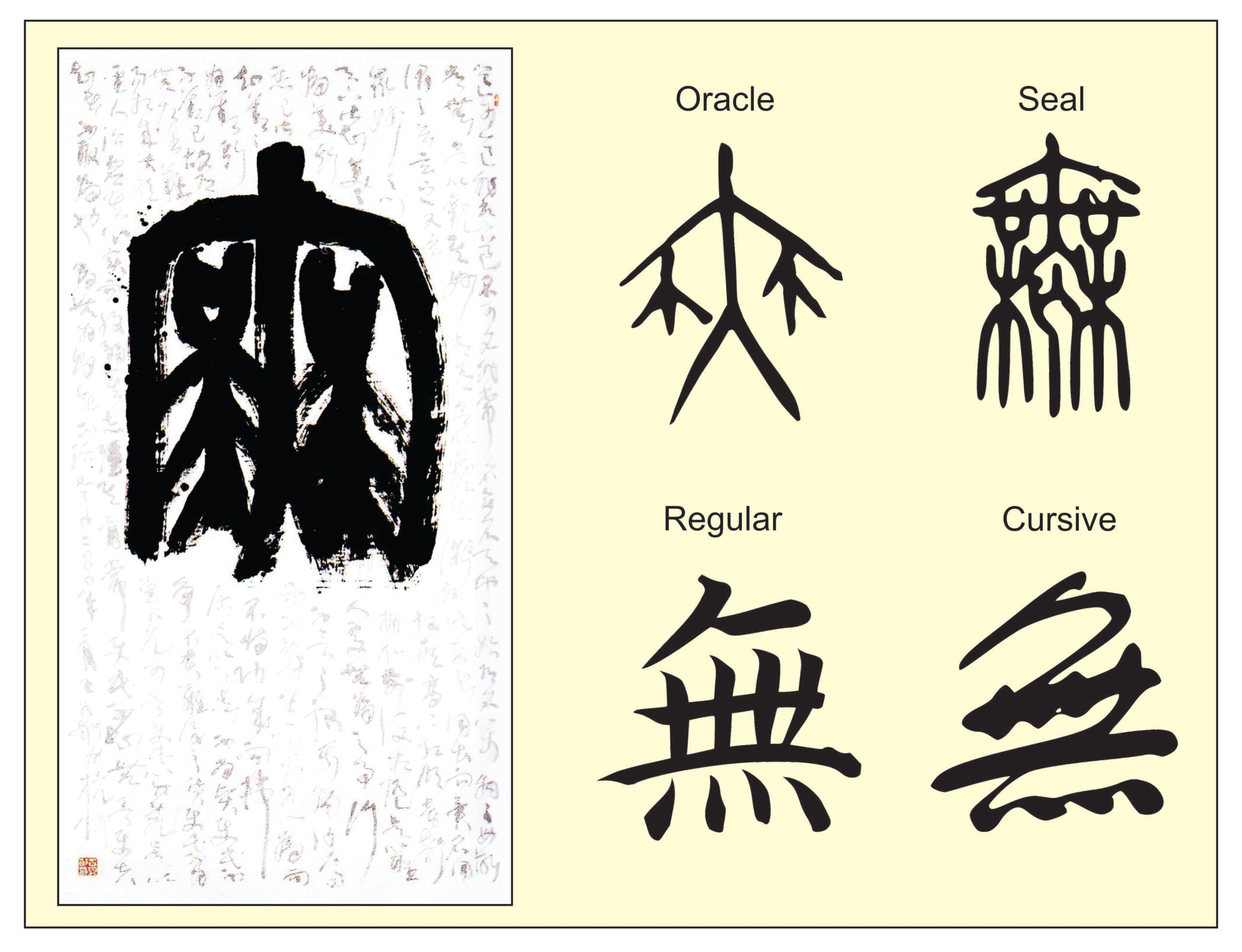
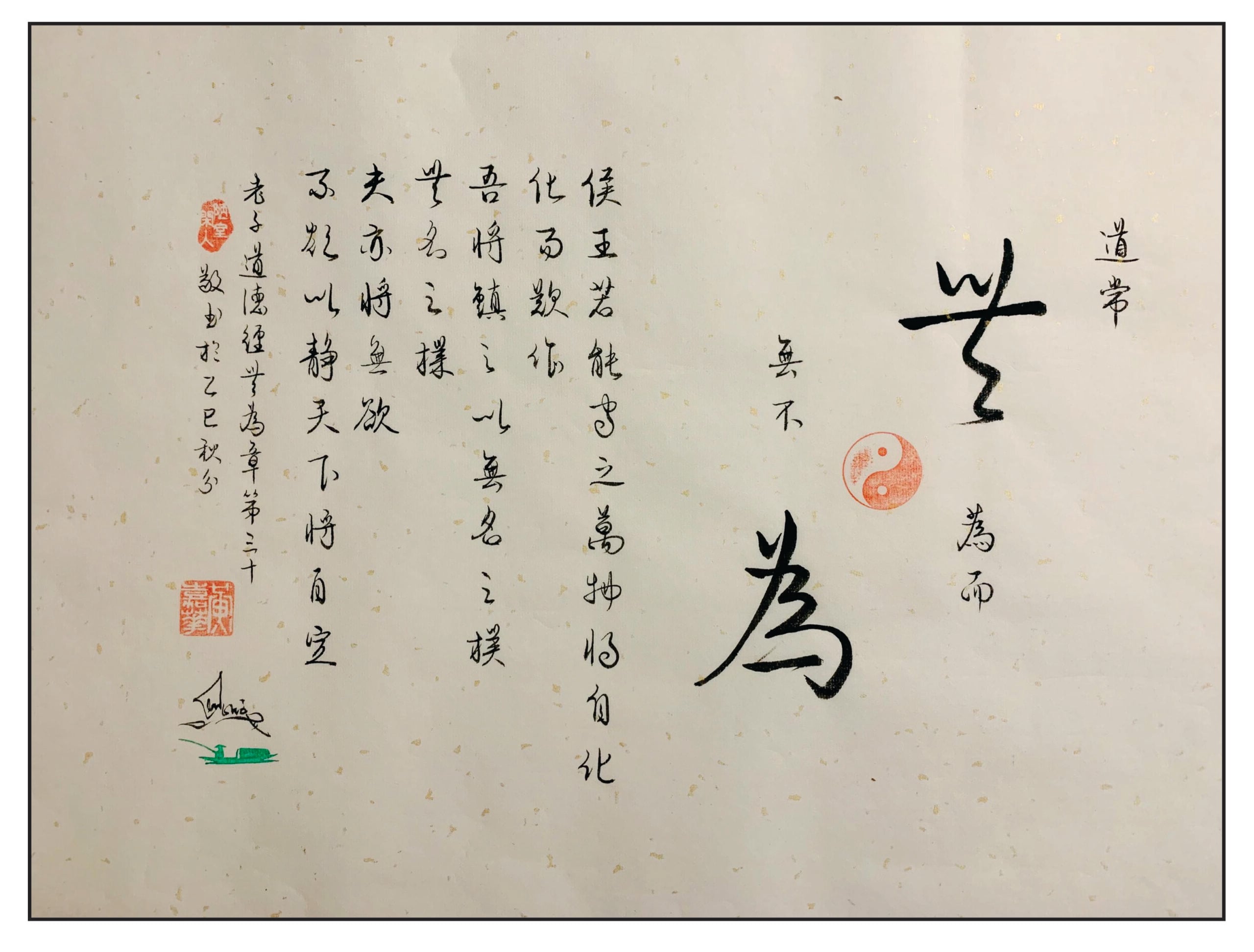
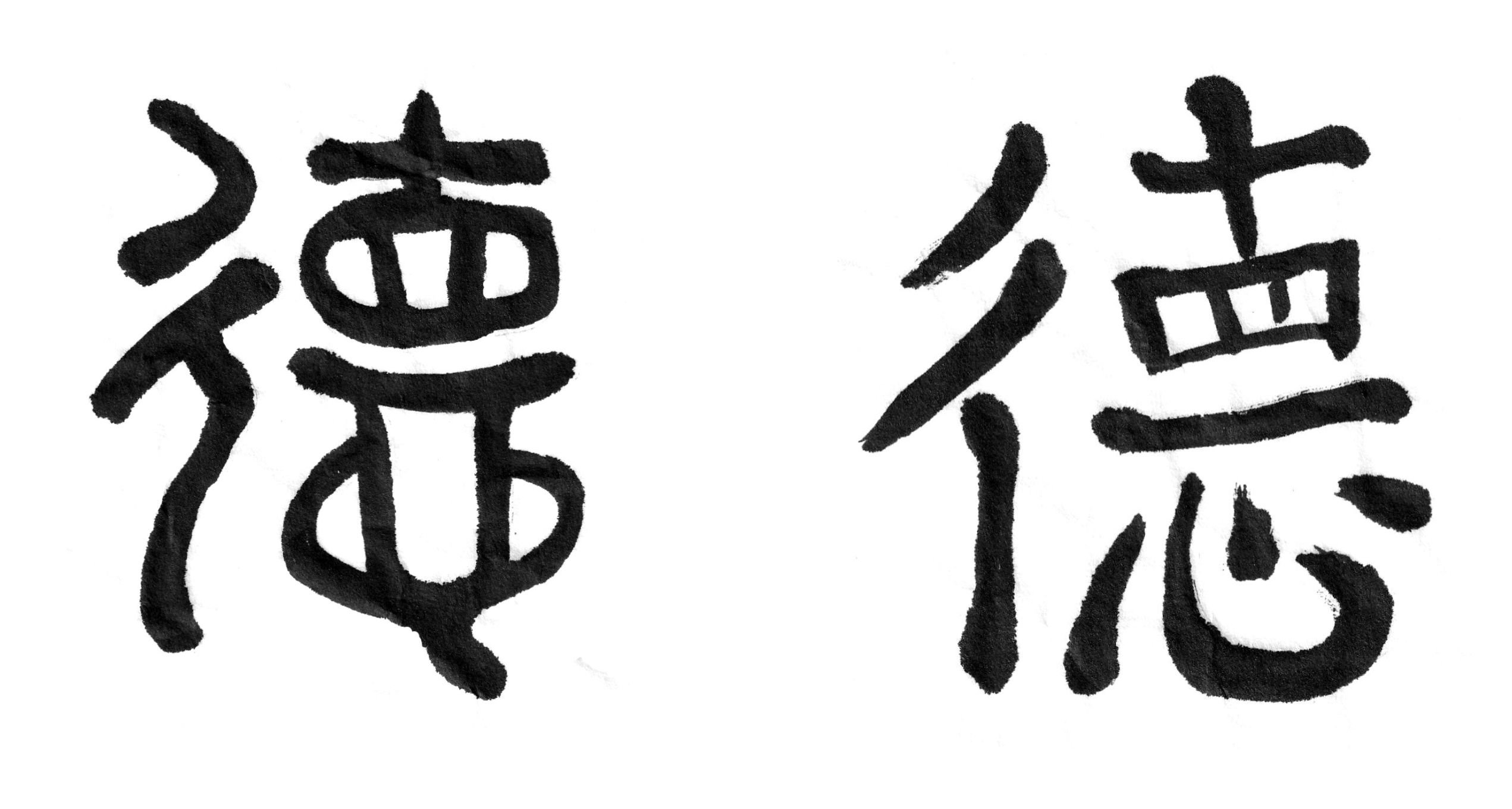
One of the central ideas in the Daodjing of Laozi is the idea of wu wei (無為, simplified 无为; wúwéi). This has been translated in many ways: “non-action,” “actionlessness,” “effortless action,” and “doing nothing.” The 37th chapter of the Daodjing considers wu wei an attribute of the eternal Dao. The 48th chapter promotes wu wei as a human virtue. The illustration shows wu wei in regular script (left) and in cursive (right).

Being True to Oneself

A foundational concept in Daoism is自然, zìrán. This word is composed of 自 (self, oneself, from, since) and 然 (right, correct, so, in this manner). Almost impossible to translate, the word has been variously rendered simply as “self-so” (Ziporyn, 2009) or more abstractly as “as-it-is-ness” (Fu, 1973, p 382). The meaning contains the idea of acting “naturally” or “spontaneously.” An underlying concept is “authenticity” – one’s action should be true to one’s nature.

Laozi uses the word in the ending to Chapter 25 of the Daodejing (with translation by Wu, 2016): 

人法地,地法天,天法道,道法自然

Man follows the ways of Earth;
Earth follows the ways of Heaven;
Heaven follows the ways of Dao;
Dao follows its own ways.

Several aspects of zìrán need consideration. First, the Dao acts through all things. As well as ordering the cosmos, the Dao acts through each individual object it contains. Human beings must ultimately follow their own zìrán.  Zhuang Zhou, commonly known as Zhuangzi (莊子), a Daoist philosopher from the 4th Century BCE, begins his writings with a description of all the different things in the universe from the mythological great Peng bird to the morning mushroom, and recommends that one must act “on the rectitude (正, zhèng) of Heaven and Earth” (Lynn, 2022, p 8). Guo Xiang (郭象, 265-312 CE) commented on this section of the Zhuangzi

“Heaven and earth” is just a blanket term used to indicate all beings. It is all individual beings that form the very substance of heaven and earth, and it is each being’s self-so [ziran] that aligns true to itself. “Self-so” [ziran] means what is so of itself [ziran], without being done by anyone or for any purpose. Thus, Peng’s ability to fly high and the sparrow’s ability to stay low, the great tree’s ability to last long and the mushroom’s ability to perish quickly, all these are done spontaneously, all are self-so [ziran] (Ziporyn, 2009, p 132.)

Second, the concept of zìrán does not mean that all things passively accept their lot in the universe. Misha Tadd (2019) argues that zìrán has as much to do with “authority” as with “authenticity.” We need to be true to our ideal selves: to seek what we should be rather than accept what we are.  

Third, the idea of acting “naturally” means acting in accord with the Dao. However, human beings do not need to return to the simple state of primitive societies to do so (Tadd, 2019, p 4). Although the idea of the “noble savage” was popular when the Daodejing was initially translated into Western languages, Laozi was not being nostalgic for a lost Eden; rather he was imagining a future utopia (Stamatov, 2023).   


Yet Nothing is Left Undone

How the Dao “follows its own ways” is described in the 37th chapter of the Daodejing. This is the final chapter in the section of the book that deals with the nature of the Dao

The commonly accepted version of the Daodejing is divided into two parts. The first 37 chapters are concerned with the Dao (way), and the next 44 with the nature of De (virtue). Some recently discovered early versions reverse the ordering of the two parts (Chan, 2025). However, for our purposes it is appropriate to follow the traditional order and to understand the nature of the Dao before we propose a way for human virtue.

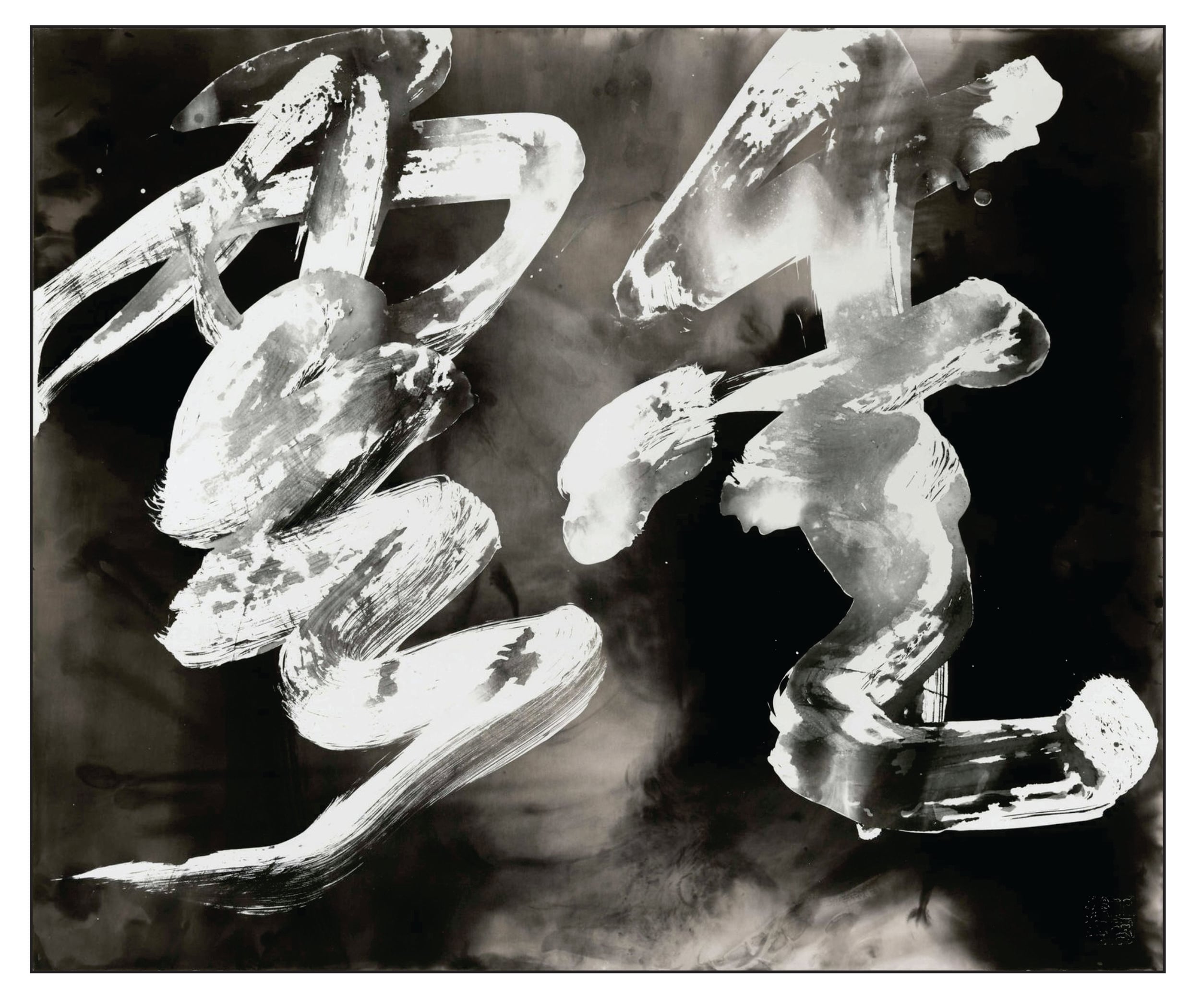
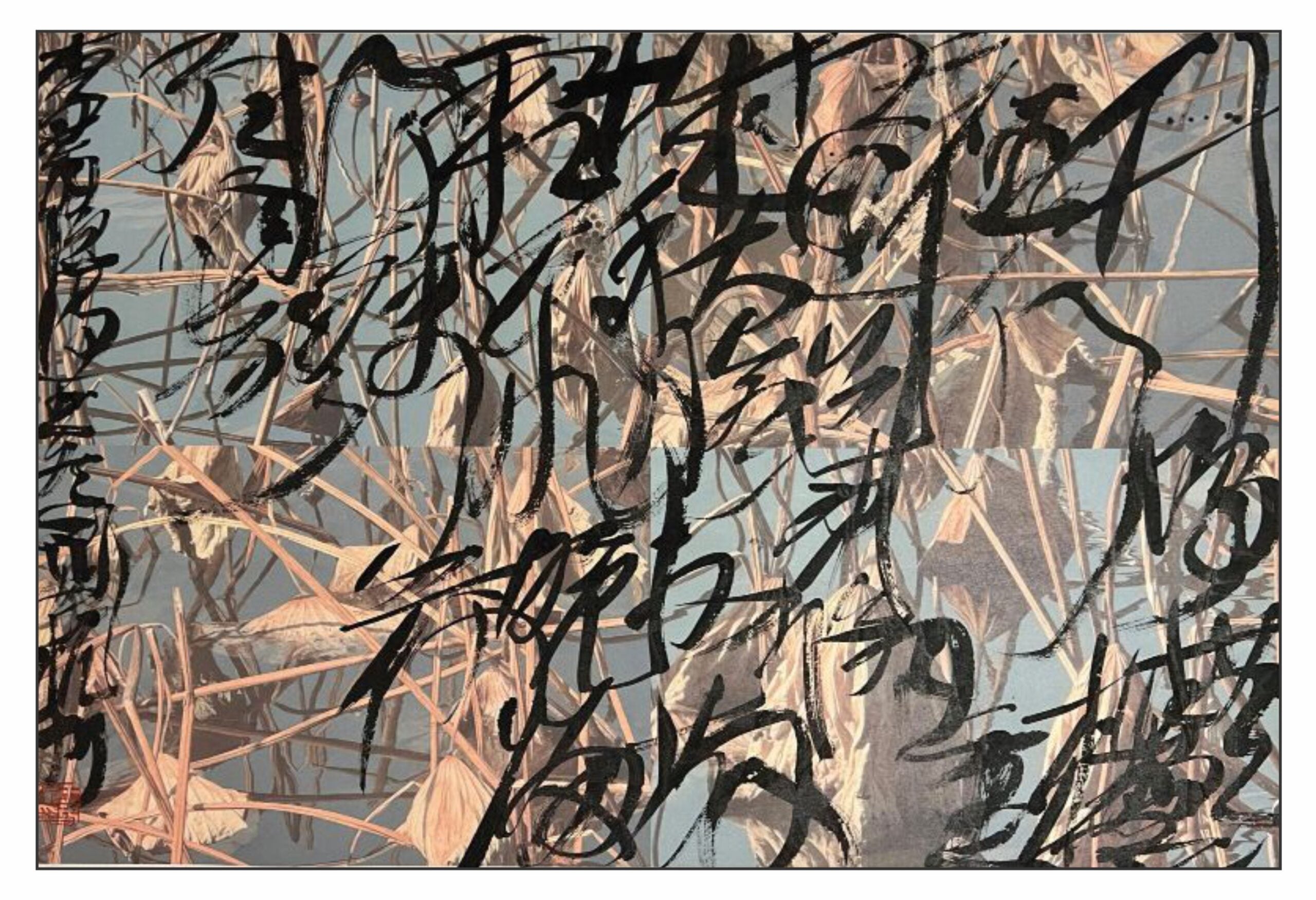
The last chapter pf the first part states that the eternal Dao – the principle that governs the universe – exercises its power by means of wu wei. The following is the Chinese text of Chapter 37 together with a translation by Wu (2016) and calligraphy by Ken Wong:

道恆無為而無不為。
侯王若能守之,萬物將自化。
化而欲作,
吾將鎮之以無名之樸。
無名之樸,夫亦將不欲。
不欲以靜,天下將自定。

Dao in its eternity does nothing, yet nothing is not done.
If lords and kings can all abide by that, all things will change of themselves.
As they change, their desires start to grow;
I calm them down with the nameless pristine timber.
Calmed by the nameless pristine timber, they will have no more desire.
Desireless and calm, the world will correct its own course.

The phrase 無名之樸 is usually translated as “nameless simplicity” (e.g., Fischer, 2023). The character 樸 (), another version of which is 朴, generally means “simple.” However, it once meant “unworked wood” – hence the “nameless pristine timber” of Wu’s translation.  

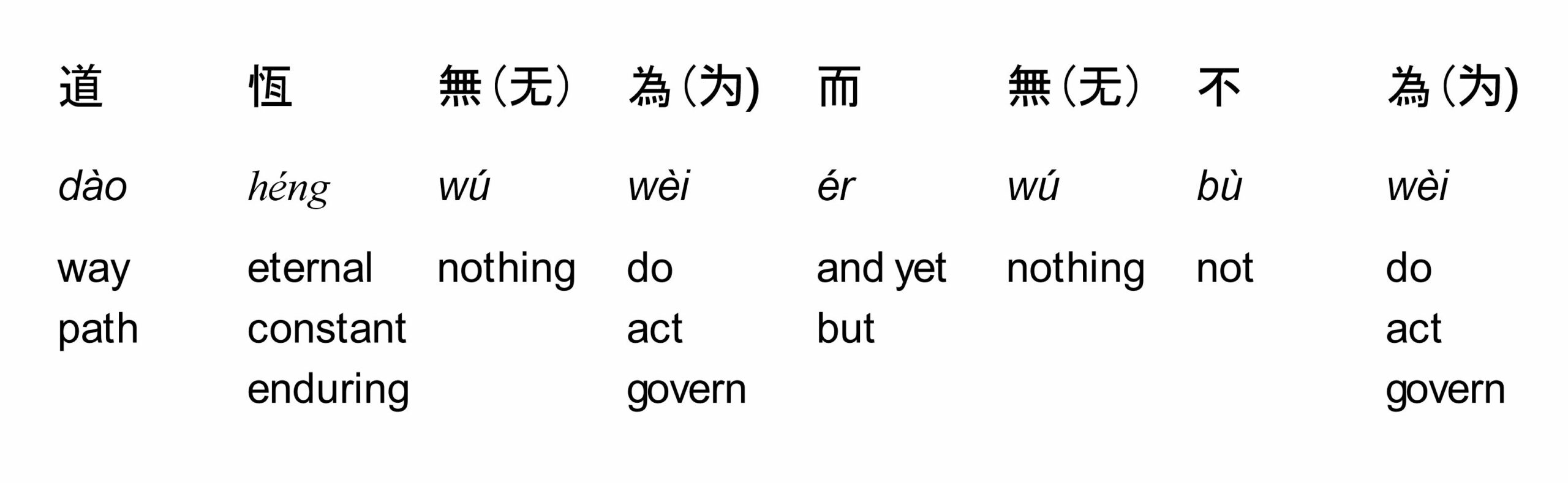
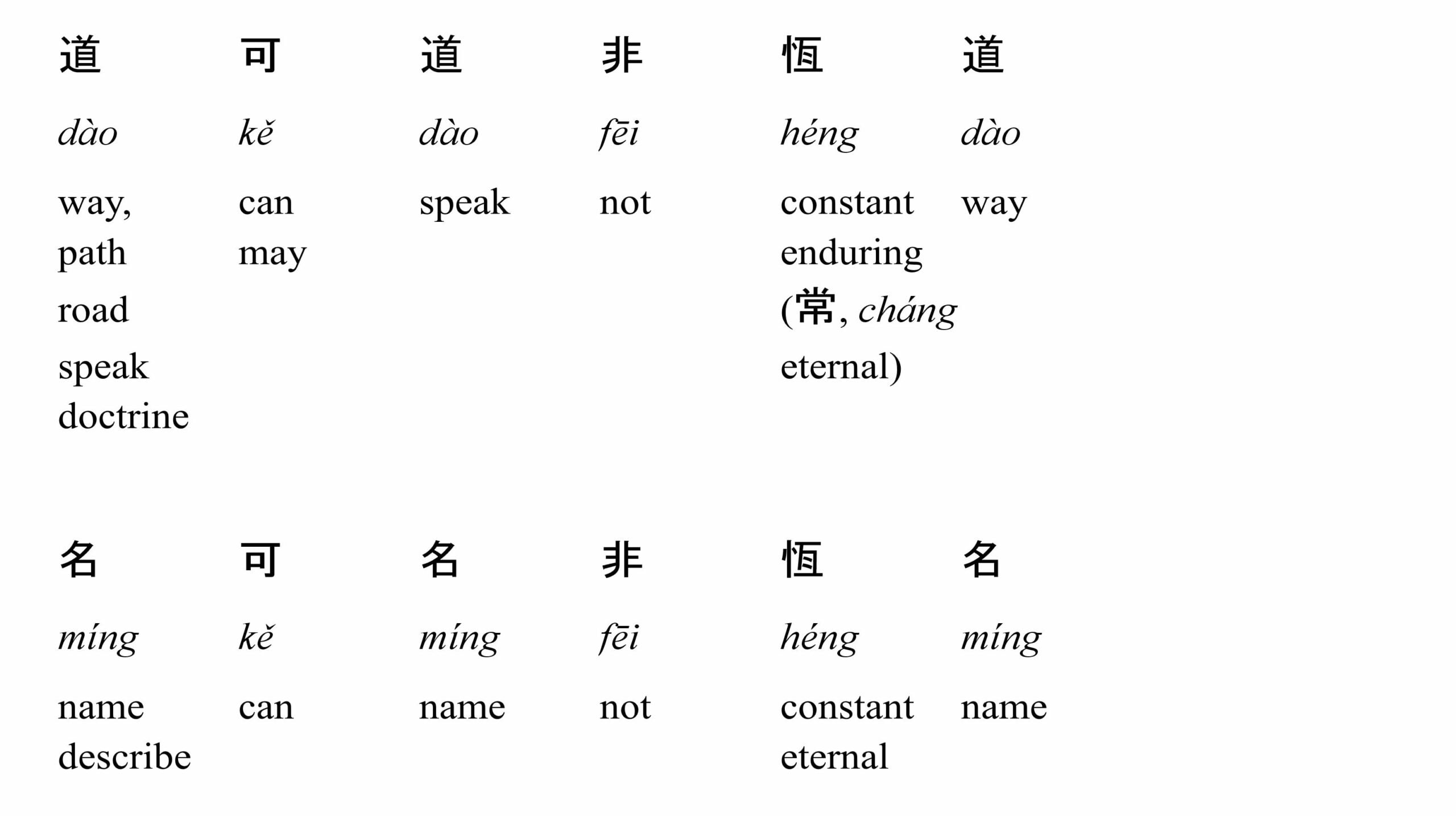
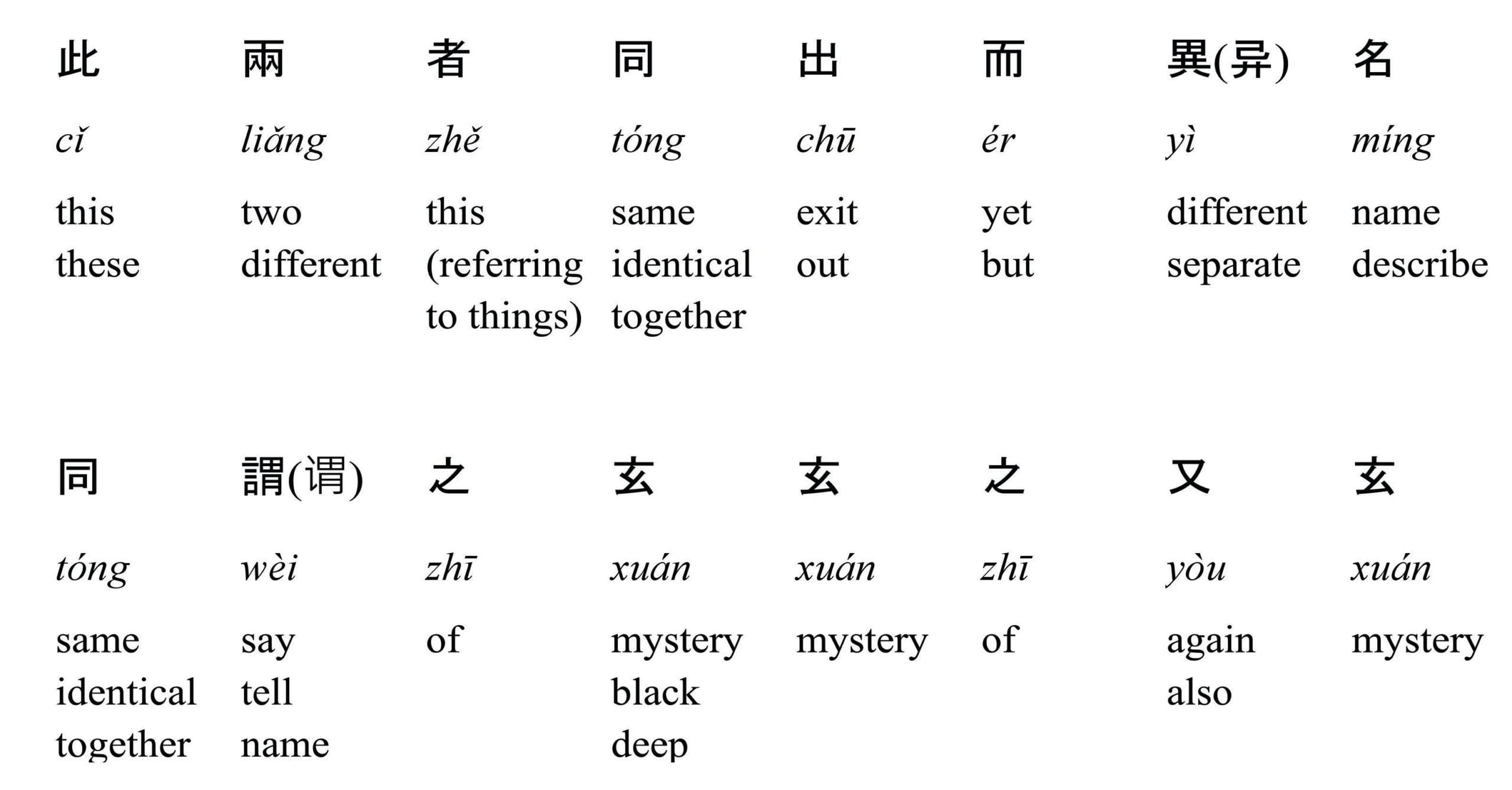
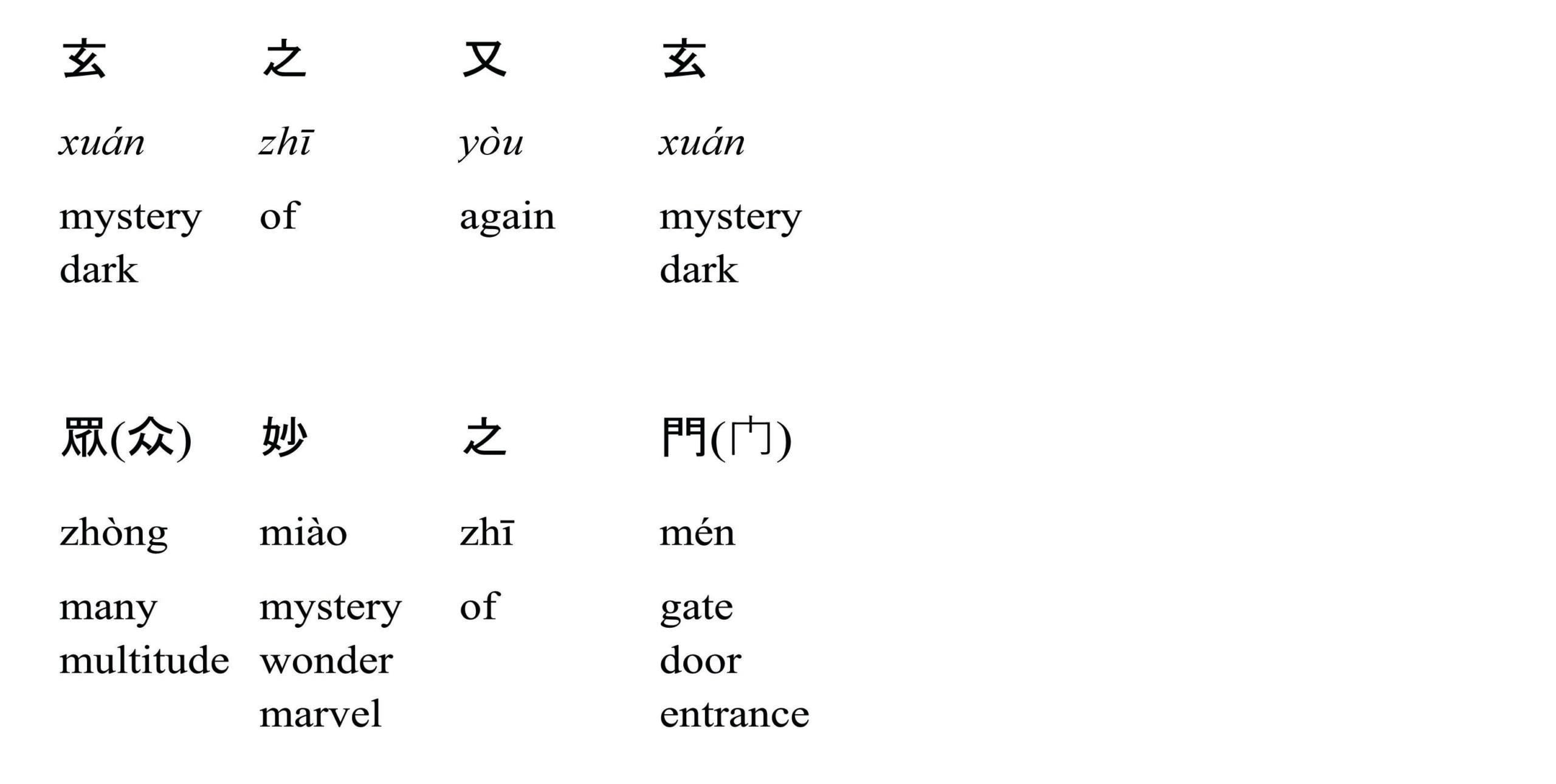
The famous first line is shown below in a character-by-character translation:

The translation of wu wei (無為) is problematic. A simple translation is “doing nothing” but that is not Laozi’s meaning. In Chapter 37 the Dao does nothing and yet somehow everything is done.  The following are suggested translations of wu wei: “non-action” (Moeller, 2016), “effortless action” (Slingerland, 2003), “unself-conscious action” (Lynn, 2022, p 3), “non-contrivance” (Fischer, 2023, p 27), and “no purposive action” (Hansard, 2003).

Loy (1985) proposed that wu wei represent “nondual action:” the activity of an individual that has no self (with intentions and goals) but is rather part of a universal self. This can eliminate the problem of free will in a deterministic universe:

whenever “I” act it is not “I” but the whole universe that “does” the action or rather is the action. If we accept that the universe is self-caused, then it acts freely whenever anything is done. Thus, from the nondualist perspective, complete determinism turns out to be equivalent to absolute freedom.

Slingerland (2003, p 7) comments

It is important to realize, however, that wu-wei properly refers not to what is actually happening (or not happening) in the realm of observable action but rather to the state of mind of the actor. That is, it refers not to what is or is not being done but to the phenomenological state of the doer. … It describes a state of personal harmony in which actions flow freely and instantly from one’s spontaneous inclinations—without the need for extended deliberation or inner struggle—and yet nonetheless accord perfectly with the dictates of the situation at hand, display an almost supernatural efficacy, and (in the Confucian context at least) harmonize with the demands of conventional morality.

Fischer (2023, p 27) describes the mental concomitant of wu wei:

It describes the state of acting genuinely, unselfconsciously, or, as we might say, “from the heart,” as opposed to doing something self-consciously, because others expect you to, or because you are coerced.


Decreasing Day by Day

In the 48th chapter of the Daodejing Laozi proposes wu wei as the ideal of human behavior. The following is the Chinese text together with a translation by Wu (2016):

為學日益,為道日損。
損之又損,以至於無為。
無為而無不為。
取天下常以無事,
及其有事,不足以取天下

To pursue learning you increase day by day; to pursue Dao you decrease day by day.
Decrease and yet again decrease, till you reach the state of Non-doing.
Do nothing and yet nothing is not done.
The world is often won without busying around;
When busying around occurs, the world cannot be won.

The third line repeats the first line of Chapter 37 as an injunction for human behavior. We must follow the same principle as the Dao. Although it is easy to say that the Dao can act according to its own self, how exactly human beings can do so is clear. The chapter states that the world can only be won without 事 (shì, business/work/responsibility).

The Zhuangzi provides several examples of acting in accord with wu wei, the most famous example being butcher Ding. The story is introduced with the comments:

The flow of my life is always channeled by its own boundaries, but the mind bent on knowledge never is. A flow channeled by its own boundaries is endangered when forced to follow something that is not, and trying to rescue it with the doings of the knowing mind only makes the danger worse. (Ziporyn, 2009, p 21).

King Hui of Liang was very impressed with the skill of his butcher Ding who was able to cut up an ox with remarkable speed and agility. When asked how he had become so adept, Ding replied:

What I love is the Course [Dao], something that advances beyond mere skill. When I first started cutting up oxen, all I looked at for three years was oxen, and yet still I was unable to see all there was to see in an ox. But now I encounter it with the spirit rather than scrutinizing it with the eyes. My understanding consciousness, beholden to its specific purposes, comes to a halt, and thus the promptings of the spirit begin to flow. I depend on Heaven’s unwrought perforations and strike the larger gaps, following along with the broader hollows. I go by how they already are, playing them as they lay. So my knife has never had to cut through the knotted nodes where the warp hits the weave, much less the gnarled joints of bone. A good cook changes his blade once a year: he slices. An ordinary cook changes his blade once a month: he hacks. I have been using this same blade for nineteen years, cutting up thousands of oxen, and yet it is still as sharp as the day it came off the whetstone. For the joints have spaces within them, and the very edge of the blade has no thickness at all. When what has no thickness enters into an empty space, it is vast and open, with more than enough room for the play of the blade. That is why my knife is still as sharp as if it had just come off the whetstone, even after nineteen years. (Ziporyn, 2009, p 22).

One might simply understand that through years of study and practice the cook had become so proficient at his that eveything was performed by learned reflex, without any need for consciousness. However, consicuousness still played a role: the cook continued:

Nonetheless, whenever I come to a clustered tangle, realizing that it is difficult to do anything about it, I instead restrain myself as if terrified, until my seeing comes to a complete halt. My activity slows, and the blade moves ever so slightly. Then all at once, I find the ox already dismembered at my feet like clumps of soil scattered on the ground. I retract the blade and stand there gazing at my work arrayed all around me, dawdling over it with satisfaction. Then I wipe off the blade and put it away. (Ziporyn, 2009, p 22)

After long thought and much practice we can become adept at anything. We behave automatically. However, consciousness still plays a role, slowing us down when problems arise, preventing mistakes that occur when one becomes more convinced of one’s skill than warranted.


The Art of Rulership

Laozi considers how leaders can best govern their people in Chapter 17 of the Daodjing. The following is the Chinese text and the translation of Wu (2009):

太上,不知有之;其次,亲而誉之;
其次,畏之;其次,侮之。
信不足焉,有不信焉。
悠兮其贵言。功成事遂,百姓皆谓:我自然。

The best ruler is one whose presence is unknown;
the second best is one who is beloved and praised;
the next best is one who is feared;
the next is one who is despised.

Where there is insufficient good faith,
there is loss of faith.

Relax and spare your words.
When the goal is achieved and the job is done,
everyone says, “We did it.”

Laozi favors the ruler who exercises wu wei, who allows his ministers to exercise their responsibilities, and who lets his people to be true to their own selves: 自然, ziran. Another translation of the final line is: The people all say: “We have done it by ourselves.” (Lin, 1977)

These ideas on government were extensively discussed in the Huainanzi, a collection of writings collected to assist the Prince of Huainan in the 2nd Century BCE (Ames,1981). The following is from one of the essays entitled The Art of Rulership:

Thus, the ruler in possession of the Way extinguishes thought and dispenses with guessing, and waiting in limpidity and vacuity, he uses words that do not boast and takes action that does not rob subordinates of responsibility. He makes demands of fulfilment according to claims made. He lets them get on with their duties without telling them how; he expects them to fulfil their duties without instructing them. He takes not knowing as his Way and being at a loss as to what to do as his treasure. Acting in this way, each of the various officials has his appointed tasks. (Ames, 1981, p 202)

The Concept of Flow

Mihaly Csíkszentmihályi (1934-2021), a Hungarian-American psychologist, became interested in why people can become so completely involved in difficult, time-consuming and sometimes dangerous activities, that they lose all sense of self and time. He described the experience as one of “flow” (Csíkszentmihályi, 1990). Nakamura and Csíkszentmihályi (in Csíkszentmihályi, 2014, p 240) describe the following subjective characteristics of being “in flow:”  

  1. Intense and focused concentration on what one is doing in the present moment
  2. Merging of action and awarenessLoss of reflective self-consciousness (i.e., loss of awareness of oneself as a social actor)
  3. A sense that one can control one’s actions; that is, a sense that one can in principle deal with the situation because one knows how to respond to whatever happens next
  4. Distortion of temporal experience (typically, a sense that time has passed faster than normal)
  5. Experience of the activity as intrinsically rewarding, such that often the end goal is just an excuse for the process.

Athletes during peak performance, musicians during virtuoso recitals, and scientists formulating a new theory all experience this state of flow. Other terms that have been used to describe it are “in the zone” or “being locked in.” The individual in the flow is fully conscious of what is going on, but there is little if any self-consciousness. The game is being played, the music is being made, the theory is being grasped.

This state can only come after one has become an expert. Only when the actions can occur automatically, can consciousness move to a higher level – directing the strategy of the game rather than making individual movements, conveying the meaning rather than playing the notes, finding the underlying pattern rather than simply recording what is happening.  

A person in a state of flow is very similar to a person acting according to the principle of wu wei (De Pryker, 2011). Both are acting effortlessly and without self-consciousness. In both action and awareness are fused. There are differences – flow empowers the individual self, whereas wu wei leads to a decrease in personal desires as one seeks greater union with the universal self. Nevertheless, the two states are far more similar than different.  

In recent years, the concepts of wu wei have been used to promote higher achievements in sports (Kee et al. 2021) and to find happiness in normal human behavior through “effortless living” (Gregory, 2018). A major difficulty is in deciding how to attain wu wei. One must become highly skilled and then become so completely involved in something that one loses oneself in the endeavor. One can try to be “mindful,” to live in the present, to eliminate personal desires, but such advice is imprecise.


The Flow of Calligraphy

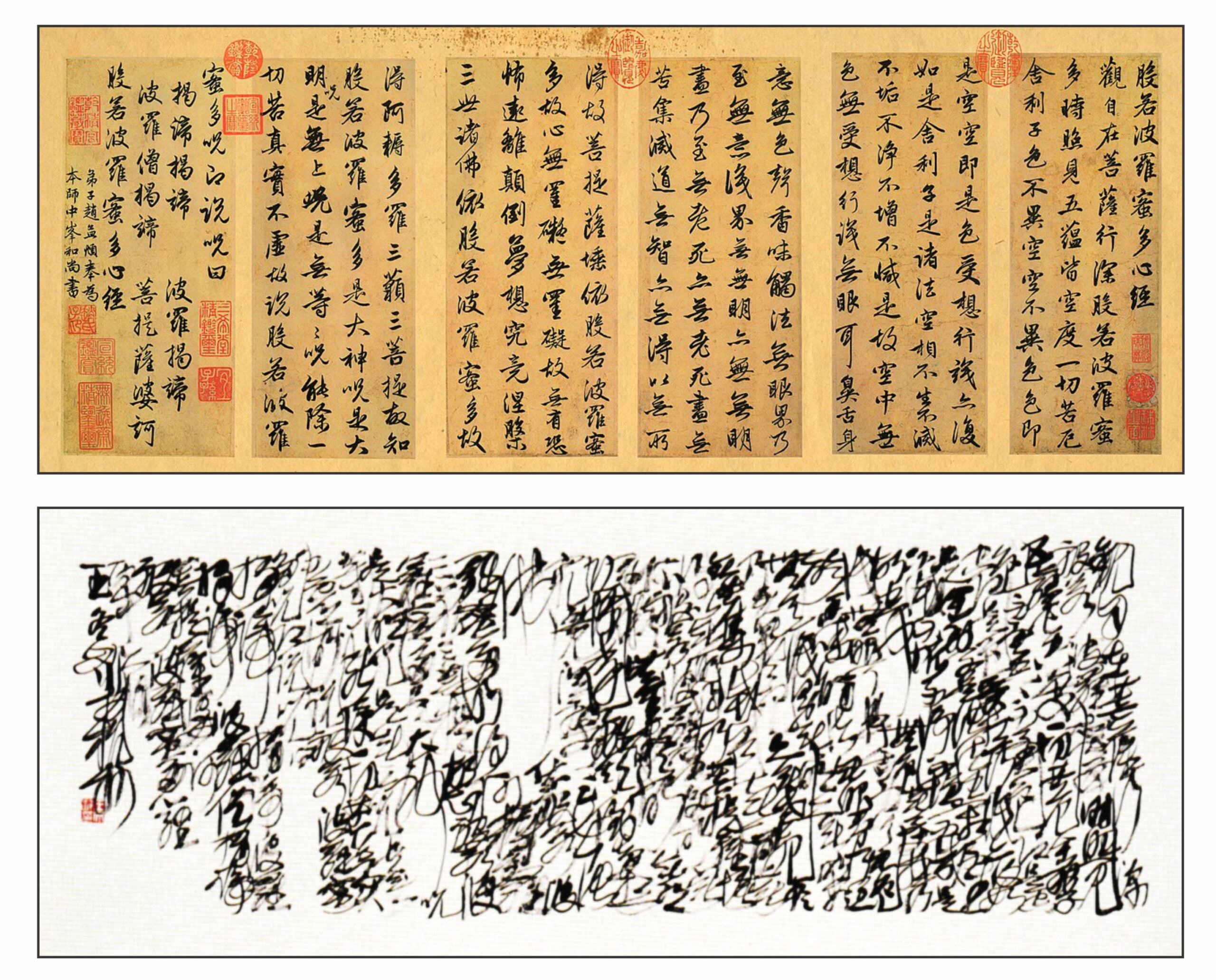
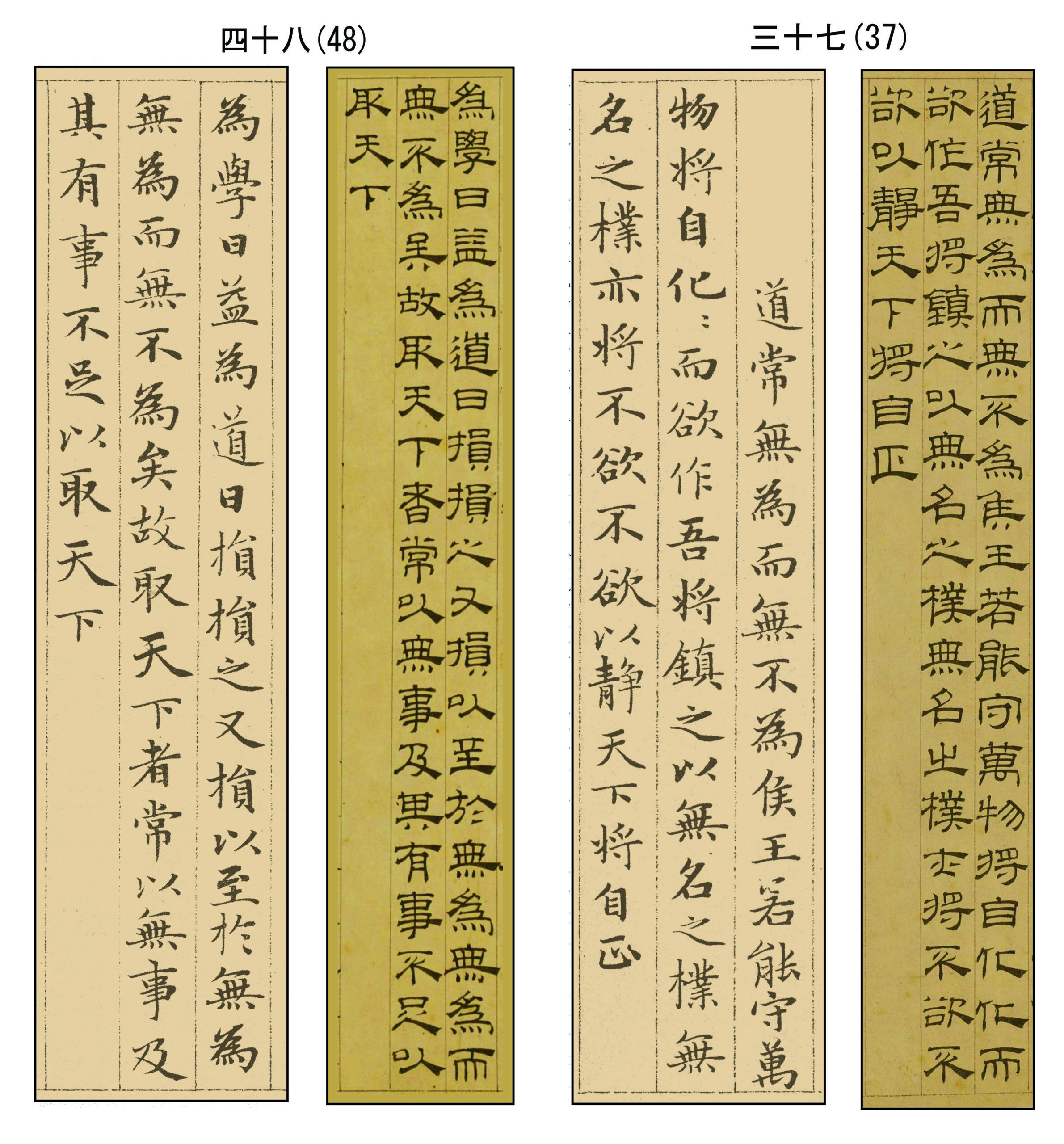
Chapters 37 and 48 of the Daodejing – the chapters that are crucial to the concept of wu wei are shown below in the calligraphy of the 13th Century Zhao Mengfu in regular script, and of the 14th Century Sheng Mao in clerical script): 

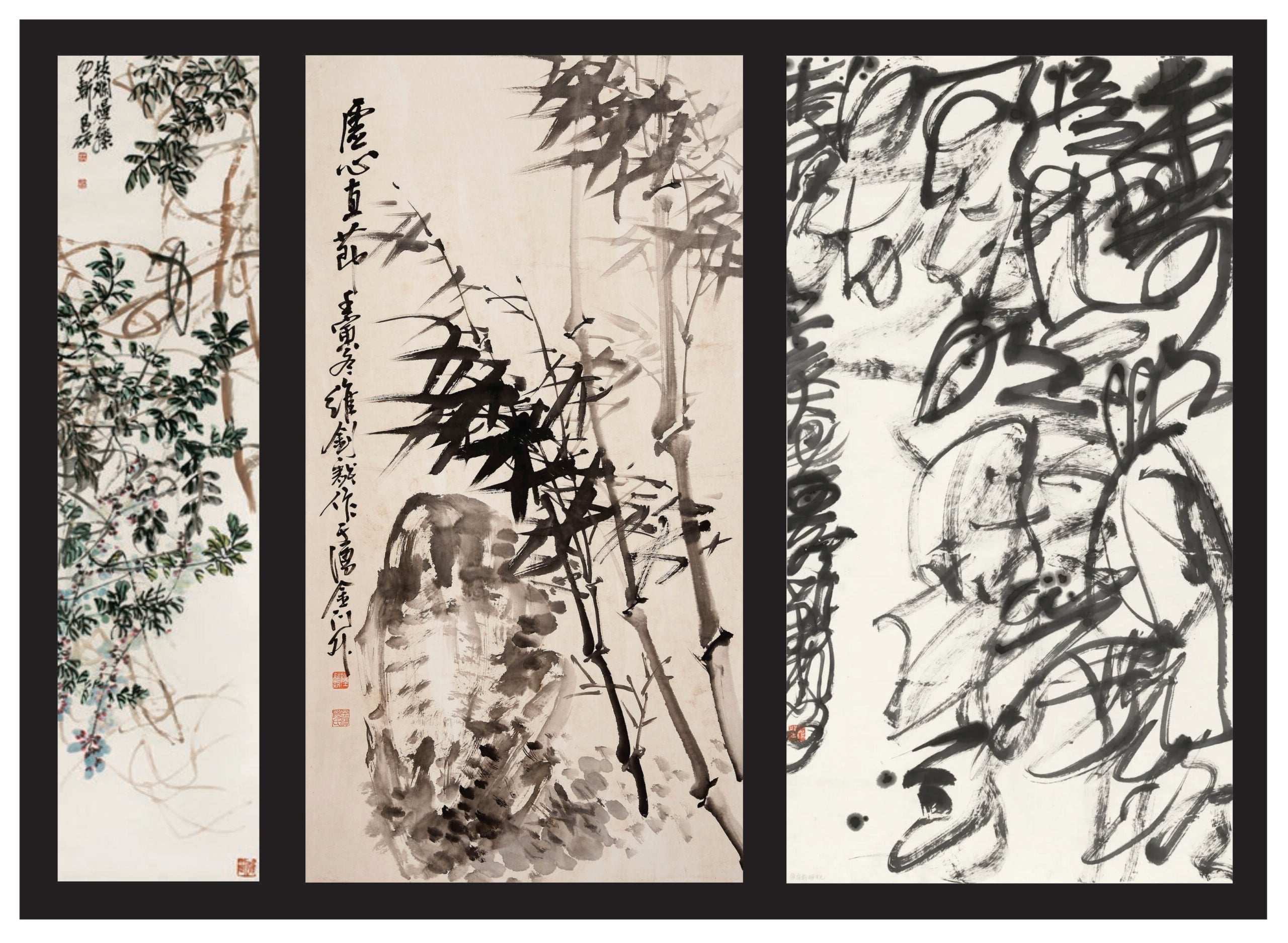
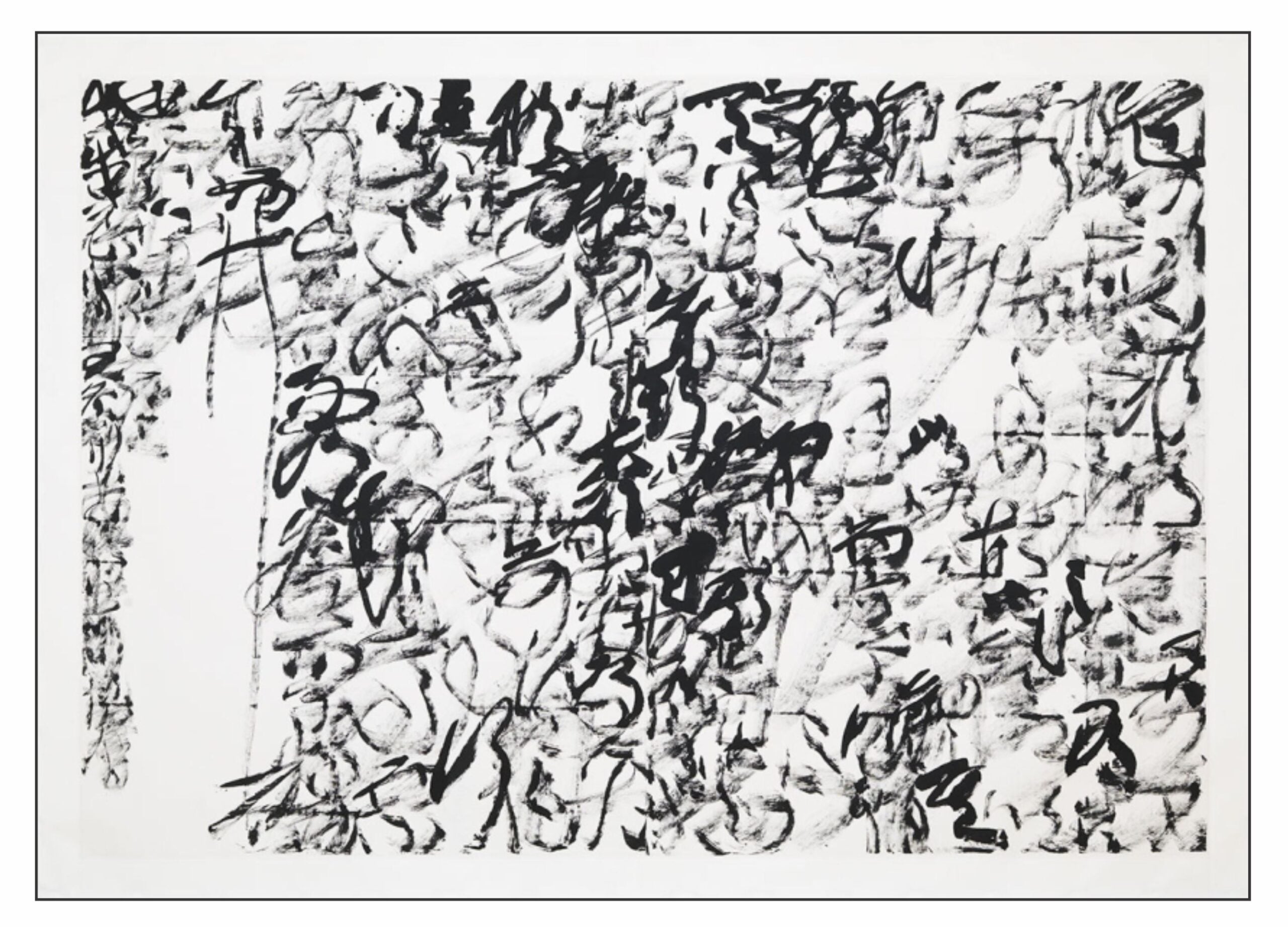
The esthetics of Chinese calligraphy depends on the flow from one character to another. The true calligrapher follows the principle of wu wei and writes effortlessly. Chiang Yee (1973, p 117) describes the essential characteristics of Chinese calligraphy:

The beauty of Chinese calligraphy is essentially the beauty of plastic movement, not of designed and motionless shape. A finished piece of it is not a symmetrical arrangement of conventional shapes, but something like the co-ordinated movements of a skilfully composed dance —impulse, momentum, momentary poise, and the interplay of active forces combining to form a balanced whole.  


Envoi

We can conclude with some comments of the poet and Trappist monk Thomas Merton in his introduction to his free translations from the Zhuangzi (2004, p 21):

The true character of wu wei is not mere inactivity but perfect action—because it is act without activity. In other words, it is action not carried out independently of Heaven and earth and in conflict with the dynamism of the whole, but in perfect harmony with the whole. It is not mere passivity, but it is action that seems both effortless and spontaneous because performed “rightly,” in perfect accordance with our nature and with our place in the scheme of things. It is completely free because there is in it no force and no violence. It is not “conditioned” or “limited” by our own individual needs and desires, or even by our own theories and ideas.

And an excerpt from his translation (p. 69):

If man, born in Tao,
Sinks into the deep shadow
Of non-action
To forget aggression and concern,
He lacks nothing
His life is secure.


References

Ames, R. T. (1981) Wu-wei in “The art of rulership” chapter of Huai Nan Tzu: its sources and philosophical orientation. Philosophy East and West, 31(2), 193-213

Chan, A. K. L. (2025). Laozi. The Stanford Encyclopedia of Philosophy.

Chiang, Y. (1973). Chinese calligraphy: an introduction to its aesthetic and technique (3rd ed.). Harvard University Press.

Csikszentmihalyi, M. (1990). Flow: the psychology of optimal experience. Harper & Row.

Csikszentmihalyi, M. (2014). Flow and the foundations of positive psychology. Springer Netherlands.

De Prycker, V. (2011). Unself-conscious control: broadening the notion of control through experiences of flow and wu-wei. Zygon, 46(1), 5–25.

Fischer, P. (2023). The annotated Laozi: a new translation of the Daodejing. State University of New York at Albany.

Fu, C. W.-H. (1973). Lao Tzu’s conception of Tao. Inquiry (Oslo), 16(1–4), 367–394.

Gregory, J. (2018). Effortless living: wu-wei and the spontaneous state of natural harmony. Inner Traditions.

Hansen (2003). Wuwei: taking no action. In Cua, A. S. (Ed.) Encyclopedia of Chinese philosophy. (pp 784-786). Routledge.

Kee, Y. H., Li, C., Zhang, C.-Q., & Wang, J. C. K. (2021). The wu-wei alternative: Effortless action and non-striving in the context of mindfulness practice and performance in sport. Asian Journal of Sport and Exercise Psychology, 1(2–3), 122–132.

Lin, P. J. (1977, open access 2020). A Translation of Lao-tzu’s Tao Te Ching and Wang Pi’s Commentary. (Volume 30 in University of Michigan Chinese Studies). University of Michigan.

Liu, X. (2015). Laozi’s philosophy: textual and conceptual analyses. In X. Liu (Ed.), Dao Companion to Daoist Philosophy (pp. 71–100). Springer Netherlands.

Loy, D. (1985). Wei-Wu-Wei: nondual action. Philosophy East & West, 35(1), 73–86.

Lynn, R. J. (2022). Zhuangzi: a new translation of the sayings of Master Zhuang as interpreted Columbia University Press.

Merton, T. (2004). The way of Chuang Tzu. Shambhala.

Moeller, H. G. (2015). Basic aspects of daoist philosophy. International Communication of Chinese Culture, 2 (2), 99–107.

Slingerland, E. G. (2003). Effortless action: Wu-wei as conceptual metaphor and spiritual ideal in early China. Oxford University Press.

Stamatov, A. (2023). The Laozi’s ideal state: nostalgia, utopia, state of nature. Religions, 14(10), 1243.

Tadd, M. (2019). Ziran: authenticity or authority? Religions, 10(3), 207.

Wu, C. Q. (2016). Thus spoke Laozi: a new translation with commentaries of Daodejing. University of Hawaii.

Ziporyn, B. (2009). Zhuangzi: the essential writings with selections from traditional commentaries. Hackett


Laozi: the Nature of the Dao

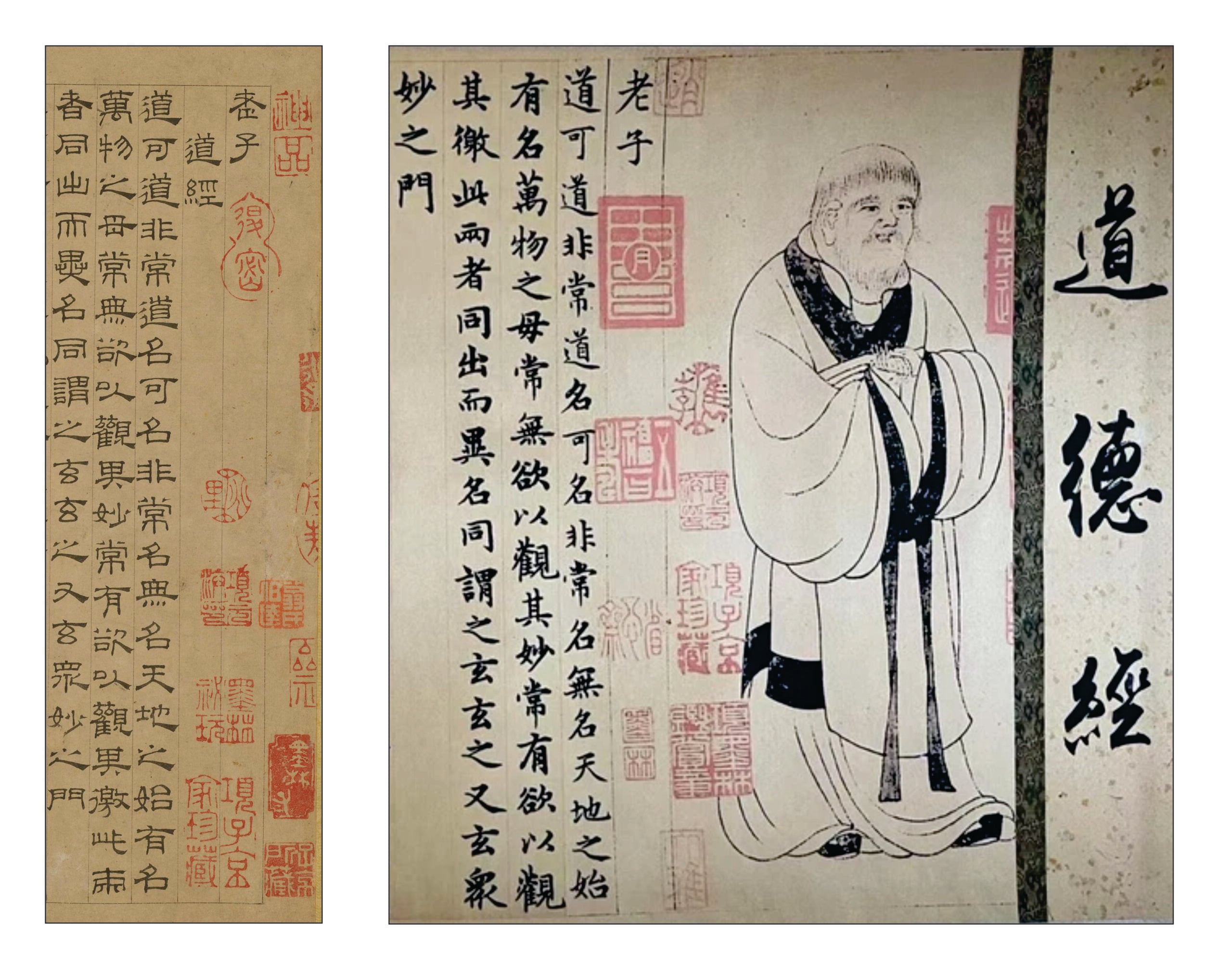
Laozi (老子, lǎozǐ, “the old master”) was a legendary character from the 6th Century BCE who put together a collection of philosophical and ethical sayings that has come to be known as the Dàodéjing (道德經 simplified:道德经; or Tao Te Ching in the Wade-Giles romanization, “The Book of the Way and of Virtue”) or Laozi after the name of the author. The illustration shows a depiction of Laozi from a scroll by Sheng Mao. Following the discovery of early versions of the text written on silk and bamboo slips dating to the 2nd Century BCE (Chan, 2016, 2025), several new translations and annotated editions have been published. This essay presents a close reading of the first chapter.   

The First Chapter

The following is the Chinese text of the first chapter (which can be followed at the websites of the Chinese Text Project or Wikibooks) and a recent English translation by Fischer (2023).

道可道,非常道。名可名,非常名。
無名天地之始;有名萬物之母。
故常無欲,以觀其妙;常有欲,
以觀其徼。此兩者,同出而異名,
同謂之玄。玄之又玄,衆妙之門

The way that can be (fully) conveyed is not the abiding Way; a name that can be (fully) descriptive is not an abiding name.

“Formlessness” is the name of the beginning of Heaven and Earth; “form” is the name of the mother of the myriad things.

Thus, if you abide in formlessness, you may thereby observe its wonders; and if you abide in form, you may thereby observe its manifestations.

These two appear together but have different names. This togetherness, we call it “mysterious” mystery and more mystery: the gateway to many wonders.

The following illustration shows on the left the first chapter in clerical script from a scroll by Sheng Mao (盛懋, fl. 14th Century) in the Palace Museum in Beijing, and on the right in regular script from a scroll by Zhao Mengfu (趙孟頫, 1254–1322). The latter includes a portrait of Laozi as a benevolent old gentleman.

The following is a recitation of the first chapter from the dao-de-jing website, and the text in pinyin romanization:

dào kě dào fēi cháng dào
míng kě míng fēi cháng míng
wú míng tiān dì zhī shǐ
yǒu míng wàn wù zhī mǔ
gù cháng wú yù yǐ guān qí miào
cháng yǒu yù yǐ guān qí jiào
cǐ liǎng zhě tóng chū ér yì míng
tóng wèi zhī xuán xuán zhī yòu xuán
zhòng miào zhī mén

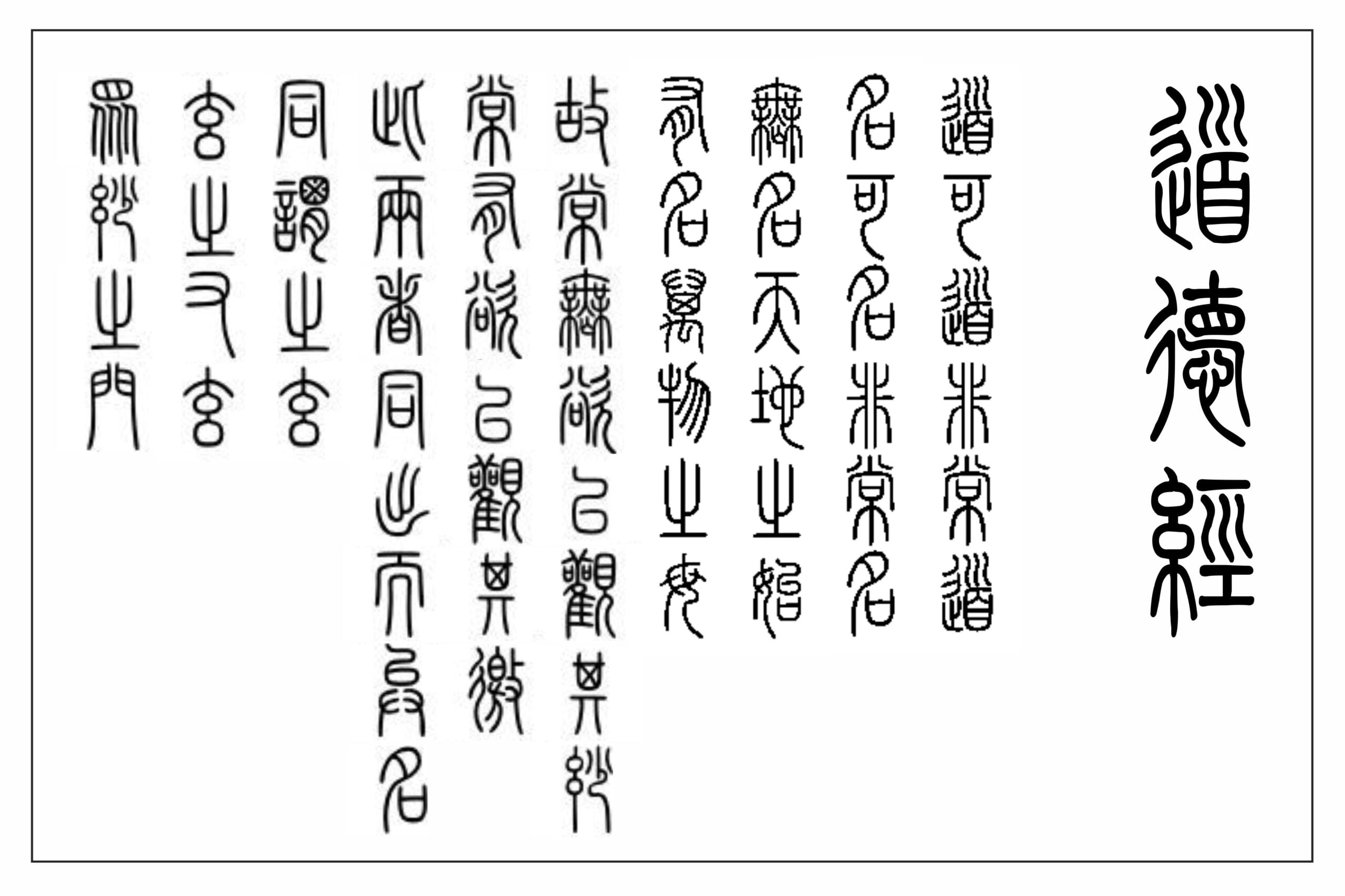
The original book of sayings was likely handed down orally. The earliest extant versions were written in clerical script. However, it is possible that there might have been versions of the book written in the Small Seal script, such as imagined in the following illustration:


Or even versions written in the earlier Great Seal or Bronze script, which was used at the time that the book was supposedly created. The illustration on the right shows a Great Seal version of Chapter 1 as imagined by Wilson (2010):

This essay will concern itself with the first chapter (or verse) of Laozi’s book. Red Pine quotes De Qing (1546-1623), a Buddhist commentator, on this chapter:

Laozi’s philosophy is all here. The remaining 5000 words only expand on this first verse.


The Ineffable Dao

The first section of the chapter concerns the difficulty in expressing the nature of Dao:

The way that can be spoken of is not the eternal Way
The name that can be named is not the eternal Name.

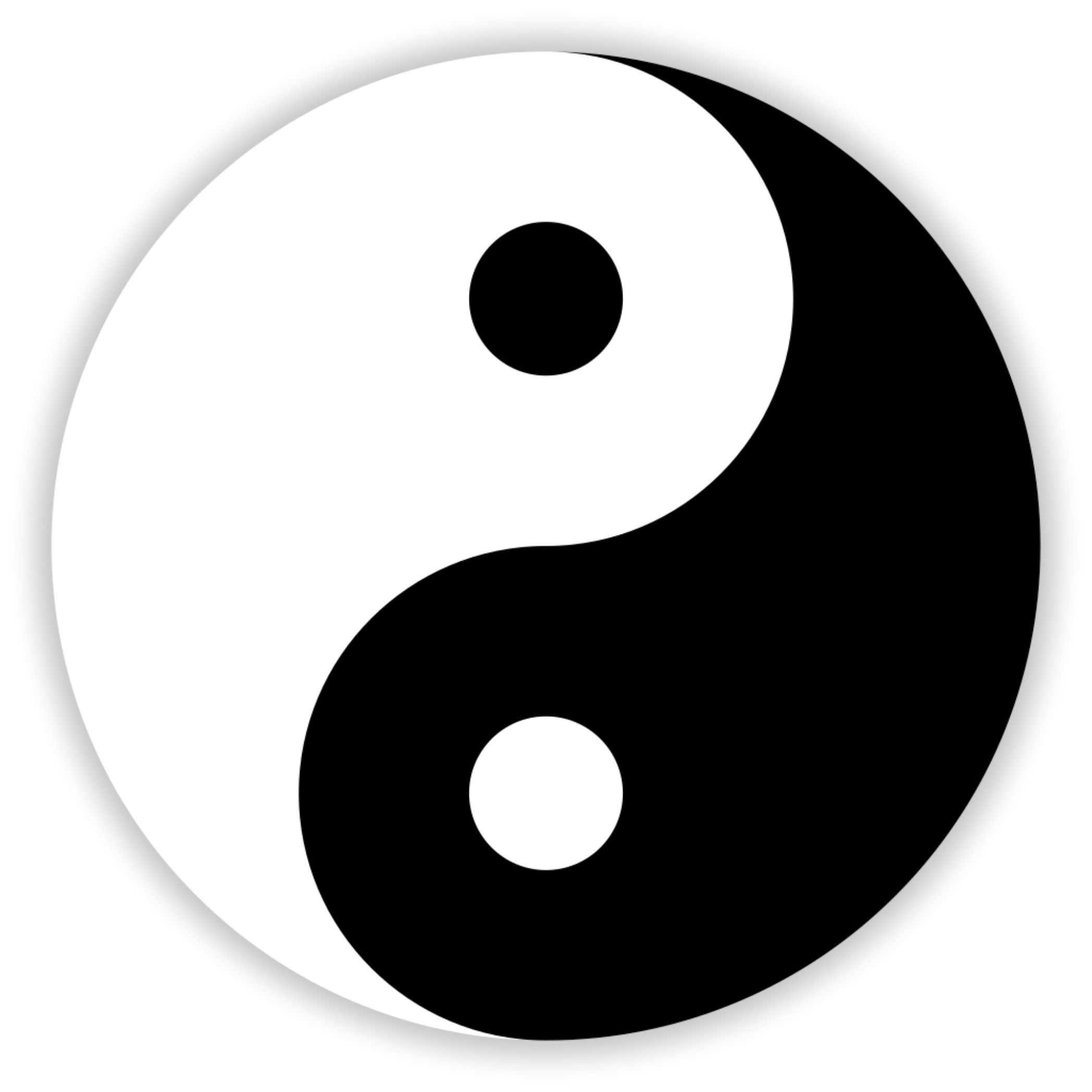
Much of Daoist philosophy is related to the opposing concepts of Yīn (陰 simplified 阴 lunar, feminine, passive, cool) and Yáng (陽 simplified 阳 solar, masculine, active, warm). The prototypical examples of Yin and Yan are the shady north side of a hill and its sunny south side. Yin and Yang are the two opposite but interacting forces that underly the harmony of the universe. They can be represented by the tàijítú (太極圖, utmost extreme symbol), one version of which is shown on the right. The small contrasting circles within in each half show how the opposites are complementary rather than antagonistic.

The first two lines of the Daodejing provides two parallel statements on the Dao and on its name. These lines thus concern the actual Dao and its abstract name, both of which cannot be fully understood by finite beings. Actual and abstract can be considered as one of the dualities composing Yin and Yang.

The first line uses the character 道 dao in three ways: first as a noun describing a way or path, second as a verb in the sense of speaking (telling how to follow a path), and third to express the concept of an eternal Dao underlying all things. The second line acts in the same way for the character 名 (name). All languages can use the same word as noun and verb, e.g. “change” in English, but this is more common in Chinese.

In later versions of the Daodejing the character 恆 (constant) was replaced by 常 (with a similar meaning), probably because the former was the name of the fifth emperor of the Han dynasty, Lui Heng (203-157 BCE), and therefore a taboo word.

The Dao is eternal or everlasting. However,

While everlasting seems apt, describing the Dao as unchanging does not fit. This is because Laozi’s Dao serves as the substance of the cosmos and fundamental source and basis of the things of the world. It is eternally transforming and dynamic. (Chen et al., 2020, p 47)

The following is a description of the Dao by Zhuangzi (莊子, Master Zhuang, Chuang-tzu in the Wade-Giles romanization) a Daoist philosopher who lived in the 4th Century BCE (Palmer et al. 1996, pp 50-51):

The great Tao has both reality and expression,
but it does nothing and has no form.
It can be passed on, but not received.
It can be obtained, but not seen.
It is rooted in its own self,
existing before Heaven and Earth were born, indeed for eternity.
It gives divinity to the spirits and to the gods.
It brought to life Heaven and Earth.
It was before the primal air, yet it cannot be called lofty;
it was below all space and direction, yet it cannot be called deep.
It comes before either Heaven or Earth, yet it cannot be called old.

Alan Watts (1975, pp 41-42) commented on the difficulty in describing the Dao:

Thus the Tao is the course, the flow, the drift, or the process of nature, and I call it the Watercourse Way because both Lao-tzu and Chuang-tzu use the flow of water as its principal metaphor. But it is of the essence of their philosophy that the Tao cannot be defined in words and is not an idea or concept. As Chuang-tzu says, “It may be attained but not seen,” or, in other words, felt but not conceived, intuited but not categorized, divined but not explained. In a similar way, air and water cannot be cut or clutched, and their flow ceases when they are enclosed. There is no way of putting a stream in a bucket or the wind in a bag. Verbal description and definition may be compared to the latitudinal and longitudinal nets which we visualize upon the earth and the heavens to define and enclose the positions of mountains and lakes, planets and stars. But earth and heaven are not cut by these imaginary strings. As Wittgenstein [Tractatus Logico-Philosophicus, 1922] said, “Laws, like the law of causation, etc., treat of the network and not of what the network describes.”

Chapter 32 of the Daodejing ends with the statement (translated by Pepper and Wang, 2021):

Dao in this world is like a stream in the valley
Flowing into a river,
into the sea


Being and Nothingness

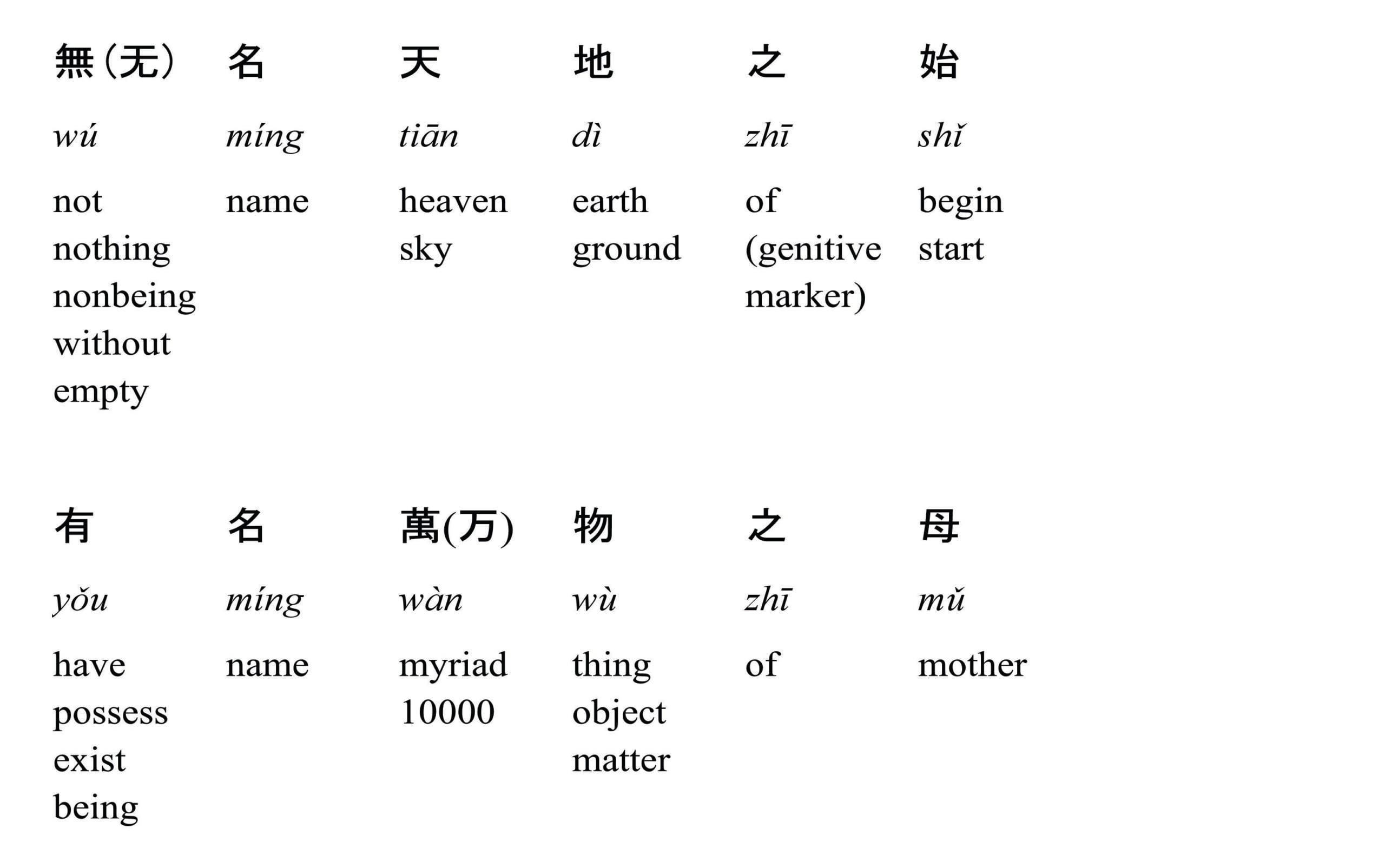
The second part of the first chapter presents a brief cosmogeny

These lines have been interpreted in two distinct ways. The first

reads wu 无 [non-presence, lacking, non-being] and you 有 [presence, having, being] as the subjects of statements, and name (名) as part of the predicate. The alternative reading takes wuming 无名 [without name, nameless] and youming 有名 [having name] as the subjects of the statements (Chen et al. 2020, pp 48-49).

Thus we could have

Nothingness is the name for the origin of heaven and earth
Being is the name for the mother of all things.

or

Nameless is the origin of heaven and earth
Named is the mother of all things.

Since Yin and Yang is basic to Laozi’s thinking, I have opted to use the first reading which stresses the dichotomy of being and non-being. Similar ideas are stated in Chapter 40 of the Daodejing:

天下萬物生於有,有生於無

All the things in the world are generated from you 有,
you 有 is generated from wu

There is a difference between 天地 (heaven and earth), which encompasses the whole cosmos, and 万物 (myriad things), which refers to the many different things within it. However, this distinction may not be necessary since some early sources used 万物 in both lines. (Huang, 2024, p 14)  

The dichotomy between you and wu (Hall & Ames, 1998) reflects a foundational issue in philosophy: the nature of Being. This goes back to some of the very earliest records of human thought. The creation hymn of the Hindu RgVeda (composed around 2000 BCE) states that at the beginning of time there was neither existence nor non-existence. The ancient Greek philosopher Parmenides (5th Century BCE) worried about “What is and what is not.” Shakespeare’s Hamlet considered “To be, or not to be, that is the question” and Jean-Paul Sartre compared L’être et le néant (Being and Nothingness).

The following is a comment by Zhuangzi (Palmer et al. 1996, p 15) on the origins of the universe:

There is the beginning; there is not as yet any beginning of the beginning; there is not as yet a beginning not to be a beginning of the beginning. There is what is, and there is what is not, and it is not easy to say whether what is not, is not; or whether what is, is.


The Mother of All Things

The fourth line of the first chapter proposes a feminine origin (母, mother) for all things. This idea is repeated in Chapter 6 which describes 玄牝 (xuán pìn, the mysterious female):

谷神不死,是謂玄牝。
玄牝之門,是謂天地根。
綿綿若存,用之不勤

The spirit of the valley does not die; it has been called the mysterious female
The gate of the mysterious female is called the root of heaven and earth.
It is continuous and uninterrupted; its functioning is inexhaustible.
(my translation)

Chapter 25 mentions the 天下母 (tiān xià mŭ, the mother of all under heaven):

有物混成,先天地生。
寂兮寥兮,独立不改,
周行而不殆,可以为天下母。
吾不知其名,字之曰道,强为之名曰

Which has been translated (Wu, 2016, p 57)

There was something undifferentiated and yet complete, born before Heaven and Earth,
Soundless and formless, independent and unchanging.
Revolving endlessly, it may be thought of as the Mother of all under Heaven.
I do not know its name; so I just call it Dao, and arbitrarily name it Great

Anderson (2021) has noted how the Daodejing fully recognizes the female nature of the Dao. Most of the world’s religions are androcentric: they ignore the divine feminine. At its beginning Daoism understoon that the world is based on interacting male ane female forces. And that creation comes from the female. 


From One to Many

The first chapter distinguishes between being and nothingness (yŏu 有 and wu 無 无). The 42nd chapter recounts the actual process of creation (translation by Wu, 2016):

道生一,一生二,
二生三,三生萬物。
萬物負陰而抱陽,
沖氣以為和。

Dao gives birth to One; One gives birth to Two;
Two gives birth to Three; Three gives birth to Ten Thousand things.
All things have Yin on their back and Yang in their embrace;
The Qi of the two converge and become harmony.

The idea of Yin on their back and Yang in their embrace refers to how we prefer to sit facing the sun with the shadow at our back.

The basic cosmogeny is that the primordial energy of the universe – (氣) – becomes differentiated into two opposing forces of yin and yang. These then interact to produce the myriad things of the world that exist in harmony (和).

The one-two-three progression probably just represents the evolution of the many things in the universe. However, Fischer (2023) also considers the possibility

that the “one, two, three” refer to physical energies (氣), Yin-Yang, and harmonized physical energies (和氣). That is: one, a semblance of a form emerges from formless-ness; two, the physical energy that constitutes that semblance is influenced by the Yin and Yang states that characterize all physical energies; three, once the semblance has morphed, chrysalis-like, into its final “harmonious” form, it has become a stable entity.


Mystery and Manifestation

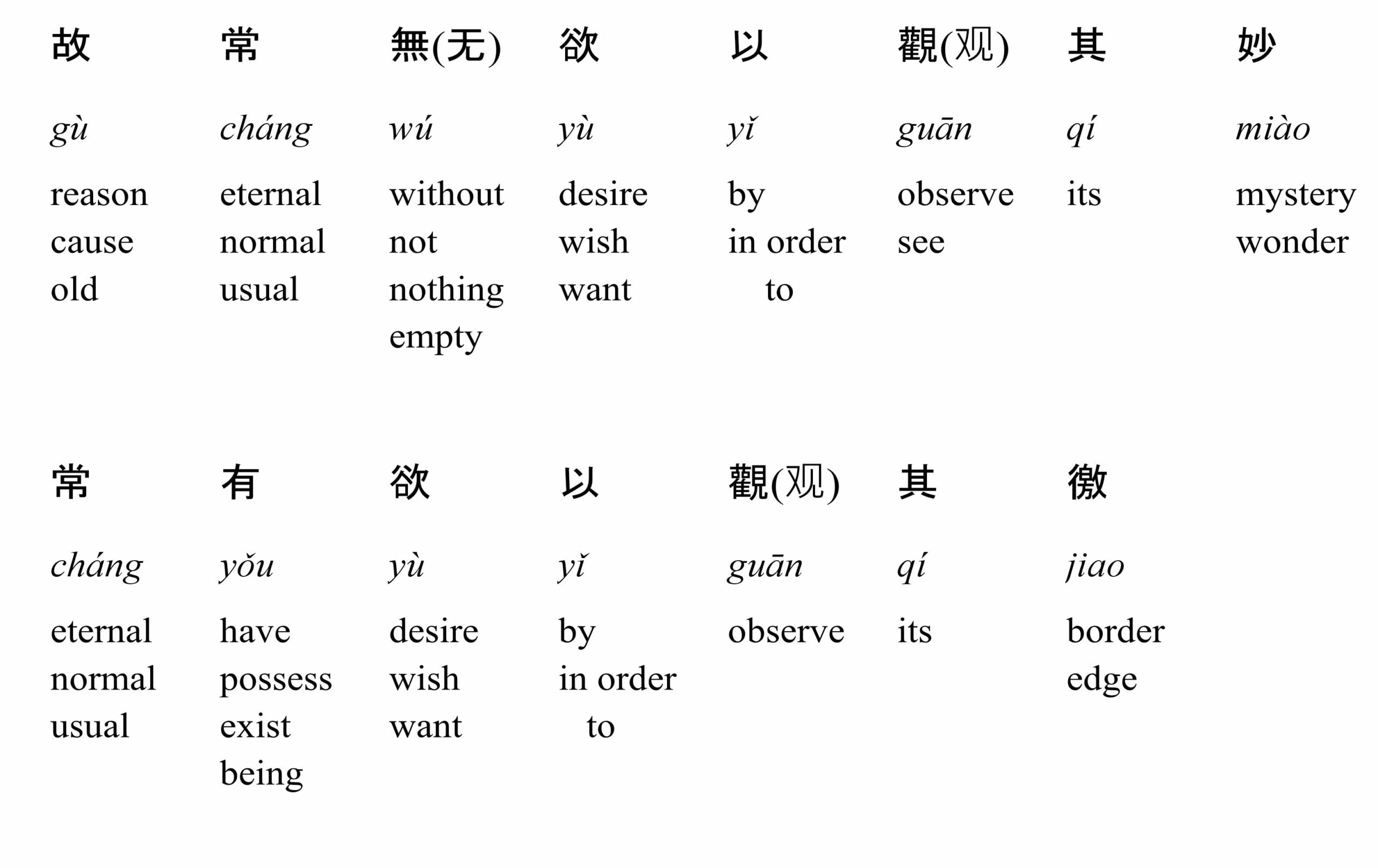
The third section of the first chapter has led to several different translations.

Some editions (e.g. Huang, 2024) substitute 眇 (miǎo, tiny, minute) for 妙 and 噭 (jiao, pursue) for 徼. This leads to the idea of the development from minute origins toward the mature things of the present.

Another difficult is whether the character 欲 acts as a noun meaning “desire” or as an adverb casting the following parts of the sentences in the subjunctive as “may observe.” This would make無 and 有 the subjects of the sentences rather than modifiers of 欲. The Fischer translation quoted at the beginning of this essay follows this approach, as do the versions of Yu (2003), Chen et al. (2020) and Wu (2016).

Translators have more commonly considered that these two sentences compare what happens with or without desire (e.g., Addiss & Lombardo;1993; Leguin & Seaton, 1998; Lin, 2020; Liu, 2024; Loy, 1985; Red Pine, 2004; Wilson 2012). This approach fits with the Buddhist idea that one can find release from suffering by relinquishing desire. As pointed out by Watts (1975, p 96), however, the idea that virtue comes from an absence of desire is paradoxical:

Trying to get rid of desire is, surely, desiring not to desire.

If we follow this approach to the translation, we find that Laozi makes no moral judgement about desire: he just points out the differences between having it or not. Both are possible and both serve a purpose. Relinquishing desire can allow the mind a mystical vision of the origin of everything. Exercising desire allows us to understand the nature of the things of the world:

Free from desire, you can realize the mystery;
Following desire, you can see the manifestations.

However, if the chapter is to be consistent, it is probably best to keep to the duality of wu (无) and you 有:

Therefore in nothingness you may see the mystery;
In being you may see the manifestations.

Nevertheless, the different translations are not that distinct. A person can see the mystery by attuning his or her mind to nothingness. One way of doing this might be to relinquish desire.


Yin and Yang

The fourth section of the chapter tells us these two states are just different aspects of the universe, part of the union of interacting opposites that makes up the concept of Yin-Yang:


Whether these lines refer to (者) the concepts of being and nothingness or to the states of desire and non-desire depends on how the previous lines were translated. I have opted for the former.

These two are but different aspects of the same idea
This is the mystery of mysteries


The Gateway

The final section of the chapter proclaims the mystery of the Dao:

Laozi uses two words for mystery:

玄 (xuán) is dark, mysterious, unseen, withdrawn, deep. But 妙 (miào) is lighter, a wonderful mystery. (Pepper & Wang, 2021, p 17)

We can stress the “darkness,” as in Denecke (2010, p 223)

Where the dark is darker than darkness, that’s the Gateway of Subtleties.

Or simply stay with “mystery”

Mystery of mystery: the gateway to many wonders


Relations to Western Pantheism

The concept of the Dao has many similarities to Western pantheism, particularly to that proposed by Spinoza (Stamatov, 2019, 2025). Fu (1973, p 390) remarks

Both philosophers think that the ultimate way of freeing oneself from human bondage and attaining total emancipation is to have an ontological insight (Lao Tzu) into or intellectual intuition (Spinoza) of the as-it-is-ness of the world and man.

One significant difference is that Spinoza clearly names the principle underlying the universe as God.

Samuel Taylor Coleridge (1772-1834) was particularly intrigued by the writings of the Domingo Fernandez Navarrete (1610-1689), a Dominican friar who had spent many years in China and had described the principles of Daoism for Western readers (Murray, 2020). Coleridge and his close colleague William Wordsworth (1770-1850) were responsible for initiating the movement of Romanticism in English literature Wordsworth’s Lines Composed a Few Miles above Tintern Abbey, On Revisiting the Banks of the Wye during a Tour. July 13, 1798 describes a romantic pantheism that is very similar to the Dao of Laozi:

And I have felt
A presence that disturbs me with the joy
Of elevated thoughts; a sense sublime
Of something far more deeply interfused,
Whose dwelling is the light of setting suns,
And the round ocean and the living air,
And the blue sky, and in the mind of man:
A motion and a spirit, that impels
All thinking things, all objects of all thought,
And rolls through all things. 

Envoi

We can conclude by putting together the complete chapter:

The way that can be spoken of is not the eternal Way
The name that can be named is not the eternal Name.

Nothingness is the name for the origin of heaven and earth
Being is the name for the mother of all things.

Therefore through nothingness you can see the mystery;
Through being you can see the manifestations.

These two are but different aspects of the same idea
This is the mystery of mysteries

Mystery of mystery: the gateway to many wonders.

The chapter is our introduction to the Dao. The character 道 is composed of two radicals. In the upper right is a representation of the head 首(shŏu), and in the left and below is a radical denoting walking (chuò). The combination perhaps represents “to go ahead.” As such it depicts the principle that underlies the universe: the way things should and do turn out.

The Dao has several meanings:

In some places the character “dao 道” refers to a metaphysical entity understood as ultimate true existence. In other places, it seems to refer to a type of rule or principle, often reflected in natural laws or patterns. In yet other locations, dao refers to standards, norms or exemplary models for human life. (Chen et al,2020, p 2),

Fu (1973) describes six dimensions of the Dao:

(i) reality – a metaphysical symbol of things as they are
(ii) origin – the source of all there is
(iii) principle – that whereby all things become what they are
(iv) function – the laws governing the processes of change
(v) virtue – that which completes the being of each and every individual
(vi) technique – the way in which people are governed

The Dao in metaphysical terms should be considered in relation to time. As time passes, thing change. Our science indicates that such changes are not random but follow general rules. Most people also believe that these changes ultimately progress toward something: that the universe has some purpose and is in the process of becoming better. The Dao instantiates these two ideas. It is the overall principle leading the universe toward harmony. Human beings can live their lives best by attuning themselves to this movement.

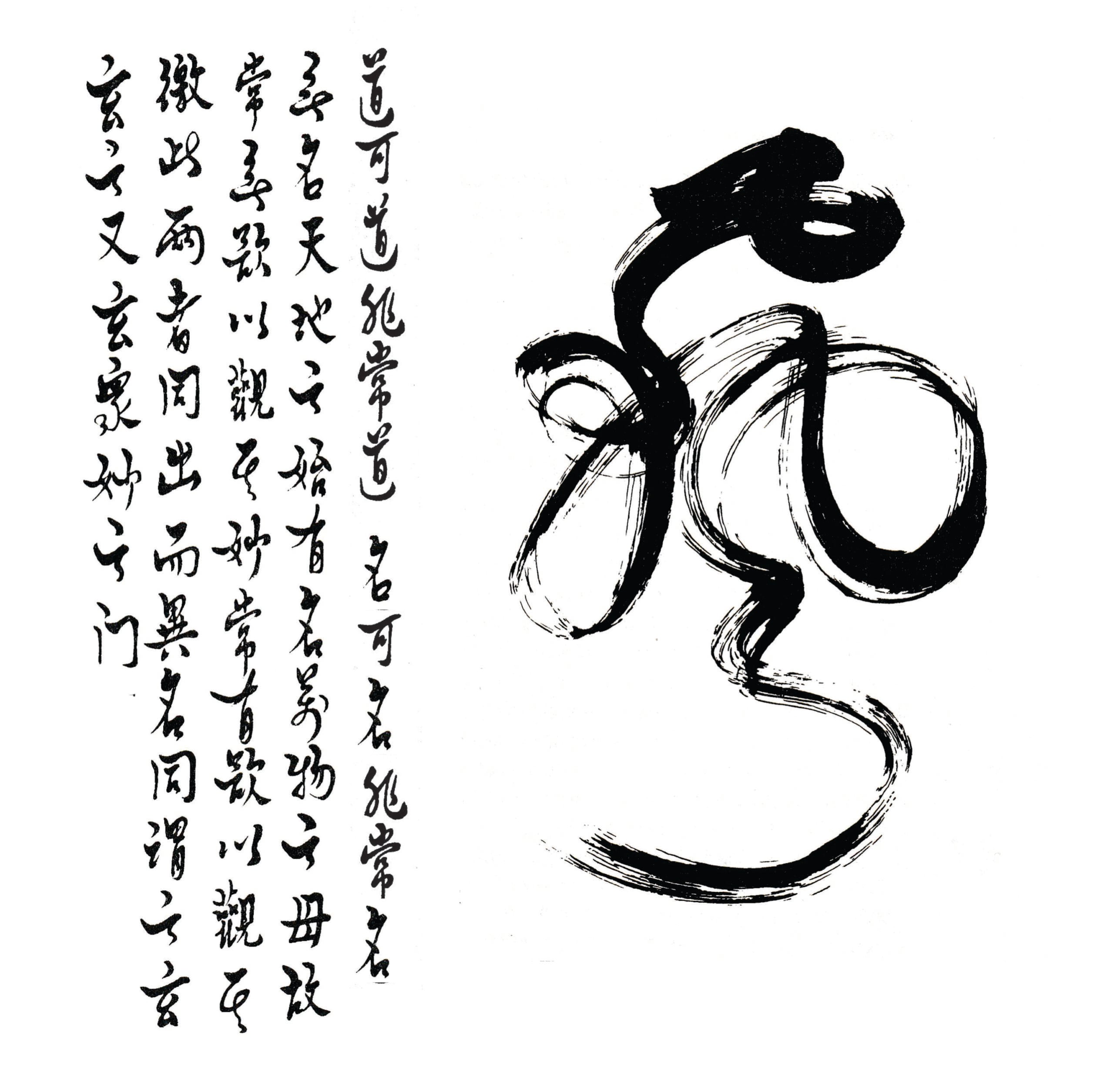
The final illustration shows on the right 道written in an ecstatic cursive script by Al Chung-liang Huang for Alan Watt’s book on Tao: The Watercourse Way (1975). The fluidity of the calligraphy fits with the idea of water finding its way. On the left is shown the first chapter of the Daodejing as created by Lee Chi-Chang for the same book:


References

Addiss, S., & Lombardo, S. (1993). Tao te ching. Hackett.

Anderson, R. (2021). The Divine Feminine: Tao Te Ching. Inner Traditions.

Chan, A. K. L. (2018). The Daodejing and its tradition. In Kohn, L. (Ed.) Daoism Handbook (Volume 14 of Handbook of Orietnal Studies) (pp 1-29). Brill.

Chan, A. K. L. (2025). Laozi. The Stanford Encyclopedia of Philosophy.

Chen, G., D’Ambrosio, P., & Xiao, O. (2020). The annotated critical Laozi: with contemporary explication and traditional commentary. Brill.

Denecke, W. (2011). The race for precedence:  polemics and the vacuum of traditions in Laozi. In The dynamics of Masters literature: early Chinese thought from Confucius to Han Feizi. (pp 207-230). Harvard University Asia Center.

Fischer, P. (2023). The annotated Laozi: a new translation of the Daodejing. State University of New York at Albany.

Fu, C. W.-H. (1973). Lao Tzu’s conception of Tao. Inquiry, 16(1–4), 367–394.

Hall, D., Ames, R. (1998). You–wu. The Routledge Encyclopedia of Philosophy. Taylor & Francis. (Retrieved 15 Nov. 2025)

Huang, J. H., (2024). The Dao De Jing: Laozi’s book of life: a new translation from the ancient Chinese. Mariner.

Le Guin, U. K., & Seaton, J. P. (1998). Tao te ching: a book about the way and the power of the way. Shambhala.

Lin, P. J. (1977, open access 2020). A Translation of Lao-tzu’s Tao Te Ching and Wang Pi’s Commentary. (Volume 30 in University of Michigan Chinese Studies). University of Michigan.

Liu, K. (2024). Laozi’s Dao de jing: a new interpretation for a transformative time. Scribner.

Loy, D. (1985). Chapter One of the Tao Tê Ching: a ‘new’ interpretation. Religious Studies, 21(3), 369–379.

Murray, C. (2020). Coleridge’s Daoism? Joseph Needham, Dominican Sinology, and Romantic Pantheism. The Wordsworth Circle, 51(2), 205–220.

Palmer, M., Breuilly, E., Ming, C. W., & Ramsay, J. (1996). The book of Chuang Tzu. Arkana (reprinted by Penguin 2006)

Pepper, J.& Wang, X. H. (2021). Dao de jing in clear English including a step-by-step translation. Imagin8 Press.

Red Pine (1996, revised 2004), Lao-Tzu’s Taoteching with selected commentaries from the past 2000 years. Copper Canyon Press.

Stamatov, A. (2019). Spinoza and Laozi: God and Dao.

Stamatov, A. (2025). Dao in world philosophy: an experimental approach. In A. Stamatov (Ed.) Dialogues with classical Chinese philosophy (pp. 192–204). Routledge.

Watts, A. (1975) Tao: the watercourse way. Pantheon Books.

Wilson, W. S. (2012). Tao te ching: an all-new translation. Shambhala.

Wu, C. Q. (2016). Thus Spoke Laozi: A New Translation with Commentaries of Daodejing. University of Hawaii.

Yu, A. C. (2003). Reading the “Daodejing”: ethics and politics of the rhetoric. Chinese literature: essays, articles, reviews (CLEAR), 25, 165-187


Searching for the Dao

This post presents some ideas about the Dào (“Way”) as described in the Dàodéjīng (“Book of the Way and its Virtue”), that legend claims was composed by Lǎozī in the 5th Century BCE. The Dào cannot be explained in words. But that has never stopped anyone from writing about it.

An Incident at Hangu Pass

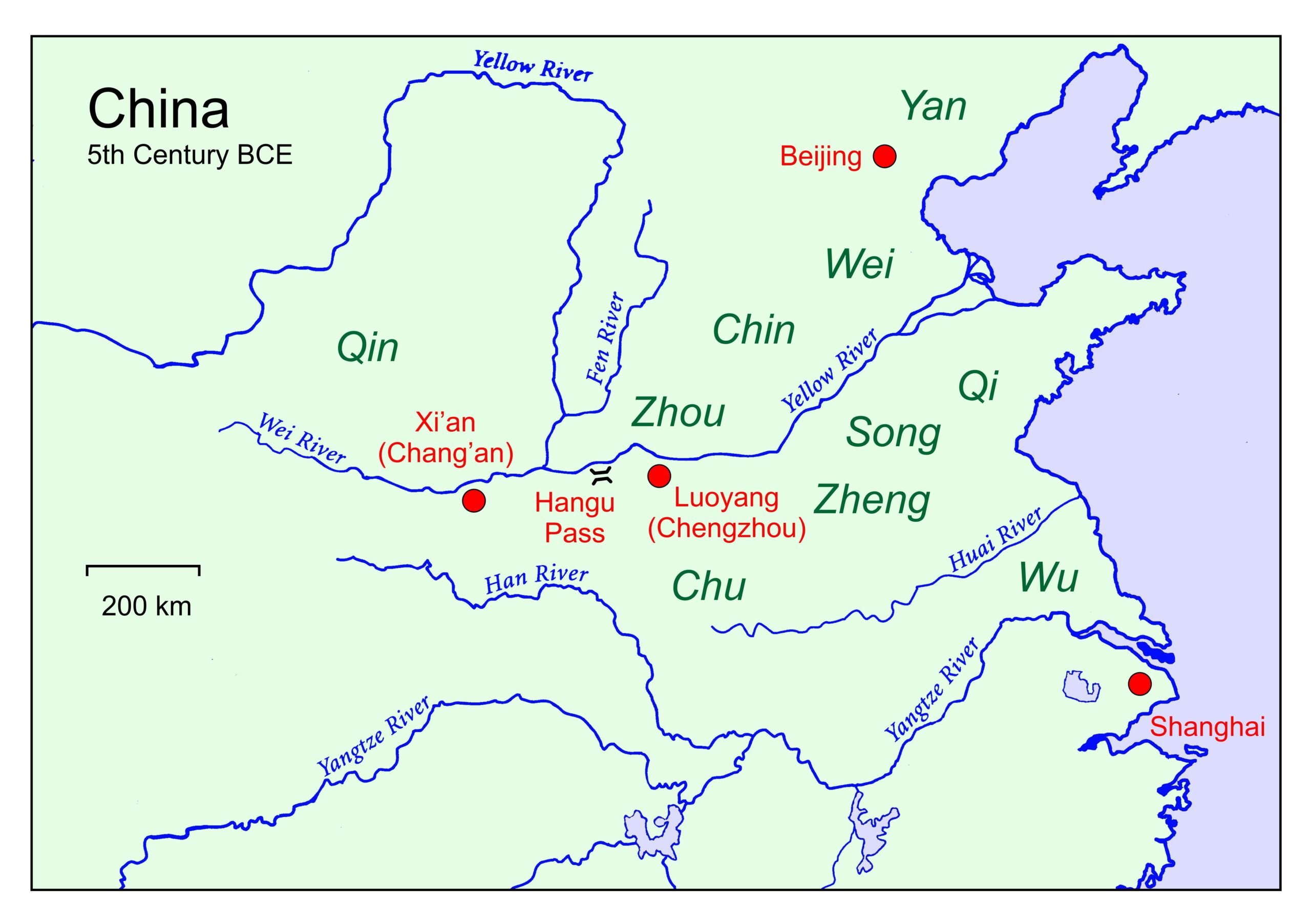
No one is sure of the season or even the year. It was probably at the end of the Spring and Autumn Period (770-476 BCE), and it would have been appropriate if it were autumn. An old man riding on a water buffalo, together with a young servant, requested passage to the west through the frontier gate at Hangu. They were leaving the violence and corruption of the Kingdom of the Eastern Zhou, which was slowly dissolving into anarchy, a time that later historians called the Warring States Period (475-221 BCE).

Yĭnxĭ, the head guardsman, realized that the old man was of some importance. In answer to his questions, the old man confirmed that he had been the Royal Archivist at the court of Zhou. He had resigned his position, and was now on his way to the mountains to find peace. Yĭnxĭ requested that the old man not leave without providing him with a summary of his wisdom. The scholar obliged and wrote out a summary of all that he considered important. And then he departed, never to be heard of again.

The writings that he left with Yĭnxĭ became known as the Dàodéjīng – the “Book of the Way and its Virtue” (Tao Te Ching in the old Wade-Giles system of romanization), containing about 5000 characters in 81 brief chapters. The first section of the book (chapters 1-37) dealt with the Dào (“way”), and the second section with (“virtue”). The author became known as Lǎozī – the “Old Master” (Lao Tzu in Wade-Giles). Sometimes the book itself is also referred to as Lǎozī.

I have told the story as best I can. There are several legends about what happened, and I am not sure which are true, or even whether Lǎozī was an actual person (Graham, 1998; Chan, 2000). The story does explain the nature of the book – an anthology of cryptic sayings and opinions on the nature of the universe and how people should behave.

The Eastern Zhou dynasty had its court in Chengzhou, now called Luoyáng. From there the king tried to maintain his rule over the surrounding feudal states. After many years of internecine warfare, the Qin state in the west ultimately prevailed over the others and founded the first Chinese Empire in 221 BCE. 

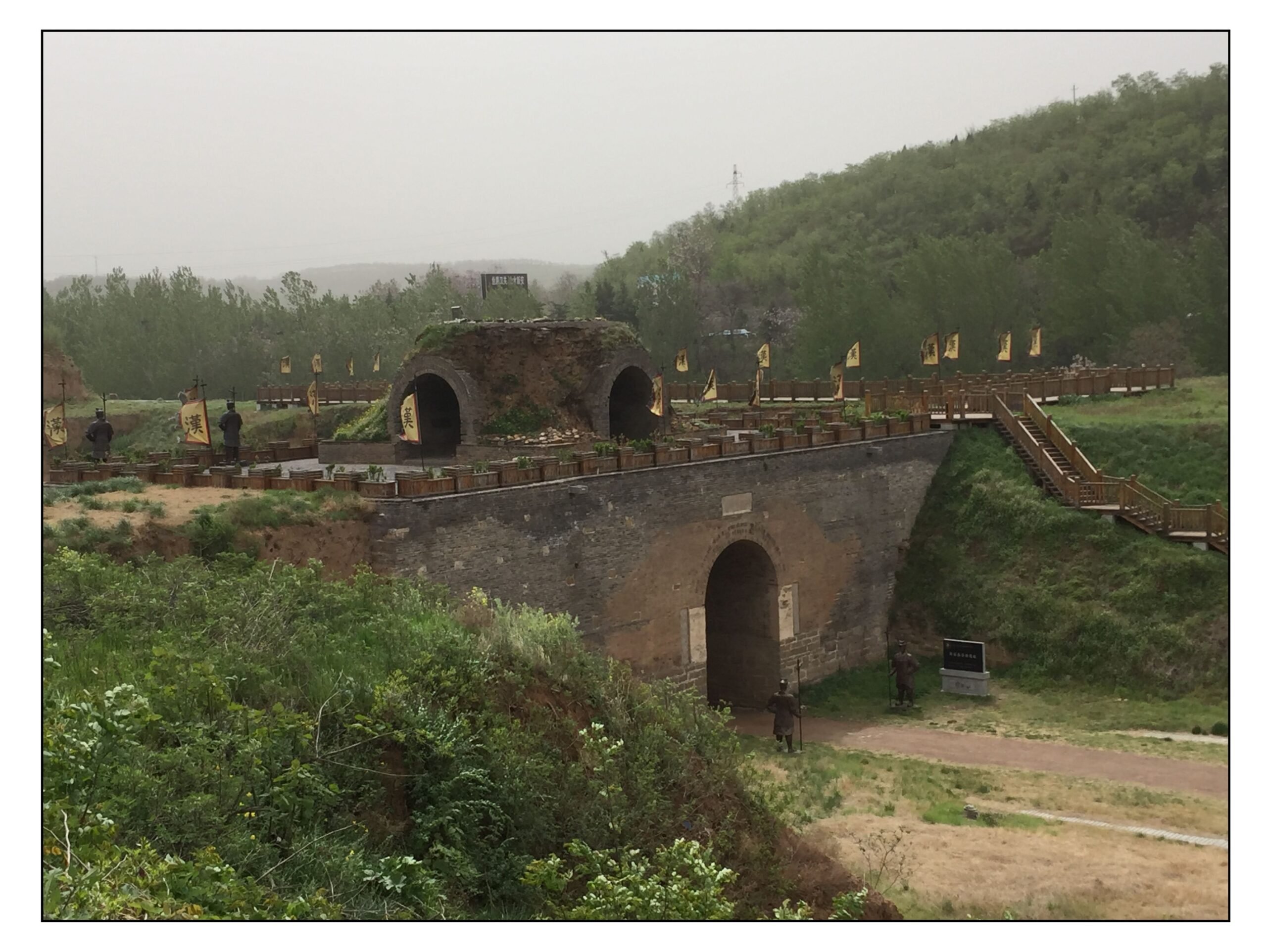
The frontier gate in the Hangu Pass has been preserved as the centerpiece of an archeological site in Xin’an:

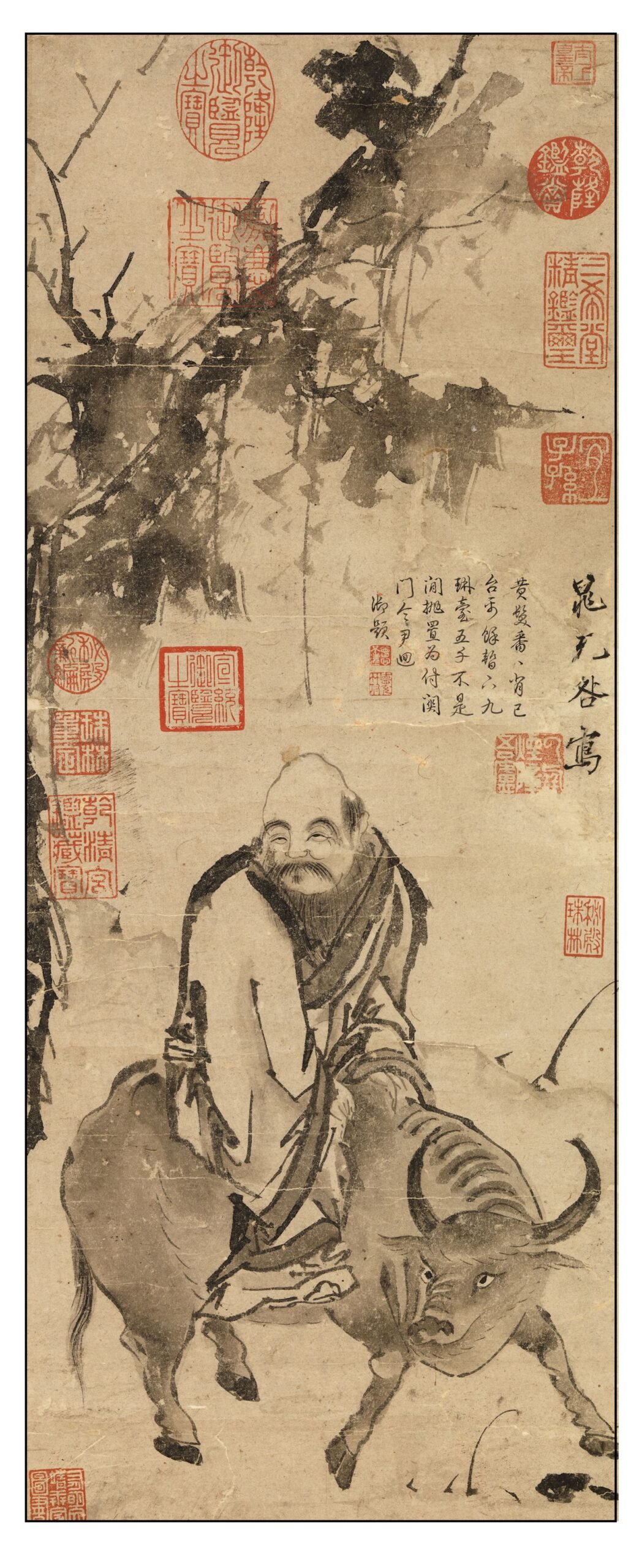
Lǎozī on his water buffalo was portrayed by Chao Buzhi in an ink painting (around 1100 CE) now in the Palace Museum in Taipei:

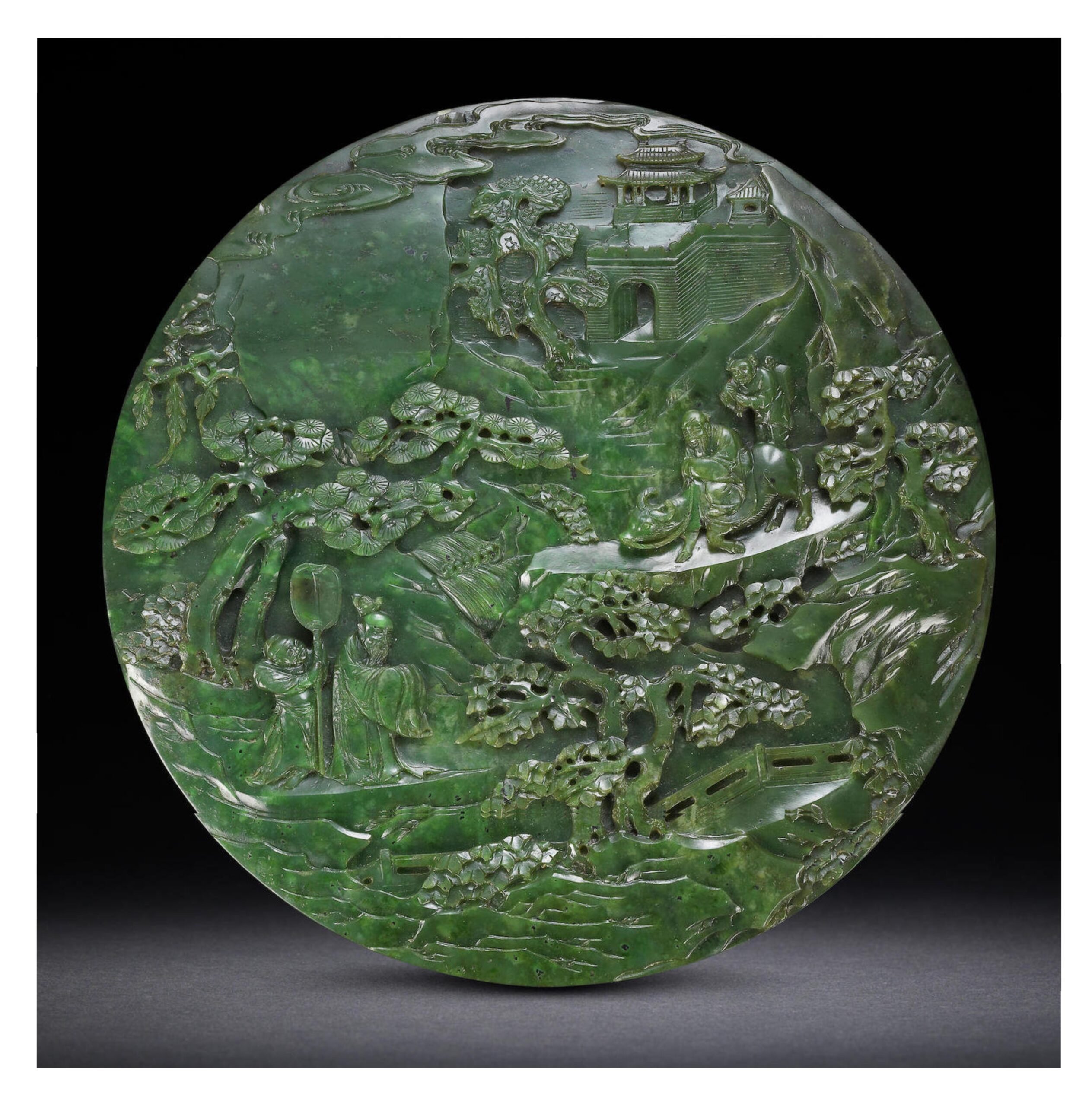
A carved jade circle from the early 19th Century represents the meeting between Lǎozī (right) and Yĭnxĭ (left) with the Hangu Gate at the top.


In 1938, Bertolt Brecht (1898-1956) felt definite empathy for Lǎozī. He was living in Denmark, an exile from his home in Germany, which was descending into the horrors of Nazism. He wrote a poem The Legend of How the Tao te Ching Came into Being on Lao Tse’s Journey into Exile, which was later published in Tales from the Calendar (1949, translated 1961). The custom’s officer asks the boy attending on Lǎozī what he has learned from the old man and receives the answer

… Daß das weiche Wasser in Bewegung
Mit der Zeit den harten Stein besiegt.
[That over time the gentlest water
Defeats the hardest stone]

This paraphrases some lines from chapter 78 of the Dàodéjīng

Brecht ends his poem with

Aber rühmen wir nicht nur den Weisen Dessen Name auf dem Buche prangt! Denn man muß dem Weisen seine Weisheit erst entreißen. Darum sei der Zöllner auch bedankt: Er hat sie ihm abverlangt.

[But we should not just praise the Sage
Whose name is displayed on the book.
Since we must retrieve from the Wise their wisdom,
The customs officer should also be thanked
For demanding it of him.]


The Nature of the Dào

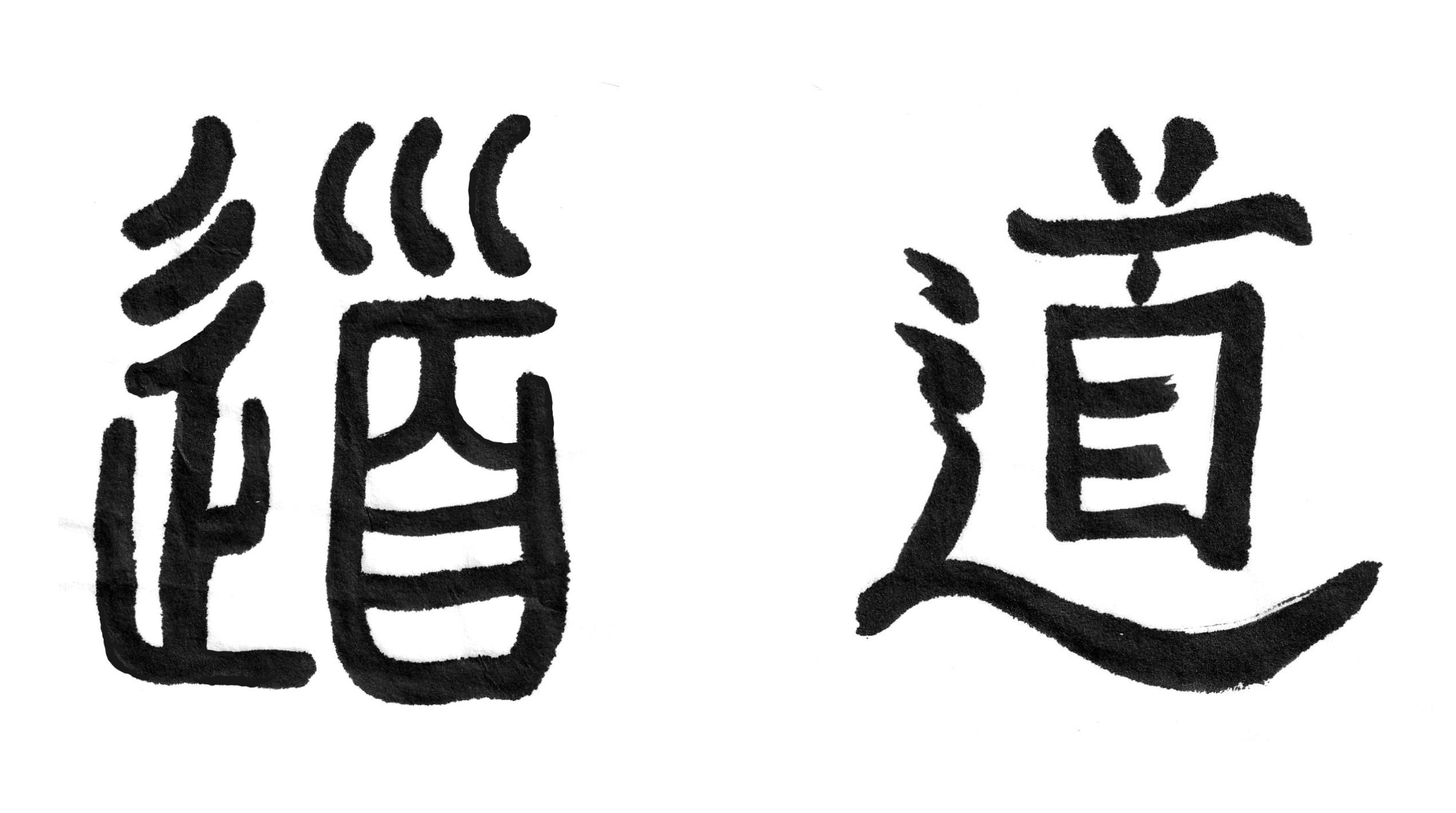
The main focus of Lǎozī ’s book is the Dào (pinyin, Tao in Wade-Gilles). The character is composed of the “walk/march” radical on the left (a leg taking a step forward) and the “head/chief” radical on the upper right (a head with hair or horns above a stylized face). The illustration below shows the Small Seal Script version (which would have been used at the beginning of the Qin dynasty) on the left, and the modern version on the right.

As a noun, Dào is most often translated as “way” or “path.” When it is used as a verb it generally means “say” or “explain.” This confluence of “way” and “word” also occurs in the Christian gospel of John (1:1, and 14:6), where the source of everything is called the word (logos) and salvation is obtained through the way (odos) (Ching, 1993, p. 88).

In Lǎozī ’s book, the Dào represents the underlying and enduring principle of the universe, something completely beyond human comprehension (Schwartz, 2000):

The Dào that can be explained is not the eternal Dào;
The Name that can be told is not the eternal Name.

The nameless is the source of heaven and earth,
The mother of everything which can be named.

Free from desire, you can realize its mystery;
Caught in desire, you see only its manifestations.

That these two aspects are both same and different
Is the paradox:

Mystery of mystery,
Gateway to wonder.

[Chapter 1, my translation. I am indebted to Mitchell (1988) for the opposition of “mystery” and “manifestations.” And to Pepper and Wang (2021) for their word-by-word analysis.]

Livia Kohn (2020, p 16) proposed:

One way to think of Dào is as two concentric circles, a smaller one in the center and a larger on the periphery. The dense, smaller circle in the center is Dào at the root of creative change— tight, concentrated, intense, and ultimately unknowable, ineffable, and beyond conscious or sensory human attainment… The larger circle at the periphery is Dào as it appears in the world, the patterned cycle of life and visible nature. Here we can see Dào as it comes and goes, rises and sets, rains and shines, lightens and darkens— the everchanging yet everlasting, cyclical alteration of natural patterns, life and death… This is Dào as natural transformations: the metamorphoses of insects, ways of bodily dissolution, and the inevitable entropy of life. This natural, tangible Dào is what people can study and learn to create harmony in the world; the cosmic, ineffable Dào, on the other hand, they need to open to by resting in clarity and stillness to find true authenticity in living.

Her description fits with that in Chapter 11 of the Dàodéjīng:

Thirty spokes converge on the wheel’s hub,
The emptiness of which allows the cart to be used.

And perhaps point to Eliot’s image in Burnt Norton (1941)

At the still point of the turning world. Neither flesh nor fleshless;
Neither from nor towards; at the still point, there the dance is,
But neither arrest nor movement.

As pointed out by Kenner (1959, pp 297-8))

This is the philosophers’ paradox of the Wheel, the exact center of which is precisely motionless, whatever the velocity of the rim.


Yīn and Yáng

The Dào is the source of all the different things in the word. The multiplicity of the world is described in Chapter 2 of the Dàodéjīng (translation by Ursula Le Guin, 1997):

For being and nonbeing
arise together;
hard and easy
compete with each other;
long and short
shape each other;
high and low
depend on each other;
note and voice
make music together;
before and after
follow each other.

The source of this multiplicity is proclaimed in Chapter 42 (my translation)

The Dào gives birth to one
One gives birth to two
Two give birth to three
Three gives birth to the myriad things of the world.

These carry Yīn on their back and Yáng in their arms
And together they achieve harmony

Yīn is water, earth, night, female; Yáng is fire, sky, day, male. Through much of the Dàodéjīng, Lǎozī is more partial to Yīn, the eternal female. Yīn and Yáng mix to form a third type of being and from this intermingling comes everything – Wànwù (ten thousand things). This process is depicted in the Tàijítú symbol: the outer circle represents the whole while the light and dark areas represent its opposing manifestations. The Tàijítú in turn becomes the center of the Bāguà (“eight symbols”) map, representing all the different elements of the world.

The Rule of

The character for (pinyin, Te in Wade-Giles) contains on the left the radical for “step/road.” The upper right of the character represents “truth” – something placed on a pedestal to be examined. The lower right is the radical for “heart.” The character thus embodies the idea of following the path of the true heart. is translated as “virtue” or “morality.” The illustration below shows the Small Seal Script version on the left and the modern version on the right.

According to Lǎozī, virtue is attained by behaving in harmony with the Dào. Exactly how one does this is not completely clear. When he wrote his book, Lǎozī had decided that he needed to retire from the world, and much of his thought espouses the concept of wéiwúwéi – “acting without acting.” He urged leaders not to interfere with the lives of their people and not to overburden them with taxes. He urged generals to exercise restraint and patience.

Acting in harmony with the Dào means doing things for the good of all rather than the benefit of one. Occasionally Lǎozī does recommend particular virtues. The following is from Chapter 67 of the Dàodéjīng:

I have three treasures
that I hold and protect:
first is compassion,
second is austerity
third is reluctance to excel.

Because I am kind I can be valiant,
Because I am frugal I can be generous
Because I am humble I can be a leader.

[My translation owes much to Red Pine (2004), from whom I took the names of the treasures. Other expressions derive from Pepper and Wang (2021).]

The Religion of Dàoism

In the 2nd Century CE, Zhāng Dàolíng was visited by the spirit of Lǎozī, and proclaimed himself the first “Celestial Master” of the Dào. (Ching, 1993; Hendrichke, 2000, Kohn 2020; Robinet, 1992; Wong, 1997). Dàoism became an organized religion. Lǎozī was deified. Various other sages and believers were raised to the rank of “Immortals.” The descendants of Zhang Dàoling have continued to lead the religion to the present day. Dàoism as a religion provided its adherents with rituals, prayers, scriptures, talismans, and divination. Some of the “austerity’ of Lǎozī was perhaps lost in the proliferating ceremonies.

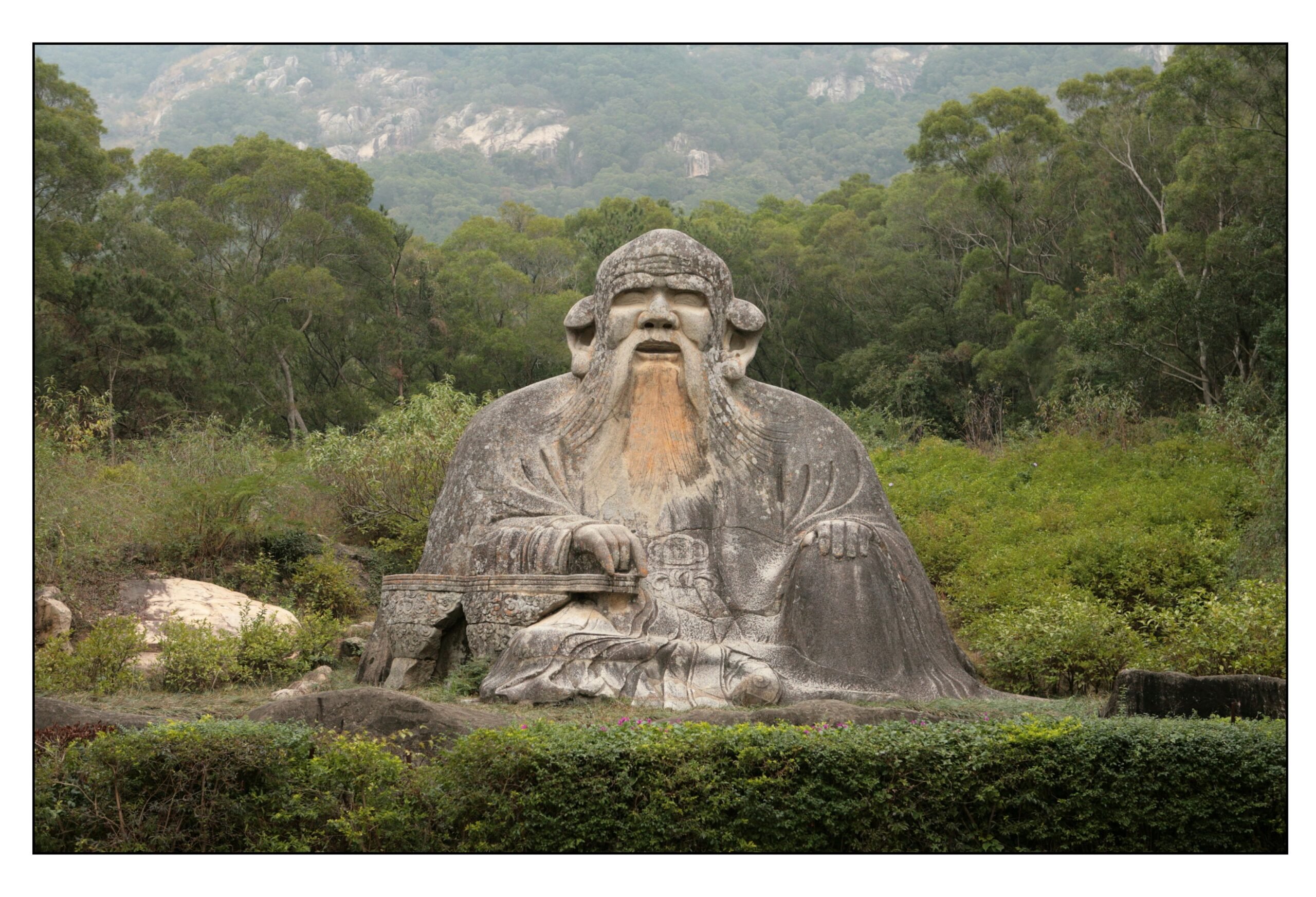
Dàoism was immensely popular. Temples sprang up everywhere. Dàoism was particularly attracted to the mountains, perhaps because this is where Lǎozī attained his immortality after leaving through Hangu Pass. Statues of Lǎozī and the immortals abound. The following is a large statue of Lǎozī created during the Song Dynasty (960-1279). It is located in the Qingyuan Mountain Park near Quanzhou city in Southern China.

The Art of Dàoism

Much of the art associated with Dàoism concerns the activities of the Immortals (Little, 2000; Little & Eichman, 2000). However, during the Yuan Dynasty (1271-1368) when the Mongols controlled China and ruled an Empire that spread as far west as Europe, several artists evolved a style of landscape painting that attempted to portray the simple power of nature (Barnhart, 1983; Cahill, 1976; Scott, 2006).


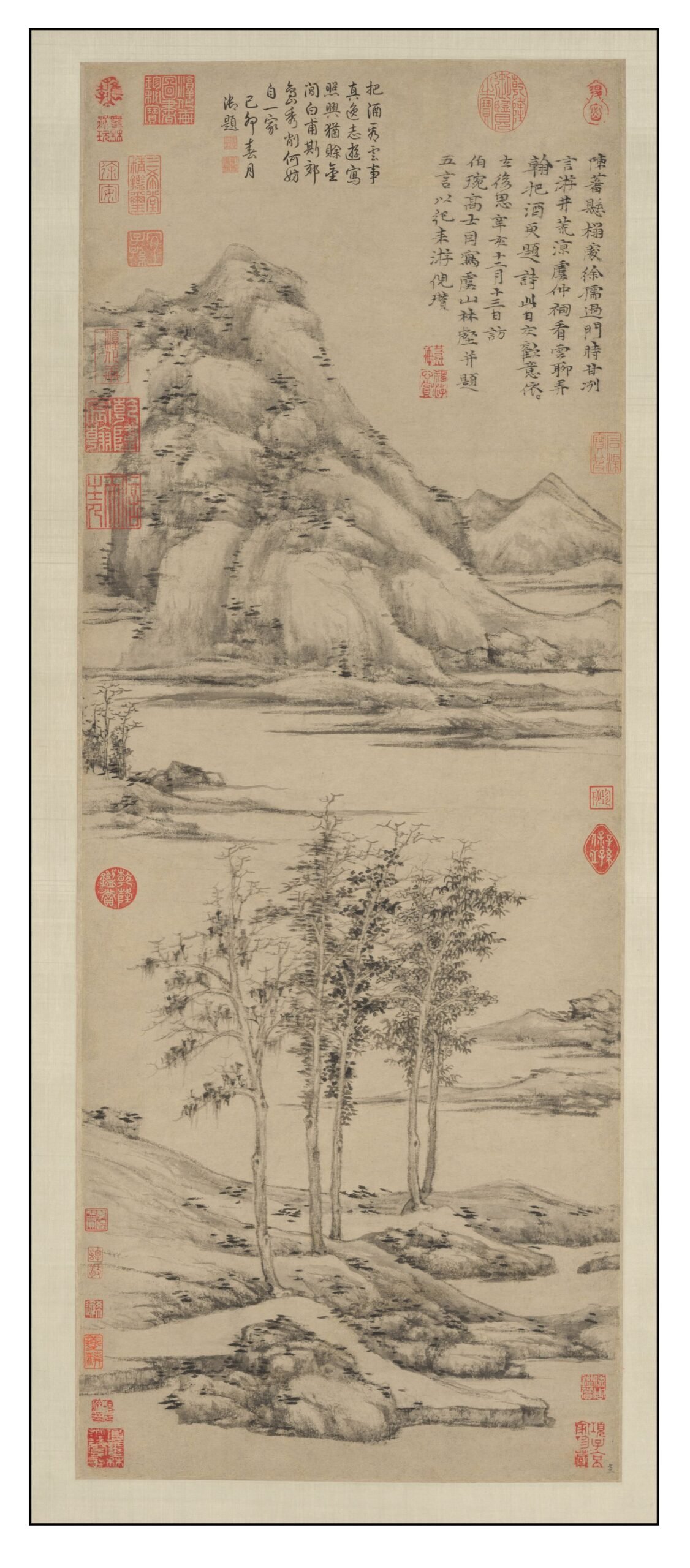
Probably the most famous of these painters was Ní Zàn (1301-1374), an aristocrat who gave up his worldly goods and retired from public life to live as an ascetic. One of his last paintings, now in New York’s Metropolitan Museum of Art, is entitled Woods and Valleys of Mount Yu (1372).

The poem appended to the top of the painting identifies where it was created and concludes:

We watch the clouds and apply our paint;
We drink wine and write poems.
The joyous feelings of this day
Will linger long after we have parted.

The painting portrays the stillness of the water in the lake and the power of the mountains on the further shore. These seem to embody the eternal forces of Yīn and Yáng. In the foreground are a few of the ten thousand things that make up our particular world. The most powerful part of the painting is that which is not painted – the water representing the force of Yīn.

The spirit at the center of all is called the dark female,
Gateway of the foundations of heaven and earth,
Which lasts unbroken and forever: use it.
[Dàodéjīng, Chapter 6, my translation]

Final Thoughts

Most people believe that the universe is governed by rules. Many believe that such rules are purposeful and that the universe is evolving toward some goal. We are a hopeful species and we like to think of this process as benevolent rather than blind. Many of our religions urge us to fit our individual intentions to this more general goal. Of all this we are unsure. But there is something behind it all:

Something there is, whose veiled creation was
Before the earth or sky began to be;
So silent, so aloof and so alone,
It changes not, nor fails, but touches all:
Conceive it as the mother of the world.
I do not know its name;
A name for it is “Way.”
[Dàodéjīng, Chapter 25, Blakney (1955) translation]


Some Translations of the Dàodéjīng (in order of publication)

Julien, S. (1842). Le Livre de la Voie et de la Vertu. Imprimerie Royale

Chalmers, J. (1868). The Speculations on Metaphysics, Polity, and Morality of the “Old Philosopher” Lau-tsze. Trübner & Co.

Legge, J. (1891). The Tao Teh King, In Sacred Books of the East, Vol. XXXIX. Oxford University Press.

https://archive.org/details/wg939/page/n3/mode/2up

Waley, A. (1936). The way and its power: a study of the Tao tê ching and its place in Chinese thought. George Allen & Unwin.

Blakney, R. B. (1955). The way of life. A new translation of the Tao tê ching, New American Library.

Feng, G., & English, J. (1972). Tao te ching. Vintage Books. Third edition (2011) has introduction by J. Needleman and acknowledges T. Lippe as co-author.

Mitchell, S. (1988). Tao te ching. Harper & Row.

Addiss, S., & Lombardo, S. (1993). Tao te ching. Hackett.

Red Pine (1996, revised 2004), Lao-Tzu’s Taoteching with selected commentaries from the past 2000 years. Copper Canyon Press.

Le Guin, U. K., & Seaton, J. P. (1998). Tao te ching: a book about the way and the power of the way. Shambhala.

Star, J. (2001). Tao te ching: the definitive edition. Jeremy P Tarcher/Putnam.

Lin, D. (2015). Tao te ching: Annotated and explained. SkyLight Paths.

Minford, J. (2018). Tao te ching (Daodejing): The Tao and the power. Viking

Pepper, J.& Wang, X. H. (2021). Dao de jing in clear English including a step-by-step translation. Imagin8 Press.


References

Barnhart, R., & Wang, C. C. (1983). Along the border of heaven: Sung and Yüan paintings from the C.C. Wang family collection. Metropolitan Museum of Art.

Brecht, B. (1949/1961). Tales from the calendar; the prose translated by Yvonne Kapp; the verse translated by Michael Hamburger. Methuen.

Cahill, J. (1976). Hills beyond a river: Chinese painting of the Yüan Dynasty, 1279-1368. Weatherhill.

Chan, A. K. L. (2000). The Daodejing and its tradition. In L. Kohn (Ed.) Daoism handbook. (pp.1-29).  Brill

Ching, J. (1993). Chinese religions. Macmillan.

Eliot, T. S. (1941). Burnt Norton. Faber and Faber.

Graham, A.C. (1998). The origins of the legend of Lao Tan. In Kohn, L., & LaFargue, M. (eds). Lao-tzu and the Tao-te-ching. (pp 23-40). State University of New York Press.

Hendrichke, B. (2000). Early Daoist movements. In Kohn, L. (2000). Daoism handbook. (pp. 134-164). Brill.

Kenner, H. (1959). The invisible poet: T.S. Eliot. McDowell, Obolensky.

Kohn, L., & LaFargue, M. (1998). Lao-tzu and the Tao-te-ching. State University of New York Press.

Kohn, L. (2000). Daoism handbook. Brill.

Kohn, L. (2020). Daoism: a contemporary philosophical investigation. Routledge.

Little, S. (2000). Daoist Art. In L. Kohn (Ed.) Daoism handbook. (pp.709-746). Brill.

Little, S., & Eichman, S. (2000). Taoism and the arts of China. The Art Institute of Chicago

Robinet, I., (1992, translated by Brooks, P. (1997). Taoism: growth of a religion. Stanford University Press.

Schwartz, B. (1998). The Thought of the Tao te ching. In Kohn, L., & LaFargue, M. (eds.). Lao-tzu and the Tao-te-ching. (pp. 189-210). State University of New York Press.

Scott, S. C. (2006). Sacred Earth: Daoism as a preserver of environment in Chinese landscape painting from the Song through the Qing Dynasties. East-West Connections: Review of Asian Studies, 6(1), 72-98. 

Wong, E. (1997). Taoism: an essential guide. Shambhala.