Wu Wei: Effortless Action

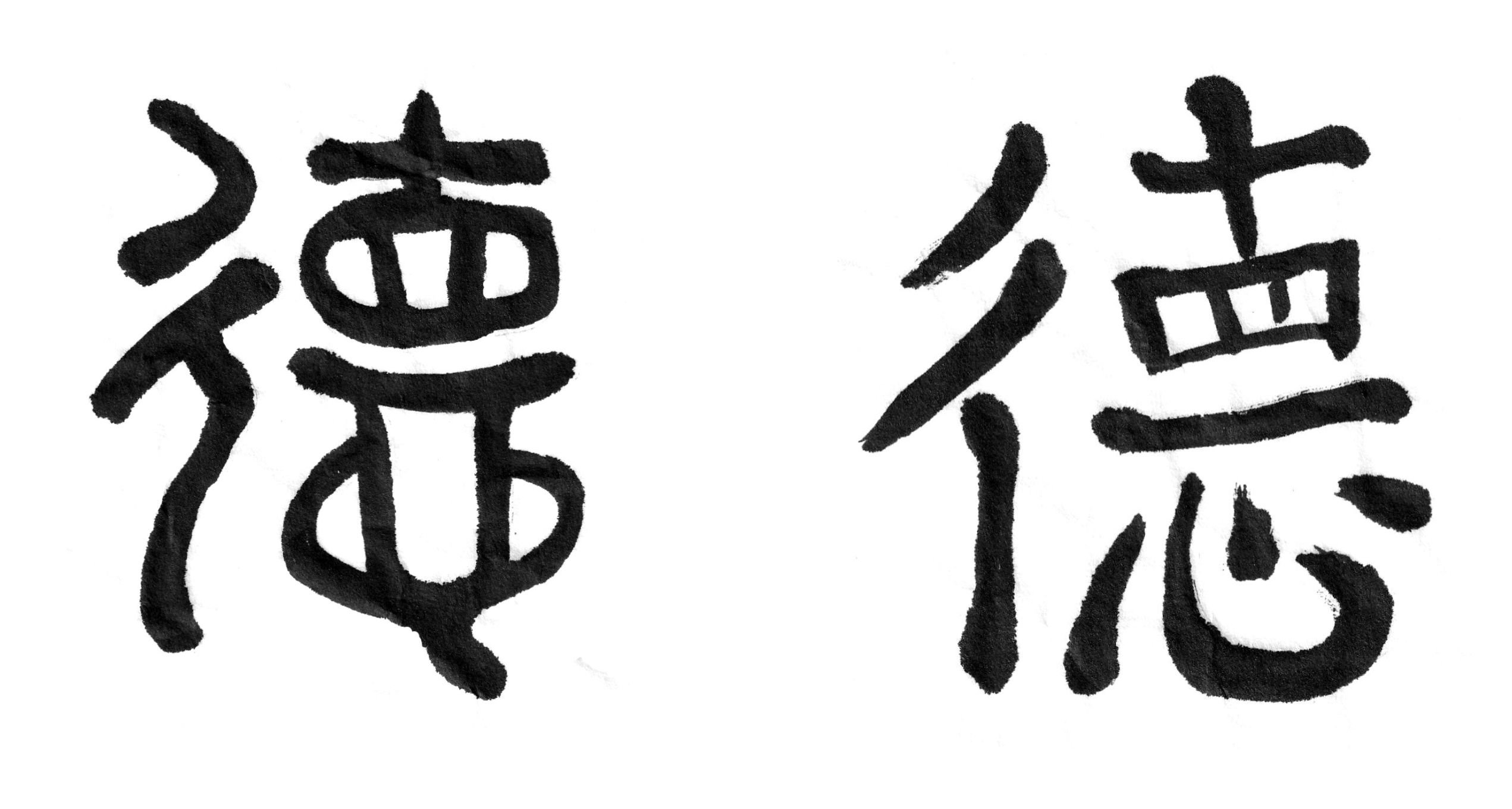
One of the central ideas in the Daodjing of Laozi is the idea of wu wei (無為, simplified 无为; wúwéi). This has been translated in many ways: “non-action,” “actionlessness,” “effortless action,” and “doing nothing.” The 37th chapter of the Daodjing considers wu wei an attribute of the eternal Dao. The 48th chapter promotes wu wei as a human virtue. The illustration shows wu wei in regular script (left) and in cursive (right).

Being True to Oneself

A foundational concept in Daoism is自然, zìrán. This word is composed of 自 (self, oneself, from, since) and 然 (right, correct, so, in this manner). Almost impossible to translate, the word has been variously rendered simply as “self-so” (Ziporyn, 2009) or more abstractly as “as-it-is-ness” (Fu, 1973, p 382). The meaning contains the idea of acting “naturally” or “spontaneously.” An underlying concept is “authenticity” – one’s action should be true to one’s nature.

Laozi uses the word in the ending to Chapter 25 of the Daodejing (with translation by Wu, 2016): 

人法地,地法天,天法道,道法自然

Man follows the ways of Earth;
Earth follows the ways of Heaven;
Heaven follows the ways of Dao;
Dao follows its own ways.

Several aspects of zìrán need consideration. First, the Dao acts through all things. As well as ordering the cosmos, the Dao acts through each individual object it contains. Human beings must ultimately follow their own zìrán.  Zhuang Zhou, commonly known as Zhuangzi (莊子), a Daoist philosopher from the 4th Century BCE, begins his writings with a description of all the different things in the universe from the mythological great Peng bird to the morning mushroom, and recommends that one must act “on the rectitude (正, zhèng) of Heaven and Earth” (Lynn, 2022, p 8). Guo Xiang (郭象, 265-312 CE) commented on this section of the Zhuangzi

“Heaven and earth” is just a blanket term used to indicate all beings. It is all individual beings that form the very substance of heaven and earth, and it is each being’s self-so [ziran] that aligns true to itself. “Self-so” [ziran] means what is so of itself [ziran], without being done by anyone or for any purpose. Thus, Peng’s ability to fly high and the sparrow’s ability to stay low, the great tree’s ability to last long and the mushroom’s ability to perish quickly, all these are done spontaneously, all are self-so [ziran] (Ziporyn, 2009, p 132.)

Second, the concept of zìrán does not mean that all things passively accept their lot in the universe. Misha Tadd (2019) argues that zìrán has as much to do with “authority” as with “authenticity.” We need to be true to our ideal selves: to seek what we should be rather than accept what we are.  

Third, the idea of acting “naturally” means acting in accord with the Dao. However, human beings do not need to return to the simple state of primitive societies to do so (Tadd, 2019, p 4). Although the idea of the “noble savage” was popular when the Daodejing was initially translated into Western languages, Laozi was not being nostalgic for a lost Eden; rather he was imagining a future utopia (Stamatov, 2023).   


Yet Nothing is Left Undone

How the Dao “follows its own ways” is described in the 37th chapter of the Daodejing. This is the final chapter in the section of the book that deals with the nature of the Dao

The commonly accepted version of the Daodejing is divided into two parts. The first 37 chapters are concerned with the Dao (way), and the next 44 with the nature of De (virtue). Some recently discovered early versions reverse the ordering of the two parts (Chan, 2025). However, for our purposes it is appropriate to follow the traditional order and to understand the nature of the Dao before we propose a way for human virtue.

The last chapter pf the first part states that the eternal Dao – the principle that governs the universe – exercises its power by means of wu wei. The following is the Chinese text of Chapter 37 together with a translation by Wu (2016) and calligraphy by Ken Wong:

道恆無為而無不為。
侯王若能守之,萬物將自化。
化而欲作,
吾將鎮之以無名之樸。
無名之樸,夫亦將不欲。
不欲以靜,天下將自定。

Dao in its eternity does nothing, yet nothing is not done.
If lords and kings can all abide by that, all things will change of themselves.
As they change, their desires start to grow;
I calm them down with the nameless pristine timber.
Calmed by the nameless pristine timber, they will have no more desire.
Desireless and calm, the world will correct its own course.
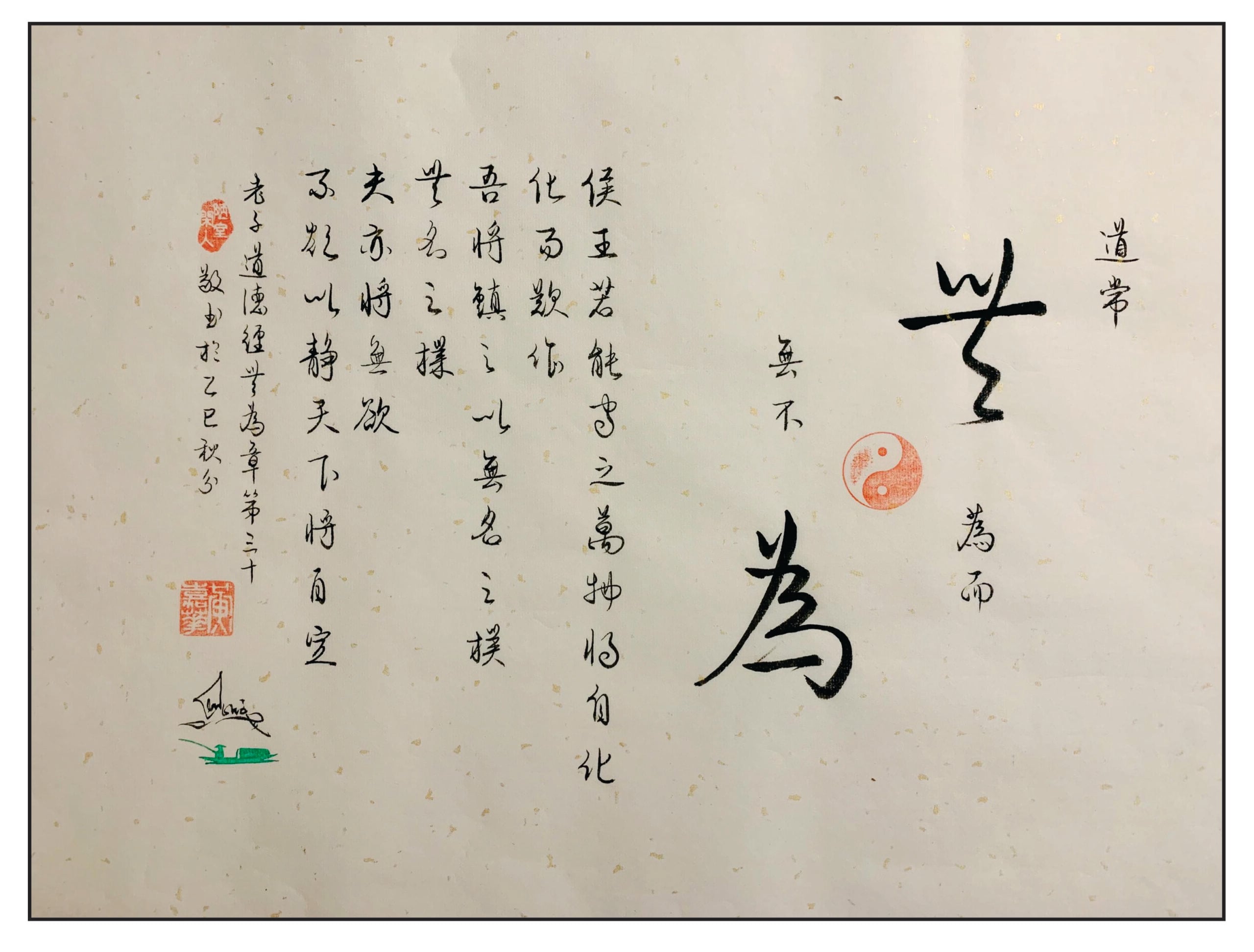
The phrase 無名之樸 is usually translated as “nameless simplicity” (e.g., Fischer, 2023). The character 樸 (), another version of which is 朴, generally means “simple.” However, it once meant “unworked wood” – hence the “nameless pristine timber” of Wu’s translation.  

The famous first line is shown below in a character-by-character translation:
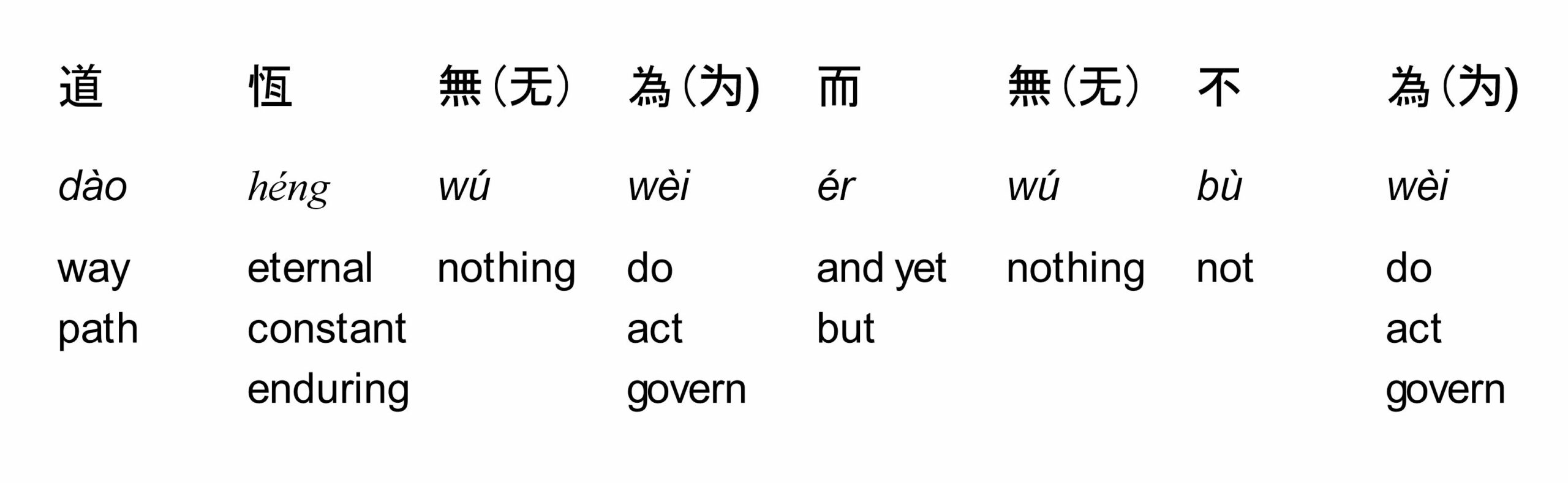
The translation of wu wei (無為) is problematic. A simple translation is “doing nothing” but that is not Laozi’s meaning. In Chapter 37 the Dao does nothing and yet somehow everything is done.  The following are suggested translations of wu wei: “non-action” (Moeller, 2016), “effortless action” (Slingerland, 2003), “unself-conscious action” (Lynn, 2022, p 3), “non-contrivance” (Fischer, 2023, p 27), and “no purposive action” (Hansard, 2003).

Loy (1985) proposed that wu wei represent “nondual action:” the activity of an individual that has no self (with intentions and goals) but is rather part of a universal self. This can eliminate the problem of free will in a deterministic universe:

whenever “I” act it is not “I” but the whole universe that “does” the action or rather is the action. If we accept that the universe is self-caused, then it acts freely whenever anything is done. Thus, from the nondualist perspective, complete determinism turns out to be equivalent to absolute freedom.

Slingerland (2003, p 7) comments

It is important to realize, however, that wu-wei properly refers not to what is actually happening (or not happening) in the realm of observable action but rather to the state of mind of the actor. That is, it refers not to what is or is not being done but to the phenomenological state of the doer. … It describes a state of personal harmony in which actions flow freely and instantly from one’s spontaneous inclinations—without the need for extended deliberation or inner struggle—and yet nonetheless accord perfectly with the dictates of the situation at hand, display an almost supernatural efficacy, and (in the Confucian context at least) harmonize with the demands of conventional morality.

Fischer (2023, p 27) describes the mental concomitant of wu wei:

It describes the state of acting genuinely, unselfconsciously, or, as we might say, “from the heart,” as opposed to doing something self-consciously, because others expect you to, or because you are coerced.


Decreasing Day by Day

In the 48th chapter of the Daodejing Laozi proposes wu wei as the ideal of human behavior. The following is the Chinese text together with a translation by Wu (2016):

為學日益,為道日損。
損之又損,以至於無為。
無為而無不為。
取天下常以無事,
及其有事,不足以取天下

To pursue learning you increase day by day; to pursue Dao you decrease day by day.
Decrease and yet again decrease, till you reach the state of Non-doing.
Do nothing and yet nothing is not done.
The world is often won without busying around;
When busying around occurs, the world cannot be won.

The third line repeats the first line of Chapter 37 as an injunction for human behavior. We must follow the same principle as the Dao. Although it is easy to say that the Dao can act according to its own self, how exactly human beings can do so is clear. The chapter states that the world can only be won without 事 (shì, business/work/responsibility).

The Zhuangzi provides several examples of acting in accord with wu wei, the most famous example being butcher Ding. The story is introduced with the comments:

The flow of my life is always channeled by its own boundaries, but the mind bent on knowledge never is. A flow channeled by its own boundaries is endangered when forced to follow something that is not, and trying to rescue it with the doings of the knowing mind only makes the danger worse. (Ziporyn, 2009, p 21).

King Hui of Liang was very impressed with the skill of his butcher Ding who was able to cut up an ox with remarkable speed and agility. When asked how he had become so adept, Ding replied:

What I love is the Course [Dao], something that advances beyond mere skill. When I first started cutting up oxen, all I looked at for three years was oxen, and yet still I was unable to see all there was to see in an ox. But now I encounter it with the spirit rather than scrutinizing it with the eyes. My understanding consciousness, beholden to its specific purposes, comes to a halt, and thus the promptings of the spirit begin to flow. I depend on Heaven’s unwrought perforations and strike the larger gaps, following along with the broader hollows. I go by how they already are, playing them as they lay. So my knife has never had to cut through the knotted nodes where the warp hits the weave, much less the gnarled joints of bone. A good cook changes his blade once a year: he slices. An ordinary cook changes his blade once a month: he hacks. I have been using this same blade for nineteen years, cutting up thousands of oxen, and yet it is still as sharp as the day it came off the whetstone. For the joints have spaces within them, and the very edge of the blade has no thickness at all. When what has no thickness enters into an empty space, it is vast and open, with more than enough room for the play of the blade. That is why my knife is still as sharp as if it had just come off the whetstone, even after nineteen years. (Ziporyn, 2009, p 22).

One might simply understand that through years of study and practice the cook had become so proficient at his that eveything was performed by learned reflex, without any need for consciousness. However, consicuousness still played a role: the cook continued:

Nonetheless, whenever I come to a clustered tangle, realizing that it is difficult to do anything about it, I instead restrain myself as if terrified, until my seeing comes to a complete halt. My activity slows, and the blade moves ever so slightly. Then all at once, I find the ox already dismembered at my feet like clumps of soil scattered on the ground. I retract the blade and stand there gazing at my work arrayed all around me, dawdling over it with satisfaction. Then I wipe off the blade and put it away. (Ziporyn, 2009, p 22)

After long thought and much practice we can become adept at anything. We behave automatically. However, consciousness still plays a role, slowing us down when problems arise, preventing mistakes that occur when one becomes more convinced of one’s skill than warranted.


The Art of Rulership

Laozi considers how leaders can best govern their people in Chapter 17 of the Daodjing. The following is the Chinese text and the translation of Wu (2009):

太上,不知有之;其次,亲而誉之;
其次,畏之;其次,侮之。
信不足焉,有不信焉。
悠兮其贵言。功成事遂,百姓皆谓:我自然。

The best ruler is one whose presence is unknown;
the second best is one who is beloved and praised;
the next best is one who is feared;
the next is one who is despised.

Where there is insufficient good faith,
there is loss of faith.

Relax and spare your words.
When the goal is achieved and the job is done,
everyone says, “We did it.”

Laozi favors the ruler who exercises wu wei, who allows his ministers to exercise their responsibilities, and who lets his people to be true to their own selves: 自然, ziran. Another translation of the final line is: The people all say: “We have done it by ourselves.” (Lin, 1977)

These ideas on government were extensively discussed in the Huainanzi, a collection of writings collected to assist the Prince of Huainan in the 2nd Century BCE (Ames,1981). The following is from one of the essays entitled The Art of Rulership:

Thus, the ruler in possession of the Way extinguishes thought and dispenses with guessing, and waiting in limpidity and vacuity, he uses words that do not boast and takes action that does not rob subordinates of responsibility. He makes demands of fulfilment according to claims made. He lets them get on with their duties without telling them how; he expects them to fulfil their duties without instructing them. He takes not knowing as his Way and being at a loss as to what to do as his treasure. Acting in this way, each of the various officials has his appointed tasks. (Ames, 1981, p 202)

The Concept of Flow

Mihaly Csíkszentmihályi (1934-2021), a Hungarian-American psychologist, became interested in why people can become so completely involved in difficult, time-consuming and sometimes dangerous activities, that they lose all sense of self and time. He described the experience as one of “flow” (Csíkszentmihályi, 1990). Nakamura and Csíkszentmihályi (in Csíkszentmihályi, 2014, p 240) describe the following subjective characteristics of being “in flow:”  

  1. Intense and focused concentration on what one is doing in the present moment
  2. Merging of action and awarenessLoss of reflective self-consciousness (i.e., loss of awareness of oneself as a social actor)
  3. A sense that one can control one’s actions; that is, a sense that one can in principle deal with the situation because one knows how to respond to whatever happens next
  4. Distortion of temporal experience (typically, a sense that time has passed faster than normal)
  5. Experience of the activity as intrinsically rewarding, such that often the end goal is just an excuse for the process.

Athletes during peak performance, musicians during virtuoso recitals, and scientists formulating a new theory all experience this state of flow. Other terms that have been used to describe it are “in the zone” or “being locked in.” The individual in the flow is fully conscious of what is going on, but there is little if any self-consciousness. The game is being played, the music is being made, the theory is being grasped.

This state can only come after one has become an expert. Only when the actions can occur automatically, can consciousness move to a higher level – directing the strategy of the game rather than making individual movements, conveying the meaning rather than playing the notes, finding the underlying pattern rather than simply recording what is happening.  

A person in a state of flow is very similar to a person acting according to the principle of wu wei (De Pryker, 2011). Both are acting effortlessly and without self-consciousness. In both action and awareness are fused. There are differences – flow empowers the individual self, whereas wu wei leads to a decrease in personal desires as one seeks greater union with the universal self. Nevertheless, the two states are far more similar than different.  

In recent years, the concepts of wu wei have been used to promote higher achievements in sports (Kee et al. 2021) and to find happiness in normal human behavior through “effortless living” (Gregory, 2018). A major difficulty is in deciding how to attain wu wei. One must become highly skilled and then become so completely involved in something that one loses oneself in the endeavor. One can try to be “mindful,” to live in the present, to eliminate personal desires, but such advice is imprecise.


The Flow of Calligraphy

Chapters 37 and 48 of the Daodejing – the chapters that are crucial to the concept of wu wei are shown below in the calligraphy of the 13th Century Zhao Mengfu in regular script, and of the 14th Century Sheng Mao in clerical script): 
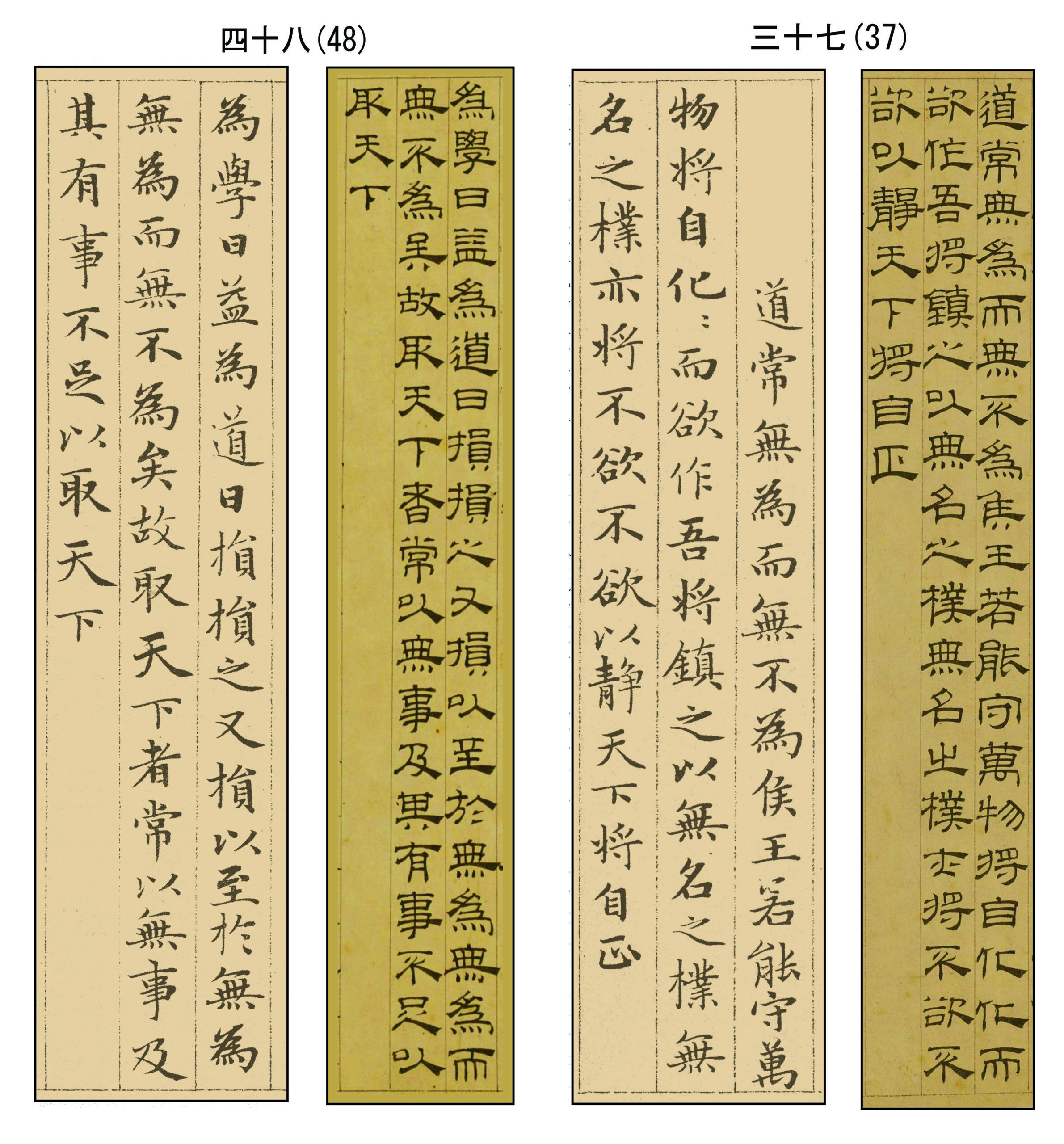
The esthetics of Chinese calligraphy depends on the flow from one character to another. The true calligrapher follows the principle of wu wei and writes effortlessly. Chiang Yee (1973, p 117) describes the essential characteristics of Chinese calligraphy:

The beauty of Chinese calligraphy is essentially the beauty of plastic movement, not of designed and motionless shape. A finished piece of it is not a symmetrical arrangement of conventional shapes, but something like the co-ordinated movements of a skilfully composed dance —impulse, momentum, momentary poise, and the interplay of active forces combining to form a balanced whole.  


Envoi

We can conclude with some comments of the poet and Trappist monk Thomas Merton in his introduction to his free translations from the Zhuangzi (2004, p 21):

The true character of wu wei is not mere inactivity but perfect action—because it is act without activity. In other words, it is action not carried out independently of Heaven and earth and in conflict with the dynamism of the whole, but in perfect harmony with the whole. It is not mere passivity, but it is action that seems both effortless and spontaneous because performed “rightly,” in perfect accordance with our nature and with our place in the scheme of things. It is completely free because there is in it no force and no violence. It is not “conditioned” or “limited” by our own individual needs and desires, or even by our own theories and ideas.

And an excerpt from his translation (p. 69):

If man, born in Tao,
Sinks into the deep shadow
Of non-action
To forget aggression and concern,
He lacks nothing
His life is secure.


References

Ames, R. T. (1981) Wu-wei in “The art of rulership” chapter of Huai Nan Tzu: its sources and philosophical orientation. Philosophy East and West, 31(2), 193-213

Chan, A. K. L. (2025). Laozi. The Stanford Encyclopedia of Philosophy.

Chiang, Y. (1973). Chinese calligraphy: an introduction to its aesthetic and technique (3rd ed.). Harvard University Press.

Csikszentmihalyi, M. (1990). Flow: the psychology of optimal experience. Harper & Row.

Csikszentmihalyi, M. (2014). Flow and the foundations of positive psychology. Springer Netherlands.

De Prycker, V. (2011). Unself-conscious control: broadening the notion of control through experiences of flow and wu-wei. Zygon, 46(1), 5–25.

Fischer, P. (2023). The annotated Laozi: a new translation of the Daodejing. State University of New York at Albany.

Fu, C. W.-H. (1973). Lao Tzu’s conception of Tao. Inquiry (Oslo), 16(1–4), 367–394.

Gregory, J. (2018). Effortless living: wu-wei and the spontaneous state of natural harmony. Inner Traditions.

Hansen (2003). Wuwei: taking no action. In Cua, A. S. (Ed.) Encyclopedia of Chinese philosophy. (pp 784-786). Routledge.

Kee, Y. H., Li, C., Zhang, C.-Q., & Wang, J. C. K. (2021). The wu-wei alternative: Effortless action and non-striving in the context of mindfulness practice and performance in sport. Asian Journal of Sport and Exercise Psychology, 1(2–3), 122–132.

Lin, P. J. (1977, open access 2020). A Translation of Lao-tzu’s Tao Te Ching and Wang Pi’s Commentary. (Volume 30 in University of Michigan Chinese Studies). University of Michigan.

Liu, X. (2015). Laozi’s philosophy: textual and conceptual analyses. In X. Liu (Ed.), Dao Companion to Daoist Philosophy (pp. 71–100). Springer Netherlands.

Loy, D. (1985). Wei-Wu-Wei: nondual action. Philosophy East & West, 35(1), 73–86.

Lynn, R. J. (2022). Zhuangzi: a new translation of the sayings of Master Zhuang as interpreted Columbia University Press.

Merton, T. (2004). The way of Chuang Tzu. Shambhala.

Moeller, H. G. (2015). Basic aspects of daoist philosophy. International Communication of Chinese Culture, 2 (2), 99–107.

Slingerland, E. G. (2003). Effortless action: Wu-wei as conceptual metaphor and spiritual ideal in early China. Oxford University Press.

Stamatov, A. (2023). The Laozi’s ideal state: nostalgia, utopia, state of nature. Religions, 14(10), 1243.

Tadd, M. (2019). Ziran: authenticity or authority? Religions, 10(3), 207.

Wu, C. Q. (2016). Thus spoke Laozi: a new translation with commentaries of Daodejing. University of Hawaii.

Ziporyn, B. (2009). Zhuangzi: the essential writings with selections from traditional commentaries. Hackett


Searching for the Dao

This post presents some ideas about the Dào (“Way”) as described in the Dàodéjīng (“Book of the Way and its Virtue”), that legend claims was composed by Lǎozī in the 5th Century BCE. The Dào cannot be explained in words. But that has never stopped anyone from writing about it.

An Incident at Hangu Pass

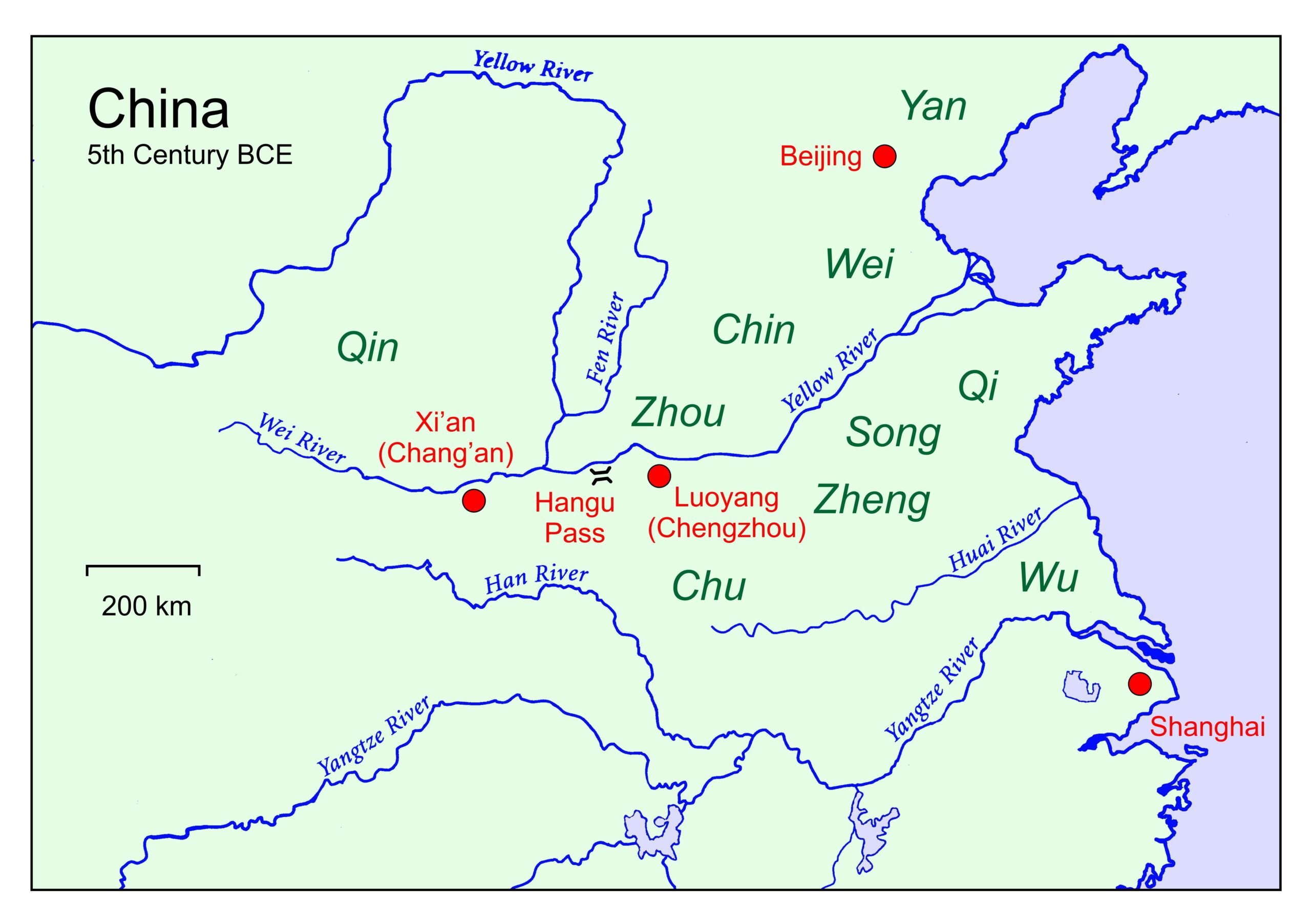
No one is sure of the season or even the year. It was probably at the end of the Spring and Autumn Period (770-476 BCE), and it would have been appropriate if it were autumn. An old man riding on a water buffalo, together with a young servant, requested passage to the west through the frontier gate at Hangu. They were leaving the violence and corruption of the Kingdom of the Eastern Zhou, which was slowly dissolving into anarchy, a time that later historians called the Warring States Period (475-221 BCE).

Yĭnxĭ, the head guardsman, realized that the old man was of some importance. In answer to his questions, the old man confirmed that he had been the Royal Archivist at the court of Zhou. He had resigned his position, and was now on his way to the mountains to find peace. Yĭnxĭ requested that the old man not leave without providing him with a summary of his wisdom. The scholar obliged and wrote out a summary of all that he considered important. And then he departed, never to be heard of again.

The writings that he left with Yĭnxĭ became known as the Dàodéjīng – the “Book of the Way and its Virtue” (Tao Te Ching in the old Wade-Giles system of romanization), containing about 5000 characters in 81 brief chapters. The first section of the book (chapters 1-37) dealt with the Dào (“way”), and the second section with (“virtue”). The author became known as Lǎozī – the “Old Master” (Lao Tzu in Wade-Giles). Sometimes the book itself is also referred to as Lǎozī.

I have told the story as best I can. There are several legends about what happened, and I am not sure which are true, or even whether Lǎozī was an actual person (Graham, 1998; Chan, 2000). The story does explain the nature of the book – an anthology of cryptic sayings and opinions on the nature of the universe and how people should behave.

The Eastern Zhou dynasty had its court in Chengzhou, now called Luoyáng. From there the king tried to maintain his rule over the surrounding feudal states. After many years of internecine warfare, the Qin state in the west ultimately prevailed over the others and founded the first Chinese Empire in 221 BCE. 

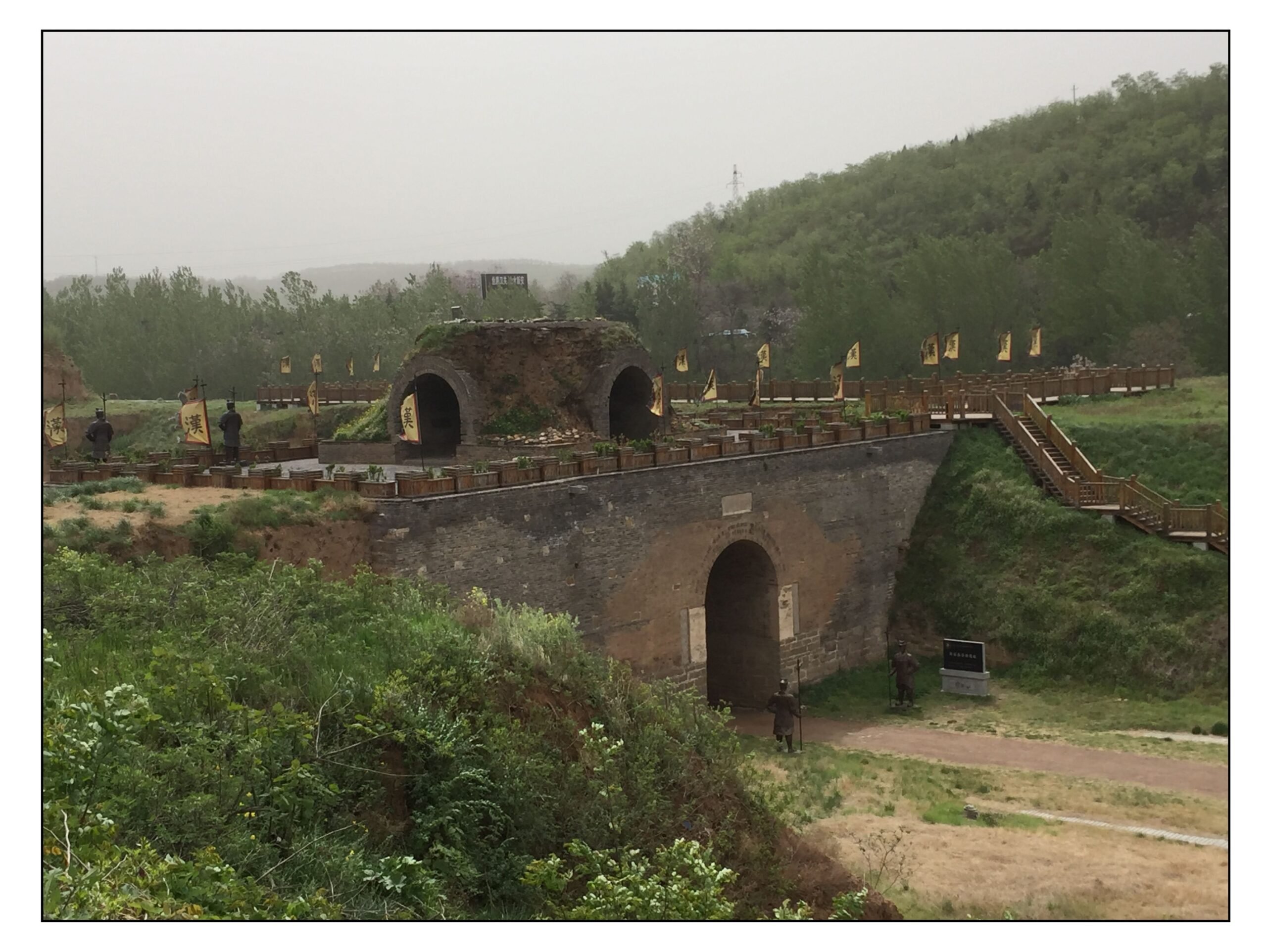
The frontier gate in the Hangu Pass has been preserved as the centerpiece of an archeological site in Xin’an:

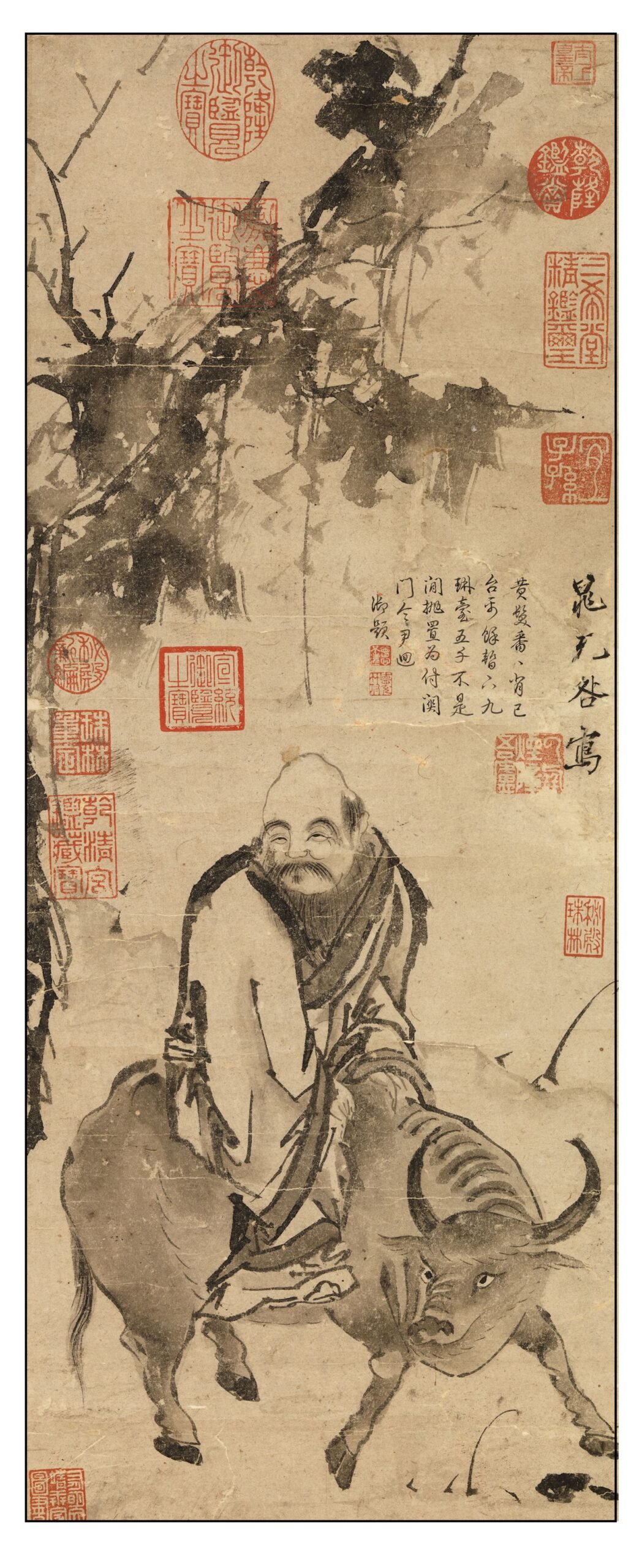
Lǎozī on his water buffalo was portrayed by Chao Buzhi in an ink painting (around 1100 CE) now in the Palace Museum in Taipei:

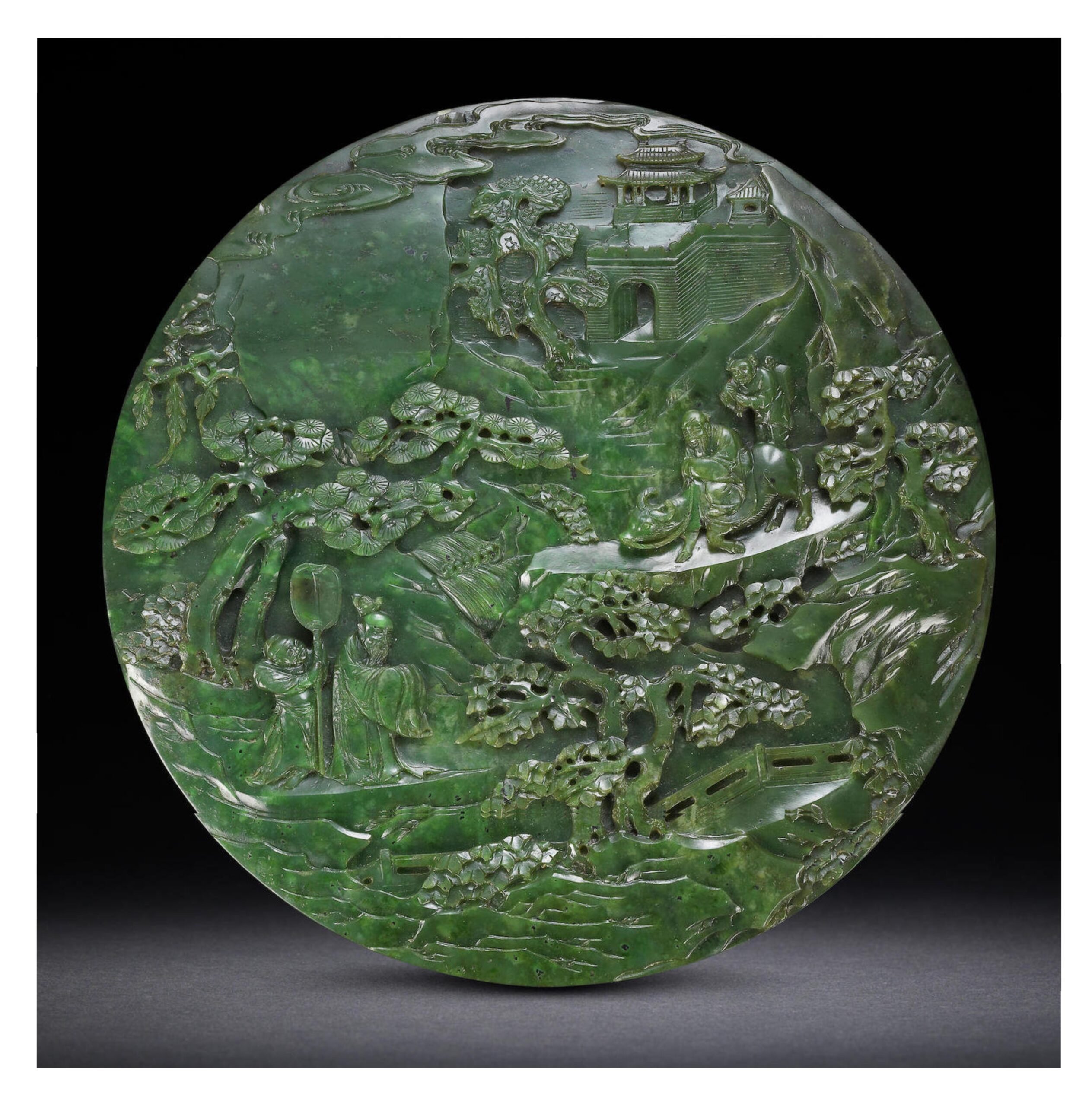
A carved jade circle from the early 19th Century represents the meeting between Lǎozī (right) and Yĭnxĭ (left) with the Hangu Gate at the top.


In 1938, Bertolt Brecht (1898-1956) felt definite empathy for Lǎozī. He was living in Denmark, an exile from his home in Germany, which was descending into the horrors of Nazism. He wrote a poem The Legend of How the Tao te Ching Came into Being on Lao Tse’s Journey into Exile, which was later published in Tales from the Calendar (1949, translated 1961). The custom’s officer asks the boy attending on Lǎozī what he has learned from the old man and receives the answer

… Daß das weiche Wasser in Bewegung
Mit der Zeit den harten Stein besiegt.
[That over time the gentlest water
Defeats the hardest stone]

This paraphrases some lines from chapter 78 of the Dàodéjīng

Brecht ends his poem with

Aber rühmen wir nicht nur den Weisen Dessen Name auf dem Buche prangt! Denn man muß dem Weisen seine Weisheit erst entreißen. Darum sei der Zöllner auch bedankt: Er hat sie ihm abverlangt.

[But we should not just praise the Sage
Whose name is displayed on the book.
Since we must retrieve from the Wise their wisdom,
The customs officer should also be thanked
For demanding it of him.]


The Nature of the Dào

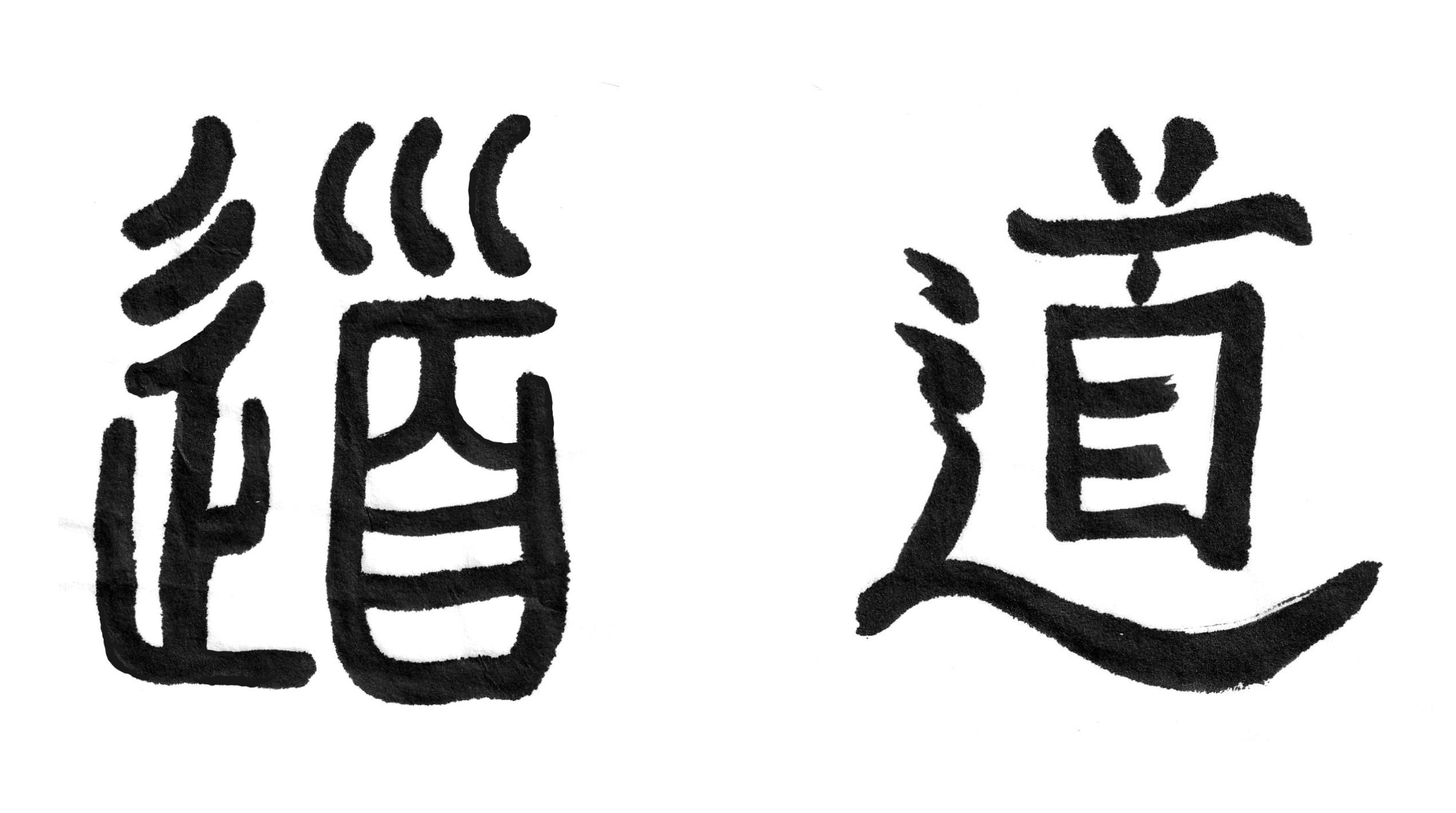
The main focus of Lǎozī ’s book is the Dào (pinyin, Tao in Wade-Gilles). The character is composed of the “walk/march” radical on the left (a leg taking a step forward) and the “head/chief” radical on the upper right (a head with hair or horns above a stylized face). The illustration below shows the Small Seal Script version (which would have been used at the beginning of the Qin dynasty) on the left, and the modern version on the right.

As a noun, Dào is most often translated as “way” or “path.” When it is used as a verb it generally means “say” or “explain.” This confluence of “way” and “word” also occurs in the Christian gospel of John (1:1, and 14:6), where the source of everything is called the word (logos) and salvation is obtained through the way (odos) (Ching, 1993, p. 88).

In Lǎozī ’s book, the Dào represents the underlying and enduring principle of the universe, something completely beyond human comprehension (Schwartz, 2000):

The Dào that can be explained is not the eternal Dào;
The Name that can be told is not the eternal Name.

The nameless is the source of heaven and earth,
The mother of everything which can be named.

Free from desire, you can realize its mystery;
Caught in desire, you see only its manifestations.

That these two aspects are both same and different
Is the paradox:

Mystery of mystery,
Gateway to wonder.

[Chapter 1, my translation. I am indebted to Mitchell (1988) for the opposition of “mystery” and “manifestations.” And to Pepper and Wang (2021) for their word-by-word analysis.]

Livia Kohn (2020, p 16) proposed:

One way to think of Dào is as two concentric circles, a smaller one in the center and a larger on the periphery. The dense, smaller circle in the center is Dào at the root of creative change— tight, concentrated, intense, and ultimately unknowable, ineffable, and beyond conscious or sensory human attainment… The larger circle at the periphery is Dào as it appears in the world, the patterned cycle of life and visible nature. Here we can see Dào as it comes and goes, rises and sets, rains and shines, lightens and darkens— the everchanging yet everlasting, cyclical alteration of natural patterns, life and death… This is Dào as natural transformations: the metamorphoses of insects, ways of bodily dissolution, and the inevitable entropy of life. This natural, tangible Dào is what people can study and learn to create harmony in the world; the cosmic, ineffable Dào, on the other hand, they need to open to by resting in clarity and stillness to find true authenticity in living.

Her description fits with that in Chapter 11 of the Dàodéjīng:

Thirty spokes converge on the wheel’s hub,
The emptiness of which allows the cart to be used.

And perhaps point to Eliot’s image in Burnt Norton (1941)

At the still point of the turning world. Neither flesh nor fleshless;
Neither from nor towards; at the still point, there the dance is,
But neither arrest nor movement.

As pointed out by Kenner (1959, pp 297-8))

This is the philosophers’ paradox of the Wheel, the exact center of which is precisely motionless, whatever the velocity of the rim.


Yīn and Yáng

The Dào is the source of all the different things in the word. The multiplicity of the world is described in Chapter 2 of the Dàodéjīng (translation by Ursula Le Guin, 1997):

For being and nonbeing
arise together;
hard and easy
compete with each other;
long and short
shape each other;
high and low
depend on each other;
note and voice
make music together;
before and after
follow each other.

The source of this multiplicity is proclaimed in Chapter 42 (my translation)

The Dào gives birth to one
One gives birth to two
Two give birth to three
Three gives birth to the myriad things of the world.

These carry Yīn on their back and Yáng in their arms
And together they achieve harmony

Yīn is water, earth, night, female; Yáng is fire, sky, day, male. Through much of the Dàodéjīng, Lǎozī is more partial to Yīn, the eternal female. Yīn and Yáng mix to form a third type of being and from this intermingling comes everything – Wànwù (ten thousand things). This process is depicted in the Tàijítú symbol: the outer circle represents the whole while the light and dark areas represent its opposing manifestations. The Tàijítú in turn becomes the center of the Bāguà (“eight symbols”) map, representing all the different elements of the world.

The Rule of

The character for (pinyin, Te in Wade-Giles) contains on the left the radical for “step/road.” The upper right of the character represents “truth” – something placed on a pedestal to be examined. The lower right is the radical for “heart.” The character thus embodies the idea of following the path of the true heart. is translated as “virtue” or “morality.” The illustration below shows the Small Seal Script version on the left and the modern version on the right.

According to Lǎozī, virtue is attained by behaving in harmony with the Dào. Exactly how one does this is not completely clear. When he wrote his book, Lǎozī had decided that he needed to retire from the world, and much of his thought espouses the concept of wéiwúwéi – “acting without acting.” He urged leaders not to interfere with the lives of their people and not to overburden them with taxes. He urged generals to exercise restraint and patience.

Acting in harmony with the Dào means doing things for the good of all rather than the benefit of one. Occasionally Lǎozī does recommend particular virtues. The following is from Chapter 67 of the Dàodéjīng:

I have three treasures
that I hold and protect:
first is compassion,
second is austerity
third is reluctance to excel.

Because I am kind I can be valiant,
Because I am frugal I can be generous
Because I am humble I can be a leader.

[My translation owes much to Red Pine (2004), from whom I took the names of the treasures. Other expressions derive from Pepper and Wang (2021).]

The Religion of Dàoism

In the 2nd Century CE, Zhāng Dàolíng was visited by the spirit of Lǎozī, and proclaimed himself the first “Celestial Master” of the Dào. (Ching, 1993; Hendrichke, 2000, Kohn 2020; Robinet, 1992; Wong, 1997). Dàoism became an organized religion. Lǎozī was deified. Various other sages and believers were raised to the rank of “Immortals.” The descendants of Zhang Dàoling have continued to lead the religion to the present day. Dàoism as a religion provided its adherents with rituals, prayers, scriptures, talismans, and divination. Some of the “austerity’ of Lǎozī was perhaps lost in the proliferating ceremonies.

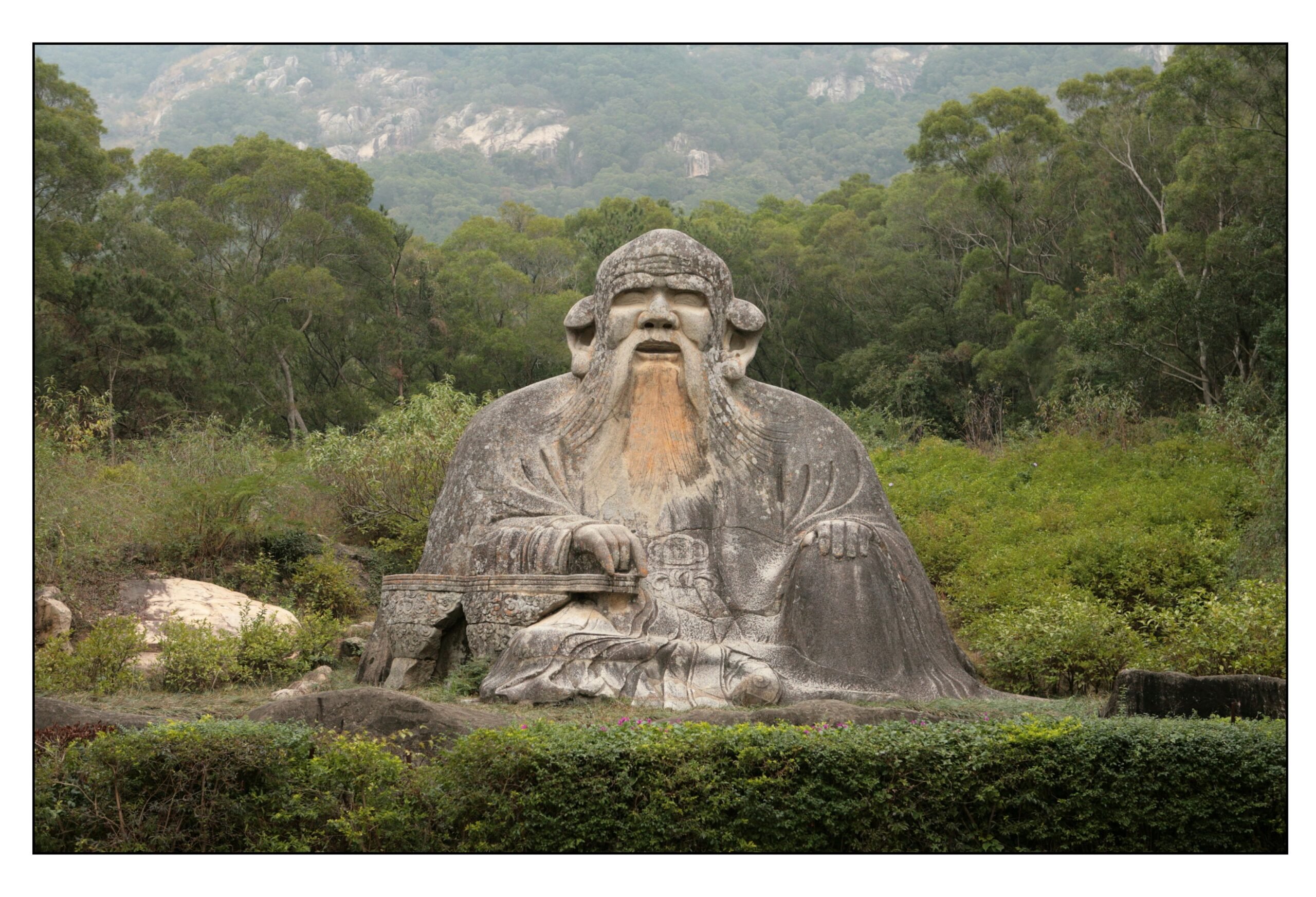
Dàoism was immensely popular. Temples sprang up everywhere. Dàoism was particularly attracted to the mountains, perhaps because this is where Lǎozī attained his immortality after leaving through Hangu Pass. Statues of Lǎozī and the immortals abound. The following is a large statue of Lǎozī created during the Song Dynasty (960-1279). It is located in the Qingyuan Mountain Park near Quanzhou city in Southern China.

The Art of Dàoism

Much of the art associated with Dàoism concerns the activities of the Immortals (Little, 2000; Little & Eichman, 2000). However, during the Yuan Dynasty (1271-1368) when the Mongols controlled China and ruled an Empire that spread as far west as Europe, several artists evolved a style of landscape painting that attempted to portray the simple power of nature (Barnhart, 1983; Cahill, 1976; Scott, 2006).


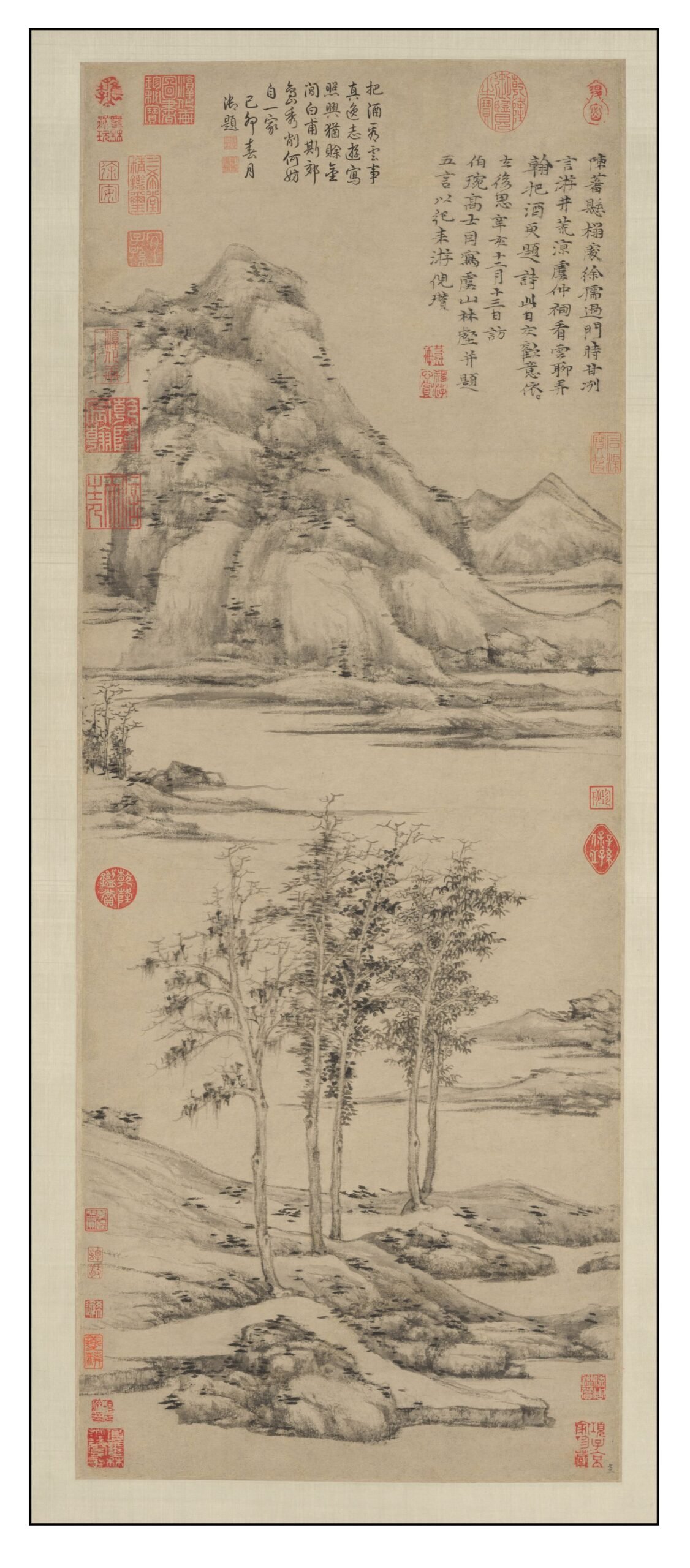
Probably the most famous of these painters was Ní Zàn (1301-1374), an aristocrat who gave up his worldly goods and retired from public life to live as an ascetic. One of his last paintings, now in New York’s Metropolitan Museum of Art, is entitled Woods and Valleys of Mount Yu (1372).

The poem appended to the top of the painting identifies where it was created and concludes:

We watch the clouds and apply our paint;
We drink wine and write poems.
The joyous feelings of this day
Will linger long after we have parted.

The painting portrays the stillness of the water in the lake and the power of the mountains on the further shore. These seem to embody the eternal forces of Yīn and Yáng. In the foreground are a few of the ten thousand things that make up our particular world. The most powerful part of the painting is that which is not painted – the water representing the force of Yīn.

The spirit at the center of all is called the dark female,
Gateway of the foundations of heaven and earth,
Which lasts unbroken and forever: use it.
[Dàodéjīng, Chapter 6, my translation]

Final Thoughts

Most people believe that the universe is governed by rules. Many believe that such rules are purposeful and that the universe is evolving toward some goal. We are a hopeful species and we like to think of this process as benevolent rather than blind. Many of our religions urge us to fit our individual intentions to this more general goal. Of all this we are unsure. But there is something behind it all:

Something there is, whose veiled creation was
Before the earth or sky began to be;
So silent, so aloof and so alone,
It changes not, nor fails, but touches all:
Conceive it as the mother of the world.
I do not know its name;
A name for it is “Way.”
[Dàodéjīng, Chapter 25, Blakney (1955) translation]


Some Translations of the Dàodéjīng (in order of publication)

Julien, S. (1842). Le Livre de la Voie et de la Vertu. Imprimerie Royale

Chalmers, J. (1868). The Speculations on Metaphysics, Polity, and Morality of the “Old Philosopher” Lau-tsze. Trübner & Co.

Legge, J. (1891). The Tao Teh King, In Sacred Books of the East, Vol. XXXIX. Oxford University Press.

https://archive.org/details/wg939/page/n3/mode/2up

Waley, A. (1936). The way and its power: a study of the Tao tê ching and its place in Chinese thought. George Allen & Unwin.

Blakney, R. B. (1955). The way of life. A new translation of the Tao tê ching, New American Library.

Feng, G., & English, J. (1972). Tao te ching. Vintage Books. Third edition (2011) has introduction by J. Needleman and acknowledges T. Lippe as co-author.

Mitchell, S. (1988). Tao te ching. Harper & Row.

Addiss, S., & Lombardo, S. (1993). Tao te ching. Hackett.

Red Pine (1996, revised 2004), Lao-Tzu’s Taoteching with selected commentaries from the past 2000 years. Copper Canyon Press.

Le Guin, U. K., & Seaton, J. P. (1998). Tao te ching: a book about the way and the power of the way. Shambhala.

Star, J. (2001). Tao te ching: the definitive edition. Jeremy P Tarcher/Putnam.

Lin, D. (2015). Tao te ching: Annotated and explained. SkyLight Paths.

Minford, J. (2018). Tao te ching (Daodejing): The Tao and the power. Viking

Pepper, J.& Wang, X. H. (2021). Dao de jing in clear English including a step-by-step translation. Imagin8 Press.


References

Barnhart, R., & Wang, C. C. (1983). Along the border of heaven: Sung and Yüan paintings from the C.C. Wang family collection. Metropolitan Museum of Art.

Brecht, B. (1949/1961). Tales from the calendar; the prose translated by Yvonne Kapp; the verse translated by Michael Hamburger. Methuen.

Cahill, J. (1976). Hills beyond a river: Chinese painting of the Yüan Dynasty, 1279-1368. Weatherhill.

Chan, A. K. L. (2000). The Daodejing and its tradition. In L. Kohn (Ed.) Daoism handbook. (pp.1-29).  Brill

Ching, J. (1993). Chinese religions. Macmillan.

Eliot, T. S. (1941). Burnt Norton. Faber and Faber.

Graham, A.C. (1998). The origins of the legend of Lao Tan. In Kohn, L., & LaFargue, M. (eds). Lao-tzu and the Tao-te-ching. (pp 23-40). State University of New York Press.

Hendrichke, B. (2000). Early Daoist movements. In Kohn, L. (2000). Daoism handbook. (pp. 134-164). Brill.

Kenner, H. (1959). The invisible poet: T.S. Eliot. McDowell, Obolensky.

Kohn, L., & LaFargue, M. (1998). Lao-tzu and the Tao-te-ching. State University of New York Press.

Kohn, L. (2000). Daoism handbook. Brill.

Kohn, L. (2020). Daoism: a contemporary philosophical investigation. Routledge.

Little, S. (2000). Daoist Art. In L. Kohn (Ed.) Daoism handbook. (pp.709-746). Brill.

Little, S., & Eichman, S. (2000). Taoism and the arts of China. The Art Institute of Chicago

Robinet, I., (1992, translated by Brooks, P. (1997). Taoism: growth of a religion. Stanford University Press.

Schwartz, B. (1998). The Thought of the Tao te ching. In Kohn, L., & LaFargue, M. (eds.). Lao-tzu and the Tao-te-ching. (pp. 189-210). State University of New York Press.

Scott, S. C. (2006). Sacred Earth: Daoism as a preserver of environment in Chinese landscape painting from the Song through the Qing Dynasties. East-West Connections: Review of Asian Studies, 6(1), 72-98. 

Wong, E. (1997). Taoism: an essential guide. Shambhala.


Numinous Experience

This post considers the nature of the human experience of the “numinous:” the sensation that one is the in the presence of something beyond comprehension or control. The term is difficult to define. Other words that overlap in meaning are “sublime,” “sacred” and “transcendent” when referring to the source of the experience, and “awe,” “reverence” and “ecstasy” when describing the state of mind induced.

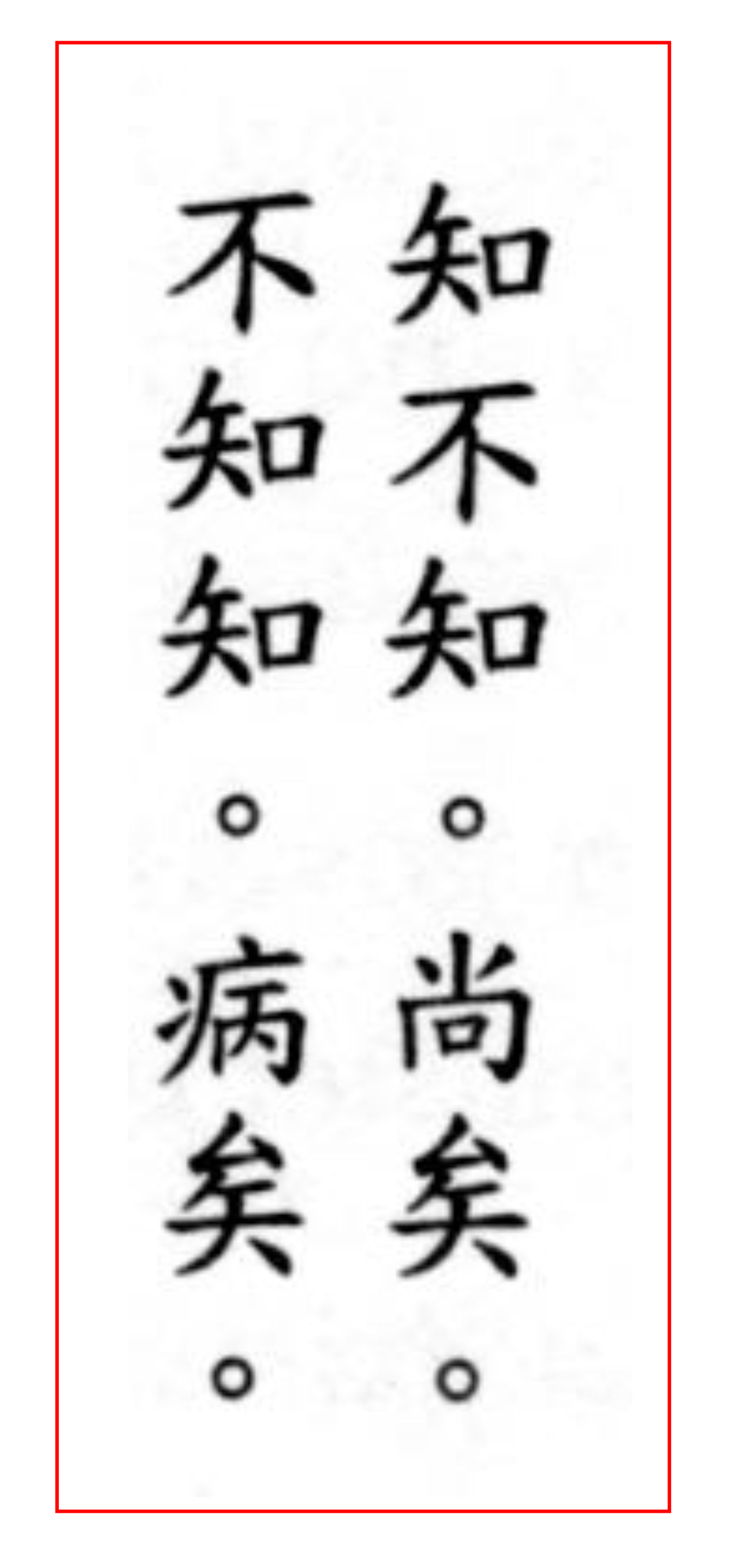
tao te ching 71 borderThe numinous is an essential component of religion. However, the scriptures warn that understanding the numinous may not come easily. Verse 71 from the Tao Te Ching (dào dé jīng,The Book of the Way of Virtue) by Lao Tzu claims that

zhī bù zhī shàng
bù zhī zhī bìng

The Chinese characters go from top to bottom and from right to left. Red Pine (2009) provides a direct translation:

To understand yet not understand
is transcendence
Not to understand yet understand
is affliction

Perhaps the words mean that we should try to understand what we do not know because not to do so leads to suffering. However, I may miss the sense as much as I mar the pronunciation when I try to speak the words.

Meaning of the “Numinous”

The word “numinous” derives from Latin word numen, meaning divinity, often the god or local presiding spirit of a particular place. The word ultimately comes from the Greek neuein for nodding, and may represent the barely perceptible nodding of a divine idol when it approves of being worshipped or grants a wish.

The numinous is essential to religion. William James (1902) suggested that religion

consists of the belief that there is an unseen order, and that our supreme good lies in harmoniously adjusting ourselves thereto. (p 53)

He further suggested that this might derive from a feeling of being in the presence of something beyond the grasp of our normal five senses:

It is as if there were in the human consciousness a sense of reality, a feeling of objective presence, a perception of what we may call ‘something there,’ more deep and more general than any of the special and particular ‘senses’ by which current psychology supposes existent realities to be originally revealed. (p. 58)

The term “numinous” was first used to describe this feeling by Rudolf Otto (1917). He considered it to be the state of a creature in the presence of its creator:

I propose to call it ‘creature-consciousness’ or creature-feeling. It is the emotion of a creature, submerged and overwhelmed by its own nothingness in contrast to that which is supreme above all creatures (pp. 9-10).

He also described it as the mysterium tremendum – “terrible mystery.” The experience of the numinous varies:

The feeling of it may at times come sweeping like a gentle tide, pervading the mind with a tranquil mood of deepest worship. It may pass over into a more set and lasting attitude of the soul, continuing, as it were, thrillingly vibrant and resonant, until at last it dies away and the soul resumes its profane, non-religious mood of everyday experience. It may burst in sudden eruption up from the depths of the soul with spasms and convulsions, or lead to the strangest excitements, to intoxicated frenzy, to transport, and to ecstasy. (pp. 12-13).

Otto described five “elements” of the numinous experience. First is “awefulness.” In the monotheistic religions this is also called the “fear of God.” Second is “overpoweringness,” or majestas. This invokes the humility of the creature in the presence of his creator. Third is “urgency.” This is the sense of an active will or living power in charge of the universe. Fourth is the idea that the numinous is “wholly other.” In mysticism this is described as the experience of the void or nothingness. The abyss is a recurring image. The numinous

has no place in our scheme of reality but belongs to an absolutely different one, and which at the same time arouses an irrepressible interest in the mind. (p. 29)

This idea leads to the fifth characteristic of the numinous: “fascination.” The experience entrances as well as bewilders. Otto considered this the Dionysiac element of the numinous, that which we describe as intoxication or ravishment.

C. S. Lewis (1940) used the idea of the numinous to explain how one can believe in God when the existence of suffering makes the concept of an omnipotent and omnibenevolent God illogical. He described the feeling as being in the presence of a mighty spirit:

You would feel wonder and a certain shrinking – a sense of inadequacy to cope with such a visitant and of prostration before it – an emotion which might be expressed in Shakespeare’s words “Under it my genius is rebuked.” This feeling may be described as awe, and the object which excites it as the Numinous. (p. 14).

In recent years, cognitive psychologists have considered the numinous under the rubric of “awe.” This combines cognitive uncertainty and intense emotion (Keltner & Haidt, 2003):

[A]we involves being in the presence of something powerful, along with associated feelings of submission. Awe also involves a difficulty in comprehension, along with associated feelings of confusion, surprise, and wonder.

A final aspect of the numinous that we might consider is the sense that one is being perceived as much as perceiving. This quotation is from Christian Wiman, a poet, in a book called My Bright Abyss (2013):

At such moments it is not only as if we were suddenly perceiving something in reality we had not perceived before, but as if we ourselves were being perceived. (p. 82)

In summary, the experience of the numinous combines three main characteristics

(i) a sense of being in presence of something beyond comprehension or control.

(ii) an intense emotional arousal, combining fear and wonder, like the feeling at the edge of an abyss.

(iii) a state of uncertainty and a need to do something about it.


The Context of Numinous Experiences

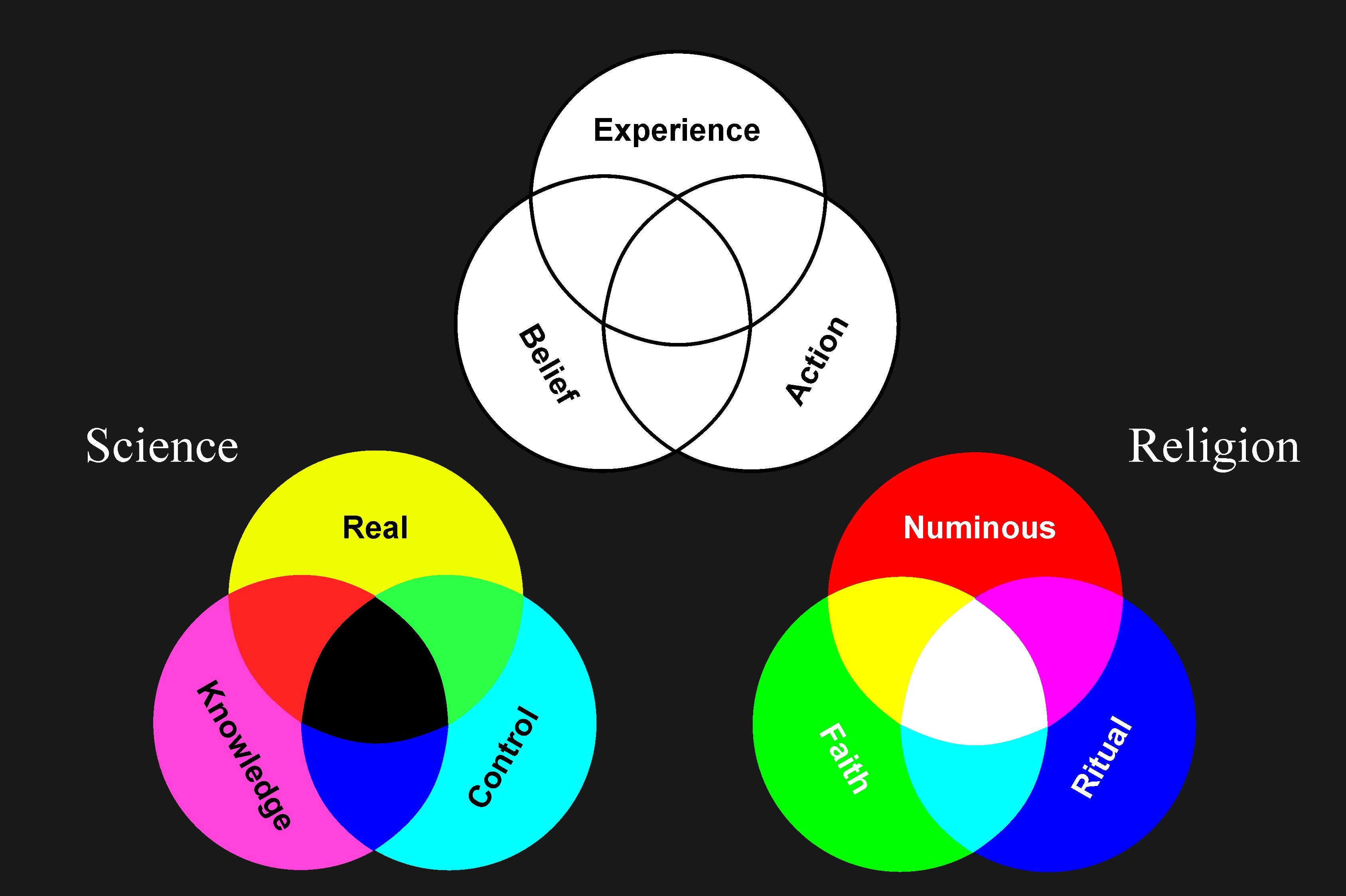
The experience of the numinous parallels the experience of the real world. In general we experience something, derive from that experience a set of beliefs, and then act according to those beliefs in order to gain more experience. This overlapping sequence is illustrated in the following figure, the upper portion of which derives from a similar representation by Lewis-Williams and Pierce (2005, p.25).

experience dark

When dealing with the real world we create knowledge that then allows us to act within that world. The experience of the numinous leads to faith and faith lead to practices that bring about further interaction with the numinous. For example, revelations can lead to conversion to a faith that promotes prayer and meditation to enhance the experience of the numinous.

caravaggio damascus border

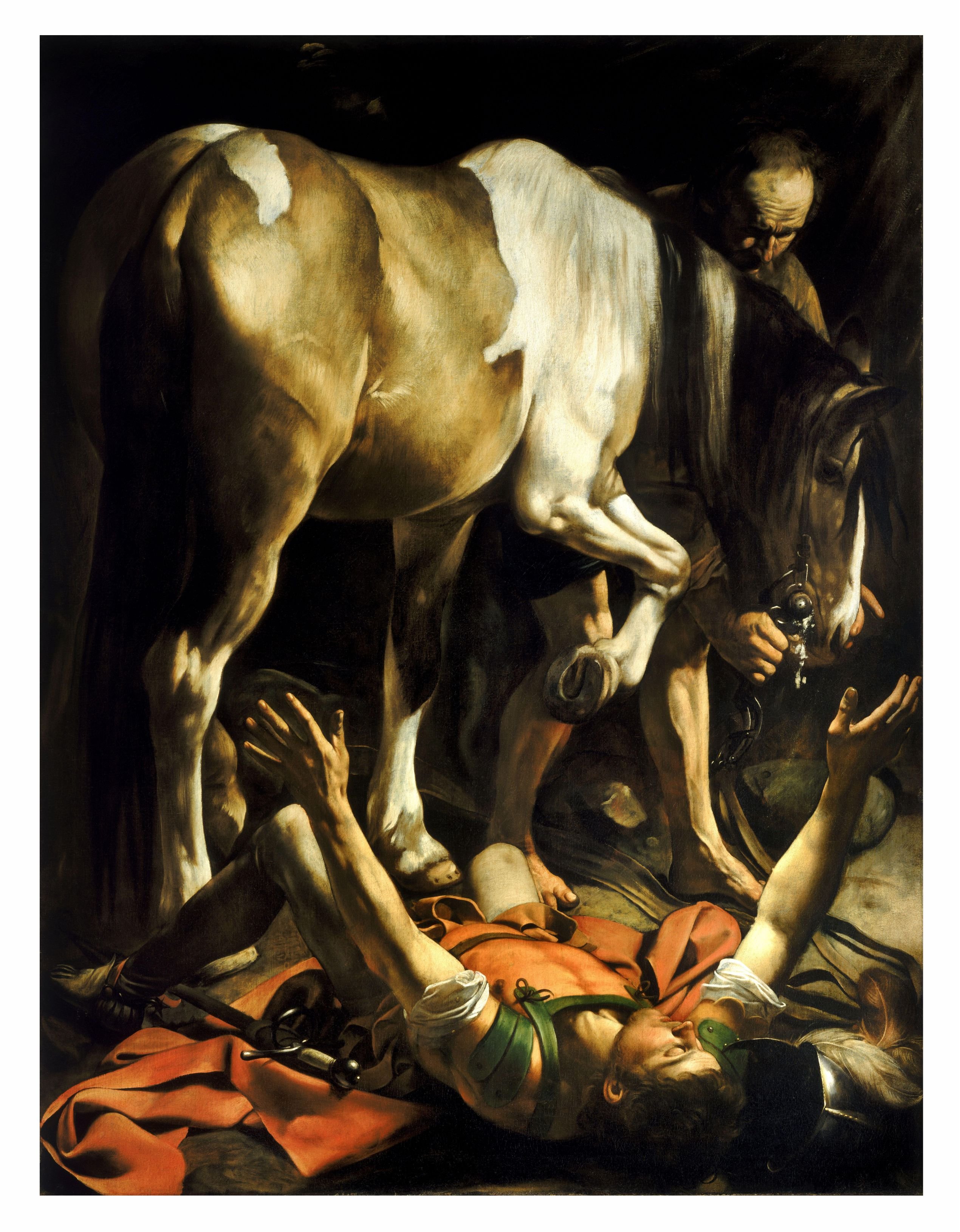
Michelanglo Merisi da Caravaggio, 1601, The Conversion on the Way to Damascus, Church of Santa Maria del Populo, Rome.

An intense experience of the numinous can lead to a complete re-thinking of one’s life.  On the road to Damascus the persecutor Saul had a vision that led to him becoming the Apostle Paul:

And it came to pass, that, as I made my journey, and was come nigh unto Damascus about noon, suddenly there shone from heaven a great light round about me.

And I fell unto the ground, and heard a voice saying unto me, Saul, Saul, why persecutest thou me? (Acts 22:6-7)

The nature of Saul’s vision is not known. Some have suggested that it might have been epileptic in origin. Yet the effect is perhaps more important than the cause.

Visions are not as common in our present day as they seemed to in the past. Nowadays, we have only the artistic representation of experiences from earlier times – the numinous at second-hand.

Once a religion is founded, behaviors are promoted to maintain the link to the original numinous experience. The mainstay of the Eastern religions is the process of meditation. The goal is to lose the self, to dissolve into the great sea of being. Western religions tend to prayer more than meditation. Communing with a personal God rather than dissolving in a Universal Force.

teresa border

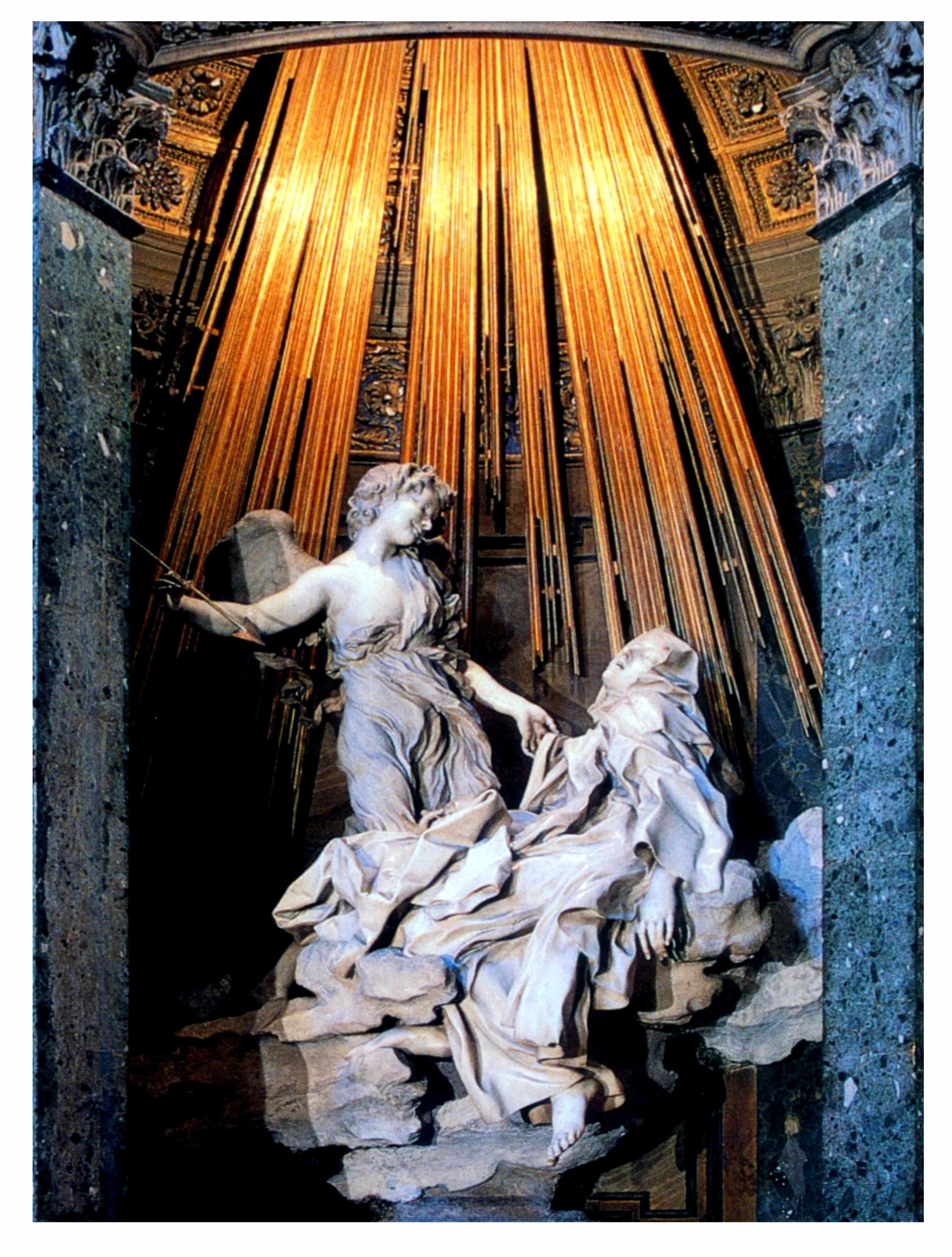
Gian Lorenzo Bernini, 1652, The Ecstasy of Saint Teresa, Church of Santa Maria della Vittoria, Rome

Though mainly peaceful, both prayer and meditation can become ecstatic. Saint Teresa’s experience of the angel was as sexual as it was ascetic:

I saw in his hand a long spear of gold, and at the iron’s point there seemed to be a little fire. He appeared to me to be thrusting it at times into my heart, and to pierce my very entrails; when he drew it out, he seemed to draw them out also, and to leave me all on fire with a great love of God. The pain was so great, that it made me moan; and yet so surpassing was the sweetness of this excessive pain, that I could not wish to be rid of it. The soul is satisfied now with nothing less than God (Teresa of Avila, 1581, 29:17).


The numinous is not necessarily related to religion. The romantic revolution led to the search for the numinous in nature, often described as the “sublime:”

And I have felt
A presence that disturbs me with the joy
Of elevated thoughts; a sense sublime
Of something far more deeply interfused,
Whose dwelling is the light of setting suns,
And the round ocean and the living air,
And the blue sky, and in the mind of man;
A motion and a spirit, that impels
All thinking things, all objects of all thought,
And rolls through all things.
Lines Written a Few Miles above Tintern
Abbey, William Wordsworth, 1798

The term “sublime” has multiple meanings (Saint-Girons, 2014). In the context of Wordsworth’s poem it is used in the manner of Burke in his to mean something that evokes both terror and delight.

Whatever is fitted in any sort to excite the ideas of pain, and danger, that is to say, whatever is in any sort terrible, or is conversant about terrible objects, or operates in a manner analogous to terror, is a source of the sublime; that is, it is productive of the strongest emotion which the mind is capable of feeling. When danger or pain press too nearly, they are incapable of giving any delight, and are simply terrible; but at certain distances, and with certain modifications, they may be, and they are delightful, as we every day experience. (pp. 13-14).

The numinous can come from drugs as well as devotion. Wordsworth’s friend Coleridge’s visions of Kubla Khan were induced by opium. In the latter half of the twentieth century psychedelic experiences became a common way to seek the numinous:

Take me on a trip upon your magic swirlin’ ship
My senses have been stripped, my hands can’t feel to grip
My toes too numb to step, wait only for my boot heels
To be wanderin’
I’m ready to go anywhere, I’m ready for to fade
Into my own parade, cast your dancing spell my way
I promise to go under it.
Bob Dylan, Mr Tambourine Man, 1967

The near-death experience is another way to the numinous.The anoxic brain is likely awash in psychodelic chemicals. Yet, there is no doubt of the experience, or the memory of an ascent toward the light.

Numinous experiences of whatever kind tend to make people change their thinking. This can lead to a religious belief system or faith. Faith fosters practices, such as meditation, prayer, and asceticism, that promote further numinous experiences.


Psychological Studies of the Numinous Experience

Keltner and Haidt (2003) reviewed our understanding of awe. Many different situations can elicit the mental state. We may awed in the presence of great natural beauty – sunsets, mountains, canyons, galaxies. Artistic creations can also elicit awe – paintings especially when large, music especially when loud, architecture especially when high. Great leaders and saints can trigger awe and devotion. Science can also bring forth the feeling – the ecstasy of theory rather than theology.

Awe has both emotional and cognitive characteristics. The two main emotions in the experience of awes are fear and wonder. Essential to the experience of awe is an incomplete understanding of what we are experiencing. The vastness of what we perceive overwhelms our cognitive ability. There is a pressing need to come to grips with the source of our confusion and uncertainty.

[A]we involves a need for accommodation, which may or may not be satisfied. The success of one’s attempts at accommodation may partially explain why awe can be both terrifying (when one fails to understand) and enlightening (when one succeeds).

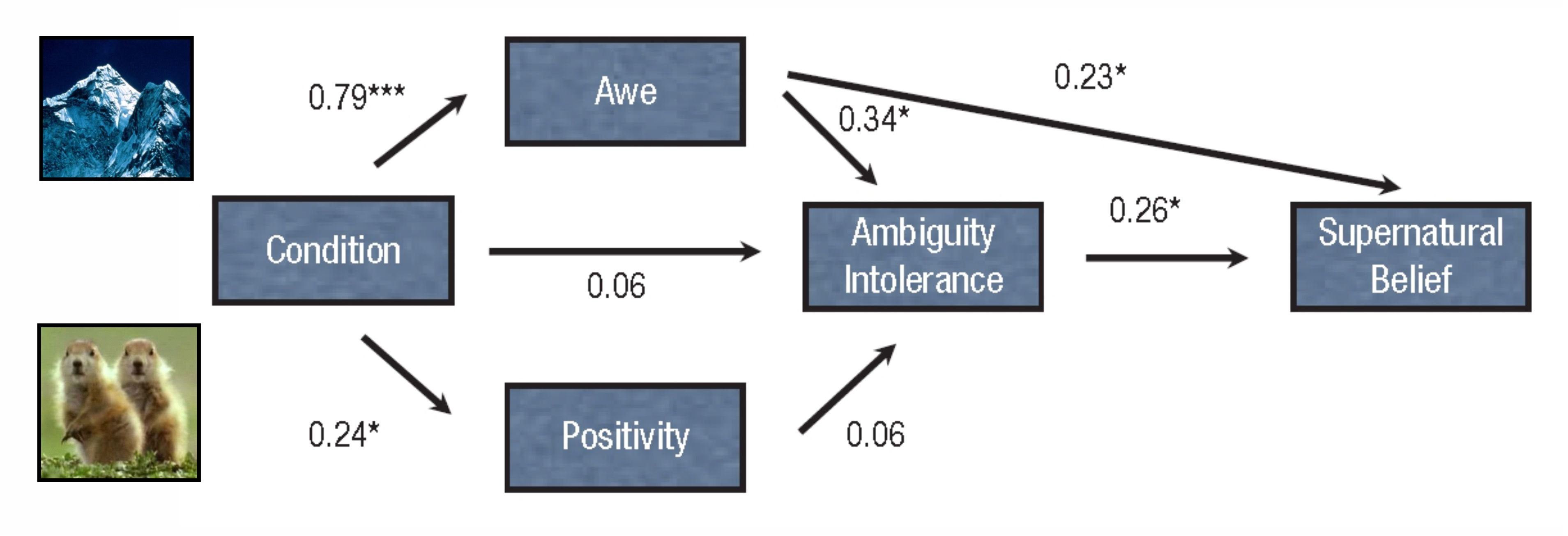
The experience of the numinous often leads to a belief in supernatural powers. A recent psychological study by Valdesolo and Graham (2014) investigated how this comes about. Subjects were exposed to two conditions. In one they watched awe-inspiring videos of sunsets, mountains, canyons and galaxies. In another they watched humorous videos of animal behavior. Their emotional experience (awe, positivity or neutral) was quantified using simple scales.

Two questionnaires were administered. One determined the subject’s ability to tolerate uncertainty: “I feel uncomfortable when I don’t understand the reason why an event occurred in my life” Another determined the subject’s belief in supernatural forces: “The events that occur in this world unfold according to God’s or some other nonhuman entity’s plan.” A correlational analysis showed that awe induced by the experimental manipulation increased belief in supernatural forces in those that were less able to tolerate ambiguity.

valdesolo border

The authors suggest that “in the moment of awe, some of the fear and trembling can be mitigated by perceiving an author’s hand in the experience.” In a related experiment, Kristin Laurin and her colleagues (2008) related the belief in God to the “desire to avoid the emotionally uncomfortable experience of perceiving the world as random and chaotic.” God is what we postulate to make the world make sense and to provide us comfort in the face of deep emotions.

The numinous induces emotional as well as cognitive effects. However, we understand much less about our emotions than about our thoughts. The complex array of human emotions can be considered as mixtures of some primary states. Six basic emotions generally considered: happiness, sadness, fear, anger, surprise, and disgust. Other emotions were considered as combinations of these primary states. Thus hatred may be a combination of anger and disgust. In a recent paper describing computer algorithms for recognizing human emotions from facial expressions, Du and his colleagues (2014) have suggested that awe is a combination of surprise and fear.

Awe may be more complex. The experience of the numinous involves attraction as well as withdrawal: orientation toward as well as flight from, heart rate slowing as opposed to speeding. The mysterium tremendum is often also considered the mysterium fascinans.

curiosity borderSome categorizations of emotion include curiosity: that which leads us to explore our environment. Curiosity (or “interest”) is an emotional state, personality trait or motivational drive that becomes manifest in a situation where there is either a lack of arousal (boredom) or a disparity between what one experiences and what one understands (information-deprivation) (Litman, 2005). Curiosity is prominent in children. The main facial aspects of curiosity are the fixed stare, widened eyelids and pursed lips (Reeve, 1993).I suggest that the numinous induces curiosity as well as fear and uncertainty.

The numinous is difficult to describe – indeed it is often called ineffable, that which passes understanding. In the dark night of the soul a cloud of words appears as a possible summary of the psychology of the numinous:

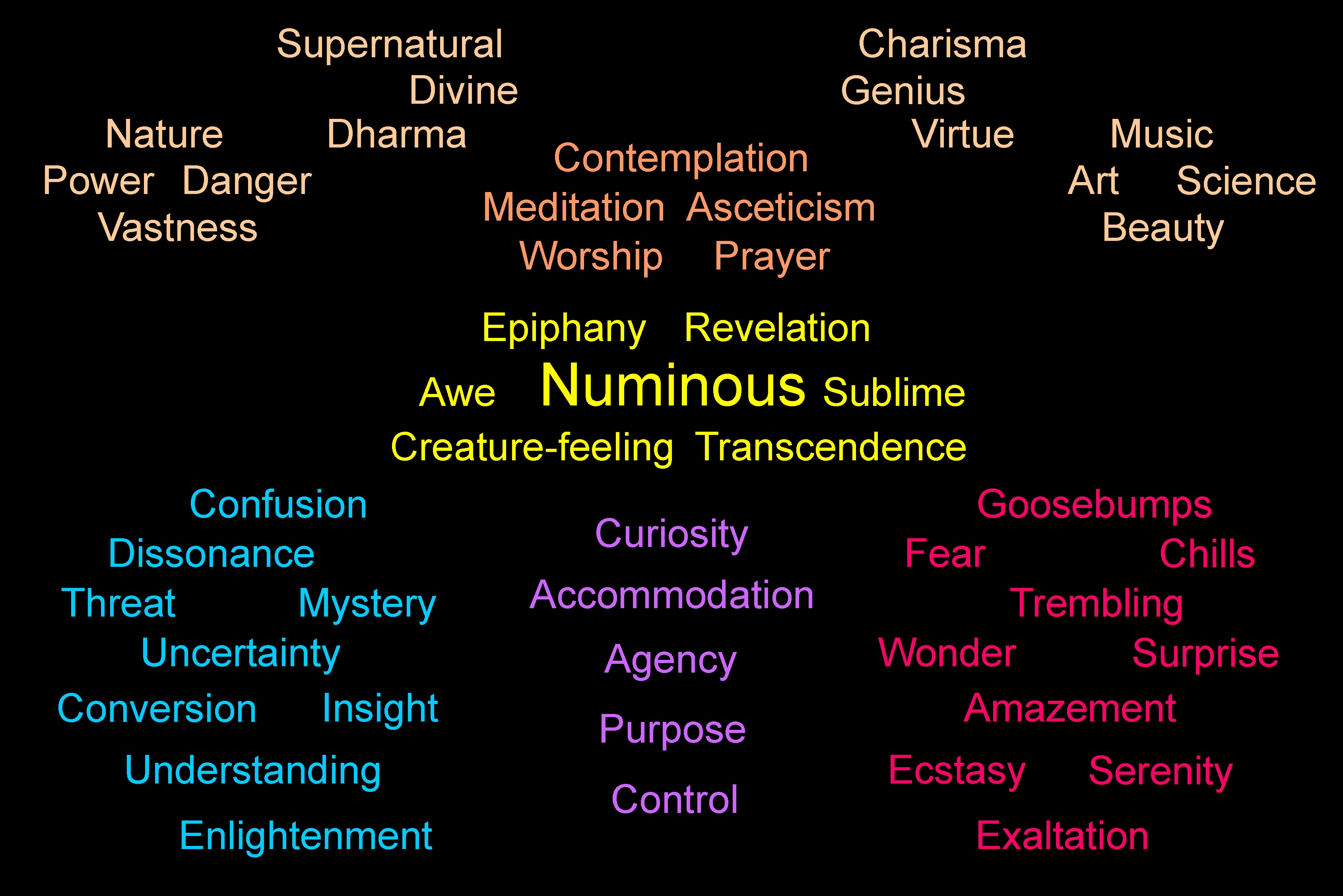
numinous word cloud

The experience of the numinous can be induced (pale yellow) by natural beauty, by supernatural effects, by charismatic people and by works of art. It can be fostered by various religious behaviors (orange). The numinous induces both cognitive and emotional responses. The main cognitive effects (blue) are confusion and uncertainty. The main emotional effects (light red) are fear and wonder. We must try to cope with these effects through processes of accommodation (purple) so that we might reach enlightenment and exaltation.


Neuroscientific Studies of the Numinous

Unfortunately, we have not been able to determine specific brain concomitants of the numinous experience. Many regions are active and these interact in as yet unknown ways. The three main areas are the prefrontal regions, especially those active during the processing of theory of mind, the temporal regions, especially those related to emotions, and the parietal regions, where different perceptual modalities come together.

Neurological approaches to the numinous have involved studies of both epilepsy and brain lesions. The numinous experience may be part of the aura of an epileptic attack. Fyodor Dostoyevsky suffered from epilepsy, and we presume that the seizures of Prince Myshkin in The Idiot reflect his own experience:

His mind, his heart were lit up with an extraordinary light; all his agitation, all his doubts, all his worries were as if placated at once, resolved in a sort of sublime tranquility, filled with serene harmonious joy, and hope, filled with reason and ultimate cause.

Although the origin of Dostoyevsky’s seizures is unknown, most consider them as temporal lobe epilepsy. Surveys show that about 4 % of patients with temporal lobe epilepsy have religious or mystical experience either in the aura or in the post-ictal state (Devinsky & Lai, 2008). The experience is much more likely pleasant than not.

Attempts to trigger the numinous experience in normal subjects by magnetic stimulation of the temporal lobe (Persinger, 2002) have not been replicated (Granqvist et al., 2005). The stimulus levels were likely too low to have any neuronal effect, and the numinous experiences reported were probably related to suggestion rather than to stimulation.

Olaf Blanke and his colleagues (2004) studied five patients who reported out-of-body experiences and found lesions in the temporo-parietal region of the brain. This region where the different perceptual systems come together may be important in the representation of the self within a world. Losing oneself and becoming swept away in a more universal experience may therefore result from damage to these regions. This area of the cortex is very sensitive to anoxia since it is at the furthest reaches of the cortical vascular supply. Some have suggested that the prophets who received divine revelations when they went up into the mountains might have been particularly susceptible to hypoxia (Arzy et al., 2005). A similar hypothesis can be made for the near-death experience.

The electrical activity of the human brain changes markedly during the numinous experience. Both alpha and theta activity significantly increase during meditation (e.g. Cahn & Polich, 2006; Cahn et al., 2013; Tsai et al, 2013). The problem is that we do not really know what these rhythms mean in terms of brain processing. Furthermore, we do not know whether the rhythmic changes are an essential part of the meditation process or simply a side-effect. The alpha rhythm is likely an idling activity generated when the visual cortex is not processing information. Theta activity can occur in drowsiness and in emotional arousal. In the sixties, seekers of the numinous trained their brains to increase their alpha rhythm. Whether or not such biofeedback brought forth revelations independently of the pharmaceuticals that were its frequent concomitants remains unknown. As well as changing the ongoing EEG rhythms, meditation also alters the electrical activity evoked or induced by external stimuli (Cahn et al., 2013). Again we have difficulty determining what this means for the meditative state because we do not really know what these changes indicate.

Functional MRI studies of the numinous experience are difficult. Mystic visions may not come easily in a multi-Tesla magnetic field. Many experiments have occurred and many manipulations have been made (a non-critical review is Fingelkurts & Fingelkurts, 2009). Some studies are woefully inadequate in terms of their design and analysis. Others are intriguing but founder on the difficulty of setting up experimental manipulations that can lead to a sense of the numinous within the confines of the magnet. Two sets of studies illustrate the problems.

Beauregard and his colleagues studied Carmelite nuns as they recalled mystical experiences (Beauregard et al., 2006, 2008). They found multiple regions active in comparison to the resting state, most prominently in the inferior frontal, temporal and parietal regions.

Kapogiannis and his colleagues used a much less effective manipulation – subjects either evaluated religious statements or discriminated fonts (Kapogiannis et al., 2009, 2014). Their only significant finding related to a belief in God’s lack of involvement in the world. The brain only betrayed its lack of faith.

Perhaps the numinous is in the interactions of networks rather than the activity of neurons. Brain connectivity is likely as important as brain activity (Yeo et al., 2011). A recent study of meditation by Xu and his colleagues (2014) showed activity mainly in the default, frontoparietal, and limbic networks. The default network involving frontal, parietal and temporal regions is typically active during resting control conditions when the brain is not involved in the experimental task. Intriguingly, the default network was more active during meditation than during the normal resting state. Perhaps the default mode of the human cerebral cortex allows the experience of the numinous, at least in the sense of the brain freely thinking without external constraint. When we withdraw from the world and look inward, our thoughts often turn to matters of philosophy. As Alfred North Whitehead (1926) said “Religion is the art and theory of the internal life of man.”


Overview

Although the numinous experience is the focus of scripture and the basis for religious belief, we have little knowledge of how it occurs. We have some understanding of the psychology that underlies the experience. Emotions of fear and wonder combine with a cognitive state of confusion and uncertainty. The outcome of the experience can be some accommodation of our thinking to allow a larger view of the world. We know very little about how the brain mediates the numinous experience. This is unfortunate since it is so important. It is what changes lives.

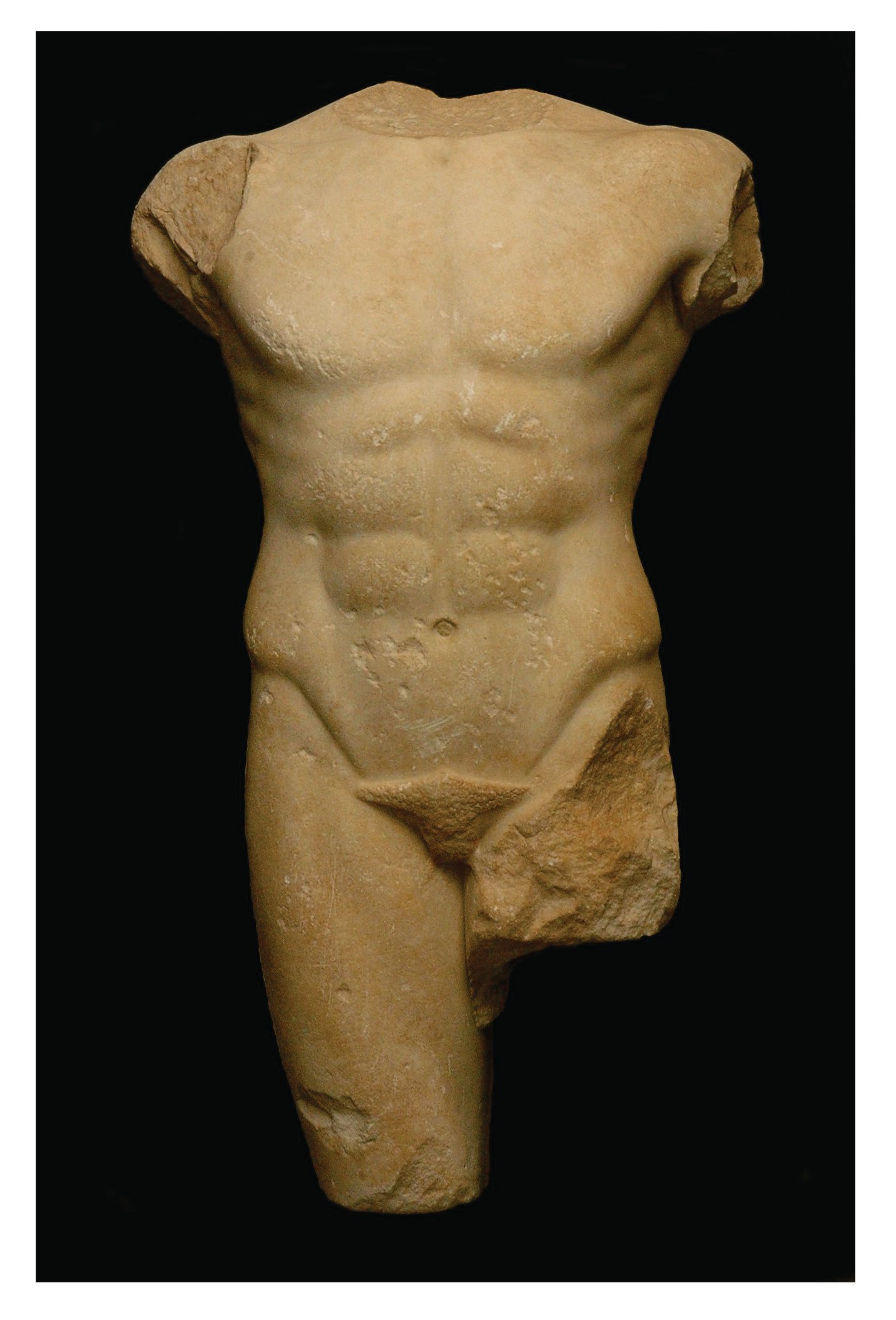
louvre torso border


Rainer Maria Rilke wrote about his experience of the numinous while looking at a torso of Apollo in the Louvre. His poem Archaïscher Torso Apollos (Rilke, 1908) concludes:

           denn da ist keine Stelle,
die dich nicht sieht. Du mußt dein Leben ändern.

           for there is no place
that does not see you. You must change your life.


References

Arzy, S., Idel, M., Landis, T., & Blanke, O. (2005) Why revelations have occurred on mountains? Linking mystical experiences and cognitive neuroscience. Medical Hypotheses, 65, 841–845

Blanke, O., Landis, T., Spinelli, L., & Seeck, M. (2004). Out-of-body experience and autoscopy of neurological origin. Brain, 127, 243–258.

Beauregard, M., & Paquette,V. (2006). Neural correlates of a mystical experience in Carmelite nuns. Neuroscience Letters, 405, 186–190.

Beauregard, M., & Paquette,V. (2008). EEG activity in Carmelite nuns during a mystical experience. Neuroscience Letters, 444, 1-4

Burke, E. (1757). A philosophical enquiry into the origin of our ideas of the sublime and beautiful. London: R. and J. Dodsley.

Cahn, B. R., & Polich, J. (2006). Meditation states and traits: EEG, ERP, and neuroimaging studies. Psychological Bulletin, 132, 180–211.

Cahn, B. R., Delorme, A., & Polich, J. (2013). Event-related delta, theta, alpha and gamma correlates to auditory oddball processing during Vipassana meditation. Social Cognitive and Affective Neuroscience, 8, 100-111.

Devinsky, O., & Lai, G. (2008). Spirituality and religion in epilepsy. Epilepsy & Behavior, 12, 636–643

Dostoyevsky, F. (1869, translated by Pevear, R., & Volokhonsky, L., 2002). The idiot. New York: Everyman’s Library. (Part II Chapter V, pp. 225-226).

Du, S., Tao, Y., & Martinez, A. M. (2014). Compound facial expressions of emotion.  Proceedings National Academy Sciences (USA), 111, E1454–E1462.

Fingelkurts, A. A., & Fingelkurts, A. A. (2009). Is our brain hardwired to produce God, or is our brain hardwired to perceive God? A systematic review on the role of the brain in mediating religious experience. Cognitive Processing, 10, 293-326.

Granqvist, P., Fredrikson, M., Unge, P., Hagenfeldt, A., Valind, S., Larhammar, D., & Larsson, M. (2005). Sensed presence and mystical experiences are predicted by suggestibility, not by the application of transcranial weak complex magnetic fields. Neuroscience Letters, 379, 1–6.

James, W. (1902). The Varieties of Religious Experience. New York: Longmans, Green and Company. (Lecture III: The Reality of the Unseen)

Kapogiannis, D., Barbey, A. K., Su, M., Zamboni, G., Krueger, F., Grafman, J. (2009). Cognitive and neural foundations of religious belief. Proceedings of the National Academy of  Science U S A, 106, 4876-4881.

Kapogiannis, D., Deshpande, G., Krueger, F., Thornburg, M. P., & Grafman, J. H. (2014). Brain networks shaping religious belief. Brain Connectivity, 4, 70-79.

Keltner, D., & Haidt, J. (2003). Approaching awe, a moral, spiritual, and aesthetic emotion. Cognition & Emotion, 17, 297–314.

Laurin, K., Kay, A. C., & Moscovitch, D. A. (2008). Journal of Experimental Social Psychology, 44, 1559–1562.

Lewis, C. S. (1940, reprinted 1977). The Problem of Pain. London: Harper Collins (Fount). (p. 14).

Lewis-Williams, J. D., & Pearce, D. G. (2005). Inside the Neolithic mind: Consciousness, cosmos, and the realm of the gods. London: Thames & Hudson.

Litman, J.A. (2005). Curiosity and the pleasures of learning: Wanting and liking new information. Cognition and Emotion, 19, 793-814.

Otto, R. (1917, translated 1923 by J.W. Harvey). The Idea of the Holy. An inquiry into the non-rational factor in the idea of the divine and its relation to the rational. London: Oxford University Press.

Persinger, M. A. (2002). Experimental simulation of the God experience.: implications for religious beliefs and the future of the human species. In R. Joseph (Ed.) Neurotheology: Brain, Science, Spirituality, Religious Experience. (pp. 267-284). San Jose, CA: University Press.

Red Pine (2009). Lao-tzu’s Taoteching: with selected commentaries of the past 2,000 years. Port Townsend, WA: Copper Canyon Press.

Reeve, J. (1993). The face of interest. Motivation and Emotion, 17, 353-375.

Rilke, R. M. (1908). Der neuen Gedichte anderer Teil. Leipzig: Insel.

Teresa of Avila, Saint (1581, translated D. Lewis, 1904). The Life of St. Teresa of Jesus, of the Order of Our Lady of Carmel. 3rd Edition. London: Thomas Baker. (Available online through Christian Classics Ethereal Library).

Saint-Girons, B. (2014). Sublime. In B. Cassin (Ed.) Dictionary of untranslatables: a philosophical lexicon. (pp. 1091-1096). Princeton, NJ: Princeton University Press.

Tsai, J. F., Jou, S. H., Cho, W. C., & Lin, C. M. (2013). Electroencephalography when meditation advances: a case-based time-series analysis. Cognitive Processing, 14, 371–376.

Valdesolo, P., & Graham, J. (2014). Awe, uncertainty, and agency detection. Psychological Science, 25, 170-178

Whitehead, A. N. (1926). Religion in the making. Cambridge: Cambridge University Press (pp. 47-48)

Wiman, C. (2013). My bright abyss. Meditation of a modern believer. New York: Farrar, Straus & Giroux.

Wordsworth, W., & Coleridge, S. T. (1798). Lyrical ballads with a few other poems. London: J. & A. Arch.

Xu, J., Vik, A., Groote, I. R., Lagopoulos, J., Holen, A., Ellingsen, O., Håberg, A. K., & Davanger, S. (2014). Nondirective meditation activates default mode network and areas associated with memory retrieval and emotional processing. Frontiers in Human Neuroscience, 8:86.

Yeo, B. T., Krienen, F. M., Sepulcre, J., Sabuncu, M. R,, Lashkari, D., Hollinshead, M., Roffman, J. L., Smoller, J. W., Zöllei, L., Polimeni, J. R., Fischl, B., Liu, H., & Buckner, R. L. (2011). The organization of the human cerebral cortex estimated by intrinsic functional connectivity. Journal of Neurophysiology, 106, 1125-1165.