Robert Desnos: Contrée

Robert Desnos (both ‘s’ pronounced, 1900-1945) was a Surrealist French poet. During World War II, after initially serving in the French army, Desnos became an active member of La Résistance. The illustration shows a photograph taken in 1943. On 22 February 1944, Desnos was arrested by the Gestapo and deported to Auschwitz. From there he was transferred to the Flōha labor campe, and finally, in April 1945, to Theresienstadt in Czechoslovakia. Though Theresienstadt was liberated on 8 May, Desnos died there of typhus on 8 June. Contrée (“Against the Grain”), a book of 25 poems celebrating the land of France and its resistance to oppression, was published in 1944.

Rrose Sélavy

In 1921, the young poet Robert Desnos met André Breton (1896-1966) and became an enthusiastic participant in the automatic writing sessions of the Surrealist Movement. During this time, he also became smitten with Rrose Sélavy, the altera ego of Marcel Duchamp (1887-1968). The name is a pun for Eros, c’est la vie (“love is life”), or arroser la vie (“give a toast to life”). In 1922, Desnos published under the title Rrose Sélavy multiple brief wordplays, puns and spoonerisms, supposedly dictated to him by Rrose while the poet slept (Conley, 2002, pp 15-44). Breton described them as “words making love” (les mots font l’amour) (Desnos, 1999, p 159).

The following are three of the wordplays: 

Rrose Sélavy voudrait bien savoir si l’amour, cette colle à couches, rend plus durs les molles couches [Rrose Sélavy would like to know if love is the fly-paper that hardens the soft foundation.]

La solution d’un sage est la pollution d’un page. [The solution of a sage is the pollution of a page. (page in the sense of both book-page and page-boy)]

Est-ce que la caresse des putains excuse la paresse des culs teints? [Does the whore’s caress excuse the laziness of dyed buttocks?]

The following illustration shows a photograph of Desnos by Man Ray (1925) and a painting by Georges Malkine (1928).
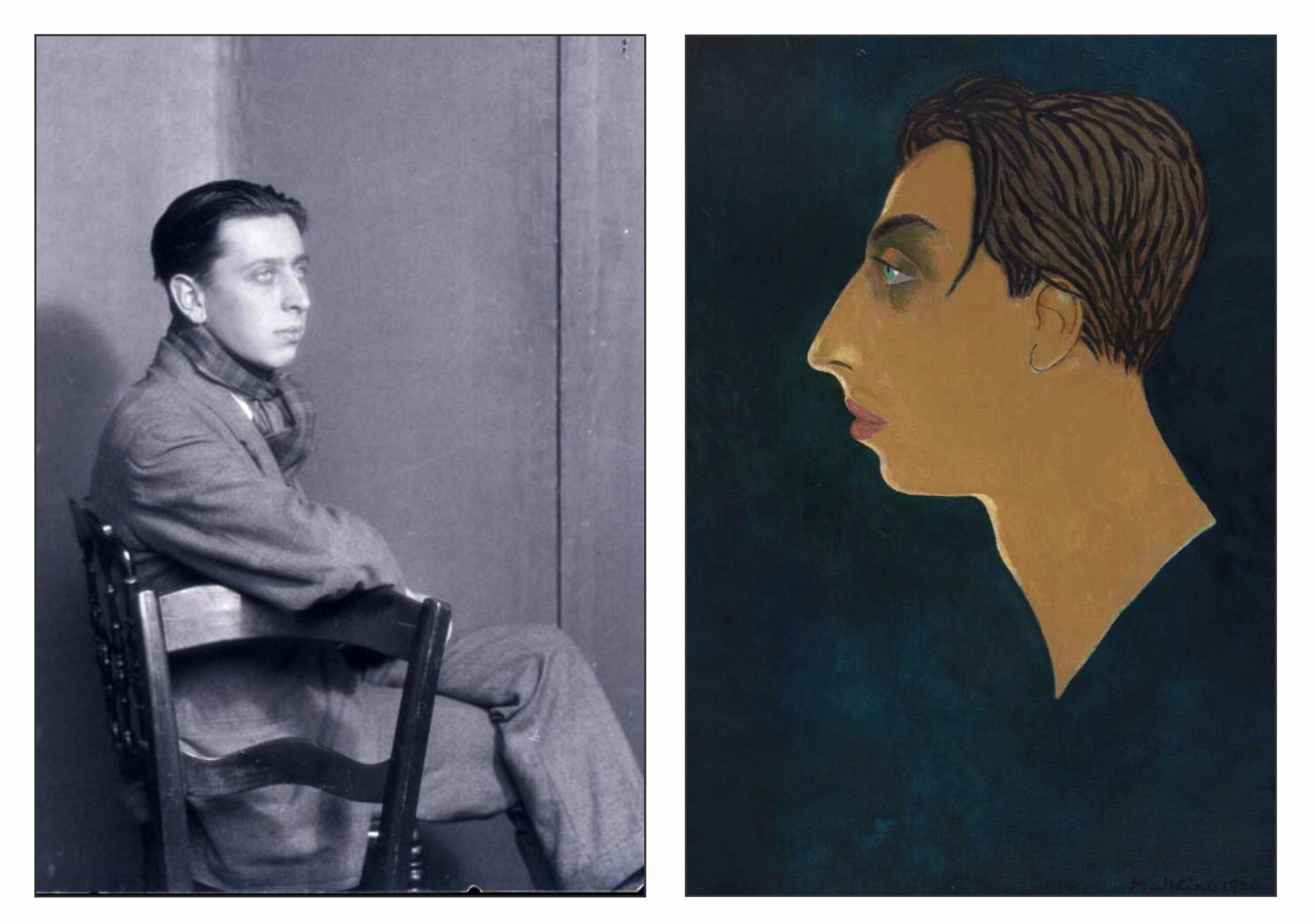
 

Desnos and Breton denounced each other in 1929. Desnos continued to write poetry though his days of automatic sleep-writing were over. During the 1930s many of his works were dedicated to the love of his life Youki (Lucie Badoud), who had been the muse and model for the Japanese artist Tsuguharu Fujita. Her nickname was the Japanese word for “snow.”
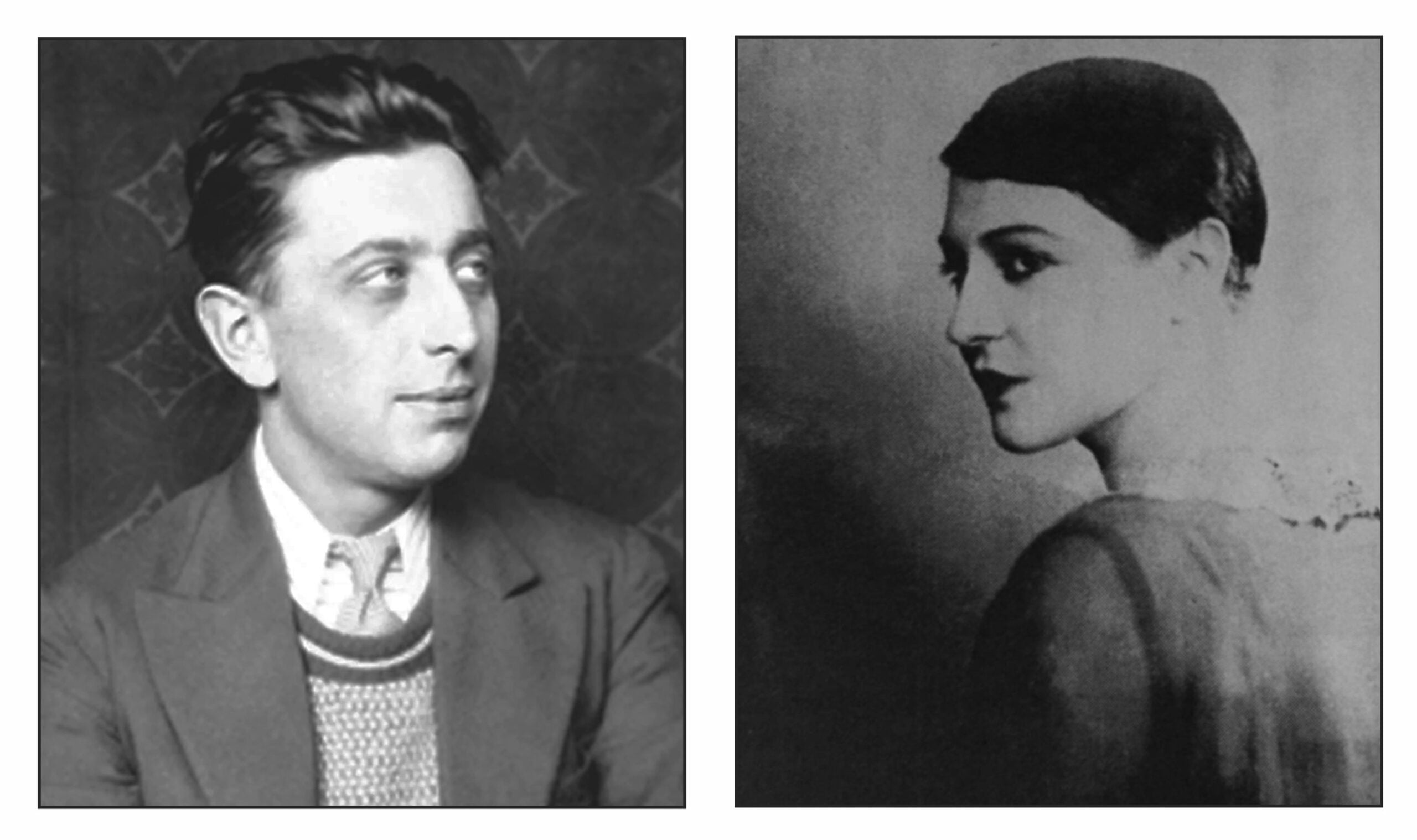
World War II

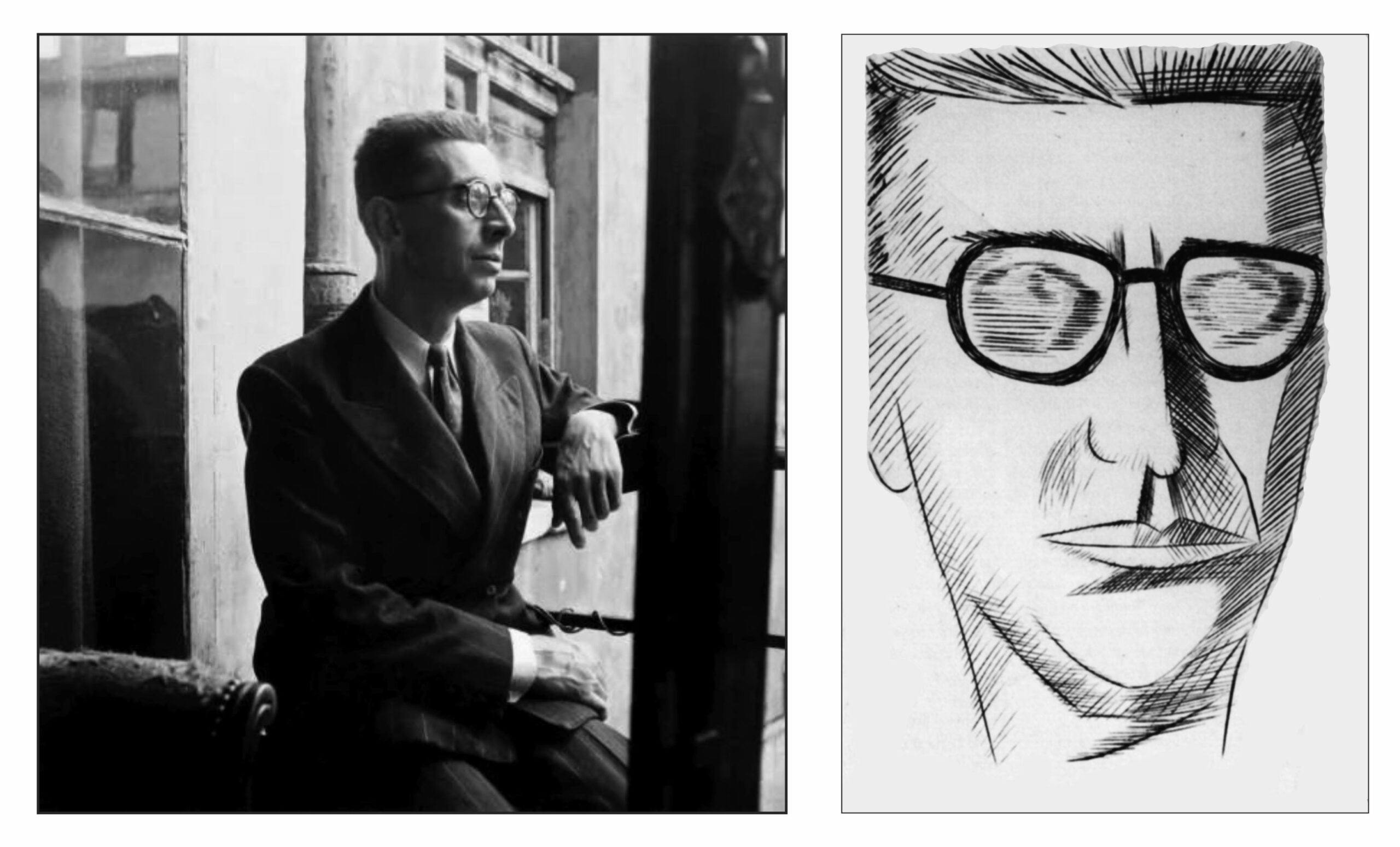
During the initial period of the war when very little happened – la drôle de guerre (phoney war) – Desnos enlisted in the army. When Germany invaded France in May 1940, he was captured, released, and then demobilised. He became a journalist at the newspaper Aujourd’hui, but continued to write poetry. Those poems that were more overtly anti-fascist were published clandestinely using pseudonyms. He participated in La Résistance by providing them with information secretly available to the newspaper, and arranging counterfeit papers for Jews and others sought by the occupying Germans. In February 1944, he was apparently betrayed by someone he had offended, and deported. The following illustration shows a photograph by Dora Maar taken in 1943, and an engraving portrait by Gaston Roux that was used for the volume État de veille (State of Alert) published by Robert Godet in 1943.
 

Contrée

Robert Godet published Contrée after Desnos was deported. The meaning of the title is complex. Both the French “contrée” and the English “country” derive from the Latin (terra) contrata which means “(the land) spread out before one.” In both languages the words came to mean the land around a town or city: rural rather than urban. In English, “country” was also used to denote the political entity that governs a defined region, a meaning that in French was taken by “pays.” The word “contrée” can also be the feminine past participle of the verb “contrer” meaning “act against” or “counter.” Adès (2017) translates this as “against the grain.” For Desnos “(la terre) contrée” suggests both the enduring land, and its rebellion against the current government.

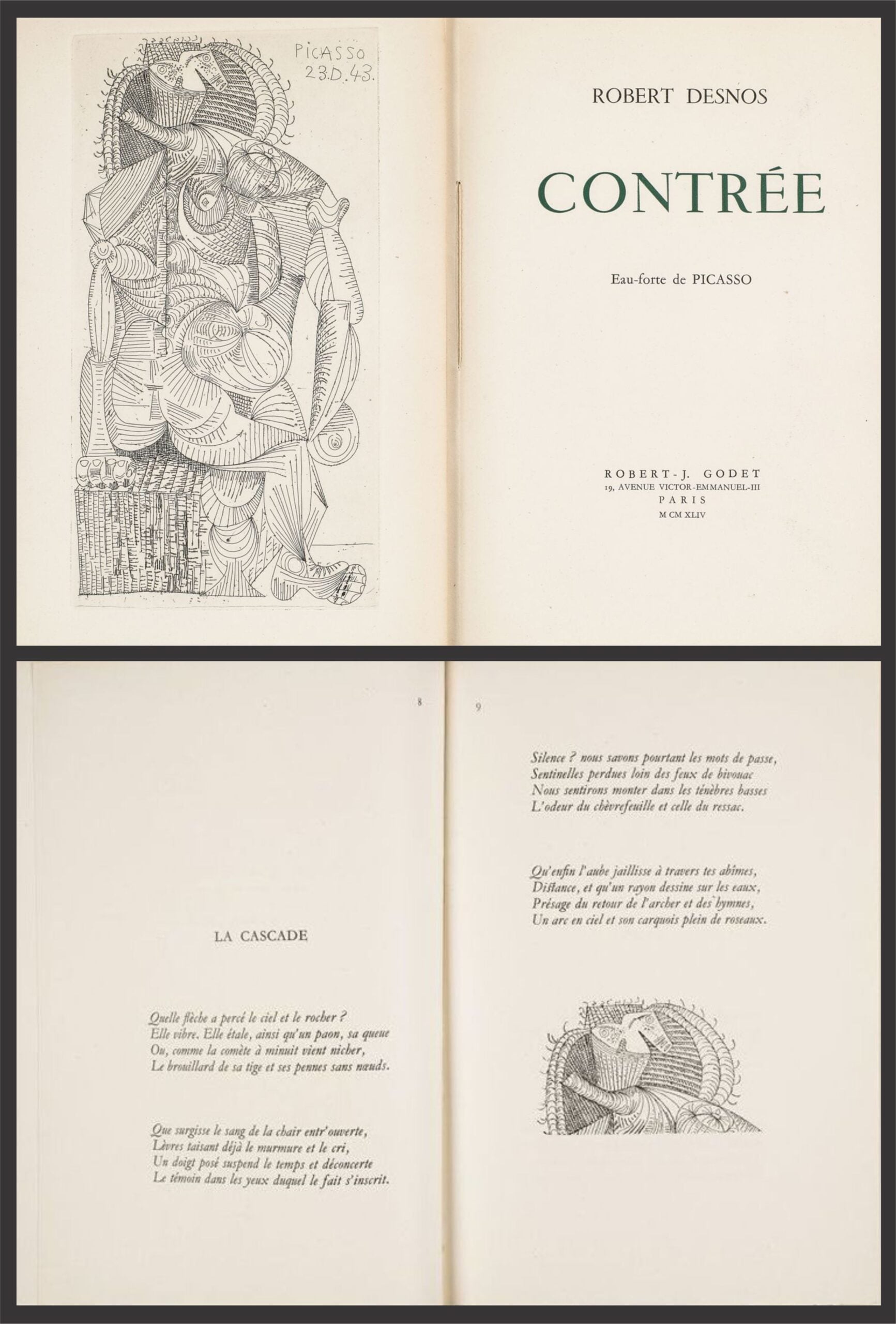
The following illustration shows the etching of Dora Maar by Picasso that was included in the book, the title page, and then the first poem (La cascade). The etching shows a woman seated with her legs crossed on a chair made of books (Swan, 2017). The woman appears to be seen from both front and back; some have suggested that this double perspective might represent an embracing couple. Youki thought that the etching represented “a knight leaning on a stack of books” (Swan 2017, p 5). Picasso arranged for parts of the etching to be printed with each of the poems in the book. This may represent the desecration of the body of France by the Germans.
According to Conley (2003, p 124), Contrée contains one poem for every hour of the day and concludes with an epitaph. Although some of the poems are in free verse, most are formal in structure: nine poems are sonnets. Translations are difficult since one must find some compromise between form and meaning. Kulik (Desnos, 1984, 2004) uses free verse and finds exact meanings; Adès (2017) uses rhymes when Desnos does, albeit not always in the same order. The following sections present five of the poems from the book in the original French (Desnos, 1999; also Rimes website), and in the English translation of Timothy Adès (2017). Each poem is recited by Yvon Jean.  


La cascade

Quelle flèche a percé le ciel et le rocher?
Elle vibre. Elle étale, ainsi qu’un paon, sa queue
Ou, comme la comète à minuit vient nicher,
Le brouillard de sa tige et ses pennes sans noeuds.

Que surgisse le sang de la chair entr’ouverte,
Lèvres taisant déjà le murmure et le cri,
Un doigt posé suspend le temps et déconcerte
Le témoin dans les yeux duquel le fait s’inscrit.

Silence ? nous savons pourtant les mots de passe,
Sentinelles perdues loin des feux de bivouac
Nous sentirons monter dans les ténèbres basses
L’odeur du chèvrefeuille et celle du ressac.

Qu’enfin l’aube jaillisse à travers tes abîmes,
Distance, et rayon dessine sur les eaux,
Présage du retour de l’archer et des hymnes,
Un arc-en-ciel et son carquois plein de roseaux.

The following is a reading by Yvon Jean


The Waterfall

What arrow split the sky and pierced the rock?
Vibrant, it spreads its peacock tail and flaunts
Its blurry shaft and sleek unblemished flights,
The way the midnight comet finds its mark.

The flesh is opened. For the blood to rise,
While lips suppress the murmurs and the cries,
A finger bids time stop, pre-occupies
The witness who records it with his eyes.

Silence? And yet we know the passwords well.
We strayed from our camp-fires, we sentinels:
Drifting from shady corners we can smell
Salt surf aromas, honeysuckle smells.

Dawn bursts on far-off depths; a sunbeam limns
Upon the waves, at last, a sketch that leads
Back the returning archer and his hymns:
A rainbow, with its quiver full of reeds.

This poem, the first in the collection, seems on the surface to be like the love poems of the French Renaissance, wherein the lover sought to capture his beloved with the arrows of desire. However, the poem describes “the political pursuit of armed Resistance fighters hidden in the landscape of France” (Conley, 2003, p 131). Near a waterfall someone has been wounded, blood flows, passwords are given, and eventually the maquisards returns to their hideout and dawn arrives. The imagery for the waterfall is striking: the waterfall is likened to the tale of a peacock or a comet. Because of Desnos’ love of wordplay, one must wonder whether the word paon should recall païen meaning “pagan” – one who does not follow the established faith.


Le paysage

J’avais rêvé d’aimer. J’aime encor mais l’amour
Ce n’est plus ce bouquet de lilas et de roses
Chargeant de leurs parfums la forêt où repose
Une flamme à l’issue de sentiers sans détour.

J’avais rêvé d’aimer. J’aime encor mais l’amour
Ce n’est plus cet orage où l’éclair superpose
Ses bûchers aux châteaux, déroute, décompose,
Illumine en fuyant l’adieu au carrefour.

C’est le silex en feu sous mon pas dans la nuit,
Le mot qu’aucun lexique au monde n’a traduit
L’écume sur la mer, dans le ciel ce nuage.

À vieillir tout devient rigide et lumineux,
Des boulevards sans noms et des cordes sans noeuds.
Je me sens me roidir avec le paysage.

The following is a reading by Yvon Jean


The Countryside

I dreamed of loving. Still I love, but now
Love is no more that rose and lilac spray
Whose perfume filled the woods where each pathway
Led on directly to the blazing glow

I dreamed of loving. Still I love, but now
Love’s not that storm whose lightning kindled high
Towers, unhorsed, unhinged, and fleetingly
Would set the parting of the ways aglow.

Love is the flint my footstep sparks at night,
The word no lexicon can render right,
Foam of the sea, the cloud across the sky.

Old age makes all things fixed and luminous:
Knots are unravelled, streets anonymous;
Set in our ways, the countryside and I.

The countryside of Contrée stands in ironic contrast to that espoused by Vichy propaganda. Conley (200 3, p 1260 remarks

Under Pétain liberty, equality, and fraternity became outmoded concepts replaced with the moralizing, hierarchical values of work, family, and the notion of a mythical homeland led by the patriarchal Marshal.

Desnos remembers the springtime of his life when love blossomed, and the stormy time that followed when the war began. Now the country has hardened into resistance. Love still exists but it is now the flint that attempts to ignite rebellion.


La peste

Dans la rue un pas retentit. La cloche n’a qu’un seul
battant. Où va-t-il le promeneur qui se rapproche
lentement et s’arrête par instant? Le voici devant
la maison. J’entends son souffle derrière la porte.

Je vois le ciel à travers la vitre. Je vois le ciel où les
astres roulent sur l’arête des toits. C’est la grande
Ourse ou Bételgeuse, c’est Vénus au ventre blanc, c’est
Diane qui dégrafe sa tunique près d’une fontaine de lumière.

Jamais lunes ni soleils ne roulèrent si loin de la
terre, jamais l’air de nuit ne fut si opaque et si
lourd. Je pèse sur ma porte qui résiste…

Elle s’ouvre enfin, son battant claque contre le
mur. Et tandis que le pas s’éloigne je déchiffre
sur une affiche jaune les lettres noires du mot « Peste ».

The following is a reading by Yvon Jean:

The Plague

In the road a footstep echoes. The bell has only one
clapper. Where’s he going, the walker, coming
slowly nearer and briefly stopping? Now he’s outside
the house. I hear him breathing behind the door.

I see the sky through the glass. I see the sky where the
stars run on the rooftops. It’s the great
Bear or Betelgeuse, it’s Venus the white-bellied,
it’s Diana unfastening her tunic near a fountain of light.

Never did moons or suns run so far from the
earth, never was the night air so dense and so
heavy. I lean on my door which resists…

It opens at last, it swings and knocks against the
wall. And while the footstep moves away I decipher
on a yellow poster the word in black letters, “Plague”

The poem is written in free verse with the line-endings arbitrarily placed between article and noun, adverb and adjective. The world is out of joint. Never were the heavens so far from the earth. An unseen walker labels the house wherein we live in terror as infested by the plague. The label is ambiguous. Does it represent the oppression of the occupiers or the paralyzing fear of the oppressed? On another level the yellow poster recalls the yellow star that French Jews were required to wear.


La voix

Une voix, une voix qui vient de si loin
Qu’elle ne fait plus tinter les oreilles,
Une voix, comme un tambour, voilée
Parvient pourtant, distinctement, jusqu’à nous.
Bien qu’elle semble sortir d’un tombeau
Elle ne parle que d’été et de printemps,
Elle emplit le corps de joie,
Elle allume aux lèvres le sourire.

Je l’écoute. Ce n’est qu’une voix humaine
Qui traverse les fracas de la vie et des batailles,
L’écroulement du tonnerre et le murmure des bavardages.

Et vous ? Ne l’entendez-vous pas?
Elle dit « La peine sera de courte durée »
Elle dit « La belle saison est proche ».

Ne l’entendez-vous pas?

The following is a reading by Yvon Jean


The Voice

A voice, a voice coming from so far away
That it no longer rings in the ears,
A voice, like a drumbeat, muffled
Reaches us even so, distinctly.
Though it seems to issue from a tomb
It speaks only of summer and spring,
It fills the body with joy,
It kindles a smile on the lips.

I’m listening. It’s only a human voice
Coming across the din of life and of battles,
The crash of thunder and the babble of talk.

What about you? Don’t you hear it?
It says “The pain will be short-lived”
It says “The beautiful season is near”.

Don’t you hear it?

This poem is a poem of hope. In the noise of battle and the babble of talk, a voice promises that beauty will return. The voice is not loud, it is like the “still small voice” of God who promised Elijah that Israel would be delivered from its oppressors (1 Kings 19: 12).


L’épitaphe

J’ai vécu dans ces temps et depuis mille années
Je suis mort. Je vivais, non déchu mais traqué.
Toute noblesse humaine étant emprisonnée
J’étais libre parmi les esclaves masqués.

J’ai vécu dans ces temps et pourtant j’étais libre.
Je regardais le fleuve et la terre et le ciel
Tourner autour de moi, garder leur équilibre
Et les saisons fournir leurs oiseaux et leur miel.

Vous qui vivez qu’avez-vous fait de ces fortunes ?
Regrettez-vous les temps où je me débattais ?
Avez-vous cultivé pour des moissons communes ?
Avez-vous enrichi la ville où j’habitais ?

Vivants, ne craignez rien de moi, car je suis mort.
Rien ne survit de mon esprit ni de mon corps.

The following is a reading by Yvon Jean:


The Epitaph

I’ve lived today, and since antiquity
Been dead. I lived intact, but I was prey.
Man’s nobler side was jailed and put away;
Among the slaves in face-masks, I was free.

I’ve lived today, and nonetheless been free.
I watched the river and the earth and sky
Turn round me, and they kept their harmony;
Honey and birds, a seasonal supply.

How did you use these gifts, you there alive?
Did you misuse the days I spent in toil?
Did you make common cause and till the soil
To harvest? Did you make my city thrive?

Don’t fear me, you who live: I’m dead and gone:
Not soul nor body, nothing lingers on.

The sense of the poem stems from the ideas of mortality of the Greek philosopher Epicurus (341–270 BC), epitomized in the Latin epitaph used by many of his followers:

Non fui, fui, non sum, non curo (I was not; I was; I am not; I do not care).

Desnos agrees that today he lives, that before that was dead, and that after he dies nothing will remain. He cares not for before or after but concentrates on today. Despite the awfulness of the time into which he was born, he strives to remain free and to live in harmony with the world. He asks his readers if they using their talents for the common good or resigning themselves to servitude. The meaning of the poem is encapsulated in the line

J’ai vécu dans ces temps et pourtant j’étais libre


Imprisonment and Death

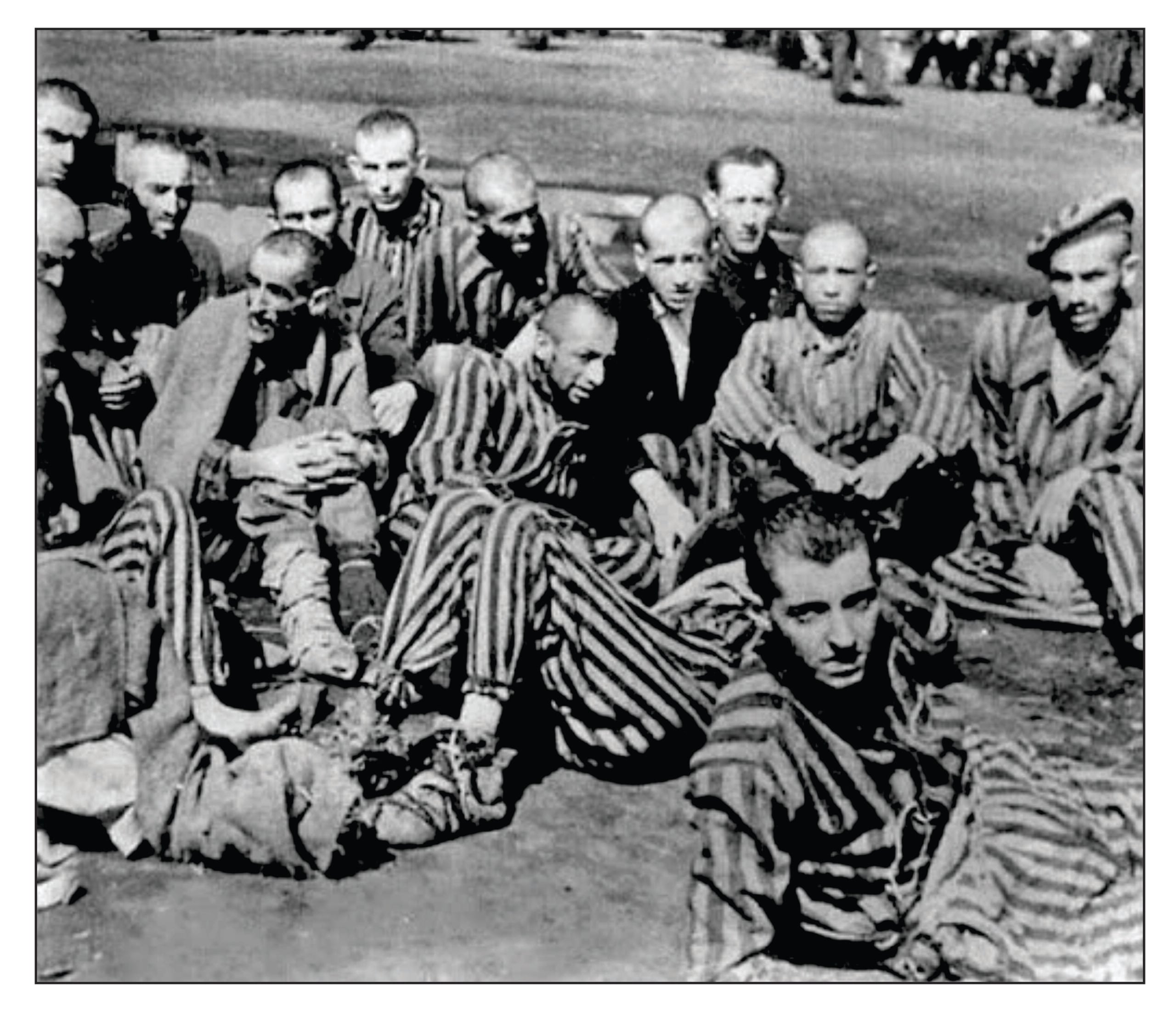
After his arrest and interrogation by the Gestapo in February, 1943, Desnos was sent to the transit camp in Compiègne. Youki visited him there and provided him with a care package. However, in April, Desnos and 1700 other prisoners were sent on to Auschwitz. From there, he was transferred to Buchenwald and then in May to the Flossenbūrg  concentration camp in Bavaria. Soon after his arrival Desnos was transferred to the Flōha sub-camp for where he worked for 11 months (Humphreys, 2002). During his stay there he wrote a few last poems usually at the request of his co-prisoners. On 14 April 1945, as the Allied Forces advanced into Germany, SS leader Heinrich Himmler ordered all concentration camps to be closed. After a forced march, Desnos arrived in Theresienstadt (Terezin) in Czechoslvakia on May 7. Germany surrendered on May 8, and all the guards left the camp at Theresienstadt. A period of chaos and starvation ensued. On June 4 a French-speaking Czech medical student Josef Stuna, assigned to help at the camp recognized Desnos. They talked about poetry, but Desnos was terribly sick with typhus, and died on June 8. The following photograph shows Desnos in a group of prisoners at Theresienstadt. He is in the center, leaning on the shoulder of a companion dressed in a black coat.
 

Mémorial des Martyrs de la Déportation

In 1962 a memorial to the 200,000 people who died in concentration camps after being deported from France during World War II was constructed behind the Cathédrale Notre-Dame de Paris on the eastern tip of Île de la Cité. The memorial, designed by Georges-Henri Pingusson, has an entrance is marked by two concrete blocks. Inside is the tomb of an unknown deportee. Along both walls of a narrow chamber leading underground are 200,000 crystals meant to symbolize each of the deportees who died in the concentration camps. The actual numbers were less than 200,000.  Among those deported were 75,000 Jews; of these only about 2,500 survived. Of the 88,000 deported on political rather than racial grounds, about 53,000 survived (Wieviorka, 2016, p 417). On the walls inside the memorial are brief quotations from several French writers: Paul Élard, Jean-Paul Sartre, Antoine de Saint-Exupéry, and Robert Desnos. The following illustration shows the memorial and the two quotations from Desnos:
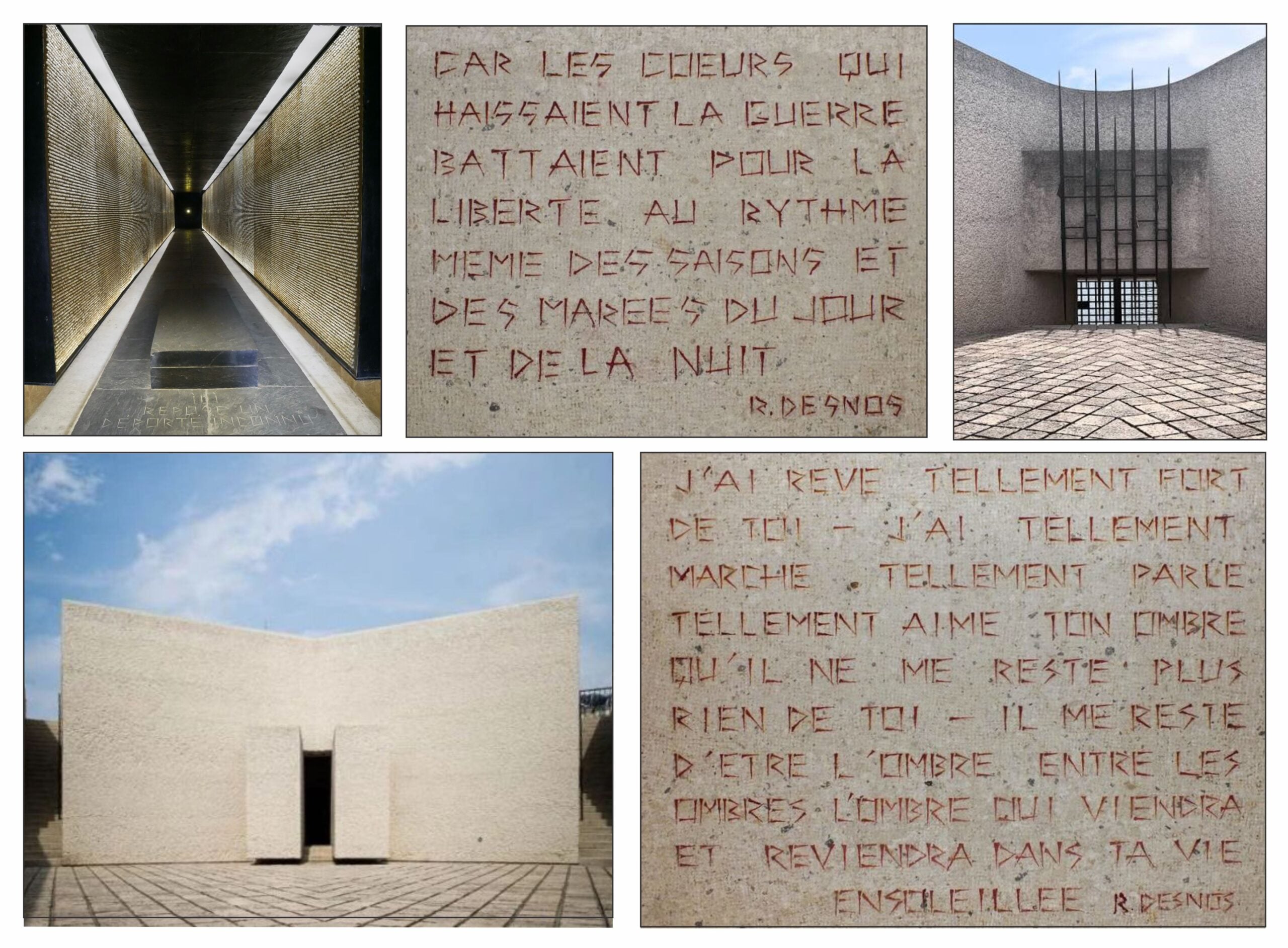
The first quotation is from the ending of a poem published in 1944:

Car ces cœurs qui haïssaient la guerre battaient pour la liberté au rythme même des saisons et des marées, du jour et de la nuit.

For these hearts that hated war were beating for liberty to the very rhythm of the seasons, the tides, day and night.  (Adès translation).

The second quotation came from what was incorrectly assumed to be his last poem (Conley, 2003, pp 203-207; Desnos/Adès, 2017, p 93). This was quoted in Czech in a brief article in a Czech newspaper on 1 July 1945 that announced the death of the French poet at Theresienstadt. Translated back into French the poem read

J’ai rêvé tellement fort de toi,
J’ai tellement marché, tellement parlé,
Tellement aimé ton ombre,
Qu’il ne me reste plus rien de toi.

Il me reste d’être l’ombre entre les ombres,
L’ombre qui viendra et reviendra
Dans ta vie ensoleillée.

The poem was thought to be addressed to France. However, the lines actually came from a 1926 prose poem that Desnos wrote for his love at the time: the singer Yvonne George

J’ai tant rêvé de toi, tant marché, parlé, couché avec ton fantôme qu’il ne me reste plus peut-être, et pourtant, qu’à être fantôme parmi les fantômes et plus ombre cent fois que l’ombre qui se promène et se promènera allégrement sur le cadran solaire de ta vie. 

I’ve dreamed of you so much, walked, talked, slept with your phantom so much that all that’s left to me perhaps, is to be a phantom among phantoms and a hundred times more shadowy than that shadow walking in joy, now and in time to come, across the sun-dial of your life. (Adès translation).


Springtime

Desnos’ real ‘last poem,’ written on 6 April 1944 in the Flossenbūrg camp (Desnos/Dumas, 1999, p 1259; Desnos/Adès, 2017, pp 512-513) was:

Printemps

Tu, Rrose Sélavy, hors de ces bornes erres
Dans un printemps en proie aux sueurs de l’amour,
Aux parfums de la rose éclose aux murs des tours,
à la fermentation des eaux et de la terre.

Sanglant, la rose au flanc, le danseur, corps de pierre
Paraît sur le théâtre au milieu des labours.
Un peuple de muets d’aveugles et de sourds
applaudira sa danse et sa mort printanière.

C’est dit. Mais la parole inscrite dans la suie
S’efface au gré des vents sous les doigts de la pluie
Pourtant nous l’entendons et lui obéissons.

Au lavoir où l’eau coule un nuage simule
À la fois le savon, la tempête et recule
l’instant où le soleil fleurira les buissons.

The following is a reading by Yvon Jean

Springtime

Rrose Sélavy, beyond these bounds you stray.
Meanwhile the waters and the earth ferment;
The rose on fortress-walls pours out its scent;
Love has its sweats and springtime is their prey.
 
The rose has torn the stone-limbed dancer’s side.
While others plough and sow, he treads the boards.
The public, blind and deaf and dumb, applauds
This rite of spring, when he has danced and died.
 
The word that’s writ in soot is wiped away
At the wind’s whim by fingers of the rain.
Nevertheless we hear it and obey.
 
Down at the wash-place where these waters run,
A cloud portrays both soap and hurricane,
Retreating when the thickets bloom in sun.
(Adès translation).

The poem hearkens back to the days of his youth when Desnos was in love with words and with Rrose Sélavy, and looks forward to the days when spring would dispel the darkness that was Europe during the Nazi era. Desnos was forever the optimist. He used to read the palms of his co-prisoners and he would always find happiness in their futures (Desnos/Caws, 2007, p 1280). An apocryphal story is that he read the palms of a group of prisoners slated for the gas chambers and that his description of their future lives so confused the guards that the prisoners were not executed.


References:

Poems and translations

Desnos, R. (translated by Forché, C., & Kulik, W. T., 1991). The selected poems of Robert Desnos. Ecco Press.

Desnos, R. (translated by Kulik, W, 1994). Contré = Country: twenty-five poems. Windhover Press (University of Iowa).

Desnos, R. (edited by Dumas, M.-C., 1999). Œuvres. Gallimard.

Desnos, R. (translated by Kulik, W, 2004). The voice of Robert Desnos: selected poems. Sheep Meadow Press.

Desnos, R. (edited by Caws, M. A., 2007) Essential poems and writings of Robert Desnos. Black Widow Press

Desnos, R. (translated by Adès, T., 2017). Robert Desnos: Surrealist, Lover, Resistant: collected poems. Arc Publications.

 Others

Conley, K. (2003). Robert Desnos, surrealism, and the marvelous in everyday life. University of Nebraska Press.

Humphreys, K. (2002). Robert Desnos. In Leroux, J.-F. (Ed.) Modern French poets. (Dictionary of Literary Biography Vol. 258). Gale

Kulik, W. (1990). On Desnos. The American Poetry Review, 19(3), 29-31.

Swan, R. (2019). Contrée: Picasso’s visual fragmented tailpieces emphasise the poetry of Robert Desnos. Knowledge Commons.

Wieviorka, O. (translated by J. M. Todd, 2016). The French Resistance. Harvard University Press.

Gauguin

Gauguin

In 1891, Paul Gauguin (1848-1903) left his wife and five children and sailed for Tahiti, where he hoped

to immerse myself in virgin nature, to see no one but savages, live their life, with no other thought in mind but to render, the way a child would, the concepts formed in my brain and to do this with the aid of nothing but the primitive means of art, the only means that are good and true (letter quoted in Eisenman, 1997, p 77).

His decision to desert his family and follow his art has been considered by philosophers as a case study in ethics. Was his hope of artistic success adequate justification for his behavior? As luck would have it, Gauguin did become a famous artist, albeit posthumously. Can this retrospectively vindicate his flight to Tahiti? These issues are complex – both in the abstract and in terms of Gauguin’s actual life.

Life Before Art

Gauguin was born in France but spent much of his childhood in Peru, where his mother’s family had aristocratic connections. His grandmother Flora Tristan (1803-1844), a feminist and socialist, was the niece of Juan Pío Camilo de Tristán y Moscoso, who briefly served as president of South Peru.  

Gauguin returned to France to finish his schooling and then spent three years as a merchant sailor and two years in the French Navy, during which time he travelled throughout the world. When he returned to France in 1871, Gauguin was taken in by a rich relative, Gustave Arosa, an avid collector of realist and impressionist paintings. Arosa got Gauguin a job on the stock exchange, and introduced him to Camille Pissarro.

Gauguin became a very successful broker, and took up painting as a hobby. He married a young Danish woman Mette-Sophie Gad (1850–1920), and had five children. Having made a fortune on the stock market, Gauguin became an art collector himself, buying paintings by Pissarro, Cézanne, Manet, Degas, and Sisley (Bretell & Fonsmark, 2005, p 56)   

Impressionism

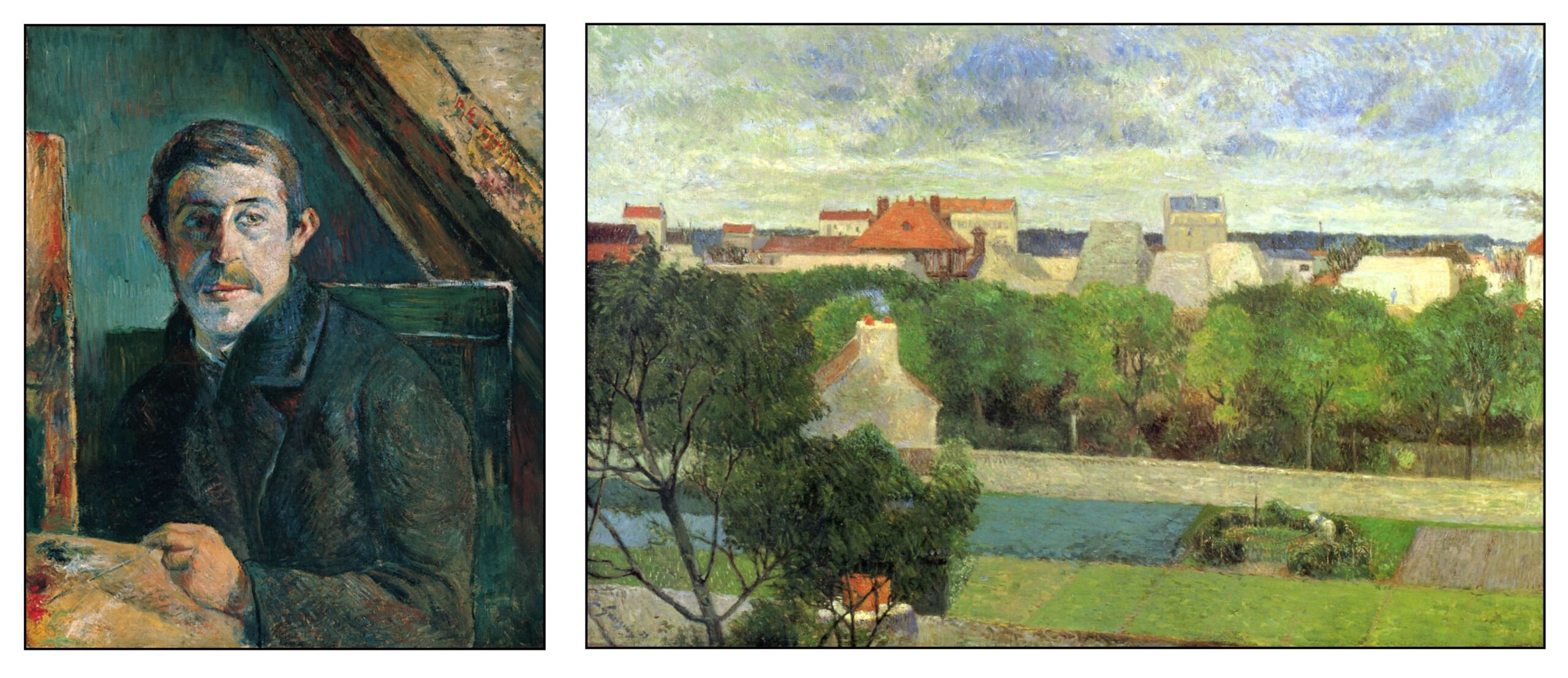
Gauguin had talent and he quickly learned the new Impressionist style. His paintings were included in the Impressionist Exhibitions beginning with the fifth in 1880. Below is one of his paintings from this time – Vaugirard Market Gardens, 1879 – together with a self-portrait from 1885.

The Stock Market Crash

In 1882 the Union Générale bank collapsed and the Paris Bourse crashed. By 1883 Gauguin was out of work. The family moved to Rouen where life was less expensive than in Paris. Gauguin decided to paint full time. However, he was not able to sell his paintings. Mette moved back to Denmark with most of the family in 1884, and Gauguin reluctantly followed in 1885. For a brief time, he was a salesman for French tarpaulins in Copenhagen, but he did not speak Danish and the endeavor came to nought. Mette supported the family by giving French lessons. Gauguin’s paintings found no market among the Danes. He became depressed, and sometimes was sometimes physically violent with his wife (Mathews, 2001, p 62). Mette’s family insisted that he leave.

In 1985 Gauguin returned alone to Paris. He submitted nineteen paintings to the Eighth and Final Exhibition of the Impressionist in1886, but these were not well received by either critics or buyers. Gauguin fled Paris for Pont-Aven in Brittany, an artists’ colony where living was cheap. There he worked with Emile Bernard and Louis Anquetin.   

Vision after the Sermon (1888)

Gauguin was fascinated by the deep religiosity of the Breton peasants. He developed a new style of painting to portray their lives. He began using clearly outlined blocks of flat color in the manner of the Japanese prints that had become popular in Paris. He further decided that colors should be based as much upon the imagination as upon reality. This emphasis on the creative imagination derived from the Symbolist movement in literature. Gauguin named his new style of painting “Synthetism.” This approach was also called “Cloisonnism” after the technique for decorating metalwork, whereby colored enamels are placed within spaces bordered by metal strips. A masterpiece of this approach was Gauguin’s The Vision after the Sermon, which portrays Breton peasants experiencing a vision of Jacob wrestling with the angel after a sermon on this episode from Genesis 22: 22-32 (Herban, 1977):

The figure at the lower right is Gauguin. The young peasant at the lower left is likely a portrait of Bernard’s sister Madeleine, with whom Gauguin was infatuated. The following is a description of the painting from Vargas Llosa’s novel The Way to Paradise. Vargas Llosa used the second person narrative as though someone is talking to Gauguin (or Gauguin is talking to himself). “Koké” was the name that the Tahitians called him – their best approximation of his name:  

The true miracle of the painting wasn’t the apparition of biblical characters in real life, Paul, or in the minds of those humble peasants. It was the insolent colors, daringly antinaturalist: the vermillion of the earth, the bottle green of Jacob’s clothing, the ultramarine blue of the angel, the Prussian black of the women’s garments and the pink-, green- and blue-tinted white of the great row of caps and collars interposed between the spectator, the apple tree, and the grappling pair. What was miraculous was the weightlessness reigning at the center of the painting, the space in which the tree, the cow, and the fervent women seemed to levitate under the spell of their faith. The miracle was that you had managed to vanquish prosaic realism by creating a new reality on the canvas, where the objective and the subjective, the real and the supernatural, were mingled, indivisible. Well done, Paul! Your first masterpiece, Koké! (Vargas Llosa, 2003, pp 217-218)

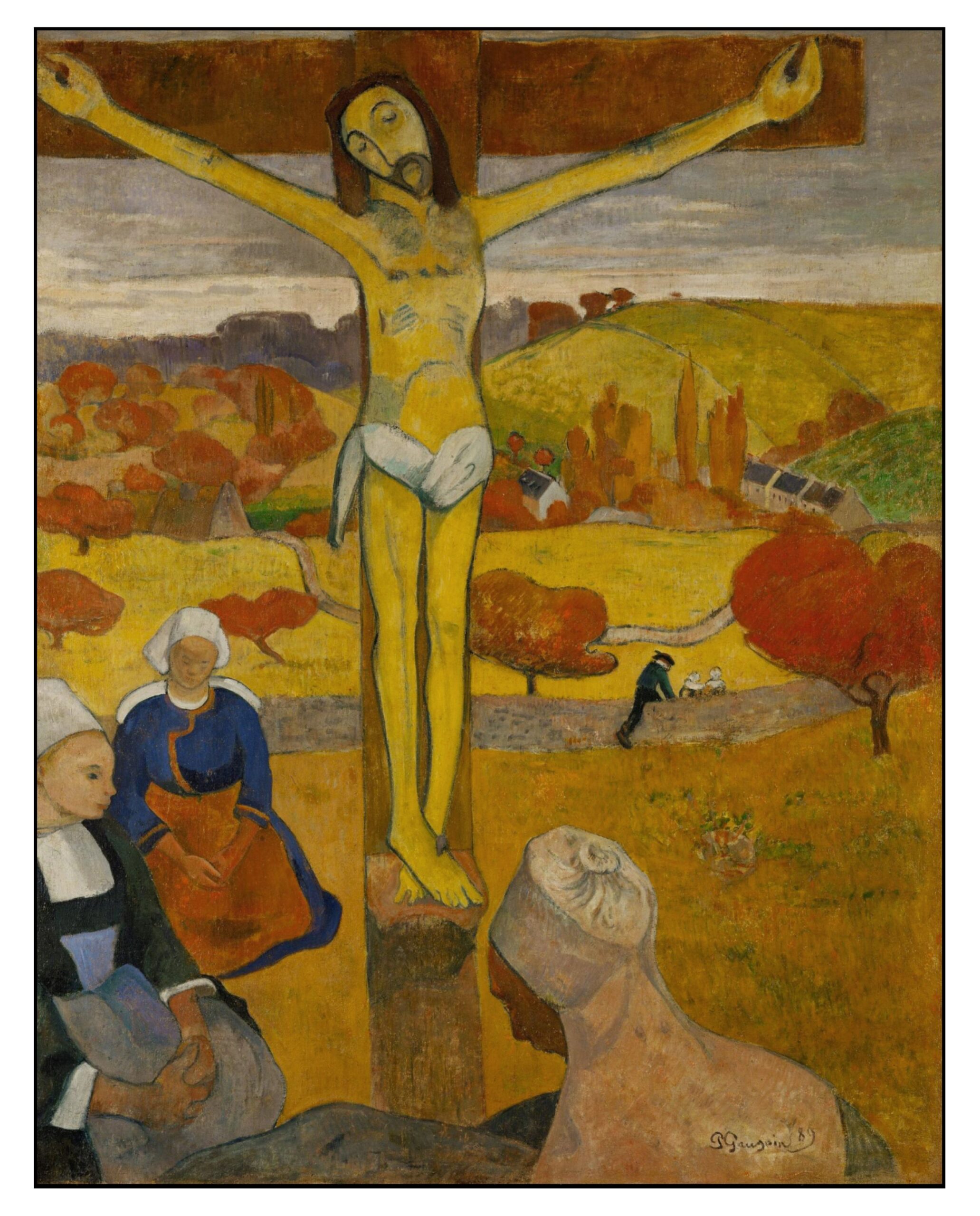
Gauguin also created a striking version of the crucifixion based on his time in Pont-Aven – The Yellow Christ (1889):

The Studio of the South

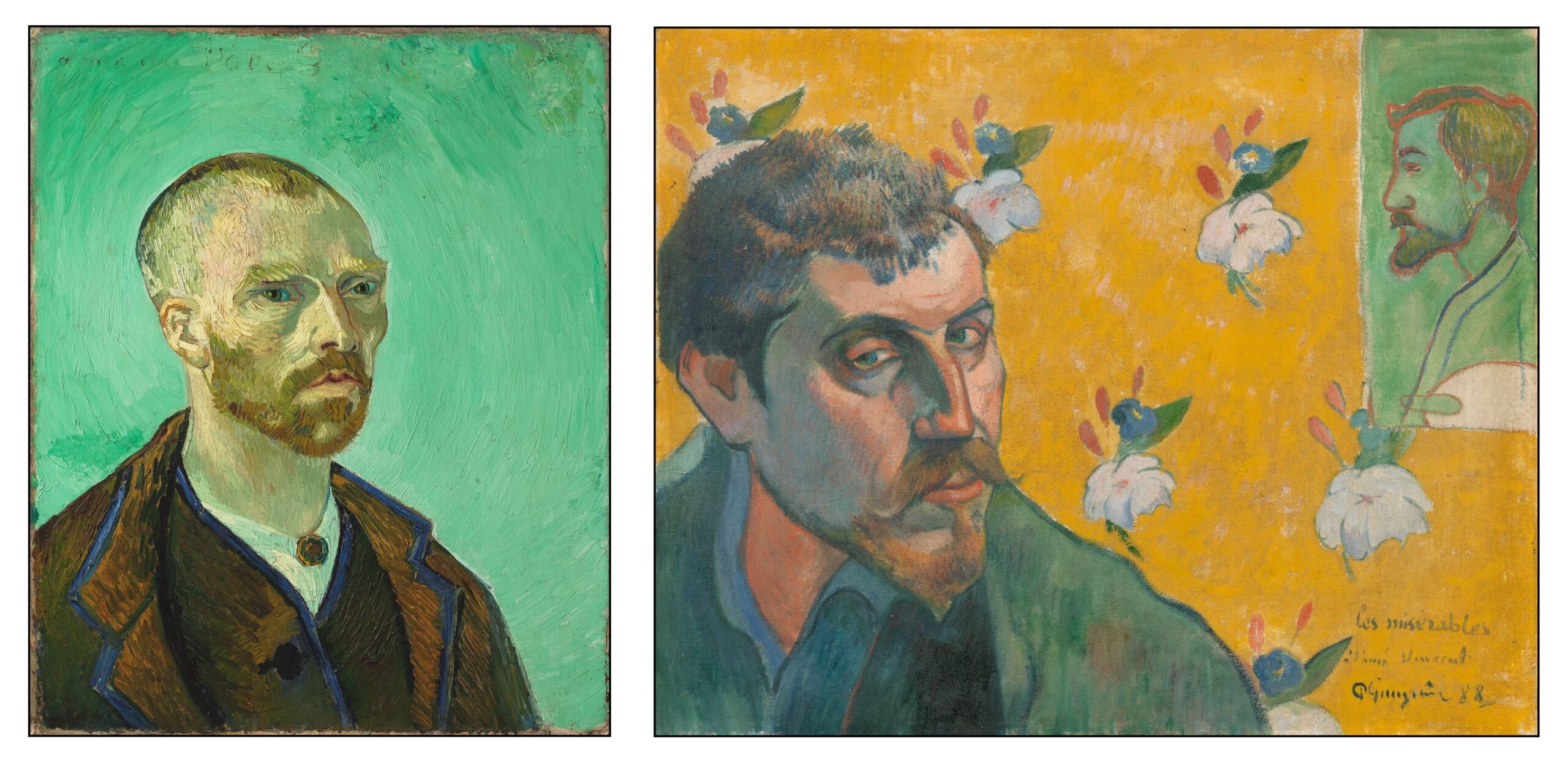
Back in Paris, Gauguin met the dealer Theo van Gogh and through him his brother Vincent. The two artists exchanged self-portraits. Van Gogh’s saw himself as an austere Japanese monk; Gauguin’s portrait is off-center against a floral wallpaper background includes a portrait of Emile Bernard:

Vincent invited Gauguin to stay with him in Arles in Provence. For nine weeks in late 1888 the two artists lived and worked together (Silverman, 2000; Druick et al, 2001). Although their relations were initially amicable, they disagreed on many things and the tension between them increased. If we are to believe what Gauguin later recalled in his journals (Gauguin, 2009, pp 12-14), one evening van Gogh threatened Gauguin with a razor and Gauguin decamped to stay the night in a hotel. Van Gogh then proceeded to cut off his right ear with the razor and presented the ear to one of the prostitutes in Arles. Gauguin fled to Paris and van Gogh was confined to an asylum.   

Manao Tupapau

Van Gogh and Gauguin had discussed the book Rarahu by Pierre Loti (1880), which described the author’s marriage to a Tahitian girl, and the two artists considered the possibility of painting in the islands of the Pacific. Van Gogh committed suicide in 1890. Gauguin sailed to Tahiti in 1891.

In Tahiti Gauguin took a Tahitian girl aged thirteen, Tehemana (Tehura), as his mistress. One night when returning home late to his hut, he found her lying frightened on the bed:   

Quickly, I struck a match, and I saw. . . . Tehura, immobile, naked, lying face downward flat on the bed with the eyes inordinately large with fear. She looked at me, and seemed not to recognize me. As for myself I stood for some moments strangely uncertain. A contagion emanated from the terror of Tehura. I had the illusion that a phosphorescent light was streaming from her staring eyes. Never had I seen her so beautiful, so tremulously beautiful. And then in this half-light which was surely peopled for her with dangerous apparitions and terrifying suggestions, I was afraid to make any movement which might increase the child’s paroxysm of fright. How could I know what at that moment I might seem to her? Might she not with my frightened face take me for one of the demons and specters, one of the Tupapaus, with which the legends of her race people sleepless nights? Did I really know who in truth she was herself? The intensity of fright which had dominated her as the result of the physical and moral power of her superstitions had transformed her into a strange being, entirely different from anything I had known heretofore. (Gauguin, 1919/85, pp 33-34)

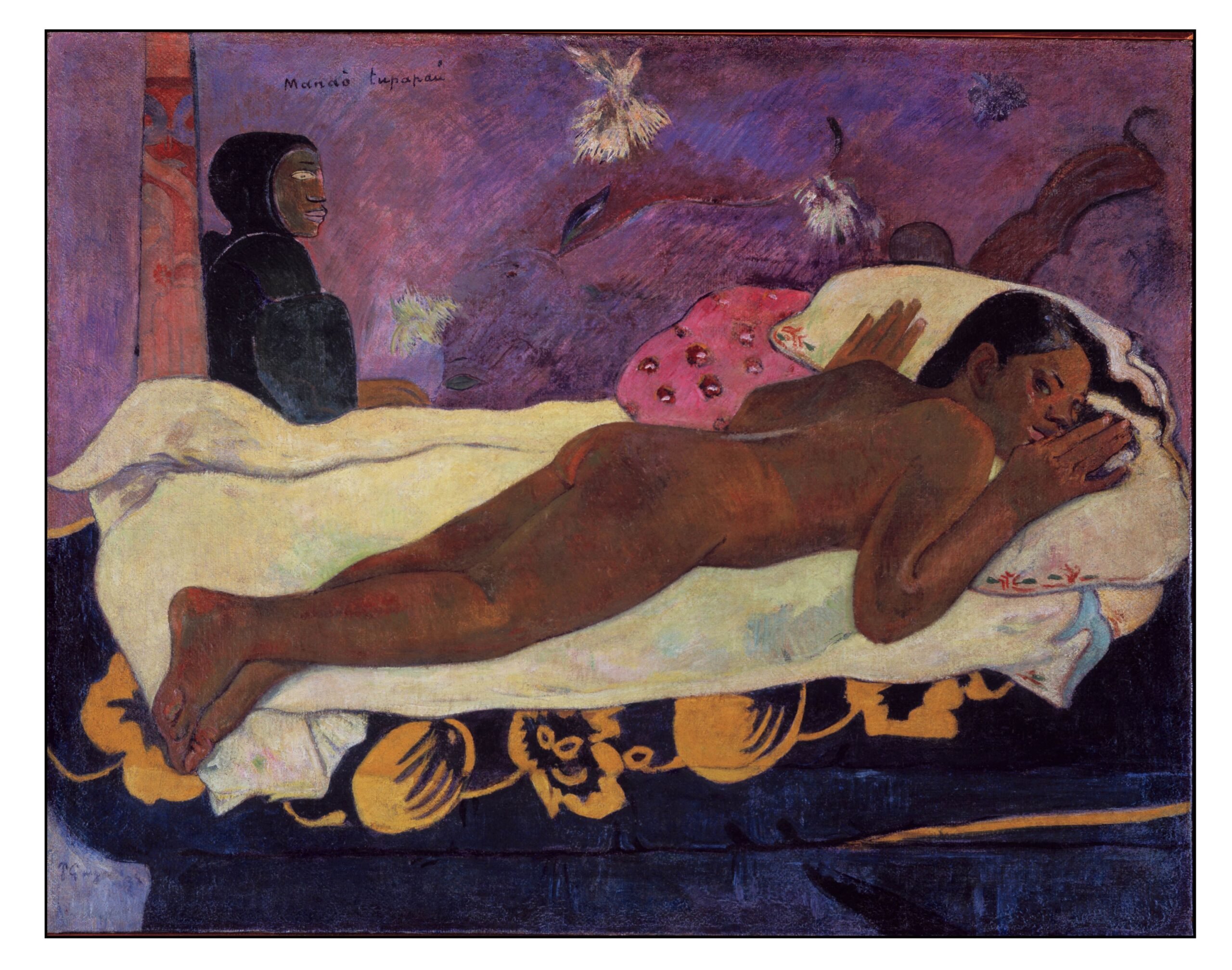
In Tahitian legends the Tupapaus were malignant demons. Over the next few days Gauguin painted the scene that he had witnessed, calling it Manao Tupapau, “Spirit of the Dead Watching” (1892):

Vargas Llosa imagines his thoughts about the painting:

Yes, this was truly the painting of a savage. He regarded it with satisfaction when it seemed to him that it was finished. In him, as in the savage mind, the everyday and the fantastic were united in a single reality, somber, forbidding, infused with religiosity and desire, life and death. The lower half of the painting was objective, realist; the upper half subjective and unreal but no less authentic. The naked girl would be obscene without the fear in her eyes and the incipient downturn of her mouth. But fear didn’t diminish her beauty. It augmented it, tightening her buttocks in such an insinuating way, making them an altar of human flesh on which to celebrate a barbaric ceremony, in homage to a cruel and pagan god. And in the upper part of the canvas was the ghost, which was really more yours than Tahitian, Koké. It bore no resemblance to those demons with claws and dragon teeth that Moerenhout described. It was an old woman in a hooded cloak, like the crones of Brittany forever fixed in your memory, time-less women who, when you lived in Pont-Aven or Le Pouldu, you would meet on the streets of Finistère. They seemed half dead already, ghosts in life. If a statistical analysis were deemed necessary, the items belonging to the objective world were these: the mattress, jet-black like the girl’s hair; the yellow flowers; the greenish sheets of pounded bark; the pale green cushion; and the pink cushion, whose tint seemed to have been transferred to the girl’s upper lip. This order of reality was counterbalanced by the painting’s upper half: there the floating flowers were sparks, gleams, featherlight phosphorescent meteors aloft in a bluish mauve sky in which the colored brushstrokes suggested a cascade of pointed leaves. The ghost, in profile and very quiet, leaned against a cylindrical post, a totem of delicately colored abstract forms, reddish and glassy blue in tone. This upper half was a mutable, shifting, elusive substance, seeming as if it might evaporate at any minute. From up close, the ghost had a straight nose, swollen lips, and the large fixed eye of a parrot. You had managed to give the whole a flawless harmony, Koké. Funereal music emanated from it, and light shone from the greenish-yellow of the sheet and the orange-tinted yellow of the flowers. (Vargas Llosa, 2003, pp 22-23)

The painting is one of the most discussed of Gauguin’s Tahitian pictures. The commentary is ambivalent: 

All this is to put the painting in the best possible light. But there is surely more to it than just a charming anecdote based on local folklore. In blunt terms what we actually see is the interior of a hut at night, with a large couch, covered in a boldly flowered cloth, partially overlaid by a plain white sheet on which lies a naked girl, face down, another of the child-like, yet distinctly erotic figures who have appeared before in Gauguin’s work — pert buttocks offered invitingly to the spectator. There is even something disturbing about the way the face is half-turned towards the viewer, or rather towards the artist, Gauguin, as if he and not the figure in the background is the spirit of which she is afraid. (Sweetman, 1995, pp 326-327).

Where Do We Come From? What Are We? Where Are We Going?

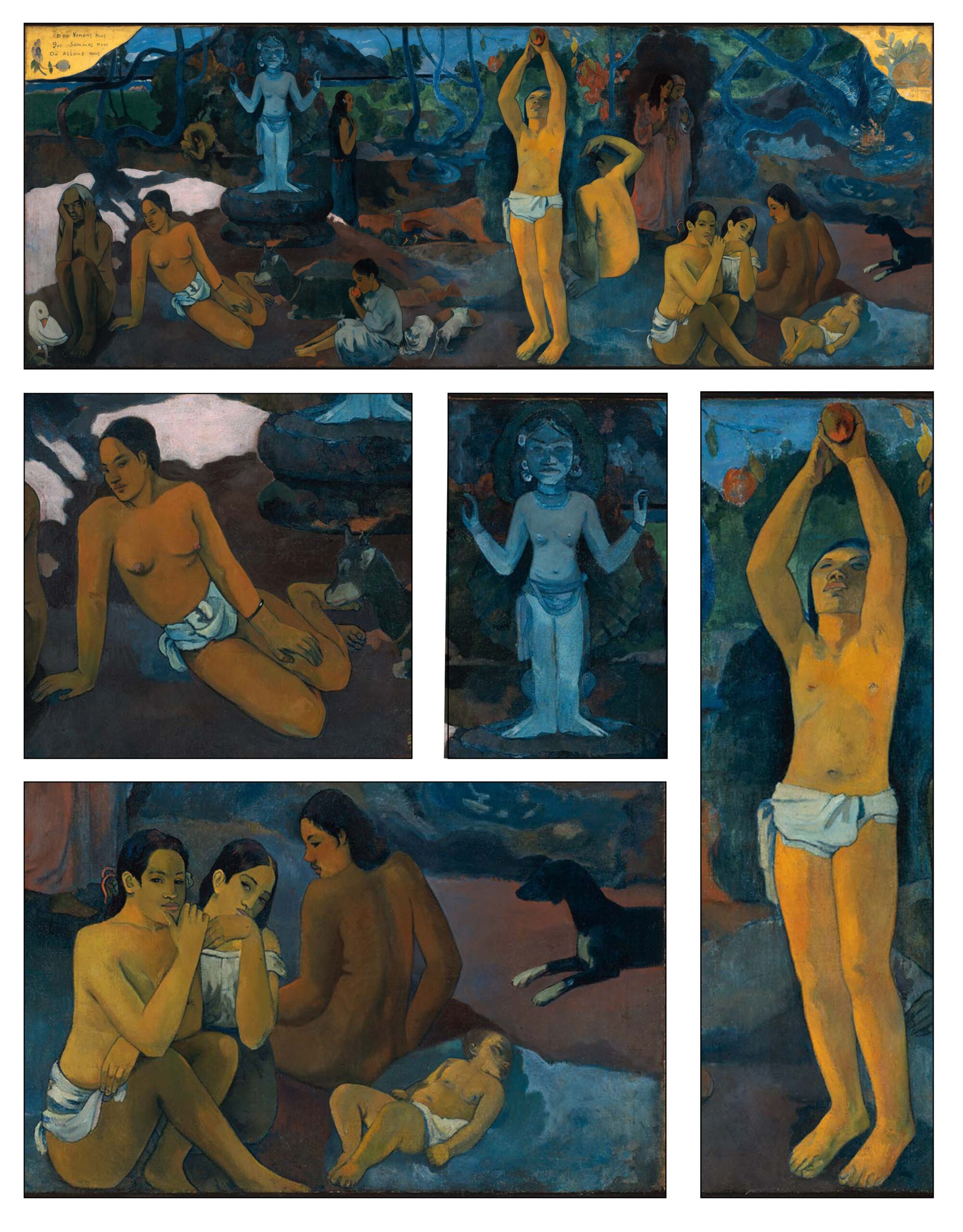
In 1893 Gauguin returned to Paris and arranged to sell some of his Tahitian paintings. He was not happy in Paris and in 1895 he returned to Tahiti. Over the next few years, Gauguin became severely depressed. He had suffered a broken ankle in a brawl in Concarneau near Pont Aven and the fracture had never really healed. He drank excessively – partly to relieve the pain and partly to improve his mood. He had sores on his legs, perhaps related to syphilis or perhaps related to the malnutrition that accompanies alcoholism. In 1897 he attempted to commit suicide with arsenic but failed. After this he worked on his last great painting, D’où venons-nous? Que sommes-nous? Où allons-nous? (1898):

Gauguin described his work in a letter to Daniel de Monfried:

The canvas is 4.50 meters long and 1.70 meters high. The two upper corners are chrome yellow, with the inscription on the left and my signature on the right, as if it were a fresco, painted on a gold-colored wall whose corners had worn away. In the bottom right, a sleeping baby, then three seated women. Two figures dressed in purple confide their thoughts to one another; another figure, seated, and deliberately outsized de-spite the perspective, raises one arm in the air and looks with astonishment at these two people who dare to think of their destiny. A figure in the middle picks fruit. Two cats near a child. A white she-goat. The idol, both its arms mysteriously and rhythmically uplifted, seems to point to the next world. The seated figure leaning on her right hand seems to be listening to the idol; and finally an old woman close to death seems to accept, to be resigned [to her fate]; . . . at her feet, a strange white bird holding a lizard in its claw represents the futility of vain words. All this takes place by the edge of a stream in the woods. In the background, the sea, then the mountains of the neighboring island. Although there are different shades of color, the landscape constantly has a blue and Veronese green hue from one end to the other. All of the nude figures stand out from it in a bold orangey tone. If the Beaux-Arts pupils competing for the Prix de Rome were told: “The painting you have to do will be on the theme, ‘Where do we come from? What are we? Where are we going?’ ” what would they do? I have finished a philosophical treatise comparing that theme with the Gospel. I think it is good. (Gauguin,1990, p. 160; original letter is illustrated in Shackelford & Frèches-Thory, 2004, p 168)

The philosophical treatise he mentioned was likely The Catholic Church and Modern Times (Gauguin, 1990, pp 161-173), in which Gauguin decries the hypocrisy of the modern church and urges his readers to return to a more natural theology. His painting is a testament to these ideas.

In a letter to Charles Morrice (Goddard, 2029, p 48) Gauguin describes his painting as proceeding from right to left, with the answer to “Where do we come from?” on the right, the answer to “What are we?” in the center and the answer to “Where are we going?” on the left. Nevertheless, the painting has no simple interpretation (Shackelford & Frèches-Thory, 2004, pp 167-201). The man plucking fruit from a tree in the center perhaps refers to Adam in a modern version of Eden. The two women in purple may refer to the church and its interpretation of our origins. The idol on the left is the Tahitian Goddess Hina (Gauguin, 1953, pp 11-13). Hina represented the sky, moon, air, and spirit. From the union between Hina and Tefatou, God of matter and earth, came forth man. Hina wished that man might be reborn after death much like the moon returns each month. Tefatou insisted that, although that matter lasts forever, man must die.  

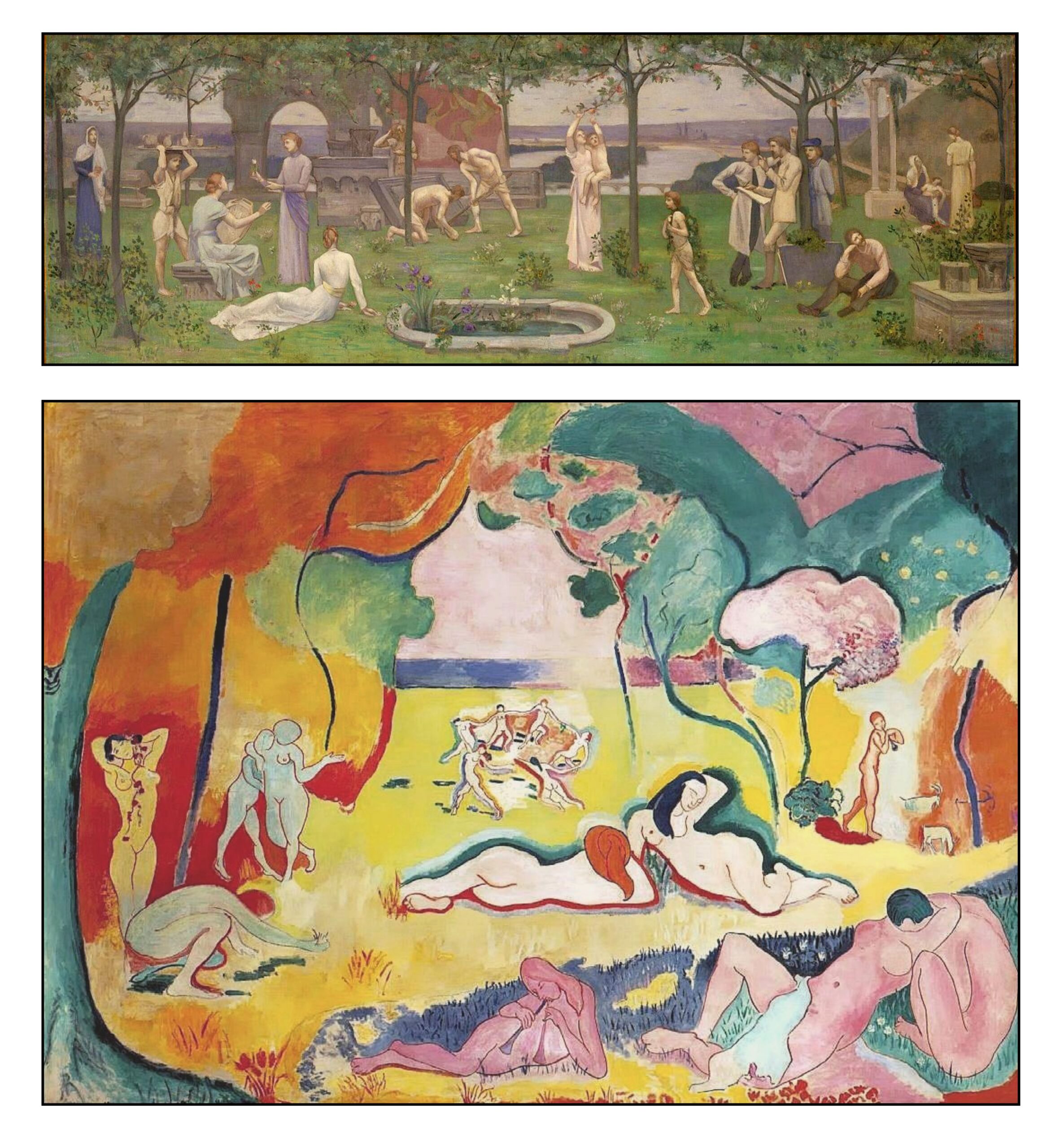
The painting stands at the cusp between earlier paintings like that of the neo-classical Between Art and Nature (1895) of Pierre Puvis de Chavannes, which Gauguin has seen on his visit back to Paris, and the Fauvist La Bonheur de Vivre (1905) of Henri Matisse. Both paintings are smaller than Gauguin’s masterpiece.


La Maison de Jouir

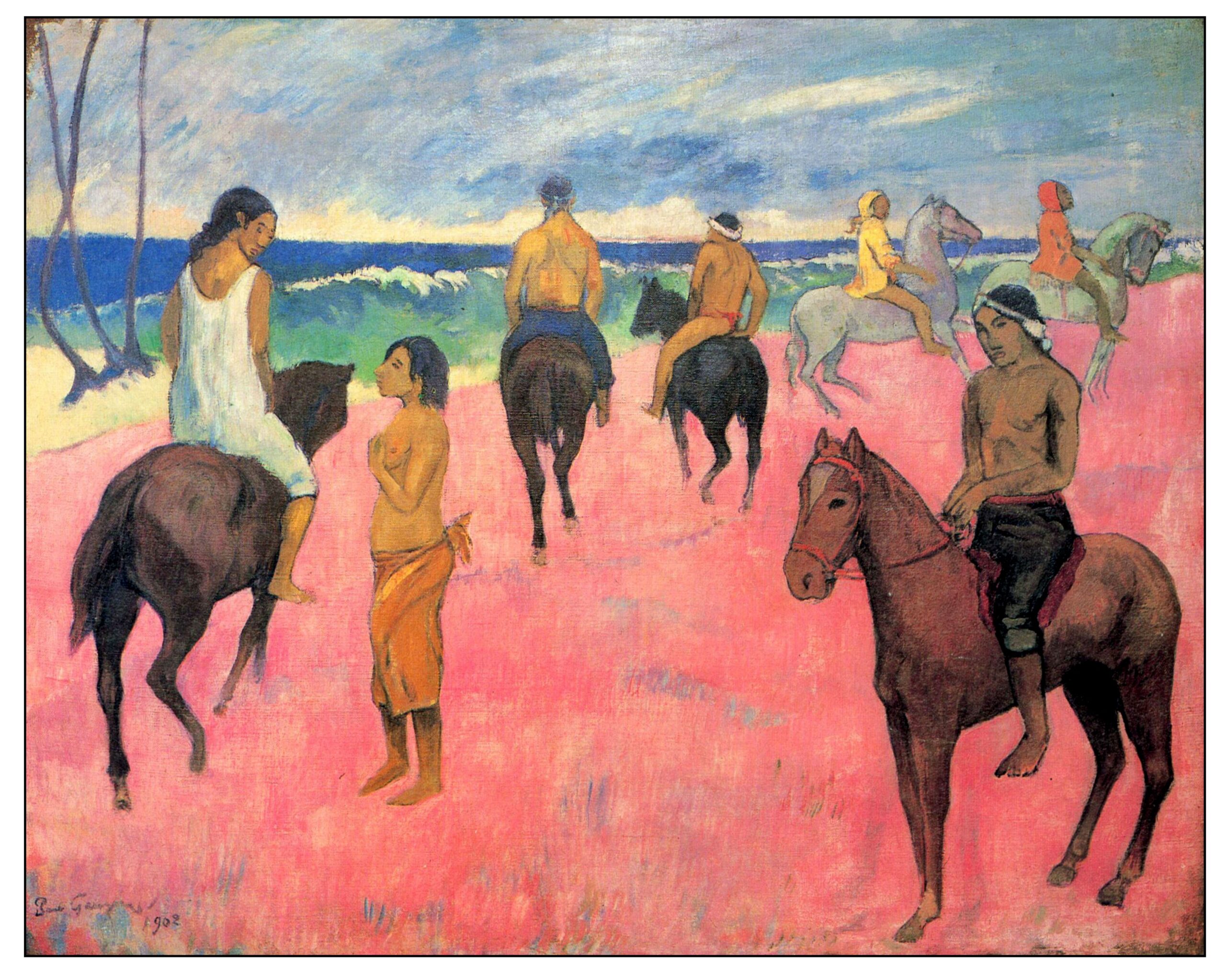
Gauguin decided that Tahiti was too tainted with Western civilization and decided in 1901 to move to the Marquesa Islands, about 1500 km northeast of Tahiti. There he again took a young Polynesian girl for his mistress and built himself a home that he called La Maison de Jouir. This is usually translated as the “House of Pleasure” but more precisely means the “House of Orgasm.” He continued to paint and to write, and he created many striking woodcuts and drawings. One of his paintings from 1902 was the Riders on the Beach. The pink color of the beach is in the imagination of the artist and nowhere near reality.

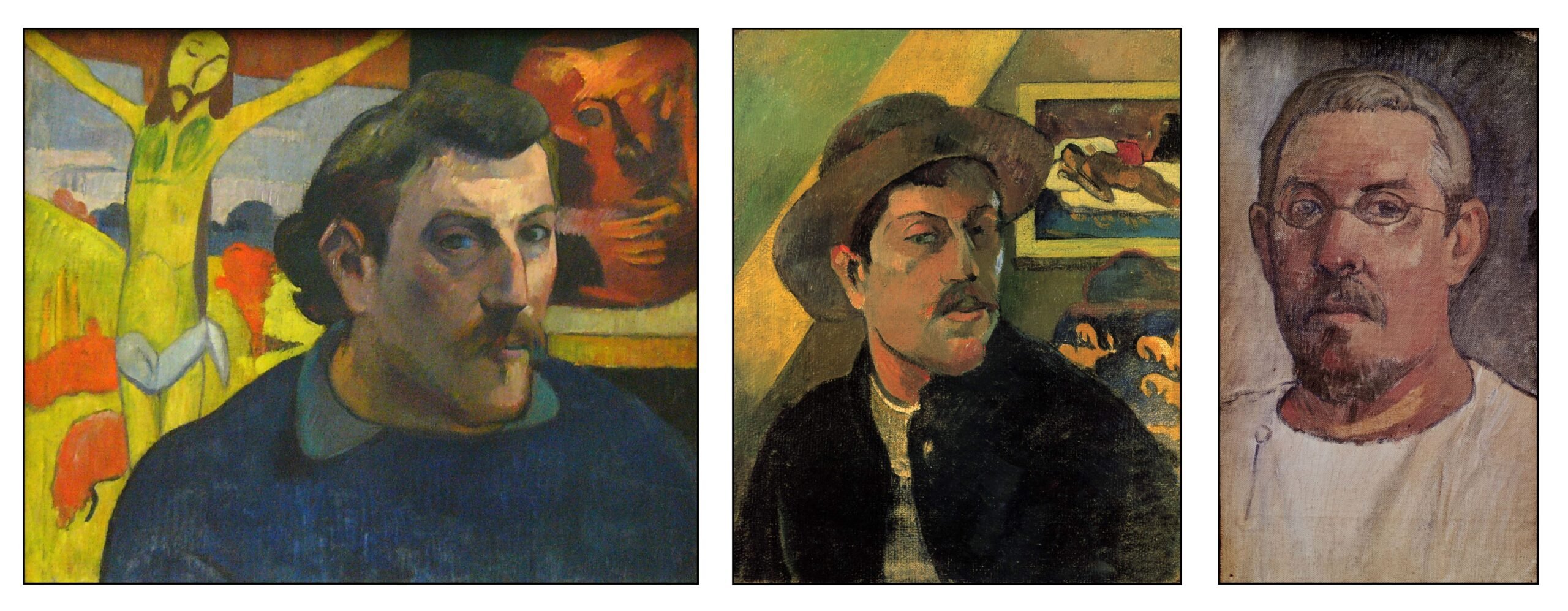
In these last years, Gauguin was wracked by pain and became more and more depressed. His last Self Portrait (1903) from just before his death shows the ravages of alcohol and morphine. It is presented below together with two earlier portraits, one from 1889 alluding to his time in Pont-Aven, and one from 1893 referring to his first visit to Tahiti:

Acclaim

Gauguin was never recognized in his lifetime as a painter of significance. His death in 1903 warranted only a few lines in the Paris newspapers. It was not until 1906 that his friends arranged a retrospective exhibition at the Salon d’Automne in Paris. His fame has grown since then. Art historians now consider Cézanne, van Gogh and Gauguin as the “guiding lights” (Hook, 2021, p. 21) of the modernist revolution in art that occurred in the first decades of the 20th Century. This assessment is borne out by the high prices that Gauguin’s paintings now command at auction.

Isabelle Cahn (in Shackelford & Frèches-Thory, 2004, pp 300-1) writes

He was the one who had dared take all the liberties, sparking the most advanced research, particularly in the domain of color . . .  Gauguin had perceived the decline of the West and revolted against the dictatorship of Greco-Roman culture. In his wake, other artists had tried to surpass the traditional boundaries of thought and, seeking regeneration, had taken an interest in primitive arts, children’s drawings, folk art and outsider art. An interest in the unconscious had also opened new vistas. By giving shape to his internal world, Gauguin exposed the anxiety of the modern soul and its questions about its fate, leading us to edge of our own enigma, but not weighing it down with explanations.

Bretell (1988, p 396) remarks about the effects of Gauguin’s work on later painters:

Picasso was clearly devastated by the power and raw, crude strength of the printed drawings. Matisse was overcome by the color and the apparently casual draftsmanship of the late paintings. Indeed, if one can measure the strength of an artist by that of his most brilliant followers, Gauguin would be among the very greatest from the late nineteenth century.     

Moral Luck

In 1976 Bernard Williams presented a paper on “Moral Luck,” in which he dealt extensively with the

example of the creative artist who turns away from the definite and pressing human claims on him in order to live a life in which, as he supposes, he can pursue his art.

For simplicity he calls the artist Gauguin, but he considers the case abstractly without being limited by historical facts. The main issue is that when Gauguin decided to desert his family, the only justification for his action was his hope that he would fulfil his destiny (and become a great artist), and that his art would contribute significantly to human culture. The concept of moral luck is that we cannot predict the future with any certainty. Gauguin may have died in a shipwreck before he reached Tahiti. In this event, his actions would have no justification. As chance (or “luck”) would have it, Gauguin did live to paint his greatest works in Tahiti, and did contribute significantly to the history of modern art. The problem is whether such an outcome can retrospectively justify the desertion of his family. Certainly not from the point of view of his family; probably not from the point of view of those with little interest in modern art. A secondary issue is whether aesthetic values can be used as justification for behavior that is, in itself, unethical.  

Thomas Nagel commented on Williams’s ideas and discussed moral luck in a more general way. Both authors thereafter updated their papers (Nagel, 1979; Williams, 1981), and there has been much further discussion in the literature (e.g., Lang, 2019; Nelkin 2019). Nagel described moral luck as that which occurs between the intention to act and the outcome of the intended action. Though we might profess, like Kant, that moral guilt or acclaim depends upon the intension (or “will”) rather than the outcome, in actuality, the outcome largely determines our sense of an action’s moral worth. For example, a person who drives while impaired and winds up killing a pedestrian is considered much more blameworthy than one who was similarly impaired but, as luck would have it, did not kill anyone. Moral luck points to the issue that we do not completely control the outcomes of our actions.

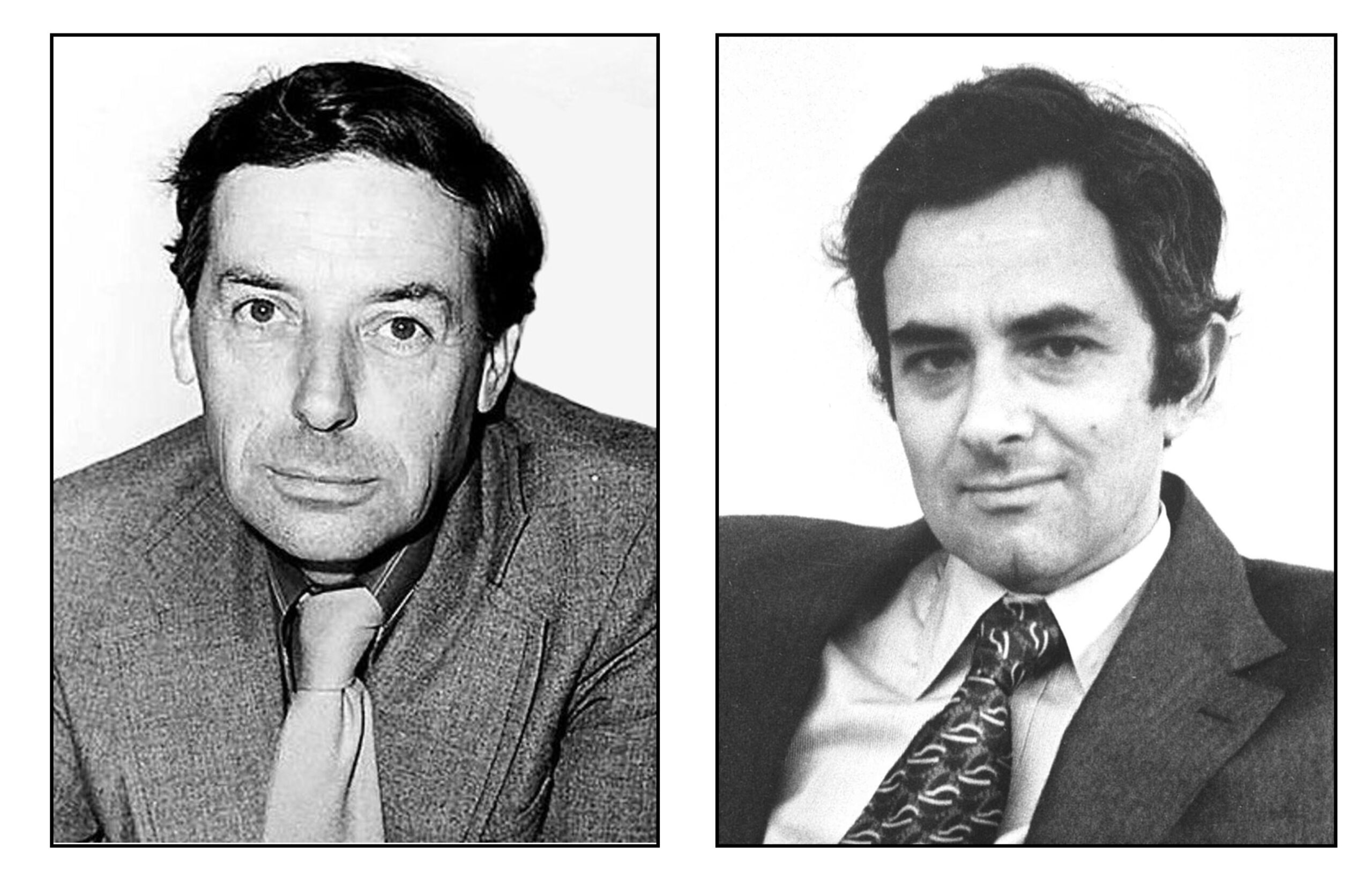
The following illustrations shows Williams on the left and Nagel on the right.

The Crimes of a Colonist   

At the time of Gauguin’s sojourn, Tahiti and the Marquesas were French colonies. The administrators of the colonies exploited the native Polynesians; the church taught them that their own culture was worthless and that they must convert to Christianity; whatever was worthwhile in their life was appropriated and made part of European culture. It was impossible for Gauguin not to be part of this process – he was a European and French Polynesia was a colony. However, he did not act in the same way as most of the Europeans. He lived with the natives, and tried to understand their language and their ideas. He was aware of the problems:

Circumstances exposed him to the effects of recent colonization; he saw the depredation and the irrecoverable loss first-hand. He also spoke out about colonization – and thereby earned the animus of the colonial and church authorities who hounded him until the end of his life (Maleuvre, 2018).  

Gauguin called the Polynesians “savages.” However, for him this was a term of praise rather than contempt. As quoted in the opening paragraph of this post, Gauguin aspired to become a savage. 

Sex Tourist

Gauguin’s mistresses in Tahiti and in the Marquesas were young girls of 13 or 14 years. Although it was normal at that time for Polynesian girls of that age to have sexual relations with men, it is impossible not to deplore Gauguin’s taking advantage of them for his own sexual pleasure. Reading about these girls in his book Noa Noa (“Fragrance”) is terribly disconcerting:

Indeed, it is soon clear that he is not just the average Westerner exploring for the sake of broadening his understanding of the world—he is, more than anything, a sexual tourist. Even the title Noa Noa, which means “fragrance,” is used by Gauguin to indicate the aroma of a human body particularly in sexual situations. Although sexual liaisons similar to those described by Gauguin were regularly reported in other contemporary travel accounts, Gauguin makes them central to the story and, in doing so, transforms the normally pedestrian Tahitian sojourn into an erotic holiday. (Mathews, 2001, p 178).

Most historians believe that the sores on Gauguin’s legs and the heart problems that led to his death were caused by advanced syphilis. However, since the discovery of the causative agent (Treponema pallidum) and the definitive Wassermann test did not occur until after his death, we cannot be sure. A recent examination of Gauguin’s teeth did not show evidence that he had taken the mercurial compounds that normally were used to treat the disease at that time (Mueller & Turner, 2018). Nevertheless, the prevalence of syphilis then was high – about 10% in urban populations and likely much more in those who frequented prostitutes. If Gauguin did have syphilis, he almost certainly gave the disease to his young mistresses.

The following is from a poem Guys like Gauguin (2009) by Selina Tusitala Marsh. Louis Antoine de Bougainville was a French naval captain who explored the Pacific Ocean in the late 18th century:

thanks Bougainville
for desiring ’em young
so guys like Gauguin could dream
and dream
then take his syphilitic body
downstream to the tropics
to test his artistic hypothesis
about how the uncivilised
ripen like pawpaw
are best slightly raw
delectably firm
dangling like golden prepubescent buds
seeding nymphomania
for guys like Gauguin

The Artist as Monster

Gauguin as a person was not easy to like. He was concerned only with his own presumed genius. He treated his family and his mistresses egregiously. Does this mean that we should not consider his paintings – that he should be, in our modern idiom, “cancelled” (e.g., Nayeri, 2019)? Many artists have done monstrous things (Dederer, 2003), and it is often difficult to consider their art independently of their immoral lives. We should not shy away from their sins. We should not call Gauguin’s Polysnesian mistresses “young women” but clearly state that they were girls who were seduced by a sexual predator. Nevertheless, we must consider the art for its own sake. Gauguin’s paintings are powerful: they make us experience things differently. 

References

Brettell, R. R. (1988). The Art of Paul Gauguin. National Gallery of Art.

Brettell, R. R., & Fonsmark, A.-B. (2005). Gauguin and Impressionism. Yale University Press.

Dederer, C. (2023). Monsters: a fan’s dilemma. Alfred A. Knopf.

Druick, D. W., Zegers, P., Salvesen, B., Lister, K. H., & Weaver, M. C. (2001). Van Gogh and Gauguin: the studio of the south. Thames & Hudson.

Eisenman, S. (1997). Gauguin’s skirt. Thames &Hudson.

Gauguin, P. (translated by O. F. Theis, 1919, reprinted 1985). Noa Noa: the Tahitian journal. Dover Publications.

Gauguin, P. (edited and annotated by R. Huyghe, 1951). Ancien culte mahorie. La Palme

Gauguin, P. (translated by E. Levieux and edited by D. Guérin, 1990). The writings of a savage. Paragon House.

Gauguin, P. (edited K. O’Connor, 2009) The intimate journals. Routledge.

Goddard, L. (2019). Savage tales: the writings of Paul Gauguin. Yale University Press.

Herban, M. (1977). The origin of Paul Gauguin’s Vision after the Sermon: Jacob Wrestling with the Angel (1888). The Art Bulletin59(3), 415–420.

Hook, P. (2021). Art of the extreme, 1905-1914. Profile Books.

Lang, G. (2019). Gauguin’s lucky escape: Moral luck and the morality system. In S. G. Chappell & M. van Ackeren (Eds.) Ethics Beyond the Limits. (pp. 129–147). Routledge. 

Maleuvre, D. (2018). The trial of Paul Gauguin. Mosaic, 51(1), 197–213.

Marsh, S. T. (2009). Fast talking PI. Auckland University Press.

Mathews, N. M. (2001). Paul Gauguin: an erotic life. Yale University Press.

Mueller, W. A., & Turner, C. B. (2018). Gauguin’s Teeth. Anthropology, 6: 198.

Nagel, T. (1979). Moral Luck. In Mortal Questions. (pp. 24–38) Cambridge University Press.

Nayeri, F. (November 18, 2019). Is it time Gauguin got canceled? New York Times.

Nelkin, D. N. (2019) Moral Luck. Stanford Encyclopedia of Philosophy.

Silverman, D. (2000). Van Gogh and Gauguin: the search for sacred art. Farrar, Straus & Giroux.

Shackleford, G. T. M., & Frèches-Thory, C. (2004). Gauguin Tahiti: the studio of the South Seas. Thames & Hudson.

Sweetman, D. (1995). Paul Gauguin: a life. Simon & Schuster.

Vargas Llosa, M. (translated by N. Wimmer, 2003). The way to paradise. Farrar Straus & Giroux.

Williams, B. A. O. (1981). Moral Luck. In Moral Luck: Philosophical Papers 1973-1980. (pp. 20–39) Cambridge University Press.

Williams, B. A. O., & Nagel, T. (1976). Moral Luck. Proceedings of the Aristotelian Society, Supplementary Volume, 50(1), 115–151.


Point of View

Point of view is an essential concept in both philosophy and art. In philosophy, point of view highlights the problem of conscious experience. To understand the consciousness of another individual we must be able to experience that individual’s point of view. This may be partially possible among individuals of the same species and culture. Yet, as Thomas Nagel (1974) points out, this becomes next to impossible when the individuals use different perceptual processes. Bats determine where things are in space by perceiving the echoes of their own ultrasonic sounds. We can track the sounds as they are emitted and received; we can record the response of the bat’s neurons to these sounds; yet we will never really understand what it is like to be a bat.

Conscious experience is particular to the perceiving individual, and is inaccessible to another. Imagination allows us to hypothesize what it might be like, but the hypothesis cannot be tested. Nagel uses the term “ascription” rather than “description:”

There is a sense in which phenomenological facts are perfectly objective: one person can know or say of another what the quality of the other’s experience is. They are subjective, however, in the sense that even this objective ascription of experience is possible only for someone sufficiently similar to the object of ascription to be able to adopt his point of view—to understand the ascription in the first person as well as in the third, so to speak.

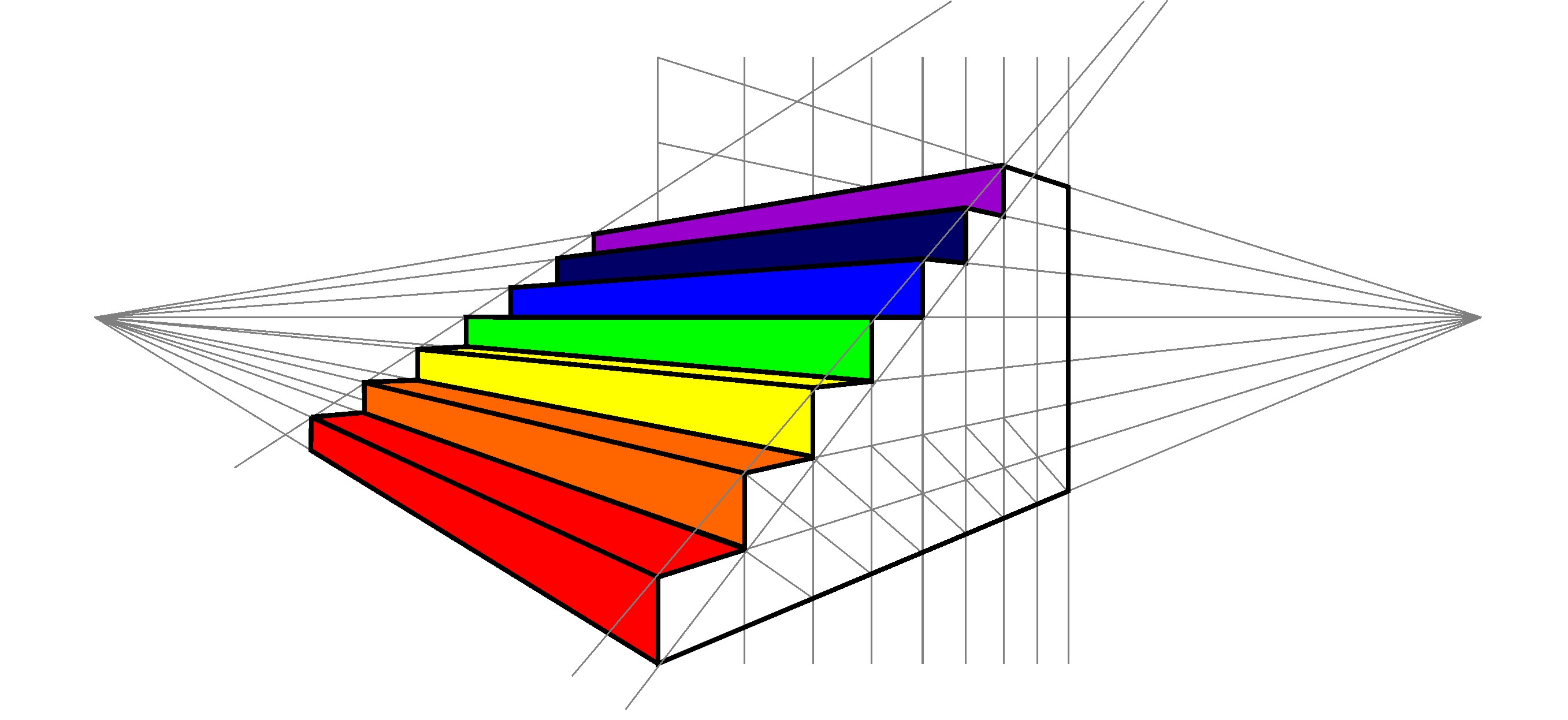
In art, point of view describes the perspective of the artist. Perspective is a set of conventions whereby an artist communicates his or her experience to another. Since the Renaissance, perspective in Western painting has used a set of geometrical rules for portraying the location and orientation of objects in space (D’Amelio, 1964). The main techniques involve visual horizons and vanishing points. The following illustration shows a set of colored steps in two-point perspective, together with their perspective guidelines.

stairs

Painters combined geometric perspective with other rules concerning shading and texture to represent reality. The Impressionists portrayed the colors of the light reaching the perceiver at every point of the visual field. Some paintings, such as those of John Frederick Peto in this website’s banner, were so successful that they became illusions of reality.

Towards the end of the 19th century artists rebelled against this approach, leaving photography to take over the role of realistic representation. Paul Cézanne became more concerned with the underlying form of what existed than with its sensory qualities. He simplified the planes and colors of what was visible so that the structure of the world could be perceived.

Inspired by Cézanne, Picasso and Braque began to push the limits of such formalism, founding a movement that came to be known as Cubism. The name came from the idea that reality might be simplified into cubes, but this is only one of many possible techniques for demonstrated structure. Outlines became prominent: Cubist paintings presented working diagrams of reality rather than mirror images (Berger, 1969). Shading was used was accentuate the outlines rather than to give the illusion of three dimensions. Transparency allowed one structure to be seen through another: foreground and background came together on the plane of the picture in a process called “passage.” Multiple different perspectives could be presented simultaneously: there was no longer any single point of view (Kahnweiler, 1920). The following illustration shows two of Picasso’s paintings of a guitarist, one before (1903) and one after (1910) the beginning of Cubism:

picasso guitarists 03 10

In the Cubist painting, the only details that suggest what is being represented are the curves and frets of the guitar. Once the viewer knows what to look for, the rest of the painting can perhaps be related to the general form of the guitarist, but this is an intimation of reality rather than an understanding. The picture is almost abstract. Other painters soon followed this path, removing ties to the visible world and creating representations of what cannot be seen.

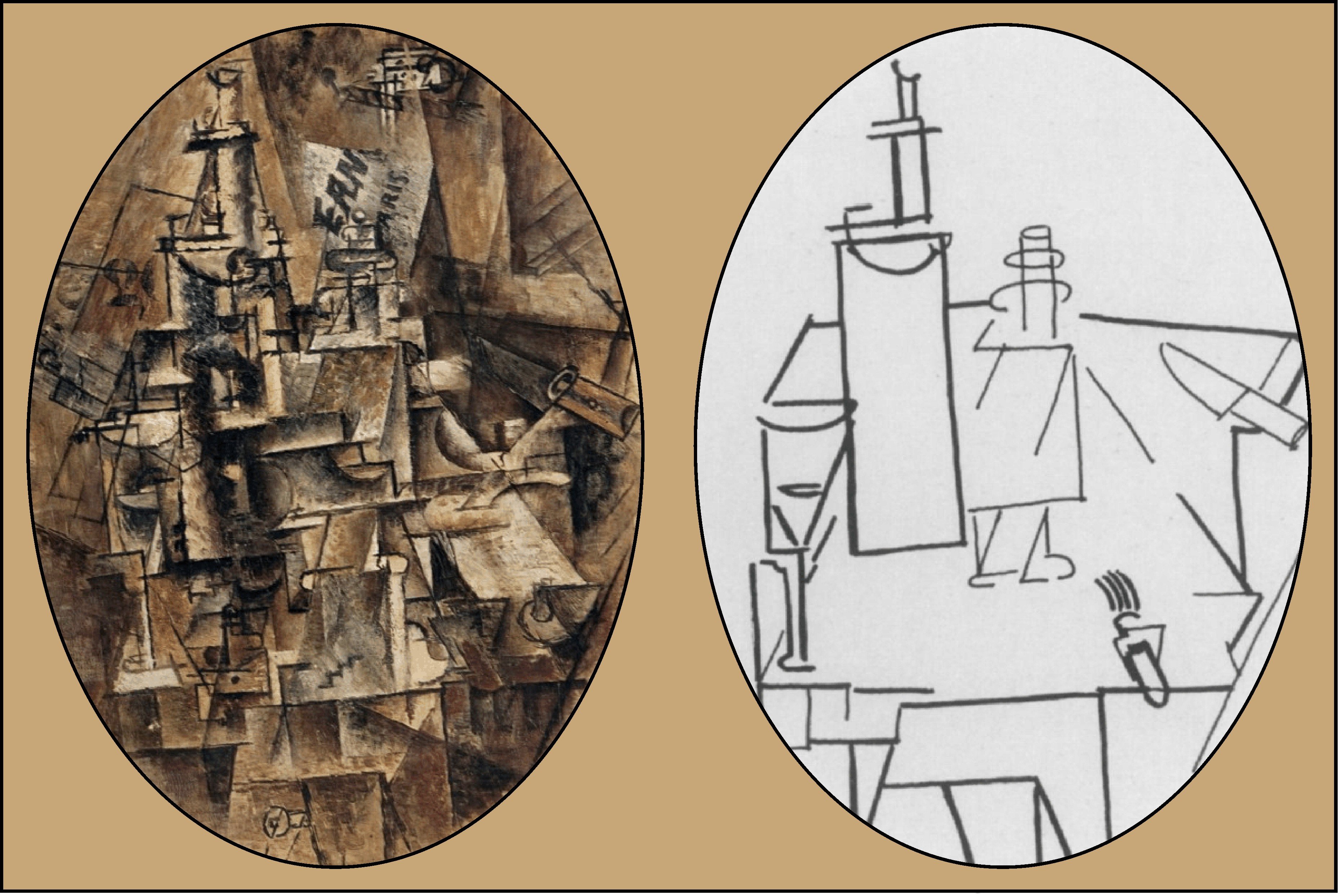
Cubist paintings continued to represent the visual world but the representations became more and more complex. The following illustration shows a painting in the Cleveland Museum of Art that represents a still life with a glass, bottle, carafe, fork and knife arrayed upon a table. However, although the painting is diagrammatic, the viewer still needs an explanatory diagram (by Henning, 1972) to see what is being represented:

picasso bottle etc

The intent of Picasso and Braque was to make painting objective rather than subjective. However, their approach came to naught. Their paintings became cluttered, idiosyncratic and incomprehensible. Some hold on reality was gained by adding illusionistic details, such as the pipes in cubist portraits, but this merely accentuated the lack of meaning in the rest of the painting. By 1912, Cubism had come to demonstrate what T. J. Clark (1999, p. 191) has called “the failure of representation.” The paintings did not communicate.

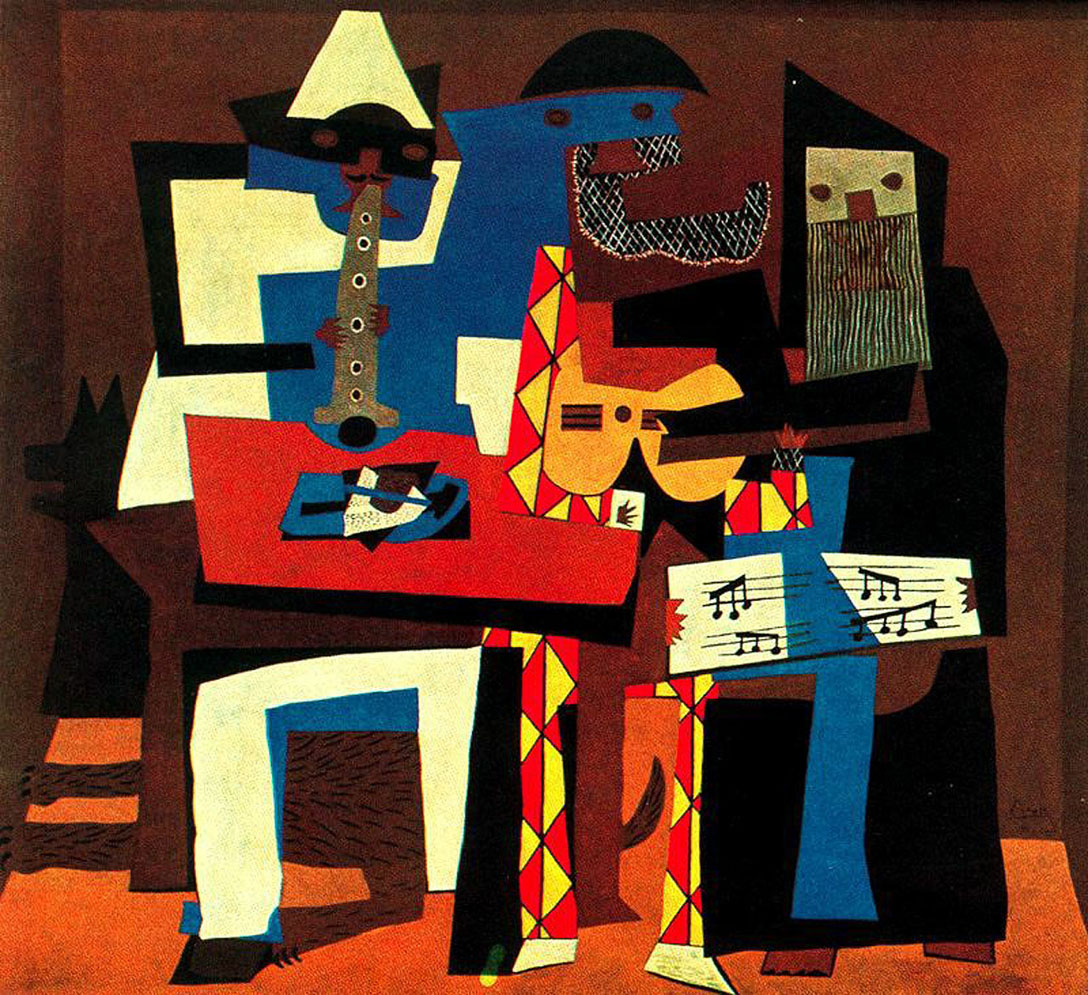
The movement changed towards a simplification rather than shattering of forms, and a return to color and texture. Synthetic Cubism became far more successful than the initial analytic version and has persisted in some form to the present. One of the masterpieces of Synthetic Cubism is Picasso’s 1921 painting of Three Musicians in the Museum of Modern Art. All three wear masks. The clarinetist dressed like Pierrot likely represents the poet Guillaume Apollinaire who died in the flu pandemic in 1918. The guitarist in the garb of Harlequin is Picasso. The vocalist on the right in the robes of a monk is Max Jacob, a Jewish poet who had just experienced mystical visions and had entered a monastic retreat. The musicians perform with a disjointed dog at their feet in a small room of doubtful perspective. The image of each musician spreads to becomes part of the others. The painting has a richness of meaning that contrasts with the aridity of Analytic Cubism.

musicians-with-masks-1921

The painting is joy to behold. It represents the pleasure of phenomenal experience: the sounds, the colors, the people. These experiences justify the evolution of consciousness:

The survival benefits of delighting in “existence” are obvious. For a start, any creature who has it as a goal to indulge its senses in the kinds of ways described will be likely to engage in a range of activities that promote its bodily and mental well-being (even if occasionally at some risk). Such a creature will do life well, we might say. (Humphrey, 2011, p. 87)

With the development of memory and thus the ability to extend consciousness over time, general awareness leads to “individuation.” (Humphrey, 2011, Chapter 9, pp. 135-146)  The phenomenal experience becomes linked to a self that persists from past to future. We develop a single point of view. Nevertheless, this individuation depends on social interactions: an individual needs others to be separate from.

Unfortunately, an individual point of view lasts only as long as the individual. One way to escape this mortality might be to dissolve the individual into some more universal consciousness. This is the goal of many of the Eastern religions: the attainment of wisdom through the loss of self.

In the Tevijja Sutta, the Buddha discusses how this might be done. The truth is not found by looking for it, but by living one’s life in the right way. Trying to understand the truth is like building a set of steps for a building when we do not know even where the building is. Better to follow the eightfold path, to attune oneself to the truth rather than attain it.

So where have we wandered in this post? Point of view is the way a person perceives the world and the way an artist represents it. Having an individual point of view is the reason for our consciousness. Expanding and sharing that point of view give us hope for persistence.

Berger, J. (1969, 1985). The moment of cubism. Reprinted in The sense of sight: Writings.  (pp. 159-188). New York: Pantheon.

Clark, T. J. (1999). Cubism and collectivity. In Farewell to an idea: Episodes from a history of modernism. (pp 168-223). New Haven: Yale University Press.

D’Amelio, J. (1964, reprinted 2004). Perspective drawing handbook. Mineola, NY: Dover.

Henning, E. B. (1972). Pablo Picasso: Bouteille, Verre, et Fourchette. Bulletin of the Cleveland Museum of Art, 59, 195-203.

Humphrey, N. (2011). Soul dust: The magic of consciousness. London: Quercus.

Kahnweiler, D. H. (1920, translated by H. Aronson, 1949). The rise of cubism. New York: Wittenborn, Schultz.

Nagel, T. (1974/1979). What is it like to be a bat? Philosophical Review, 83, 435-450. Reprinted in Mortal questions. (pp 165-180). Cambridge, UK: Cambridge University Press.

Tevijja Sutta (Digha Nikaya 1:13:27) Translation and notes provided at dharmafarer.org