W. H. Auden: September 1, 1939
Wystan Hugh Auden (1907-1973) and Christopher Isherwood (1904-1986) arrived in the United States of America on January 26, 1939. The ostensible reason for their visit was to write a book on the United States, to be published by the Hogarth Press with the title Address Not Known. The two writers had just completed a book on China, Journey to a War, which was to come out in March. However, other reasons played a larger role in their decision to emigrate. Both writers were tired of the hypocrisy, complacency and insularity of British literary life. Auden claimed, “An artist ought either to live where he has live roots or where he has no roots at all.” (Davenport-Hines, 1995, p 180). In New York City they took lodging in the George Washington Hotel at Lexington and 23rd St., had their photographs taken by Carl van Vechten, visited with Thomas Mann and his family in Princeton, wrote reviews for American magazines, and gave readings of their work. At one of these readings in April, Auden met the 18-year-old Chester Kallman (1921-1975), and fell deeply in love. The two were to remain together for the rest of Auden’s life. In June, Auden and Kallman departed on a two-month trip by Greyhound Bus across the United States, that served as their honeymoon. They visited New Orleans, stayed for a while with Frieda Lawrence in Taos, and ended up in Laguna Beach in California. On August 28, 1939, they arrived back in Manhattan.
The Beginning of World War II
In the early morning hours of September 1, 1939, Hitler’s German troops invaded Poland. One week earlier, Germany and the Union of Soviet Socialist Republics had agreed on a mutual non-aggression treaty – the Molotov-Ribbentrop pact. These negotiations had also included a secret agreement to divide up Poland between the two powers, and to allow the USSR to invade Finland and the Baltic countries.
The Munich Agreement of September, 1938, had allowed the German annexation of the Sudetenland in Czechoslovakia. In March, 1939, a fascist Slovak State was proclaimed and Germany took over the remaining areas of what had once been Czechoslovakia. Alarmed by Hitler’s complete disregard of the Munich agreements, the United Kingdom agreed to an Anglo-Polish Alliance which would assure mutual assistance in the event of German aggression. On September 3, 1939, Britain therefore gave Germany an ultimatum requiring them to withdraw their troops from Poland. The deadline passed, and later that day Neville Chamberlain declared the United Kingdom at war with Germany. Undeterred, Germany continued its invasion. The photograph shows Hitler reviewing German troops as they crossed the border into Poland.

Auden’s Poem
The beginning of the war was for Auden the culmination of a decade of increasing despair. He expressed his thoughts in a remarkable and controversial poem entitled September 1, 1939. This was first published in The New Republic in October, 1939, and then in the book Another Time in 1940.
The poem consists of 9 stanzas, each 11 lines long. There are three stresses per line, with no dominant rhythm. The rhyme scheme is variable both in terms of the lines that rhyme and the type of rhyme: slant rhymes, assonance, and alliteration are as common as perfect rhymes, and internal rhymes as frequent as end-rhymes. Each stanza is composed of one sentence. The poem is similar in many ways to Yeats’ poem about the Easter uprising in Dublin, Easter, 1916, with its ringing call to rebellion:
All changed, changed utterly:
A terrible beauty is born.
Both poems deal with a poet’s personal response to a world-changing event. Both poems are driven by a pulsating trimeter rhythm, and adorned with multiple and various rhymes.
After September 1, 1939 was published, Auden had second thoughts, particularly about the line that ends the penultimate stanza. In his preface to Bloomfield’s 1964 bibliography of his works he stated
A critic is entitled, of course, to prefer an earlier version to a later, but some seem to think that an author has no right to revise his work. Such an attitude seems to me mad. Most poets, I think, will agree with Valéry’s dictum: “A poem is never finished, only abandoned”. To which I would add: “Yes, but it must not be abandoned too soon”. In some cases, too, one finds that tinkering is no good and the whole poem must go. Rereading a poem of mine, 1st September, l939, after it had been published, I came to the line
We must love one another or die
and said to myself: “That’s a damned lie! We must die anyway”. So, in the nest edition, I altered it to
We must love one mother and die.
This didn’t seem to do either, so I cut the stanza. Still no good. The whole poem, I realised, was infected with an incurable dishonesty and must be scrapped.
Although the poem was omitted from Auden’s Collected Poems (1976), it continues to be read and studied (Brodsky, 1986; Hecht, 1993, pp 152-170; Fuller, 1998, pp 290-293; Mendelson, 1999, pp 73-77; Sansom, 2019). It may not be perfect but it says much that is important and, for the most part, says it very well. This essay reviews various aspects of the poem, and provides a recitation of each stanza by Tom O’Bedlam.
Fifty-Second Street
I sit in one of the dives
On Fifty-Second Street
Uncertain and afraid
As the clever hopes expire
Of a low dishonest decade:
Waves of anger and fear
Circulate over the bright
And darkened lands of the earth,
Obsessing our private lives;
The unmentionable odour of death
Offends the September night.
The opening of the poem may have its roots in the beginning of a 1930 poem by Ogden Nash, Spring Comes to Murray Hill, which Auden had recently read. Murray Hill is a neighborhood in midtown Manhattan.
I sit in an office at 244 Madison Avenue
And say to myself you have a responsible job havenue?
Why then do you fritter away your time on this doggerel?
If you have a sore throat you can cure it by using a good goggeral,
If you have a sore foot you can get it fixed by a chiropodist,
And you can get your original sin removed by St. John the Bopodist,
However, Nash’s blithe insouciance had transformed in Auden’s poem to a keen anxiety. For which there are no cures. And spring had long passed. Now came the fall.
In the 1930s, Fifty-Second Street between 5th and 6th Avenues in Manhattan became a center for jazz. During prohibition, the five-story brownstone buildings had provided spaces in their narrow ground floors for speakeasies. With the repeal of prohibition, these developed into bars and jazz clubs. The spaces were long, narrow, dark and windowless. They typically placed a mirrored bar on one wall and tables or booths on the other. At the far end was a tiny stage upon which small groups of musicians could play. This fostered a new jazz sound, more intimate than that of the big bands. Some famous musicians performing on the street were Coleman Hawkins, Dizzy Gillespie, Billie Holiday, Charlie Parker, and Miles Davies. The following is a night photograph of the clubs on 52nd Street:

On September 1, 1939, Auden went alone to the Dizzy Club on 52nd Street. Chester Kallman and his friend Harold Norse had discovered this gay bar a few nights before and recommended it. Auden went there alone, searching for solace in the company of strangers. Norse (1989) recalled
The dive was the sex addict’s quick fix, packed to the rafters with college buys and working-class youths under twenty-five. From street level you stepped into a writhing mass of tight boys in tighter pants … With floppy shoelaces, creased suit and tie, ash-stained, he must have looked out of place, though with his rosy California tan and sun-bleached hair he could, in the right light, pass for twenty-five. He didn’t go to pick up a boy; however, aware of the age difference and shy. he would have selected one of the two unused corner tables at the rear of the bar, which was usually deserted except for those too drunk to stand, from which he could observe boys kissing and groping under the bright lights, packed like sardines pickled in alcohol. (pp 78-79)
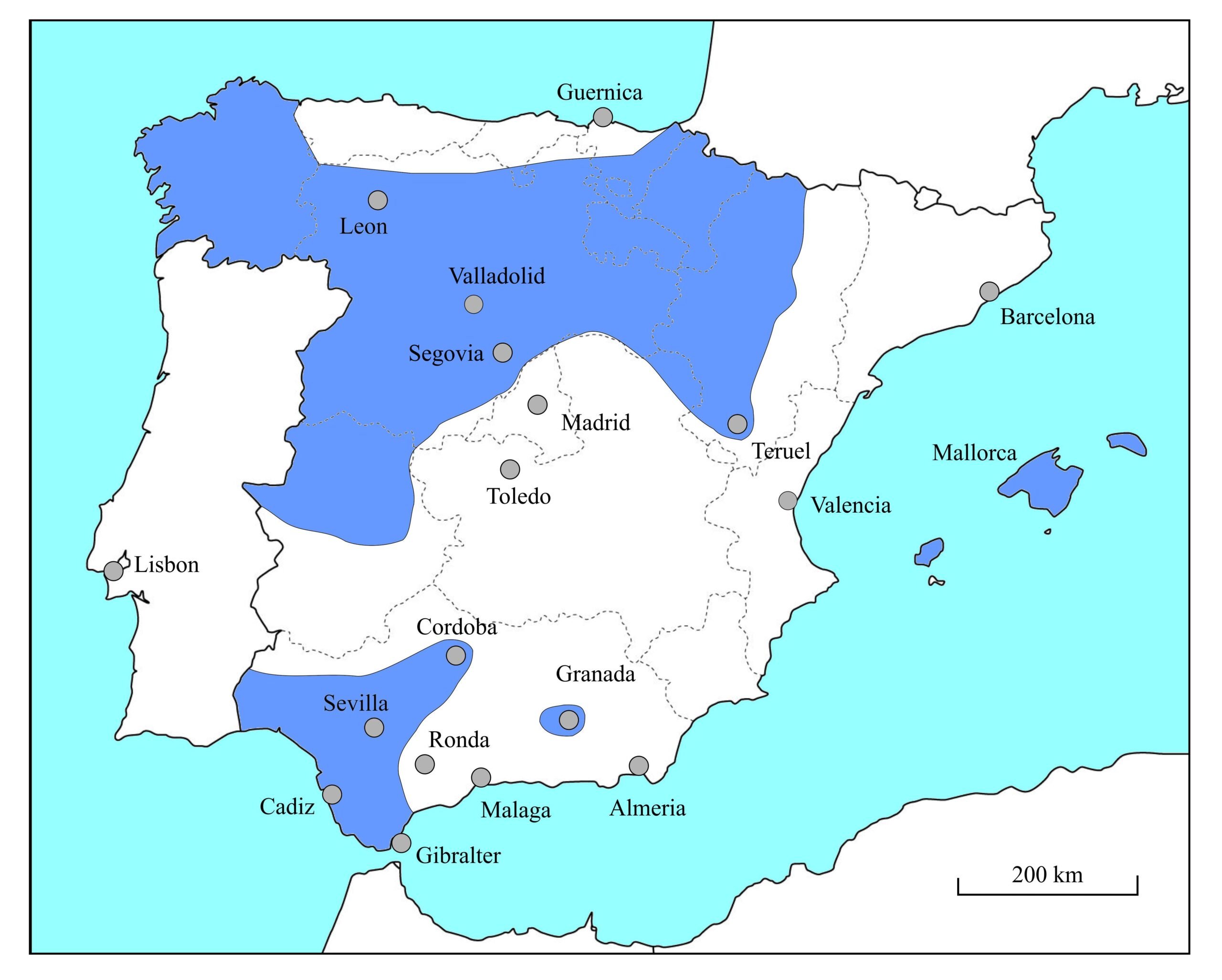
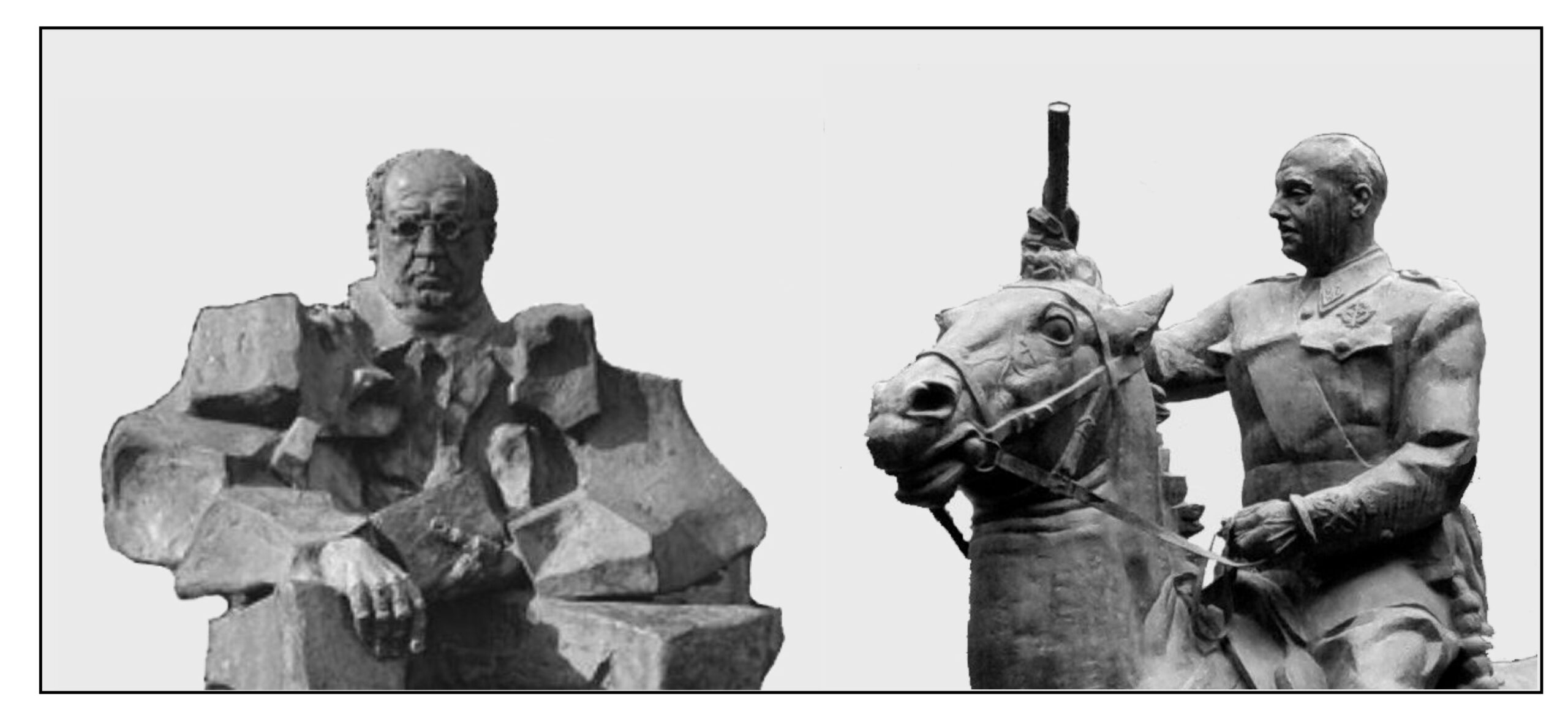
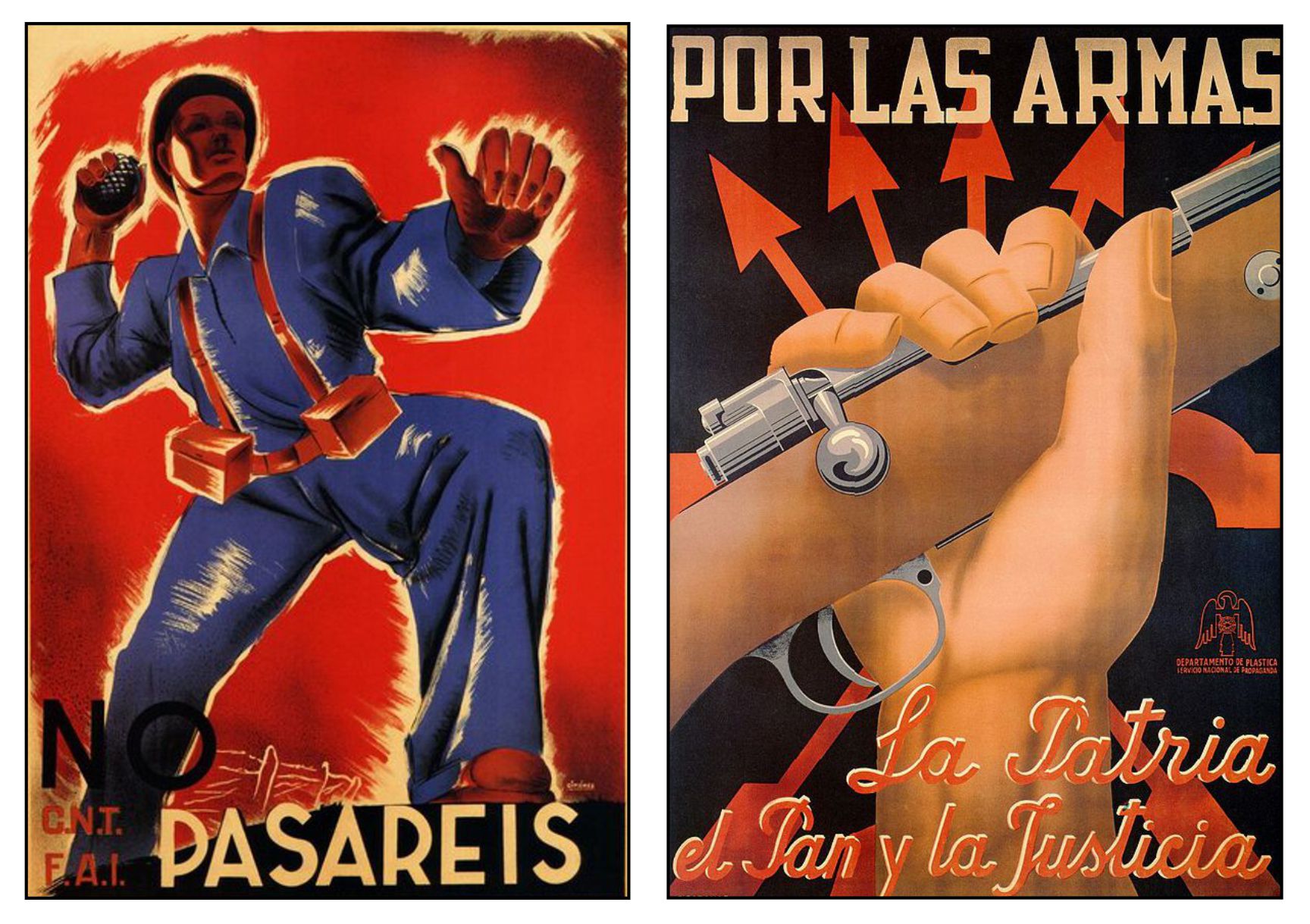
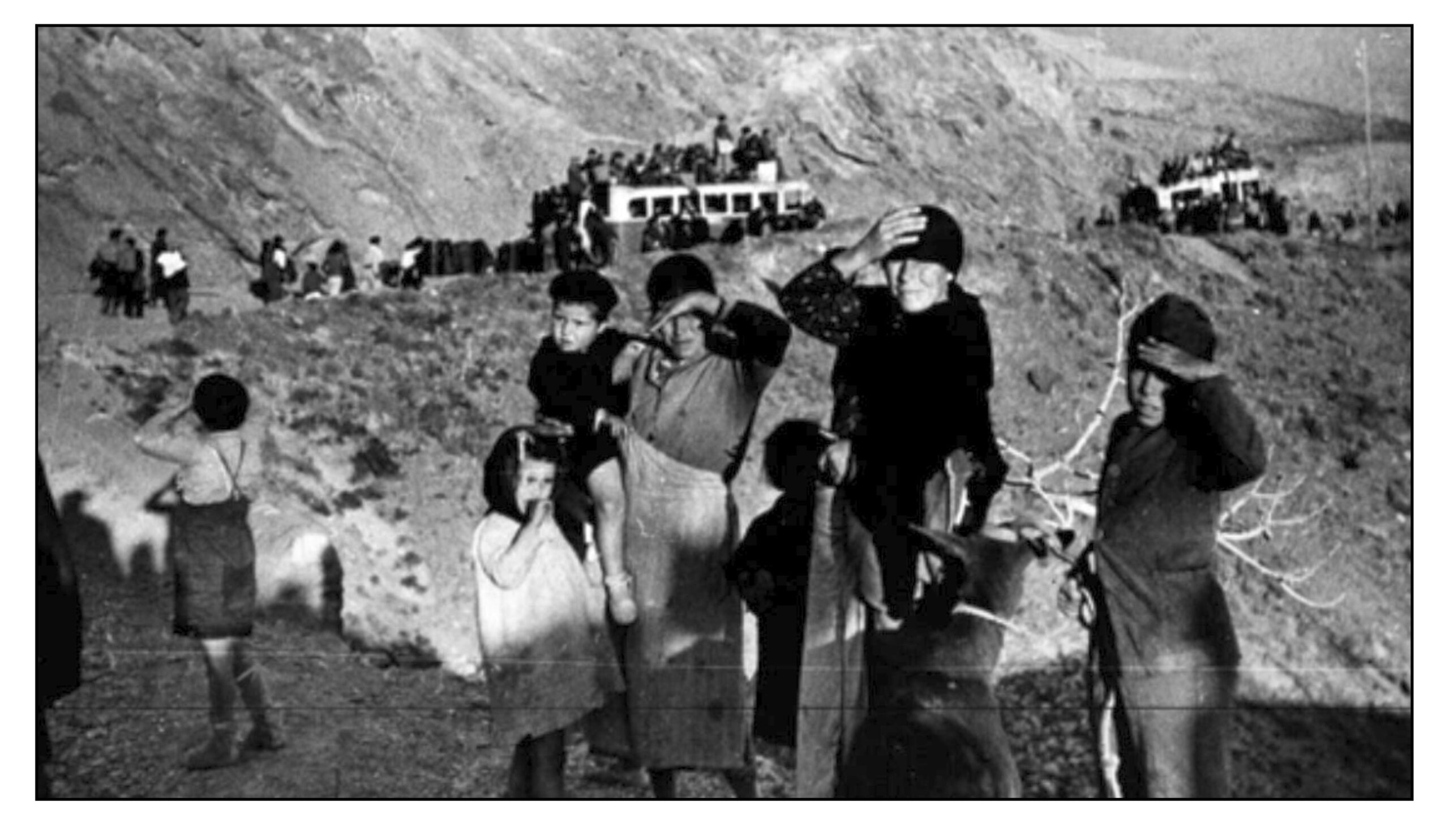
The “low dishonest decade” of the 1930s had been ushered in by the Wall Street Crash in October, 1929. Unemployment and despair soon spread across the world. Liberal hopes for a better world fell by the wayside. Autocratic companies used foreign wars to mobilize their people. In 1932, Japan invaded Manchuria. In 1933, Adolph Hitler was elected Chancellor of Germany. In 1935, Italy invaded Ethiopia. In 1936, the Nationalist military forces rebelled against the Republican government of Spain precipitating the bloody Spanish Civil War, which ended with the dictatorship of General Francisco Franco in 1939. While the fascist governments of Italy and Germany provided assistance to the Nationalist and the communist government of the USSR supported the Republicans, the liberal democracies of Western Europe decided not to intervene. In 1937, Japan invaded China. In March, 1938, Germany annexed Austria. In September, 1938, the Munich Agreement allowed Germany to take control of the Sudetenland in Czechoslovakia in return for future restraint. According to Neville Chamberlain, the British Prime Minister, this brought “Peace for our time.” However, Hitler paid no attention to the agreement, and went ahead with the occupation of the western half of Czechoslovakia in March 1939.
In some notes made during in his early months in New York City but only published much later, Auden remarked on the failure of all the “clever hopes” for peace and justice
If one reviews the political activity of the world’s intellectuals during the past eight years, if one counts up all the letters to the papers which they have signed, all the platforms on which they have spoken, all the congresses which they have attended, one is compelled to admit that their combined effect, apart from the money they have helped to raise for humanitarian purposes (and one must not belittle the value of that) has been nil. As far as the course of political events is concerned they might just as well have done nothing. (Auden, 1993, p 20)
Radio “waves” from all parts of the world, both where it was “darkened” night and where it was “bright” day, brought news of broken treaties and warnings of impending war. Listeners found it hard to hear and even harder to talk about it. One sensed an “unmentionable odour of death.”
Those to Whom Evil Is Done
Accurate scholarship can
Unearth the whole offence
From Luther until now
That has driven a culture mad,
Find what occurred at Linz,
What huge imago made
A psychopathic god:
I and the public know
What all schoolchildren learn,
Those to whom evil is done
Do evil in return.
What was it that had “driven a culture mad”? Auden sometimes longed for the simplicity of life in the Middle Ages. He believed that Luther had changed all this by insisting on an individual rather than communal approach to God, and by dissociating salvation from good works. Perhaps the madness of the modern age was its selfishness: its complete lack of fellow feeling. In his later preface to the first volume of Poets of the English Language (1950), Auden wrote
Luther denied any intelligible relation between Faith and Works, Machiavelli any intelligible relation between private and public morality, and Descartes any intelligible relation between Mauer and Mind. Allegory became impossible as a literary form, and the human Amor seemed no longer a parable of the Divine Love but its blasphemous parody.
There has been no time since its own when the literature of the Middle Ages could appeal to readers as greatly as it can today, when the dualism inaugurated by Luther, Machiavelli, and Descartes has brought as to the end of our tether and we know that either we must discover a unity which can repair the fissures that separate the individual from society, feeling from intellect, and conscience from both, or we shall surely die by spiritual despair and physical annihilation.
Auden had spent 10 months in Berlin in 1928-29 and had visited Germany multiple times during the 1930s. He loved the sexual and intellectual freedom of Weimar Germany. But this came crashing down with the rise of Hitler, who became Chancellor in 1933 and anointed himself Führer a year later. No one can really tell how Hitler came to be the embodiment of evil. Jungian psychoanalysis proposed that we internalize our early social experiences as “imagos” (later known as archetypes) which later drive our behavior. Hitler’s father was domineering and violent, and Hitler’s schooling in Linz was punitive and severe. Both may have contributed to the subconscious “psychopathic god” that drove the Führer.
The final couplet of the stanza presents the obverse of the moral law. We should love our neighbors as ourselves. For if we do them evil, they will repay us. Human history has passed through multiple cycles of evils done and revenges taken. The punitive reparations demanded of Germany after the end of World War I were a contributing factor to the onset of World War II.
What Dictators Do
Exiled Thucydides knew
All that a speech can say
About Democracy,
And what dictators do,
The elderly rubbish they talk
To an apathetic grave;
Analysed all in his book,
The enlightenment driven away,
The habit-forming pain,
Mismanagement and grief:
We must suffer them all again.
Thucydides (460-400 BCE) was an Athenian general. After losing a battle with the Spartans in 424 BCE, he was exiled from Athens. He then travelled through various regions of Greece, and wrote an account of the ongoing Peloponnesian War (431–404 BCE). This History of the Peloponnesian War, which covered events up to 411 BCE, includes a famous speech given by the Athenian leader in memory of those that died in defence of the state: Pericles’ Funeral Oration, which among other things considers the process of democracy:
We have a form of government, not fetched by imitation from the laws of our neighbouring states; (nay, we are rather a pattern to others, than they to us); which, because in the administration it hath respect not to a few, but to the multitude, is called a democracy. Wherein, though there be an equality amongst all men in point of law for their private controversies; yet in conferring of dignities one man is preferred before another to public charge, and that according to the reputation, not of his house, but of his virtue; and is not put back through poverty for the obscurity of his person, as long as he can do good service to the commonwealth. (translated by Thomas Hobbes in 1628)
The speech was not as clear as it might have been. Auden considered most of it “elderly rubbish” spoken at the “apathetic grave” of the soldiers that had died. However, it does point out that democracy requires that certain men become leaders, and that these leaders then enact laws and arrange to have them enforced. The main problem with democracy is that some leaders come to power because of popularity rather than wisdom, because of propaganda rather than policy. People vote for their leaders as much on the basis of emotion as on reason. Pericles was a charismatic leader. He had encouraged Athenian imperialism, which denied freedom to all but the ruling state, and which ultimately led to war with Sparta. Democracy comes a cropper if the wrong leader is selected. We need to be “managed” but sometime we choose the wrong manager. Once Hitler was elected, he declared himself dictator.
Blind Skyscrapers
Into this neutral air
Where blind skyscrapers use
Their full height to proclaim
The strength of Collective Man,
Each language pours its vain
Competitive excuse:
But who can live for long
In an euphoric dream;
Out of the mirror they stare,
Imperialism’s face
And the international wrong.
The skyline of New York in the 1930s was filled with new skyscrapers. These magnificent buildings demonstrated the tremendous power of capitalism. No one had made buildings as tall as these since the Tower of Babel. Yet the Great Depression showed that raw capitalism was doomed to fail. For a few years after the Wall Street Crash, the skyscrapers that had been conceived and financed before the crash were completed. After 1935 no new skyscrapers were built in New York City until 1961.
However, the “Collective Man” had shown that he could build great things even exploited. What might he do if free? Perhaps the “euphoric dreams” mentioned to in Auden’s poem allude to the New Deal that was enacted from 1933 to 1938 by the government of Franklin Delano Roosevelt. The “new” idea was that everyone should work together for the common good.
The following photograph below shows the night view south from the main building of the Rockefeller Center which was completed in 1933. Visible on the right is the Empire State Building (1931), the tallest building in the world until the World Trade Center was built in 1970. On the left is the Art Deco Chrysler Building (1930). In the right foreground, with the striking vertical stripes, is 500 Fifth Avenue (1930).

Looking at the mirrors of the bar, Auden could see the faces of the two main political forces at work in the world: western Europe with its colonial empires, and Russia with its dreams of international communism. Both were starting to fall apart. Gandhi was attempting to bring independence to India through satyagraha (nonviolent resistance). And in Russia, the show trials and executions of Stalin’s Great Purge had already begun.
Lost in a Haunted Wood
Faces along the bar
Cling to their average day:
The lights must never go out,
The music must always play,
All the conventions conspire
To make this fort assume
The furniture of home;
Lest we should see where we are,
Lost in a haunted wood,
Children afraid of the night
Who have never been happy or good.
The bars on 52nd Street were set up to make the patrons feel at home. Like a “fort,” the bar was closed off from the outside world. The lights stayed on through the night and the music played into the early hours of the morning. The following is Coleman Hawkins’ Body and Soul, recorded in 1939 with RCA (Radio Corporation of America).
The following illustration shows the interior of the Onyx bar, whose neon sign shows on the left side of the earlier photograph of 52nd Street. Without the people, it is a quiet and lonely space, with mirrors reflecting dolefully back on each other.

The stanza concludes with the mute despair of children lost in a frightening world. The fairy tales with their “haunted” woods are right.
What Mad Nijinsky Wrote
The windiest militant trash
Important Persons shout
Is not so crude as our wish:
What mad Nijinsky wrote
About Diaghilev
Is true of the normal heart;
For the error bred in the bone
Of each woman and each man
Craves what it cannot have,
Not universal love
But to be loved alone.
Auden had found some respite from the recent propaganda and demagoguery by reading through the Diary of Vaslav Nijinsky (1889-1950), written during the winter of 1918-1919 but only published in 1936. The diary was composed when Nijinsky was living in Switzerland with his wife Romola; and slowly but surely becoming mad.
Nijinsky had become a dancer with Les Ballets Russes, and the lover of its impresario Sergei Diaghilev. His most famous performance was in 1912 as the faun in a ballet that he himself choregraphed for Debussy’s L’Après-midi d’un Faune (1894), itself based on the 1876 poem by Stéphane Mallarmé about the sensuous dreams of a young faun. The following are contemporary photographs by Adolph de Meyer, showing the Nijinsky reclining with his flute as the music begins and then dancing in a stylized manner evocative of ancient Greek paintings.

When Nijinsky married the Hungarian aristocrat Romola de Pulszky in 1913, Diaghilev summarily dismissed him from the Ballet Russes, and took as a lover another beautiful young man, the choreographer, Léonide Massine. As Nijinsky lapsed into schizophrenia, Romola continued to care for him.
The diaries jump haphazardly from one topic to the next. Auden quotes a comment about Nijinsky that follows from a discussion of Georges Clemenceau, the Prime Minister of France.
I know that Clemenceau is honest; he is the policy of France. He is a hard-working man, but he was mistaken when he sent France to her death. He is a man who seeks goodness, a child with a tremendous brain. Some politicians are hypocrites like Diaghilev, who does not want universal love, but to be loved alone. I want universal love. (Nijinsky, 1936, p 27).
Madness brings the truth to light. Human beings want to be loved, but find it difficult to love one another. Most of us are like Diaghilev: selfishness is “bred in the bone.”
Brodsky (1986, p 345-6) points out the intricacy of the rhymes in this stanza. Most importantly “Diaghilev” pararhymes with “love.” But this end-rhyme is preceded by the internal consonant rhymes on the “v” of “Craves what it cannot have.”
Who Can Speak for the Dumb?
From the conservative dark
Into the ethical life
The dense commuters come,
Repeating their morning vow;
“I will be true to the wife,
I’ll concentrate more on my work,”
And helpless governors wake
To resume their compulsory game:
Who can release them now,
Who can reach the deaf,
Who can speak for the dumb?
In this stanza Auden recounts how commuters come to the city promising themselves to do better. But the city lacks leaders who can release them from their mundane lives. The ending has its source in the advice given by his mother to King Lemuel in Proverbs:
It is not for kings, O Lemuel, it is not for kings to drink wine; nor for princes strong drink:
Lest they drink, and forget the law, and pervert the judgment of any of the afflicted.
Give strong drink unto him that is ready to perish, and wine unto those that be of heavy hearts.
Let him drink, and forget his poverty, and remember his misery no more.
Open thy mouth for the dumb in the cause of all such as are appointed to destruction.
Open thy mouth, judge righteously, and plead the cause of the poor and needy.
(Proverbs 31: 4-9)
We are in need of kings who can comfort those who suffer, who can talk to the deaf and speak up for the dumb.
We Must Love One Another or Die
All I have is a voice
To undo the folded lie,
The romantic lie in the brain
Of the sensual man-in-the-street
And the lie of Authority
Whose buildings grope the sky:
There is no such thing as the State
And no one exists alone;
Hunger allows no choice
To the citizen or the police;
We must love one another or die.
This stanza provides tentative answers to the questions posed in the preceding stanza. Auden had been concerned about the role of the poet in modern society. Soon after Yeats had died in January 1939, and Auden had written In Memory of W. B. Yeats, publishing it in The New Republic in March. The poem famously claimed that “poetry makes nothing happen.” Nevertheless, it also claimed that poetry provided “a mouth.” This recitation is by Auden.
For poetry makes nothing happen: it survives
In the valley of its making where executives
Would never want to tamper, flows on south
From ranches of isolation and the busy griefs,
Raw towns that we believe and die in; it survives,
A way of happening, a mouth.
In September 1, 1939, Auden voices what is needed to undo the lies to which we have become accustomed. Fuller (1998, p 292) suggests that the “folded lie” is “a kind of kenning for the newspaper tucked under the arm of the commuter of stanza 7.” Auden admired Old English poetry which often combined two words to give the extended meaning of one: poetical periphrasis or “kenning” (from ken, know). A second lie is the romantic idea that everything we do is for the best. And a third lie is what we are told by those in authority. The syntax of the second half of the stanza is difficult. The following is the interpretation of Anthony Hecht (1993, pp 166-7):
What follows after the colon is the truth that the poet, armed only with his “voice,” has taken upon himself to reveal. It is a double secret, enraging both to the individual and to the corporate group of “Collective Man” which constitutes “Authority.” “There is no such thing as the State” is not merely an attack upon the likes of Hitler and Stalin, and the superstates over which they tyrannize; it declares that government itself is no more than a useful fiction, one which ought to allow us as much independence and freedom from itself as possible. but there is a balancing corollary which is, at the same time, the inverse of this proposition: it is that “no one exists alone.” And this means that we are, of necessity, bound to one another, not wholly independent, and thus part of the fictive State. Both those with authority and those without it are caught in this dilemma, both citizens and police.
And so we come to the crux of the poem and line that Auden later regretted.
We must love one another or die.
Auden claimed that it made no sense. We die whether we love or not. But this is a simplistic interpretation. Surely the poet is saying that we must love one another or fail to be truly human: without love we are dead to our real selves. Or even more directly: we must either love one another or wind up killing each other.
Auden had made similar comments before. Fuller (1998, p 292) quotes from Auden’s revisions for a 1939 production of Auden and Isherwood’s 1936 play The Ascent of F6:
Man is an animal that has to love or perish.
I think that years afterward, Auden considered his younger self hopelessly naïve for telling people on the brink of a war that would lead to 80 million deaths to “love one another.” Invoking the moral law would do little to stop the advancing Panzer divisions.
In his 1964 campaign against Barry Goldwater, Lyndon Johnson used a commercial wherein the image of a young girl picking petals from a daisy leads into the image of an exploding atomic bomb, as Johnson speaks a garbled version of Auden’s line:
*We must either love each other, or we must die.
Johnson won by a landslide. Perhaps poetry does make some things happen.
Defenceless under the Night
Defenceless under the night
Our world in stupor lies;
Yet, dotted everywhere,
Ironic points of light
Flash out wherever the Just
Exchange their messages:
May I, composed like them
Of Eros and of dust,
Beleaguered by the same
Negation and despair,
Show an affirming flame.
Auden was not clear what he should do now that war was beginning. How can one person change the world other than by standing up for what is right, telling others of one’s fears, and hoping that justice will prevail? The image of small lights flashing out their messages of good will likely comes from E. M Forster’s essay What I Believe, published in The Nation in 1938 and then as a pamphlet in 1939. Forster gave his famous “two cheers for democracy:” “one because it admits variety and two because it permits criticism.” However, he also believed in an aristocracy of “the sensitive, the considerate and the plucky.” And in the darkest times
the brighter shine the little lights, reassuring one another, signalling: “Well, at all events, I’m still here. I don’t like it very much, but how are you?” Unquenchable lights of my aristocracy! Signals of the invincible army! “Come along—anyway, let’s have a good time while we can.” I think they signal that too.
I think that Auden was skeptical about how effective these lights would be. While composing the poem, he changed “little lights” to “ironic lights.” Nevertheless, the poem ends with a prayer that he may show an “affirming flame.”
The idea of tiny lights flashing in the darkness was used by George H. W. Bush in a 1988 campaign speech to promote charitable giving as a better way of taking care of those in need than government handouts.
I have spoken of a thousand points of light, of all the community organizations that are spread like stars throughout the Nation, doing good. We will work hand in hand, encouraging, sometimes leading, sometimes being led, rewarding.
Upping the ante to a thousand does little in the way of convincing anyone that the rich will provide all the help that the poor will need.
The New Year Letter
A few months after September 1, 1939, Auden composed his New Year Letter, a long poem in tetrameter rhyming couplets to celebrate the beginning of 1940. His hopes for his “ironic points of light” were turning to “flares of desperation:”
Around me, pausing as I write,
A tiny object in the night,
Whichever way I look, I mark
Importunate along the dark
Horizon of immediacies
The flares of desperation rise
From signallers who justly plead
Their cause is piteous indeed
(Auden, 1976, p 224)
Auden had been intrigued by the possibilities of communism but had recognized its failure. He now began to turn back toward religion as a way to organize society. By the end of 1940, he was once again taking communion in the Anglican Church, which in the United States was called Episcopalian. There was no mystical moment of conversion, just a slowly increasing agreement with Christian beliefs (Carpenter, 1981, pp 283-8, 297-302).
The following quotation from the ending to Auden’s New Year Letter summarized much of the import of September 1, 1939, and hinted at his ongoing return to Christianity:
Our road
Gets worse and we seem altogether
Lost as our theories, like the weather,
Veer round completely every day,
And all that we can always say
Is: true democracy begins
With free confession of our sins.
In this alone are all the same,
All are so weak that none dare claim
“I have the right to govern,” or
“Behold in me the Moral Law,”
And all real unity commences
That all have wants to satisfy
And each a power to supply.
We need to love all since we are
Each a unique particular
That is no giant, god, or dwarf,
But one odd human isomorph;
We can love each because we know
All, all of us, that this is so:
Can live since we are lived, the powers
That we create with are not ours.
(Auden, 1976, p 241)
The idea that “all have wants to satisfy and each a power to supply” is a simple description of communism. Yet communism does not work. We need some other way to facilitate the moral law. This can perhaps be obtained in the idea of an immanent God, one who lives through us when we allow it:
For in him we live, and move, and have our being (Acts 17:28)
September 11, 2011
In the aftermath of the terrorist attacks on the World Trade Center in New York, there was a resurgence of interest in Auden’s September 1, 1939. Several newspapers reprinted the poem and it was recited on the radio. Written about a war that began in a September more than 70 years before, the poem helped people to explore the uncertainty, grief and fear that they were once again experiencing. It also provided some comfort in the idea that, even though the world had face terrible problems in the past, justice had always prevailed. Stephen Burt (2003) wrote
“September 1,1939” represents one mind, and many minds, united by a civic emergency, by illimitable apprehension, by a newly evident international enemy, and by the sudden, urgent, and disquietingly general search for an explanation—not just any explanation, but one that uses data we already have. It gropes for appropriate response to “evil,” while resorting neither to bellicose or to confidently pacifist rhetoric, enunciating instead a sustained uncertainty. The poem speaks at once to our feeling of catastrophic helplessness and, in its middle stanzas, to the understandable feeling that when anything bad happens to us (or to our society) it could be partly our fault. Moreover, it uses that feeling to claim that its resources, poetry’s resources, have at this time a special civic purpose: they can enunciate a collective confession and thus draw the just, the ironic light-bearers, together for good.
Growing Old
Auden continued to write poetry until his death. He was always unsure of his work. He revised many of his earlier poems (Quesenbery, 2008). He continued to disown September 1, 1939, and another long poem entitled Spain that he had written 2 years earlier. Neither poem is perfect. Yet both poems give voice to the feelings of the time in which they were written.
In the postscript to the poem The Cave of Making written in memory of his friend Louis MacNeice (1907-1963), Auden considered how poets so often fail to write what they should have. The “you” refers to Auden – he is talking to himself.
You hope, yes,
your books will excuse you,
save you from hell;
nevertheless,
without looking sad,
without in any way
seeming to blame
(He doesn’t need to,
knowing well
what a lover of art
like yourself pays heed to),
God may reduce you
on Judgment Day
to tears of shame,
reciting by heart
the poems you would
have written, had
your life been good.
The illustration shows a 2014 drawing of Auden’s face (based on photographs from the 1960s) by Caroline Binch. The deep furrows are a result of Touraine‐Solente‐Golé syndrome, a genetic disorder causing hypertrophy of the skin and bones (Aronson & Ramachandran, 2011). In Auden’s words, his face “looked like a wedding cake left out in the rain” (Carpenter, 1981, p 423). The face seems to manifest his anxiety about not getting the words completely right.

References
Aronson, J. K., & Ramachandran, M. (2011). The diagnosis of art: W. H. Auden’s face. Journal of the Royal Society of Medicine, 104(1), 38–40.
Auden, W. H. (1940). Another time: poems. Faber.
Auden, W. H. (edited by Mendelson, E, 1976). Collected poems. Random House.
Auden, W. H. (edited by Mendelson, E, 1993). The prolific and the devourer. Ecco Press.
Auden, W. H., & Pearson, N. H. (1950). Poets of the English language. Viking.
Bloomfield, B. C. (1964). W.H. Auden, a bibliography: the early years through 1955. University of Virginia.
Brodsky, J. (1986). On “September 1, 1939” by W. H Auden. In Less than one: selected essays. (pp 304-356). Farrar, Straus & Giroux.
Burt, S. (2003). “September 1, 1939” revisited: or, poetry, politics, and the idea of the public. American Literary History, 15(3), 533–559.
Carpenter, H. (1981). W. H. Auden: a biography. Allen & Unwin.
Davenport-Hines, R. P. T. (1995). Auden. Heinemann.
Fuller, J. (1998). W.H. Auden: a commentary. Faber and Faber.
Hecht, A. (1993). The hidden law: the poetry of W. H. Auden. Harvard University Press.
Mendelson, E. (1999). Later Auden. Farrar, Strauss and Giroux.
Nijinsky, V. (edited by R. Nijinsky, 1936). The diary of Vaslav Nijinsky. Simon & Schuster.
Norse, H. (1989). Memoirs of a bastard angel. William Morrow.
Quesenbery, W. D. (2008). Auden’s revisions.
Sansom, I. (2019). September 1, 1939: a biography of a poem. HarperCollins.