Vincent Van Gogh: The Double-Square Paintings

After a period of severe depression at the hospital at Saint-Rémy in the spring of 1890, Vincent Van Gogh (1853-1890) asked to be discharged. He left Saint-Rémy on May 16, 1890, and visited his brother Theo in Paris for a few days, before travelling to Auvers-sur-Oise, a small town about 30 km northwest of Paris, where Charles-François Daubigny had lived, and where several Impressionists, among them Camille Pissarro and Paul Cézanne, had painted. Auvers was also the home of Paul-Ferdinand Gachet, a kindly physician whom Theo had asked to accept his brother as a patient. Van Gogh arrived in Auvers on May 20, 1890. Over the next ten weeks he created 74 paintings. Among these, twelve used a “double-square” format: 100 by 50 cm. In these paintings, Van Gogh attempted to express his new vision of the world. Unfortunately, his depression persisted and on the evening of July 27, 1890, he shot himself with a revolver, dying from the injury two days later. The illustration shows his last self-portrait painted in Saint-Rémy in September, 1889.  

Doctor Gachet

Paul-Ferdinand Gachet (1828-1909) had trained at the Salpêtrière Hospital, but had retired to Auvers where he practised homeopathy. After his wife died in 1875, Gachet lived the life of a melancholy widower with his two children, Marguerite (born 1869) and Paul Jr. (born 1873). He collected paintings, and was himself an amateur artist. He possessed a small printing press.

Van Gogh met Doctor Gachet on the day of his arrival in Auvers. He found him a sad and sensitive man, but realized that he would probably not be able to help him with his depression. In a letter to Theo, he remarked

I think that we must in no way count on Dr Gachet. In the first place he’s iller than I am, it seemed to me, or let’s say just as much, there you have it. Now when one blind man leads another blind man, do they not both fall into the ditch?

Nevertheless, Von Gogh visited him frequently over the next several weeks and the two became friends. In a letter to his sister on June 5, he reported

I have found a true friend in Dr. Gachet, something like another brother, so much do we resemble each other physically and also mentally.

On June 3 he painted a portrait of the doctor (Saltzman, 1998). The doctor sits at a red garden table on which rests a foxglove plant. Foxglove, a source of digitalis, signifies the doctor’s medical profession. Also on the table are two yellow books: Germinie Lacerteux (1865) and Manette Salomon (1867) by Edmond and Jules de Goncourt. These novels, representative of the new movement of realism, tell depressing stories, and Van Gogh likely included them in the painting to reflect the doctor’s melancholy. The portrait is currently in a private collection. A copy of questionable authenticity is held by the Louvre.
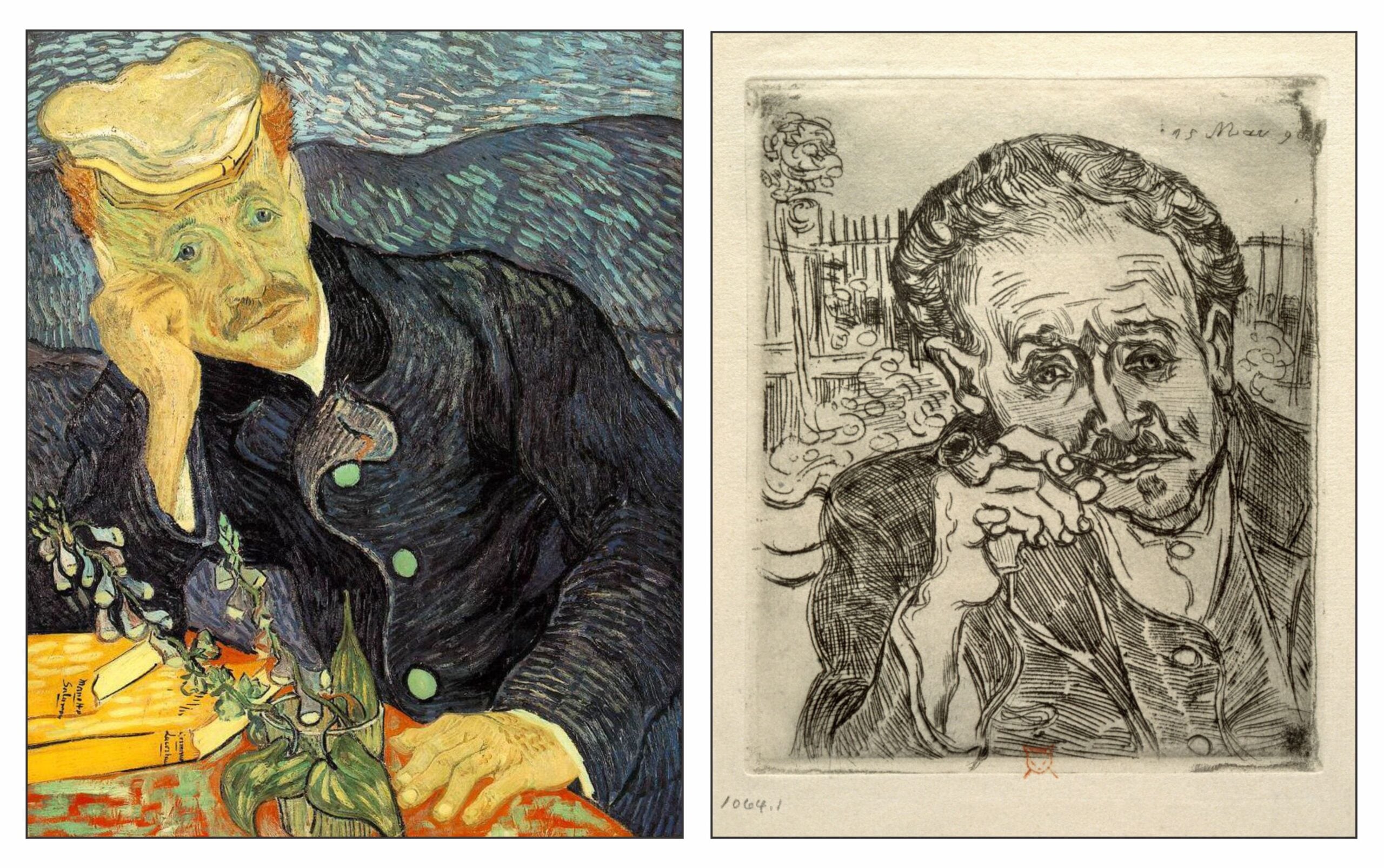
And on June 19 Gachet gave Van Gogh a prepared copper plate so that he could sketch another portrait for an etching. The plate was later etched, and multiple copies were printed either by Doctor Gachet or his son. One of them must have added the incorrect date 15 Mai 90 in a shaky backward handwriting so that it would come out properly on the print. This is the only etching that Van Gogh ever made, though his extensive experience with a reed-pen drawings made him a master of this approach.      

In a letter to his sister Wilhelmina, Van Gogh describes what he wanted to convey in his painting: 

I should like to paint portraits which would appear after a century to people living then as apparitions. By which I mean that I do not endeavour to achieve this by a photographic resemblance, but by means of our impassioned expressions – that is to say, using our knowledge of and our modern taste for colour as a means of arriving at the expression and the intensification of the character. So the portrait of Dr. Gachet shows you a face the colour of an overheated brick, and scorched by the sun, with reddish hair and a white cap, surrounded by a rustic scenery with a background of blue hills; his clothes are ultramarine – this brings out the face and makes it paler, notwithstanding the fact that it is brick-coloured.


Daubigny

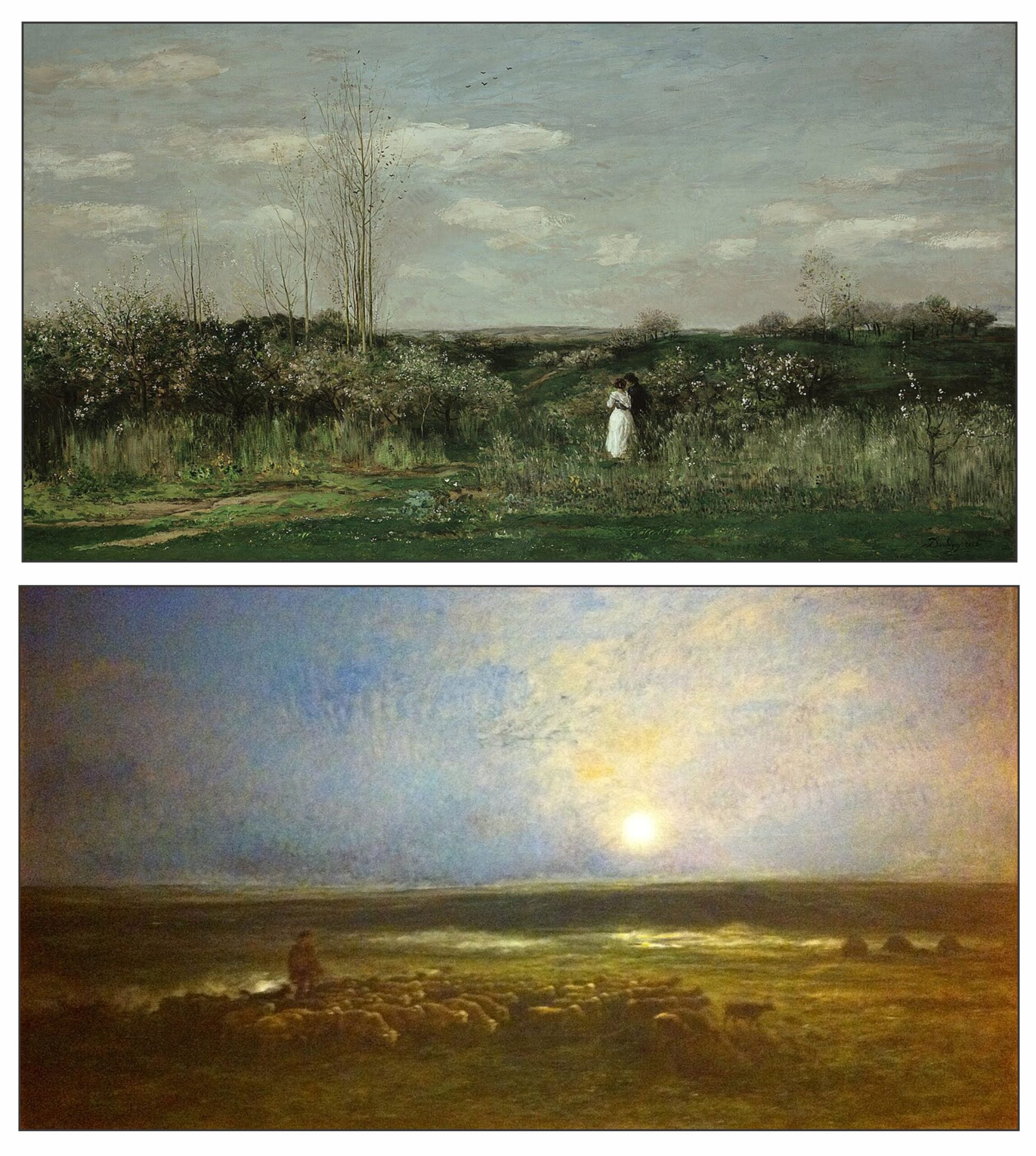
Charles-François Daubigny (1817-1878) was one of the first artists, together with Corot and Courbet, to practise painting en plein air. He wanted to capture the fleeting changes in light and color that happen in real life rather than in the studio. Daubigny settled in Auvers in 1860. While there he used a boat as a floating studio to paint the light effects on the Oise and Seine Rivers. His paintings are considered precursors to Impressionism. The following illustration shows two paintings: Springtime (1868) and Moonrise at Auvers or Return of the Flock (1878) 
Van Gogh held Daubigny in high regard (Bakker, 2015). He visited Daubigny’s widow in Auvers and painted the garden to the Daubigny villa on July 10, 1890:
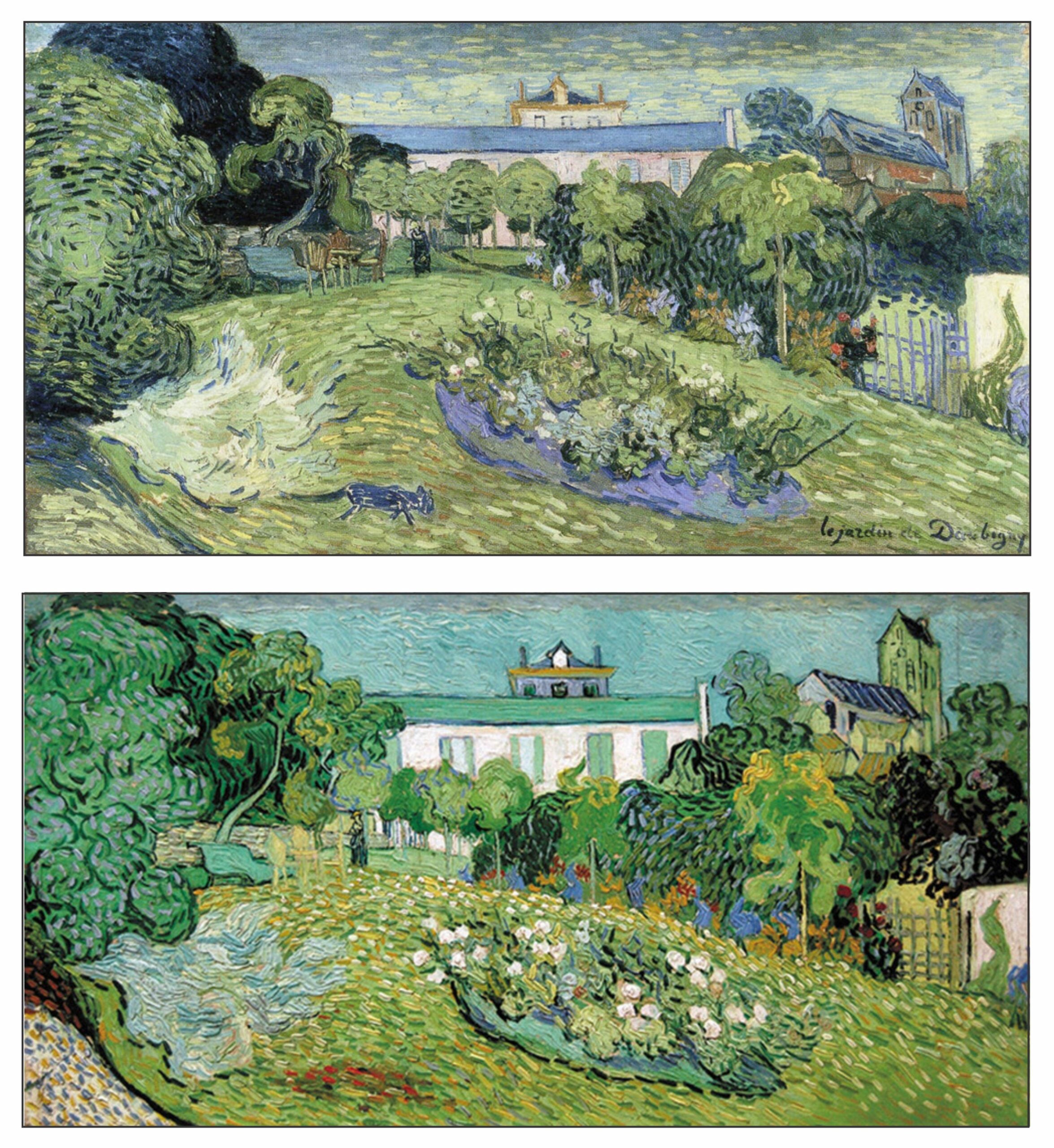
The first painting with the cat in the foreground is now in the Kunstmuseum in Basel and the later copy, painted on July 23, is in the Hiroshima Museum of Art. In the background to the right is the Romanesque Church of Notre-Dame-de-l’Assomption, just east of the villa. Van Gogh also made another smaller painting which focussed on the roses in the Daubigny garden. This painting was famously painted on a checkered napkin since Van Gogh had run out of canvas.  

Auvers-sur-Oise

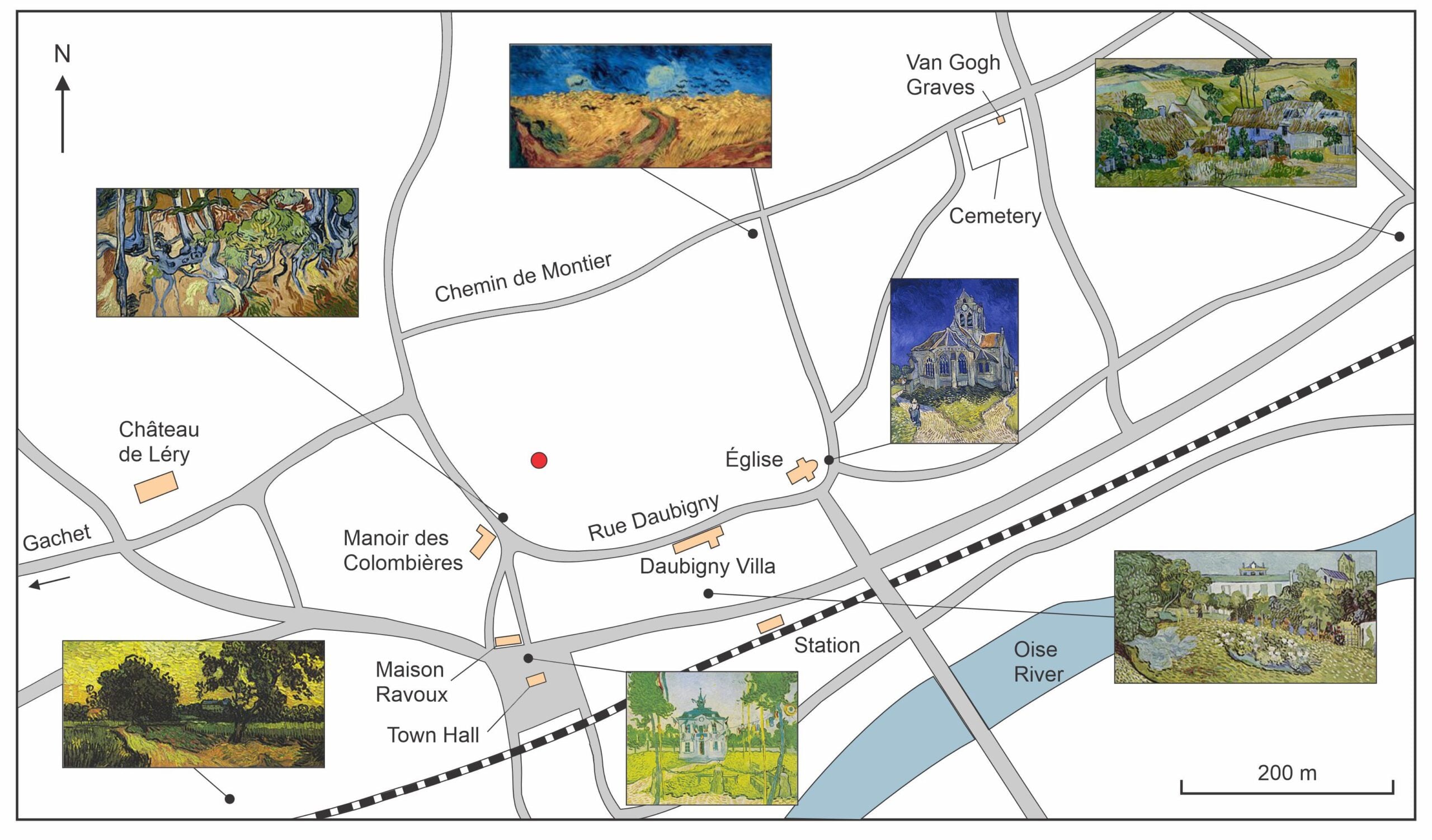
The following map of Auvers-sur-Oise, simplified from Van der Veen (2023a) shows the Daubigny Villa, the Maison Ravoux where Van Gogh found lodging, and the locations where he painted several of his pictures.
The Double-Square Format

In mid June Van Gogh had begun to use canvases that were 100 by 50 cm for some of his paintings – a double-square format (Pickvance, 1986, p 258; Coquery 2023; Bailey, 2021a, pp 102-115). Two of the July paintings of Daubigny’s garden were in this format. Daubigny had painted his landscapes using wide canvasses, and it is possible that Van Gogh chose his new format with his predecessor in mind. Van Gogh had also been impressed the recent painting Inter Artes et Naturam (1890) of Pierre Puvis de Chavannes (1824-1898) which he had seen in Paris (Wattenmaker, 1981). This is 295 x 830 cm, almost a triple-square
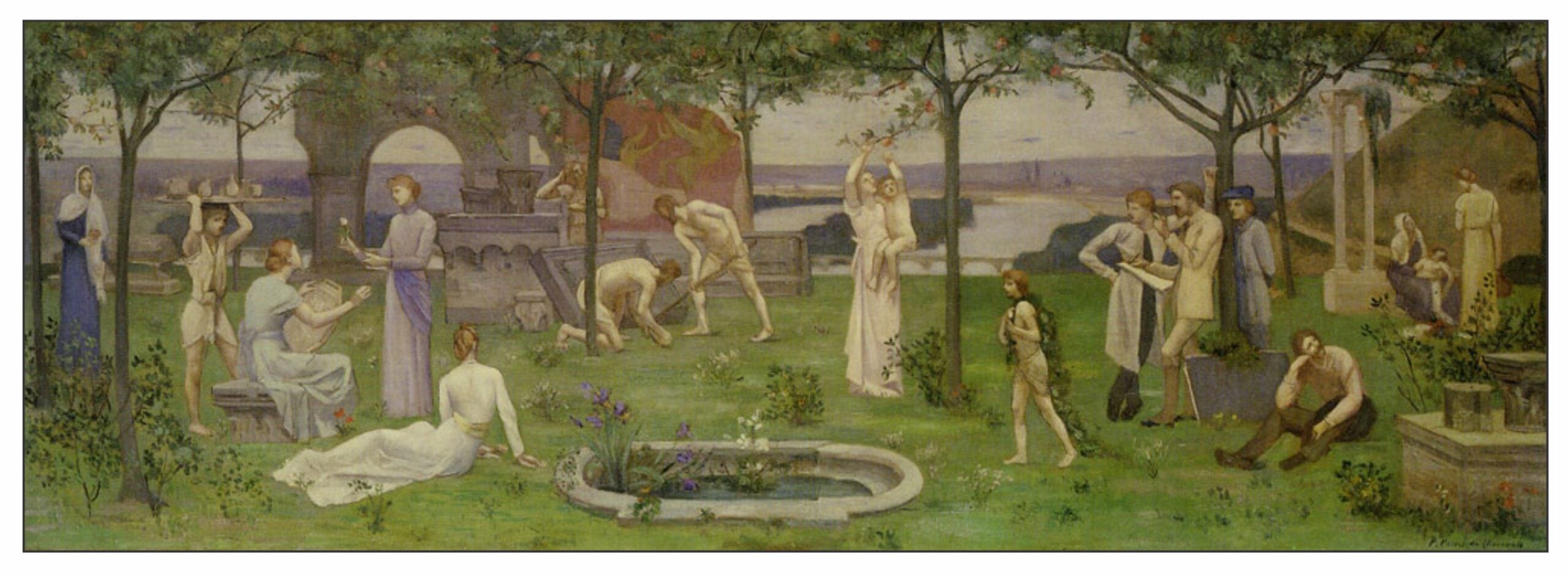
Puvis de Chavannes’ painting shows figures unearthing architectural relics, creating ceramics, and picking blossoms in a park beside the River Seine. All under the watchful eyes of several artists who are sketching their endeavors. The painting celebrates both artistic creativity and the beauty of nature without which art could not occur. Puvis de Chavanne made the original for Musée des Beaux-Arts in Rouen, but he also made several smaller copies. The following is Van Gogh’s description in his letter to his sister Wilhelmina on June 5

On one side two women, dressed in simple long robes, are talking together, and one the other side men with the air of artists; in the middle of the picture a woman with her child on her arm is picking a flower off an apple tree in bloom. One figure is forget-me-not blue, another bright citron yellow, another of a delicate pink colour, another white, another violet. Underneath their feet a meadow dotted with little white and yellow flowers. A blue distance with a white town and a river. All humanity, all nature simplified, but as they might be if they are not like that.
This description does not tell you anything – but when one sees this picture, when one looks at it for a long time, one gets the feeling of being present at a rebirth, total but benevolent, of all things one should have believed in, should have wished for – a strange and happy meeting of very distant antiquities and crude modernity.


The following is Van Gogh’s description of his first double-square paintings in his letter to Theo on June 24, 1890:

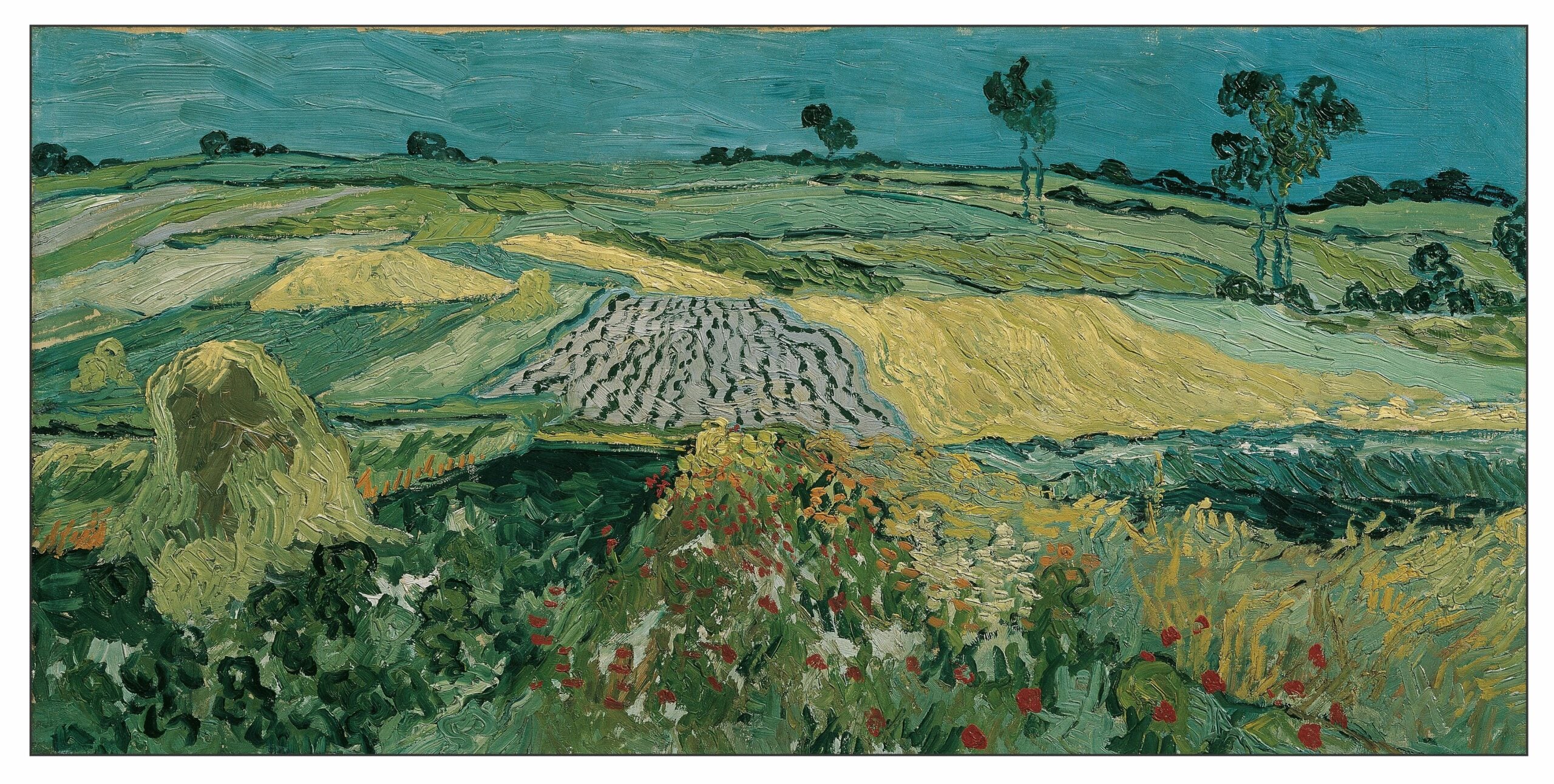
Then I have a canvas one metre long by only 50 centimetres high, of fields of wheat, and one that makes a pendant of undergrowth, lilac trunks of poplars, and underneath them some flower-dotted grass, pink, yellow, white and various greens.

The following is the first of these paintings, Wheatfields near Auvers:
This is the mysterious Undergrowth with Two Figures:
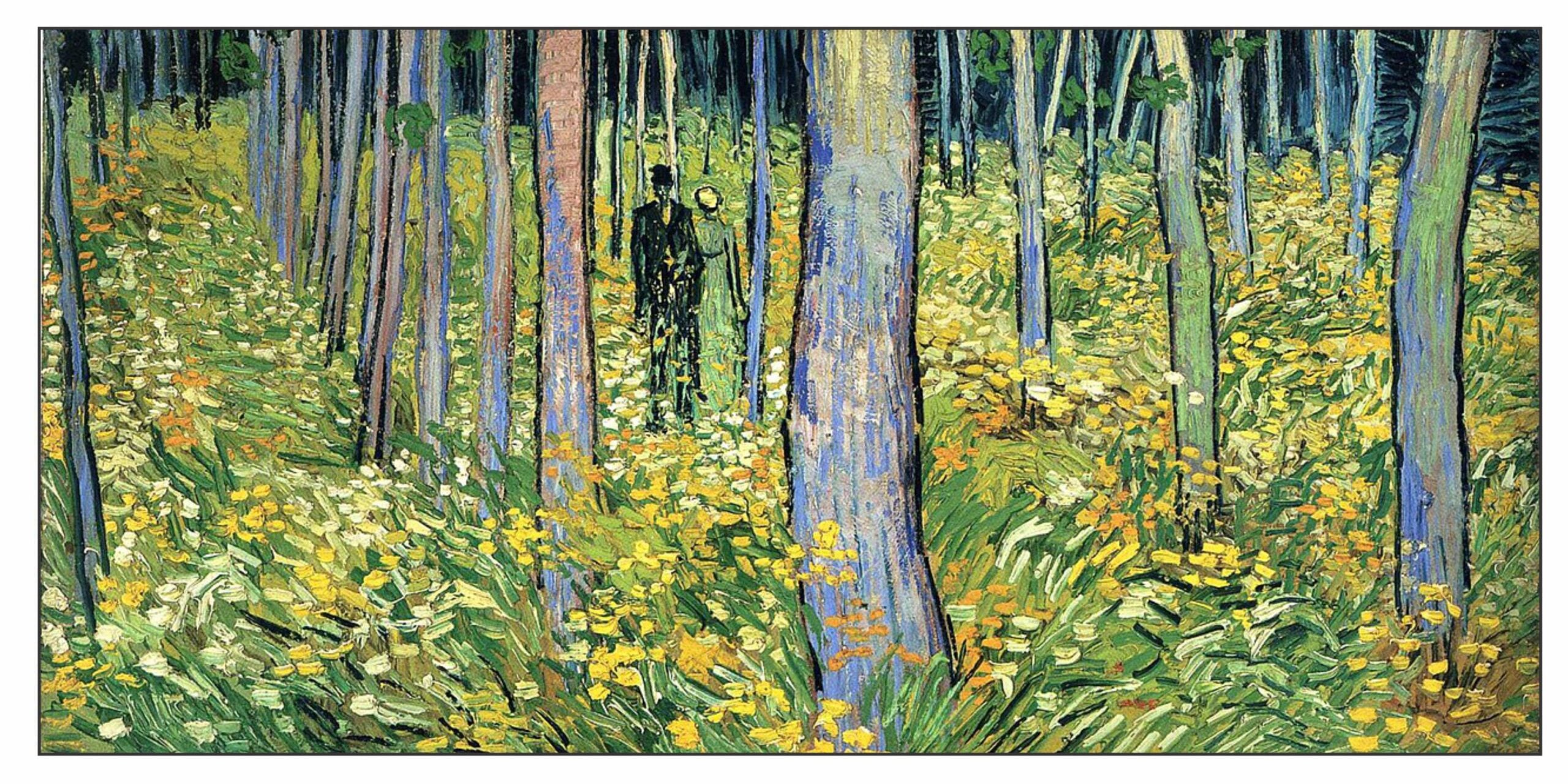
Coquery (2023) comments on the latter

No horizon here, rather a closed space punctuated by the hypnotic rows of poplars with their uncertain vanishing lines; and in the foreground a trunk that is abnormally large compared to the others, designed to intensify the perspective. The geometry of the trunks, emphasized by strong black outlines, contrasts with the vigorous profusion of grasses and flowers, more thickly painted and hardly credible as undergrowth.
Strangely, Van Gogh does not mention the ghostly, frontally rendered couple, and the uncertainty of scale as they seem to float between the trunks and the waist-high grass that sprinkles their Sunday clothes. The pair – especially the man who wears a kind of top hat – resembles a bridal couple who have strayed too far from a church square. It represents the last instance of the loving-couple motif that pervades the artist’s oeuvre like a poignant regret.
In its haunting geometry this painting can be read as a reinterpretation of the orchard in Pierre Puvis de Chavannes’s great work, Inter artes et naturam.

Puvis de Chavannes might have represented the beauty of antiquity, but Van Gogh distilled into his painting the loneliness of modern life.

The following is Landscape at Twilight:
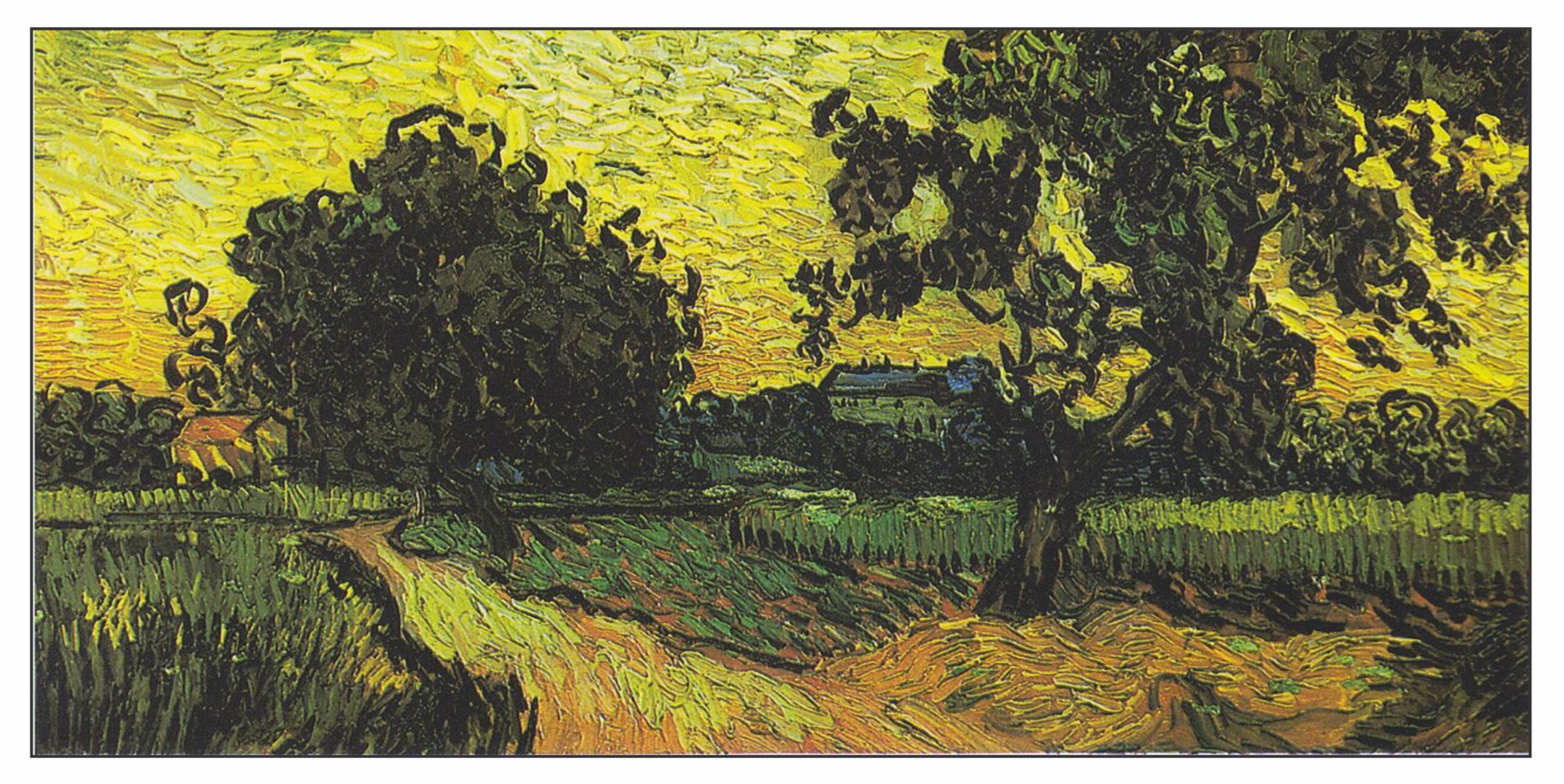
The painting is reminiscent of some of the twilight paintings of Daubigny, although Van Gogh’s colours are more intense and his brushwork far more energetic. The picture is evenly divided into bright sky and darker land. In the distance is the Château de Léry, built in 1635.

Van Gogh describes the painting in his letter of June 24

Finally a night effect – two completely dark pear trees against yellowing sky with wheatfields, and in the violet background the castle encased in the dark greenery.

A week after these first three double-square pictures, Van Gogh painted a portrait of Marguerite Gachet at the Piano using his new format, but orienting it vertically. In a letter to Theo on June 28, he described the painting

Yesterday and the day before I painted Mlle. Gachet’s portrait, which I hope you will see soon; the dress is pink, the wall in the background green with orange spots, the carpet red with green spots, the piano dark violet; it is 1 metre high by 50 cm wide.

The following illustration shows the portrait and an excerpt from the letter where Van Gogh suggests that the portrait and the Wheatfields near Auvers would complement each other. The illustration shows the two paintings aligned as proposed: 
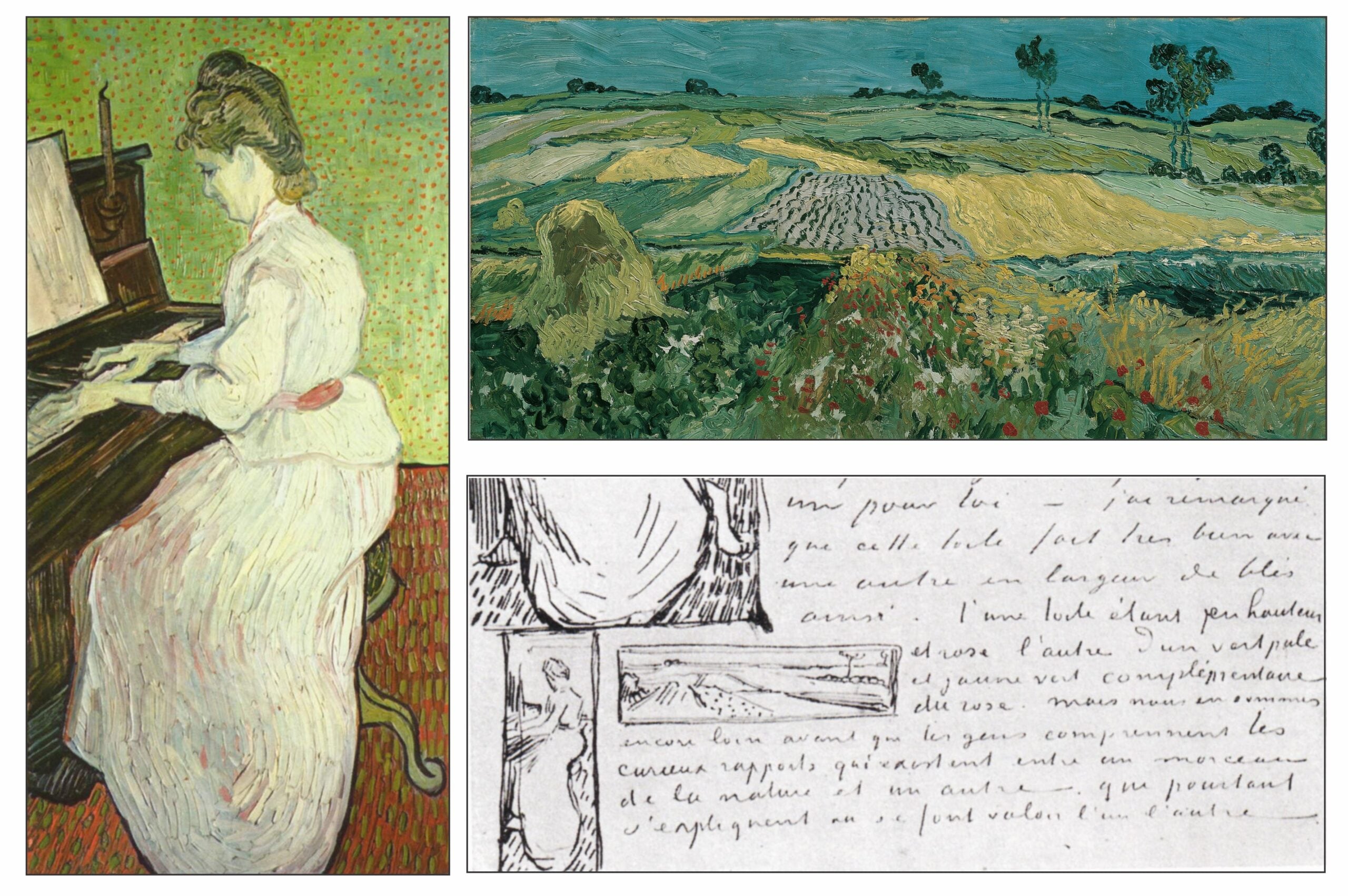
J’ai remarqué que cette toile fait très bien avec une autre en largeur, de blés, ainsi l’une toile étant en hauteur et rose, l’autre d’un vert pâle et jaune vert complémentaire du rose; mais nous en sommes encore loin avant que les gens comprennent les curieux rapports qui existent entre un morceau de la nature et un autre, qui pourtant s’expliquent et se font valoir l’un l’autre.
[I have noticed that this canvas goes very well with another horizontal one of wheat, as one canvas is vertical and in pink tones, the other pale green and greenish yellow, the complementary of pink; but we are still far from the time when people will understand the curious relation between one fragment of nature and another, which all the same explain each other and enhance each other.]


Wheatfields under Turbulent Skies

Vincent Van Gogh visited Paris in early June and became aware of the stresses of his brother Theo. His newborn son had been sick, and Theo himself was uncertain whether to stay at his position with the art dealers Boussod and Valadon, or to strike out on his own. Vincent realized what a burden he had been for his brother. In a letter to Theo on July 10 he states

It’s no small thing when all together we feel the daily bread in danger, no small thing when for other causes than that we also feel our existence to be fragile.
Once back here I too still felt very saddened, and had continued to feel the storm that threatens you also weighing upon me. What can be done – you see I usually try to be quite good-humoured, but my life, too, is attacked at the very root, my step also is faltering.

He then states that he has just completed two

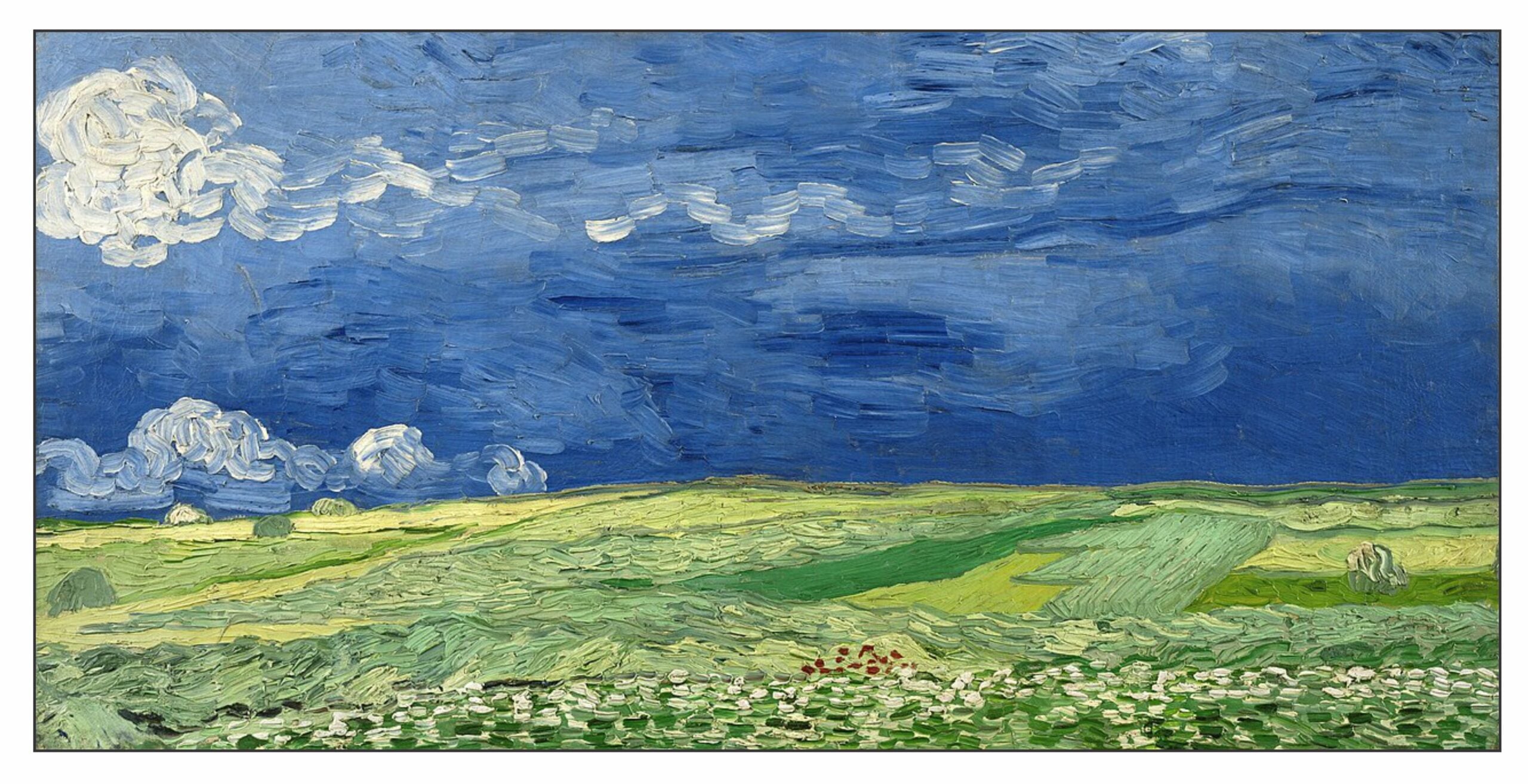
immense stretches of wheatfields under turbulent skies, and I made a point of trying to express sadness, extreme loneliness. You’ll see this soon, I hope – for I hope to bring them to you in Paris as soon as possible, since I’d almost believe that these canvases will tell you what I can’t say in words, what I consider healthy and fortifying about the countryside.

One of the paintings was Wheatfields under Thunderclouds, now in the Van Gogh Museum:
Coquery (2023, p 141) remarks that

This is the most austere of the double squares and the only one giving a predominant role to the sky, which is enlivened with heavy impasto and broad, lush brushstrokes. 

Despite the storm building up on the left, the painting conveys an abiding sense of peacefulness. The storm will come, but the fields will remain, the green will become golden and the harvest will begin.

The second painting is Wheatfield with Crows, also in the Van Gogh Museum.
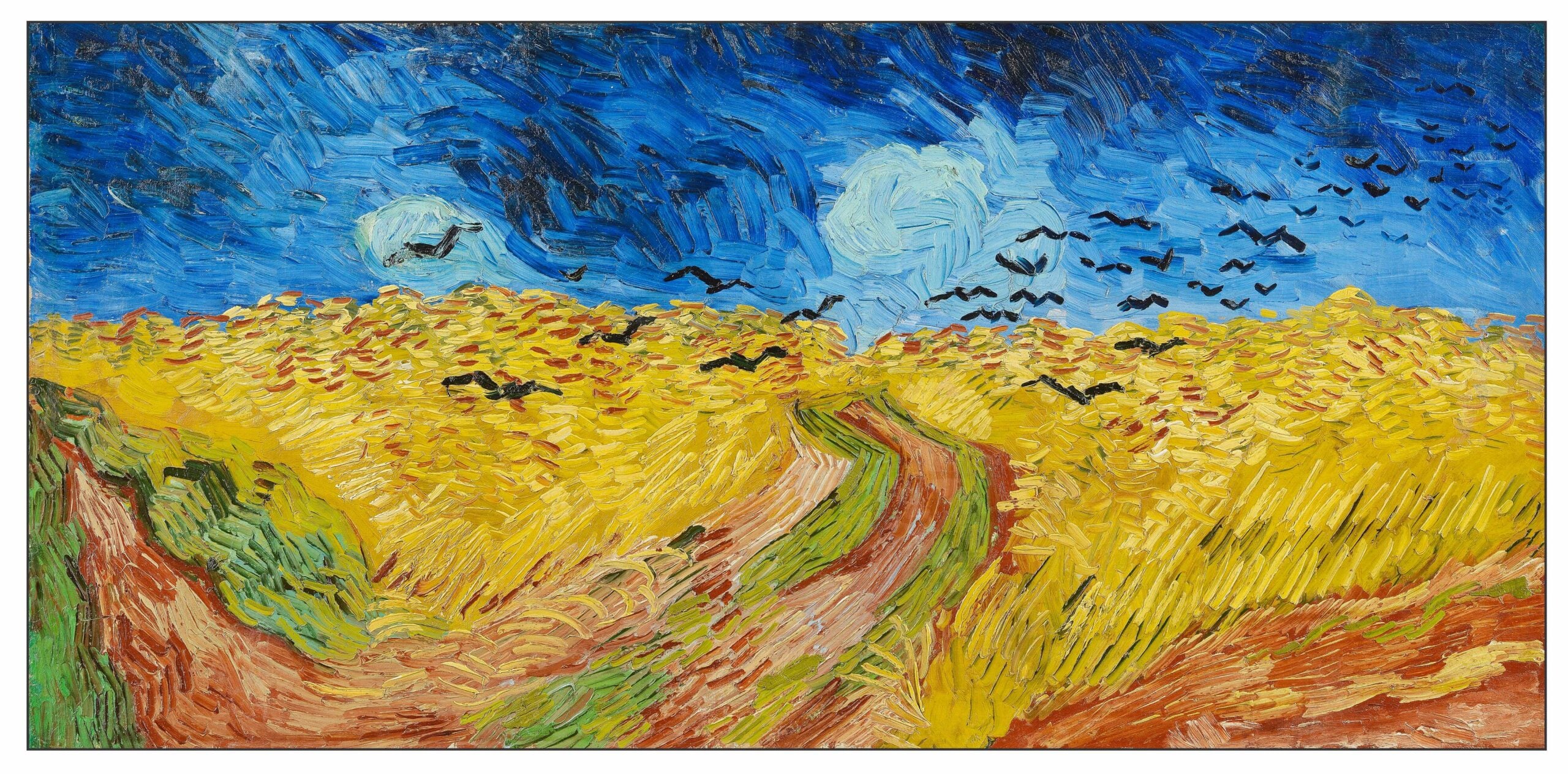
The painting is stormy. The brushstrokes are ragged. The sharp contrasts between blue and yellow and between red and green heighten the emotional intensity of the painting.  

Although the horizon is clear there is no single vanishing point and no unifying perspective. The painting appears to show two triangular wheatfields. Wouter van der Veen (2023) took two photographs from the probable location of this painting. The first shows a path between two fields viewed from the side of the Chemin de Montier
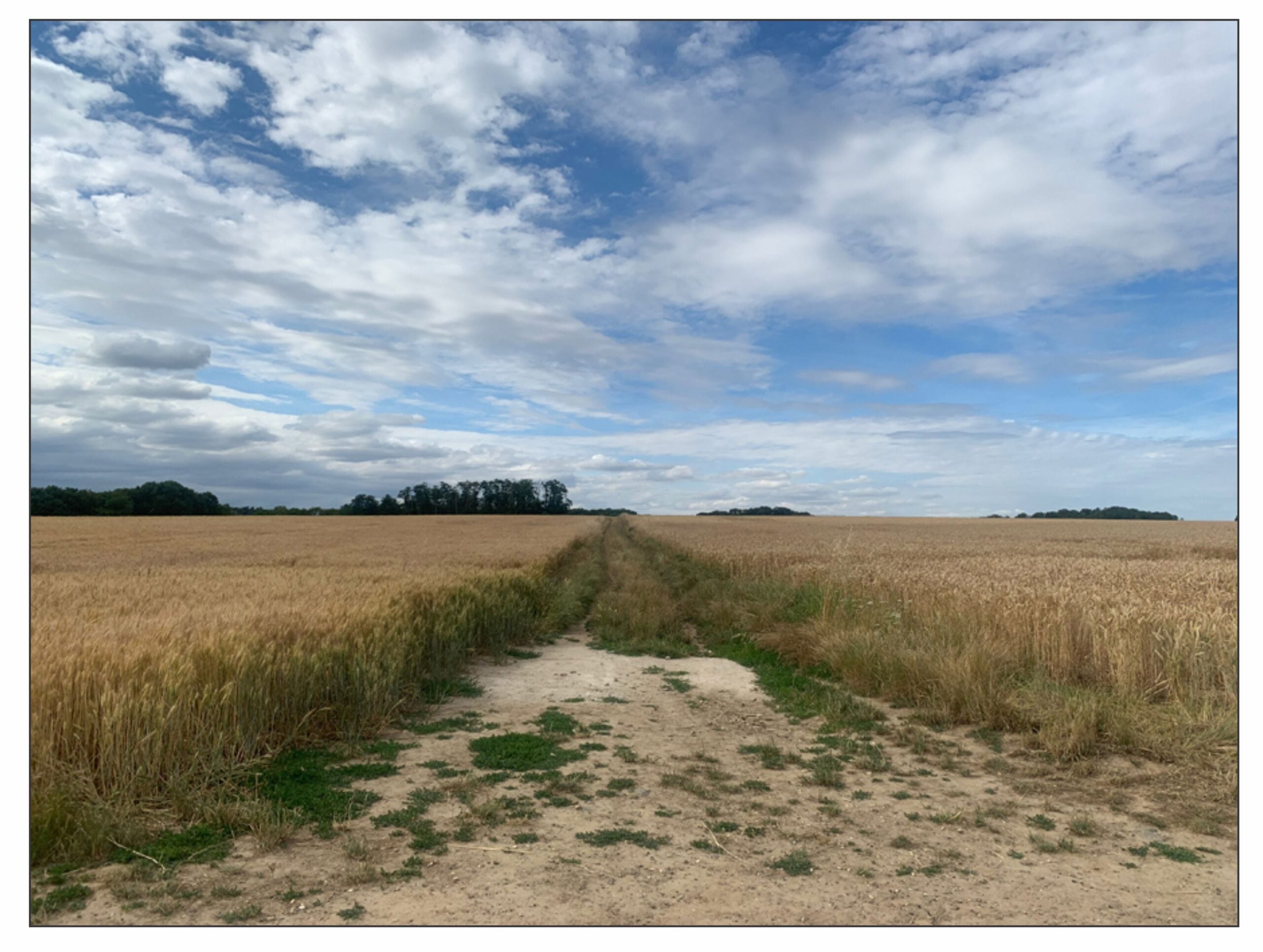
The following shows the same scene photographed using a panoramic lens. Now the scene looks much more like the painting:
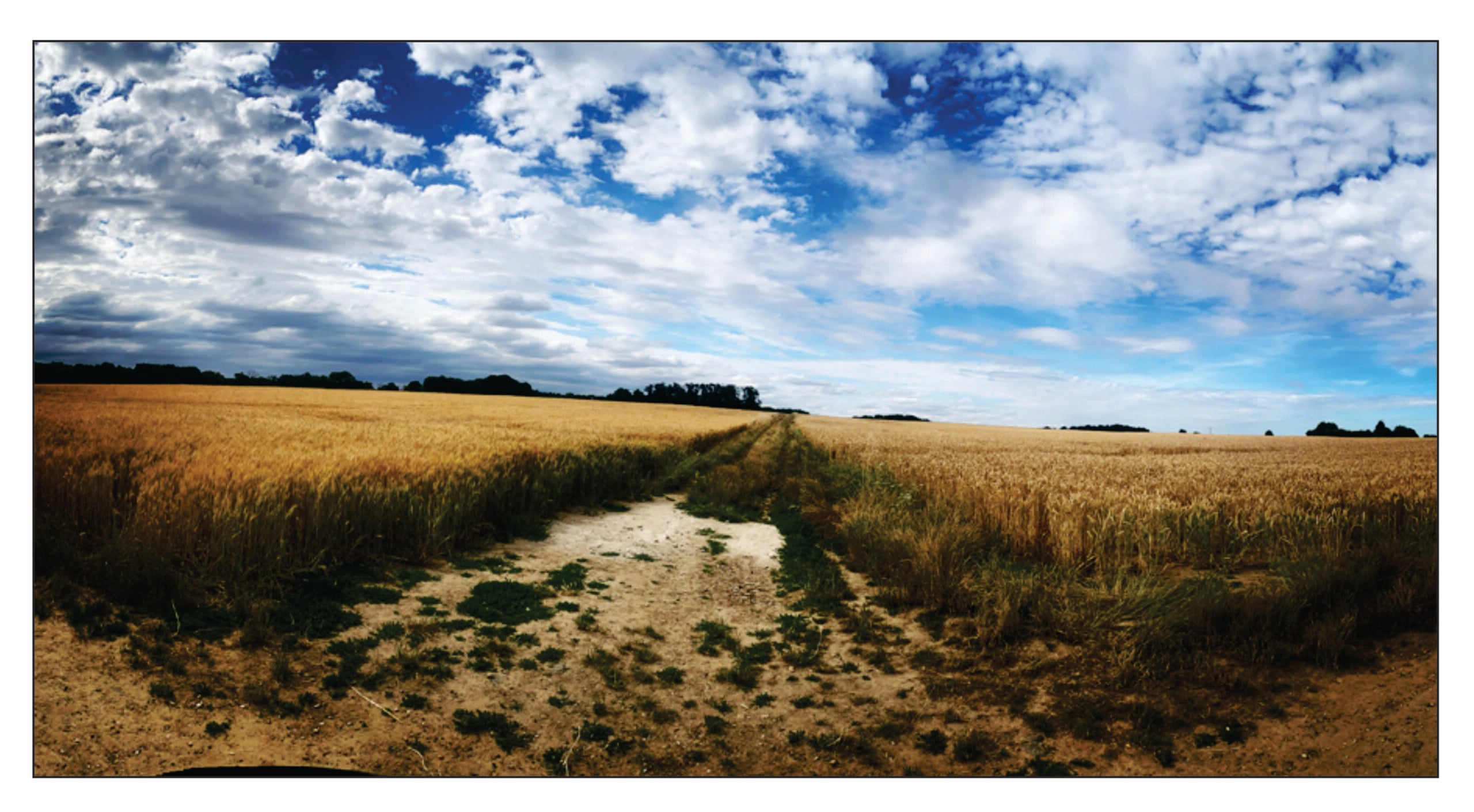
Van Gogh was using a panoramic perspective. This is much closer to what the human eye sees. Our field of vision is about 120˚ vertical by 200˚ degrees horizontal. This fits very well with Van Gogh’s double-square format. Most paintings deal with only the center of our field of vision where we see binocularly (about 120˚ square) and leave the periphery unrepresented.   

Bailey (2021a, p 24; 2021b) points to an 1843 painting by Daubigny that was likely taken from the same spot. Van Gogh may have known the painting and may have sought out the same location. However, there is a huge contrast between Daubigny’s peace and Van Gogh’s storm.  
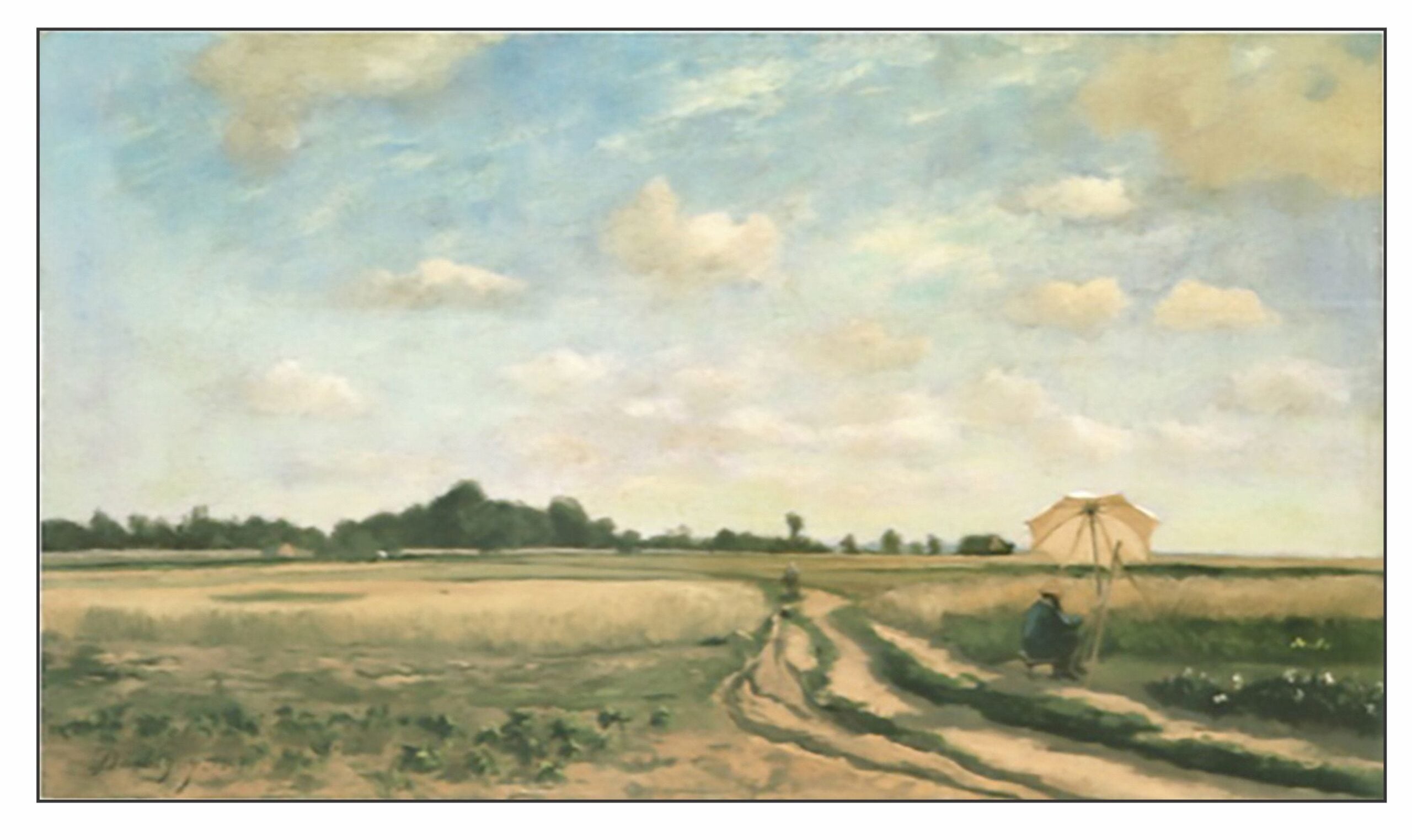
Any interpretation of Wheatfield with Crows is forever tainted with the fact that the painting was long considered Van Gogh’s last painting before his suicide (Bailey 2021b). However, it is now known that the painting was finished almost three weeks before. It is not a harbinger of death. Rather, Erickson (1998, p 162) points out the Van Gogh considered wheatfields far more restorative than ominous. She quotes from a letter to Theo on July 2

It is just in learning to suffer without complaint, in learning to look on pain without repugnance, that you risk vertigo, and yet it is possible, yet you may even catch a glimpse of a vague likelihood that on the other side of life we shall see good reason for the existence of pain, which seen from here sometimes so fills the whole horizon that it takes on the proportions of a hopeless deluge. We know very little about this, about its proportions, and it is better to look at a wheat field, even in the form of a picture.

Van Gogh was clearly suffering and he was contemplating death, but he looked to the wheatfields for affirmation. Erickson remarks (p 164)

If the roads, as they run out of the painting or disappear among the resplendent wheat, in Crows over the Wheatfield, were intended to represent death, it is a death of triumph and ultimate release. Taking into consideration van Gogh’s view of death, the images of crows and wheat, and country roads begin to come together to show what van Gogh describes as the “healthful and restorative forces” of the French countryside. The vast, troubled skies of deep royal blue, which occupy almost half of the compositional space of the painting are symbolic of the infinite, the ultimate goal of the artist’s pilgrimage. [the quotation is from the July 10 letter]


Harvest

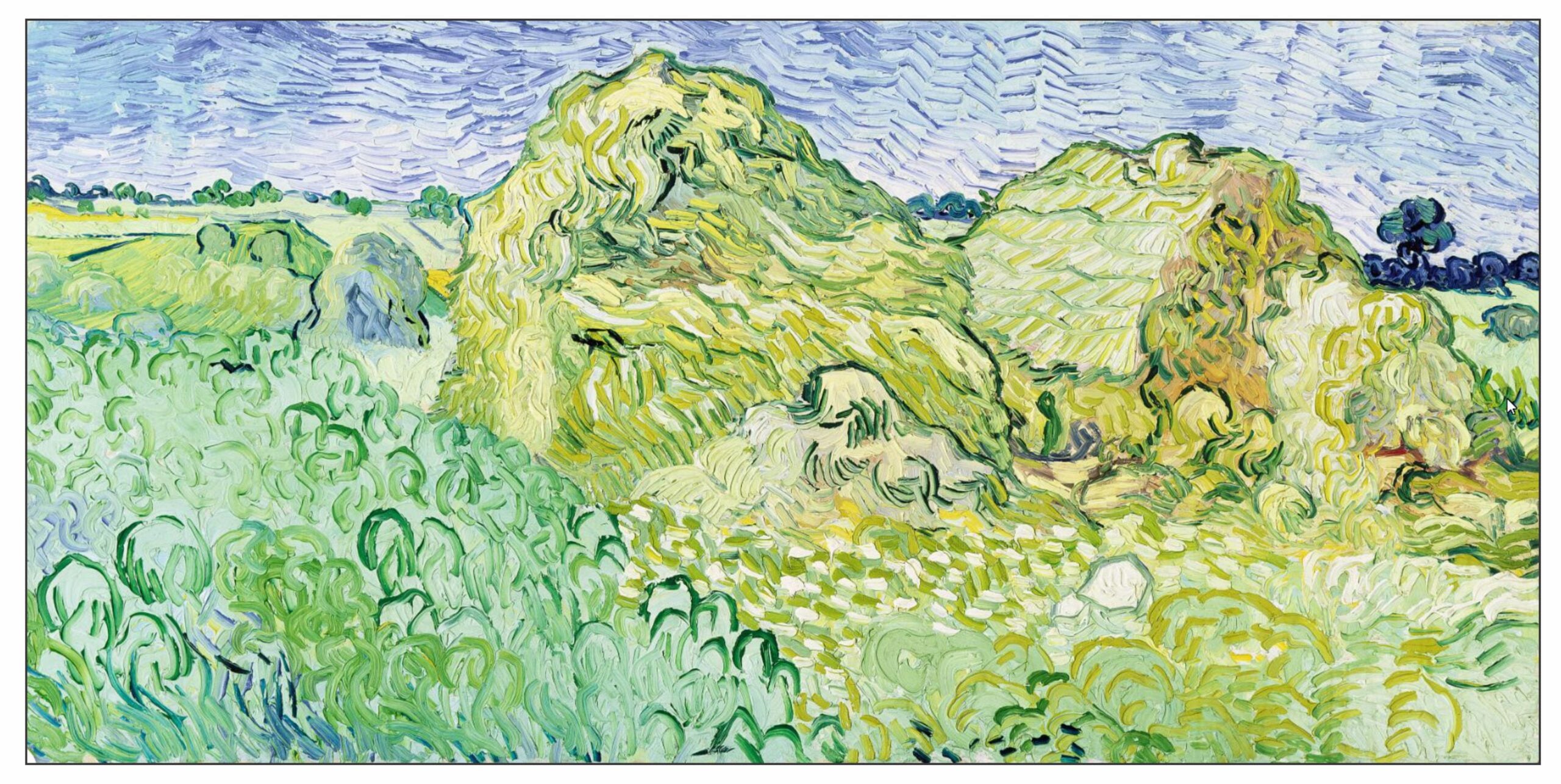
By mid-July the harvest was in full swing. Van Gogh painted a peaceful representation of a Field with Haystacks


Van Gogh had long delighted in the harvest. The following illustration shows his representation of Wheat Sheaves from July 1890, together with an earlier drawing and painting from 1885. The 1890 painting is almost ethereal in its lightness.
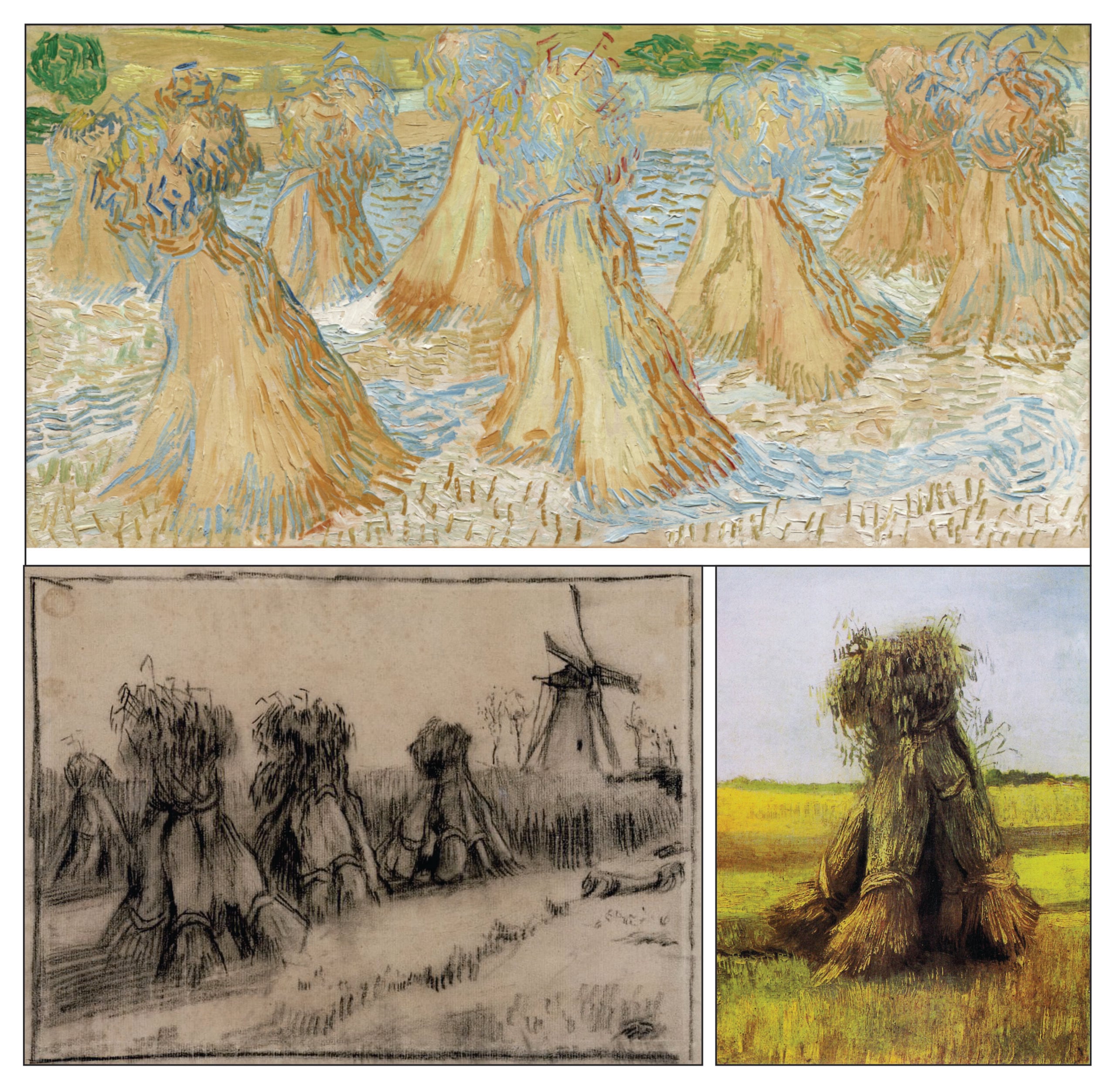
 

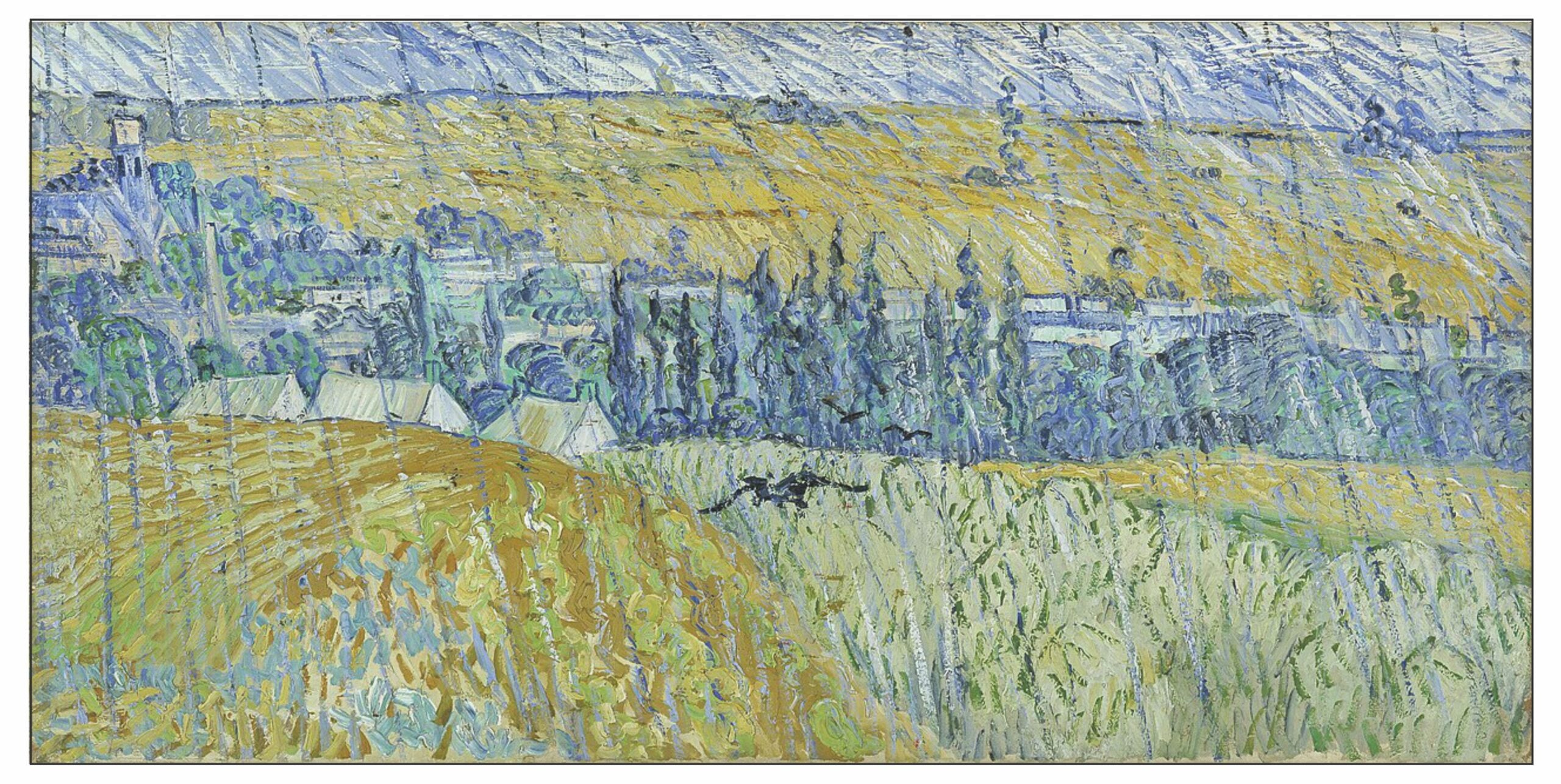
Even the rain did not dampen his peaceful feelings. The following painting of harvest fields in the rain was created on July 18. The crows are present, but they are part of the landscape:
 

Farms

Soon after his arrival in Auvers, Van Gogh had painted a group of thatched farmhouses just to the east of Auvers.  The following illustration shows a photograph from 1887 (Van der Veen, 2023a, p 54) and one of Van Gogh’s paintings from late May or early June:
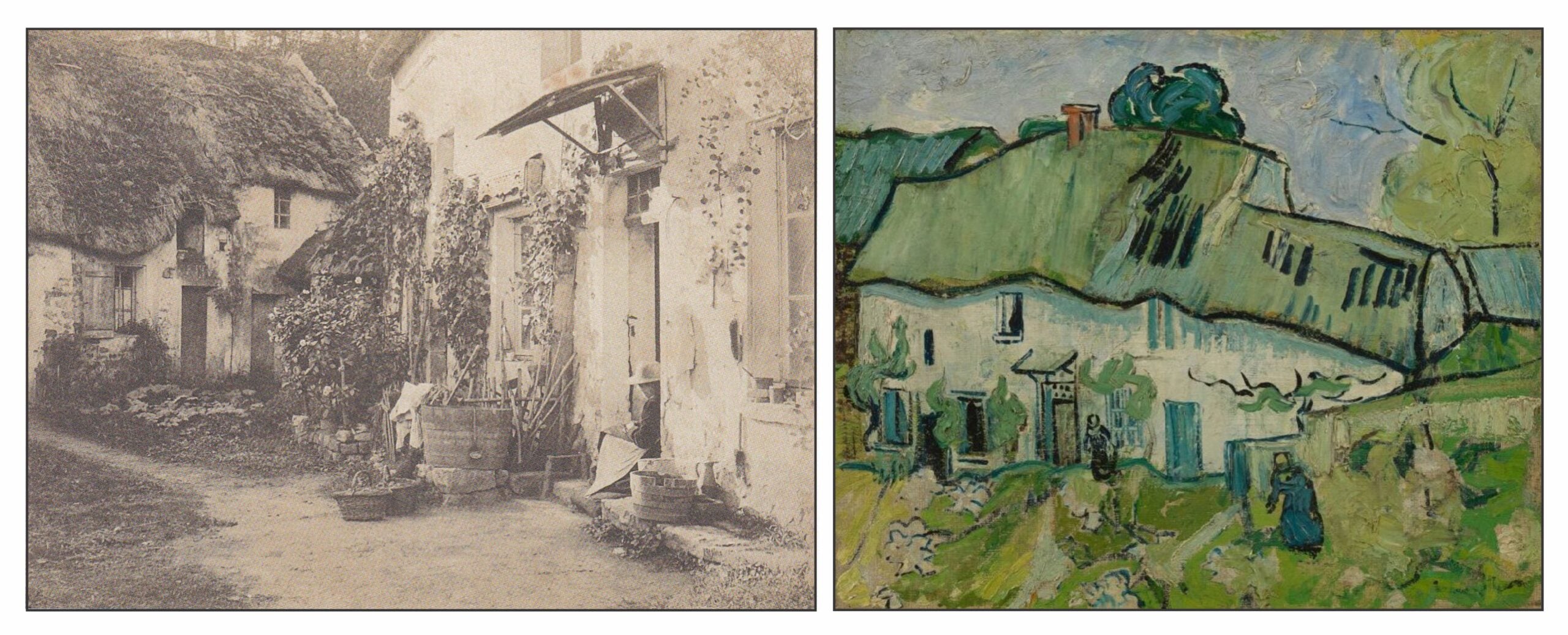
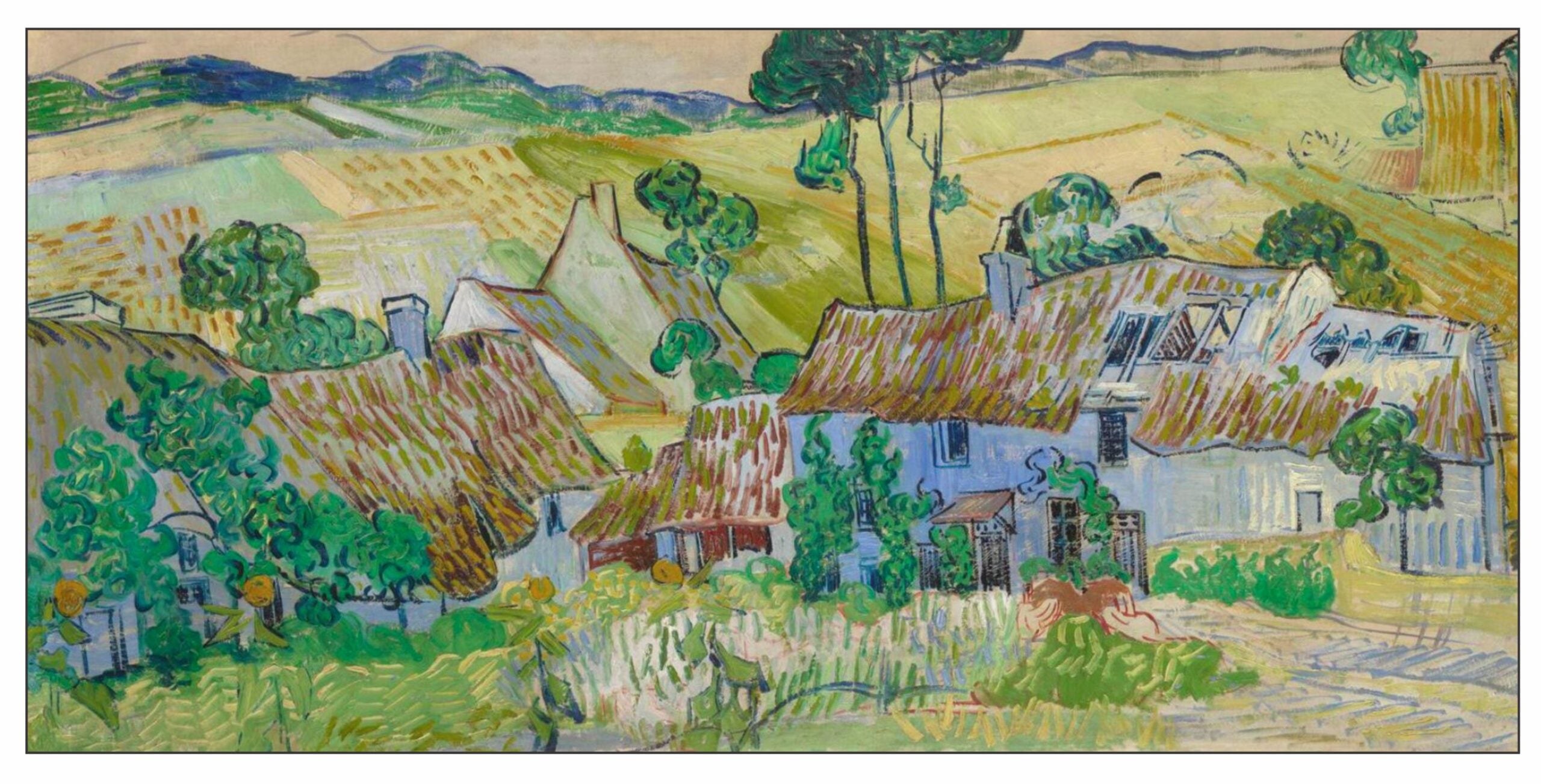
In the final days of his life, probably on July 26, Van Gogh returned to these farms and created a wonderfully peaceful picture of the farms. The double-square format allowed him to represent the whole group of farm buildings nestled together:
 

Tree Roots

Van Gogh’s last picture, painted on the day that he shot himself, was probably Tree Roots (Maes, & van Tilborgh, 2012). Some parts of the background are just flat colors and lack the final brushstrokes that Vang Gogh typically used. Van Gogh finished all his other paintings except for the Farms near Auvers, in which a small area of the sky was not completed. The painting represents the roots of trees at the side of a road.
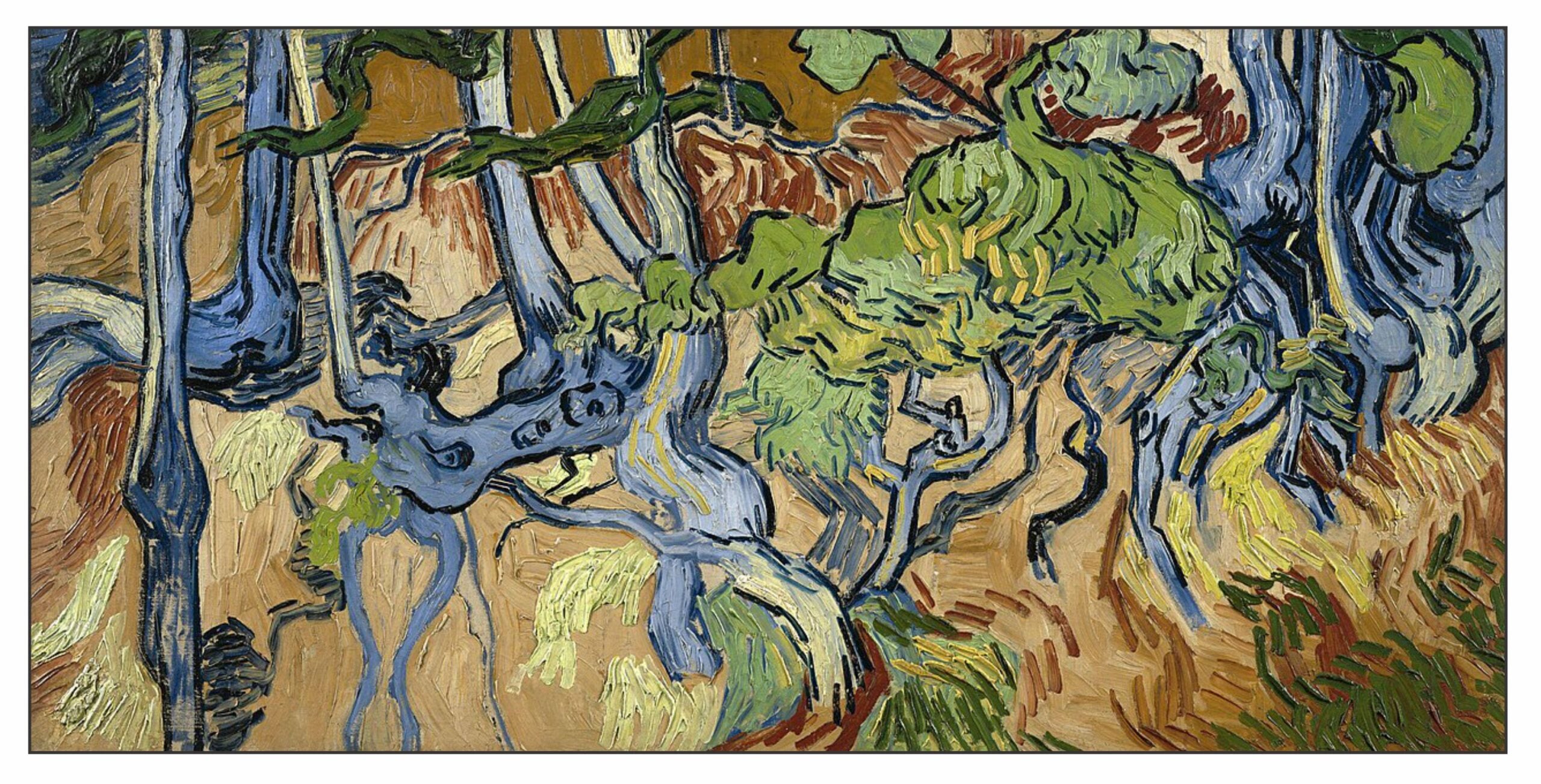
The following are comments by Pickvance (1986, pp 282-3):

Ambiguous, stylized, vitalistic, life-affirming, antinaturalistic yet palpably organic: a kind of prototype for an Art Nouveau frieze. No foreground, no element on which the viewer can get his spatial bearings, no sky to differentiate back-ground from foreground, no stabilizing horizontal. The roots and trunks are vertical; the ground plane is almost vertical. The motif could be part of the steep rise of the hillside, with the village below and the plain above, that characterizes the length of Auvers; van Gogh could have found it at almost any point. The image is passionately observed, yet objectively rendered.

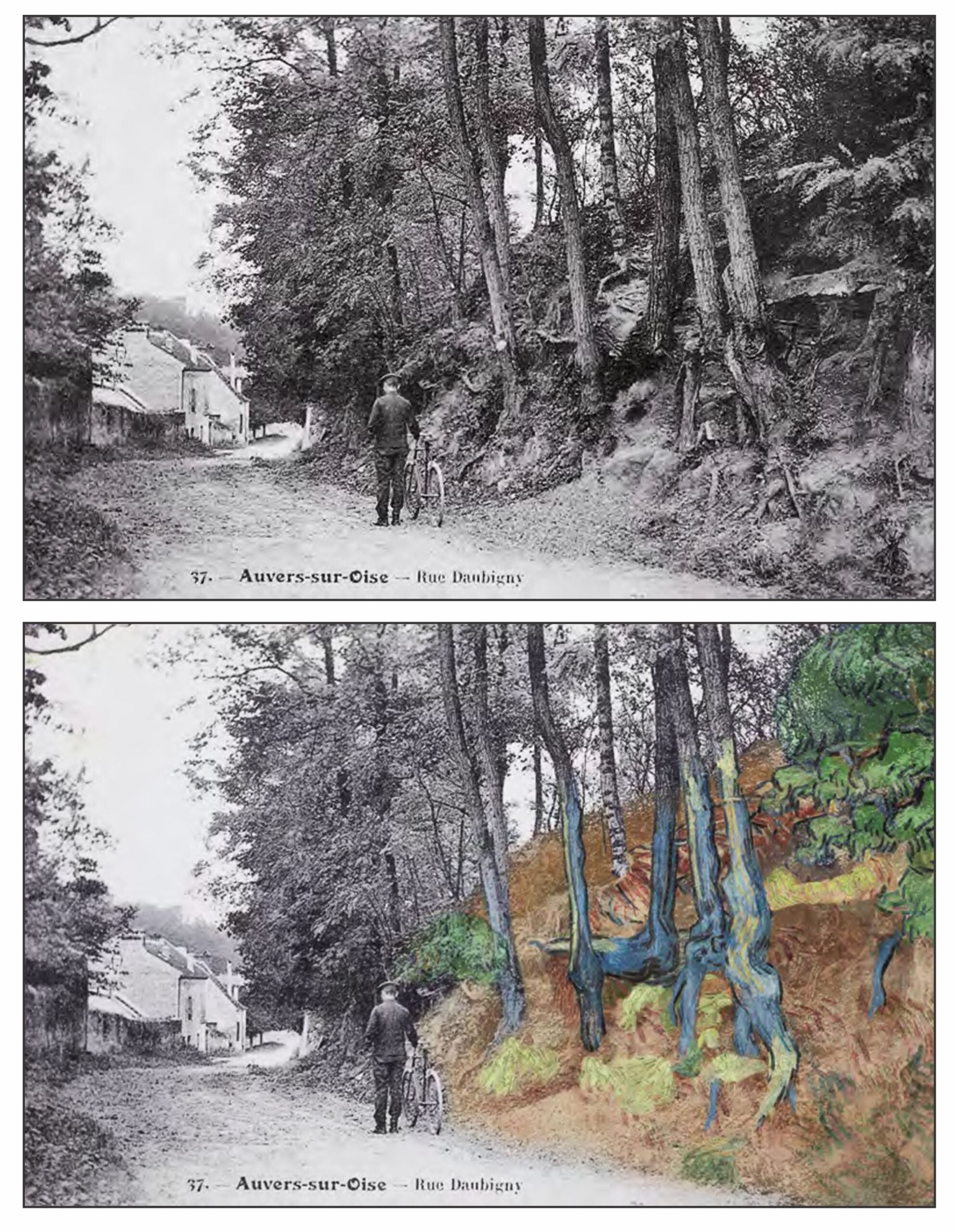
Van der Veen (2020) found a postcard showing Rue Daubigny in the early years of the 20th Century. That allowed him to pinpoint the location of Van Gogh’s tree roots:
Suicide

After painting Tree Roots and bringing it back to his room at the Maison Ravoux, Van Gogh went out in the early evening of July 27 “behind the chateau.” There he shot himself with a revolver (Bailey 2021a, pp 117-125). Though he aimed at the heart, the bullet entered the lung or upper abdomen. After the shot, he must have lost consciousness for a brief time. When he came to, he searched for the revolver “to finish the job” but was unable to find it. However, he was able to walk painfully back to his lodgings. Doctors Gachet and Mazery examined him but decided that there was nothing that they could do. Theo Van Gogh was notified and arrived in Auvers on July 28. Van Gogh died at 1:30 am on July 29.

Doctor Gachet made a sketch of Van Gogh on his deathbed. Of interest is that he did not sketch the details of Van Gogh’s wounded left ear. He later made an etching from the sketch. Both are rudimentary. Gachet signed his works “Paul Van Ryssel” (or PVR) using the name of his birthplace near Lille (“Ryssel” in Flemish).
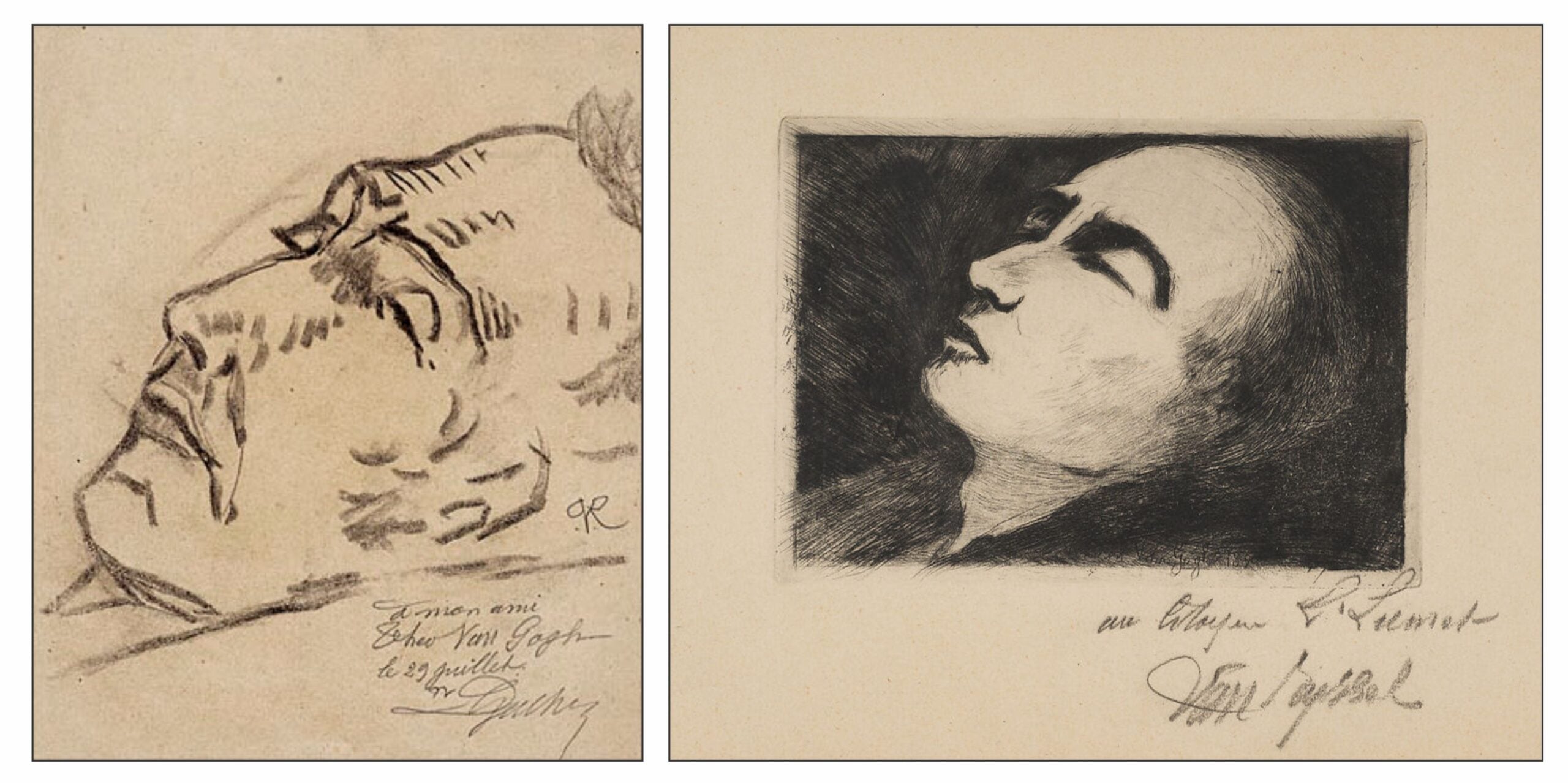
The location of the suicide is usually assumed to be north of Château Léry. However, this would have required a very long walk back to Maison Ravoux for a mortally wounded man. Van der Veen (2023c) has argued that the Manoir des Colombières was also referred to as a château, and claimed that the site of Van Gogh’s suicide was close to where he had made his last picture: the red dot on the map presented earlier in this posting, only 200 m from his lodgings. A rusted revolver found around 1960 in fields near Auvers was probably the one used by Van Gogh. He had apparently taken it from its owner, Arthur Ravoux, the manager of the inn where Van Gogh lodged (Bakker et al., 2016, p 80).   

It is impossible to know what led to Van Gogh’s decision to kill himself (Bakker et al., 2016). He suffered from recurrent episodes of depression. He felt he was a tremendous burden to his brother. Though he was convinced of the significance of his art, no one other than his brother and a few friends seemed to think it had any worth. 

Aftermath

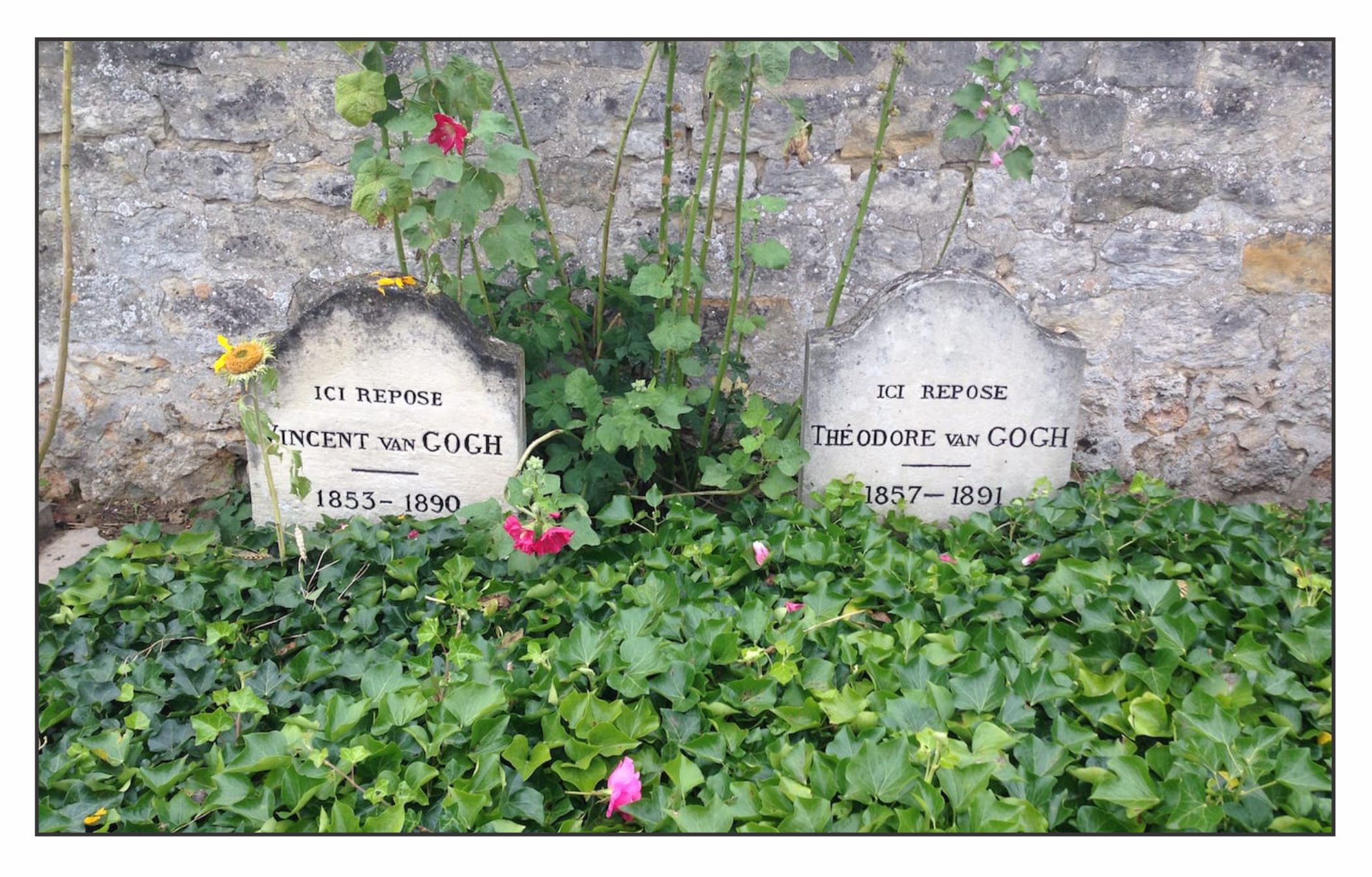
Van Gogh was buried in the cemetery at Auvers. His brother Theo died six months later, apparently of the late effects of syphilis, though grief may have played a role. Though he was initially buried in Utrecht, where he was hospitalized, His wife Joanna Bonger-Van Gogh arranged for his body to be transferred to Auvers in 1914, and the two graves rest side by side, covered with ivy that came from a cutting from the garden of Doctor Gachet:
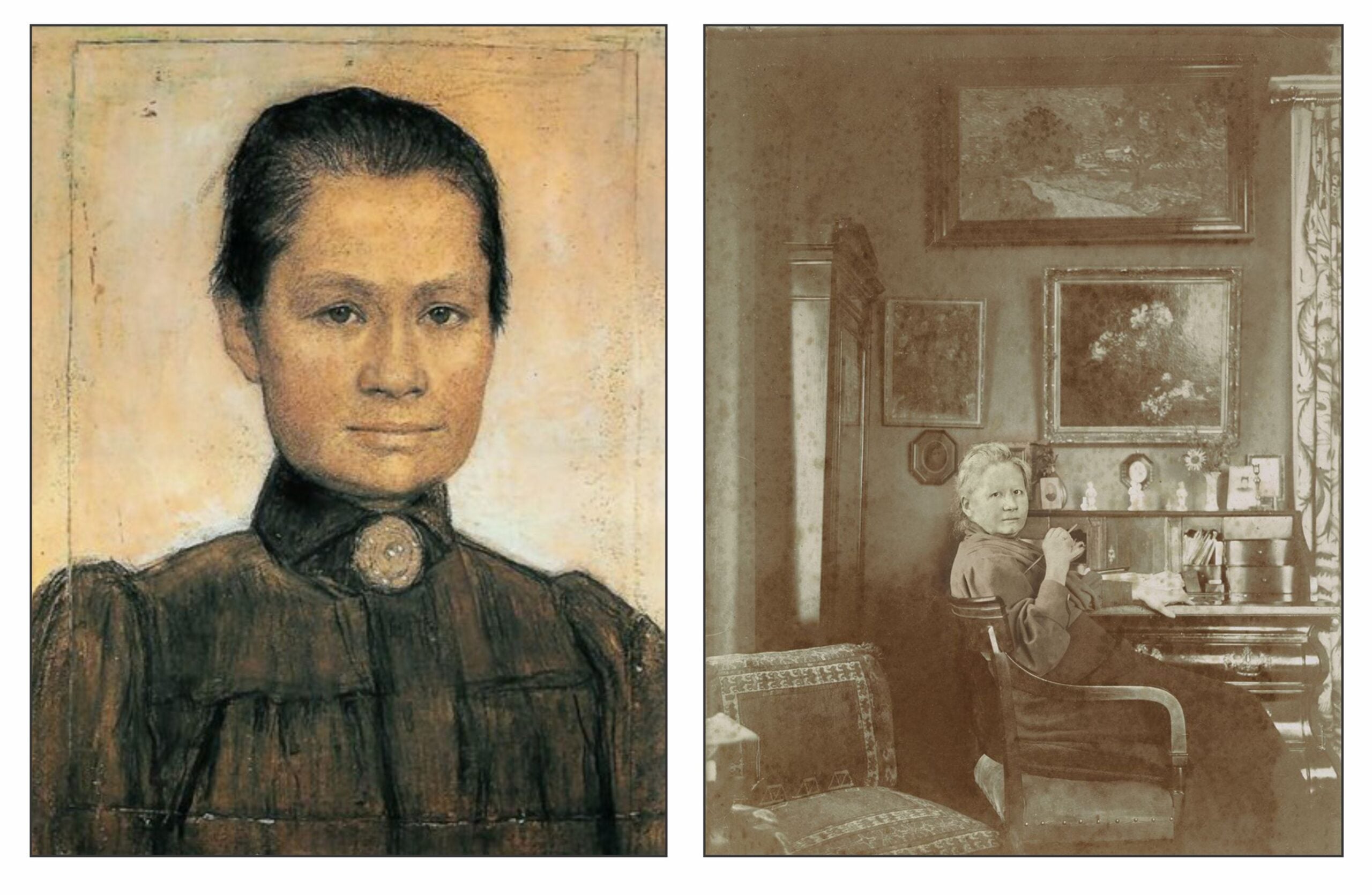
After Theo’s death, Johanna Van Gogh-Bonger retired to Bussum, just east of Amsterdam, where she earned a living through translation and by taking in lodgers. She edited the correspondence between Theo and Vincent, and kept together all of Vincent’s paintings. She continually promoted her brother-in-law’s work to dealers and museums, and in the early years of the 20th Century he finally began to receive the recognition he deserved (Luijten, 2023). The following illustration shows a 1905 portrait of Joanna by her second husband Johan Cohen Gosschalk, and a photograph of her in Amsterdam from 1909. On the wall is Van Gogh’s Landscape at Twilight.  
The Double-Square Paintings

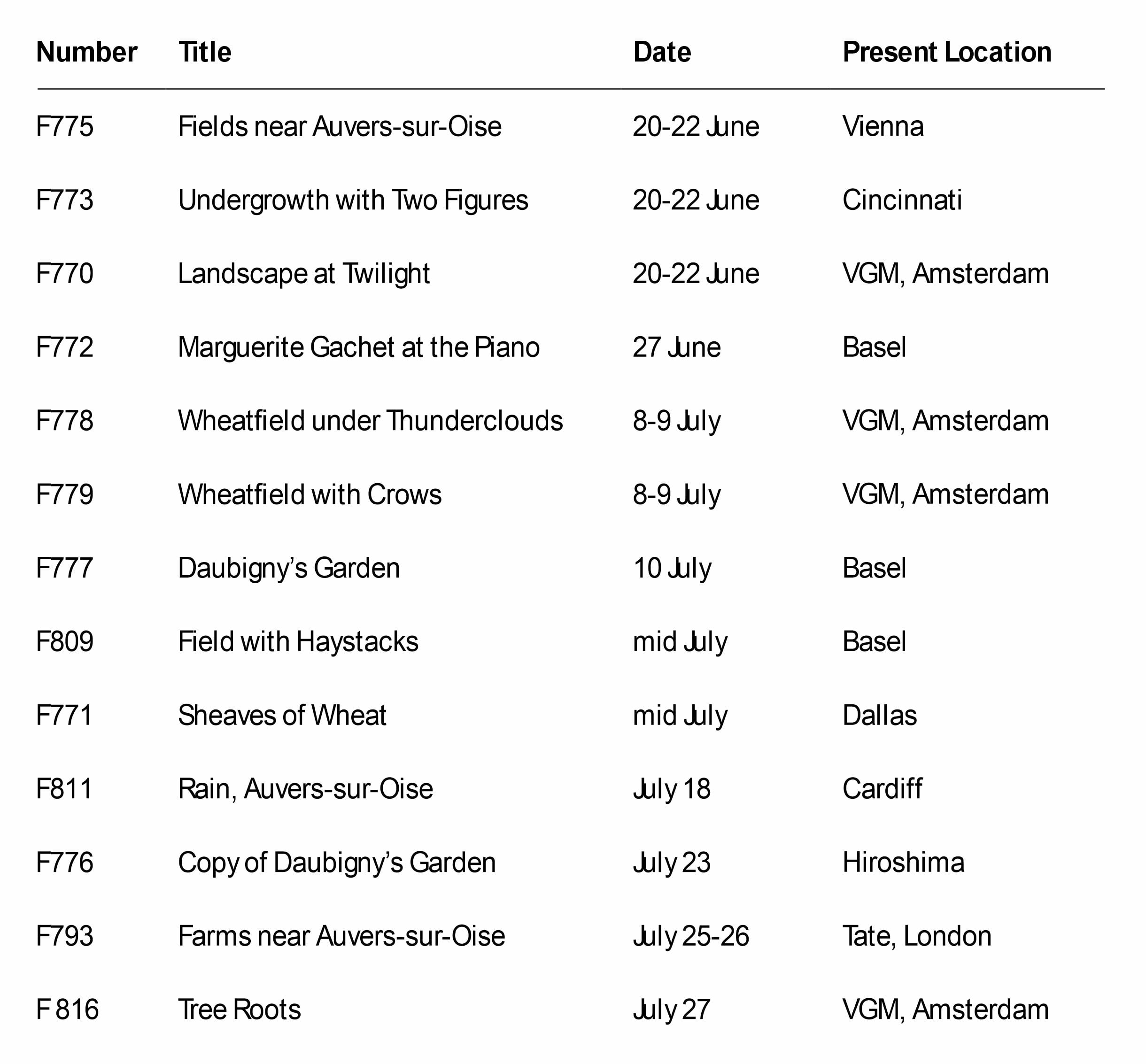
The following table lists the double-square paintings. The number is from the de la Faille catalogue (1928) 
 

References

Bailey, M. (2021a). Van Gogh’s finale: Auvers and the artist’s rise to fame. Frances Lincoln.

Bailey, M. (2021b). Van Gogh’s mysterious Wheatfield with Crows—what does it really mean? The Art Newspaper. September 3, 2021.

Bakker, N. (2015). In Daubigny’s footsteps: Vincent Van Gogh. In Ambrosini, L., Fowle, F., Bakker, N., Boitelle, R., van Dijk, M., & Clarke, M. Inspiring Impressionism: Daubigny, Monet, Van Gogh. (pp 104-129). National Galleries of Scotland.

Bakker, N., Meedendorp, T., & van Tilborg, L. (2023). Van Gogh in Auvers-sur-Oise: his final months. Thames & Hudson.

Bakker, N., Tilborgh, L. van, Prins, L., & Meedendorp, T. (2016). On the verge of insanity: Van Gogh and his illness. Yale University Press.

Coquery, E. (2023). On the threshold of a ‘New Painting’: the double square works. In Bakker et al. (2023) (pp 134-161).

de la Faille, J.-B. (1928).  L’Œuvre de Vincent van Gogh: catalogue raisonné, ouvrage accompagné de la reproduction de plus de 1.600 tableaux, dessins, aquarelles et gravures du Maître. (6 vols). Les Éditions G. van Oest.

Erickson, K. P. (1998). At eternity’s gate: the spiritual vision of Vincent Van Gogh. W.B. Eerdmans.

Luijten, H. (translated by L. Richards, 2023). Jo van Gigh-Bonger: the woman who made Vincent famous. Bloomsbury Visual Arts.

Maes, B., & van Tilborgh, L. (2012). Van Gogh’s Tree Roots up close. In van Tilborgh, L. (Ed.) Van Gogh: new findings. (pp 55-710) WBooks (Zwolle).

Pickvance, R. (1986). Van Gogh in Saint-Rémy and Auvers. Metropolitan Museum of Art.

Saltzman, C. (1998). Portrait of Dr. Gachet: the story of a van Gogh masterpiece: modernism, money, politics, collectors, dealers, taste, greed, and loss. Viking.

Van Tilburgh, L. (2023). A short biography of unbearable suffering: Van Gogh’s chosen end. In In Bakker et al. (2023) (pp 162-177).

Van der Veen, W. (2020). Attacked at the very root: An investigation into Van Gogh’s last days. Arthénon

Van der Veen, W. (2023a). Exploring Auvers-sur-Oise: people and places. In Bakker et al. (2023) (pp 34-57).

Van der Veen, W. (2023b). The secret of Wheat Field with Crows. Arthénon

Van der Veen, W. (2023c). About the place where Van Gogh took his own life. Arthénon

Wattenmaker, R.-J. (1981). Vincent van Gogh and Puvis de Chavannes. Vie des arts, 26(104), 94–96.

Divine Geometry

The Counter-Reformation, initiated by the Council of Trent (1545-1563) in response to the Protestant Reformation, promoted art as a way for believers to become emotionally involved in the Church. While Protestants were whitewashing church walls and destroying sculptures, Catholics produced the masterpieces of Baroque Art. For the Protestant, nothing should come between man and God; for the Catholic, the majesty of art could bring man to the mystery of God.

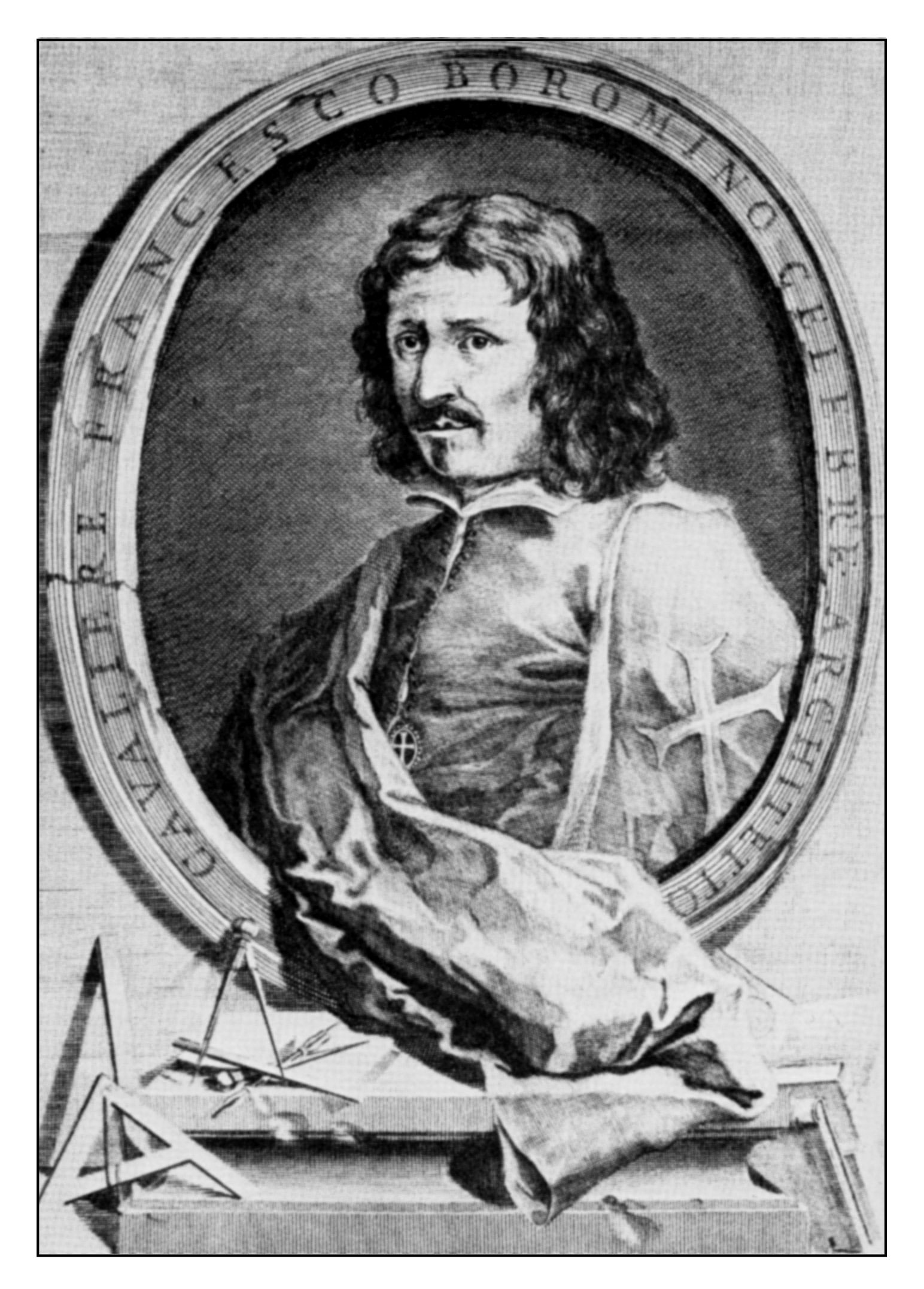
borromini engraving xxx

Francesco Borromini (1599-1667) was born as Francesco Castelli in Ticino in the lake district of Northern Italy, which at that time was actually part of Switzerland (Connors, 1999). The son of a stone-mason, he studied in Milan and may have been taught there by the great geometer Muzio Oddi. The young man finished his apprenticeship and came to Rome in 1619 to work for Carlo Maderno, the Chief Architect of Saint Peter’s Basilica and a fellow Ticinese. In Rome Francesco assumed the name of “Borromini” after San Carlo Borromeo (1538-84), Archbishop of Milan, leading force in the Counter-Reformation, and perhaps a distant relative of his mother.

In Rome, Borromini met a young sculptor from Naples, Gian Lorenzo Bernini (1598-1680). Bernini was the most talented and productive of the Baroque sculptors. With his intense creativity and charming personality, he soon became the favorite of the Roman popes. In 1624, Bernini was commissioned to construct the baldacchino over the high altar at Saint Peter’s, and after the death of Carlo Maderno in 1629, he was appointed Chief Architect of Saint Peter’s.

For a brief time, Borromini acted as Bernini’s assistant. They did not get along (Morrissey , 2005). They were of opposite temperaments: Bernini was charming and enthusiastic, Borromini was obstinate and melancholic. Borromini felt exploited, and thought that Bernini was not sufficiently grounded in the science of architecture to warrant his position. He severely criticized Bernini’s proposals for the façade and bell-towers of Saint Peter’s. The criticisms were correct and the plans were revised, but Bernini never forgave him.

Bernini is the acknowledged genius of the Baroque Age (Hibbard, 1965; Beny & Gunn 1981; Wittkower, 1997; Hopkins, 2002). Recently, however, Borromini has become more widely studied (Blunt, 1970; Morrissey, 2005; Conors, 2007). His architecture is characterized by a marvelous sense of the effects of light on curving surfaces. In his geometry one may sense the divine. The Naxos String Quartet No 7 (Davies, 2007) attempts to express in music the emotional effects of his buildings. The movie La Sapienza (Green, 2015) focuses on the visual splendor of his architecture. This posting concerns two small churches in Rome.

San Carlo alle Quattro Fontane

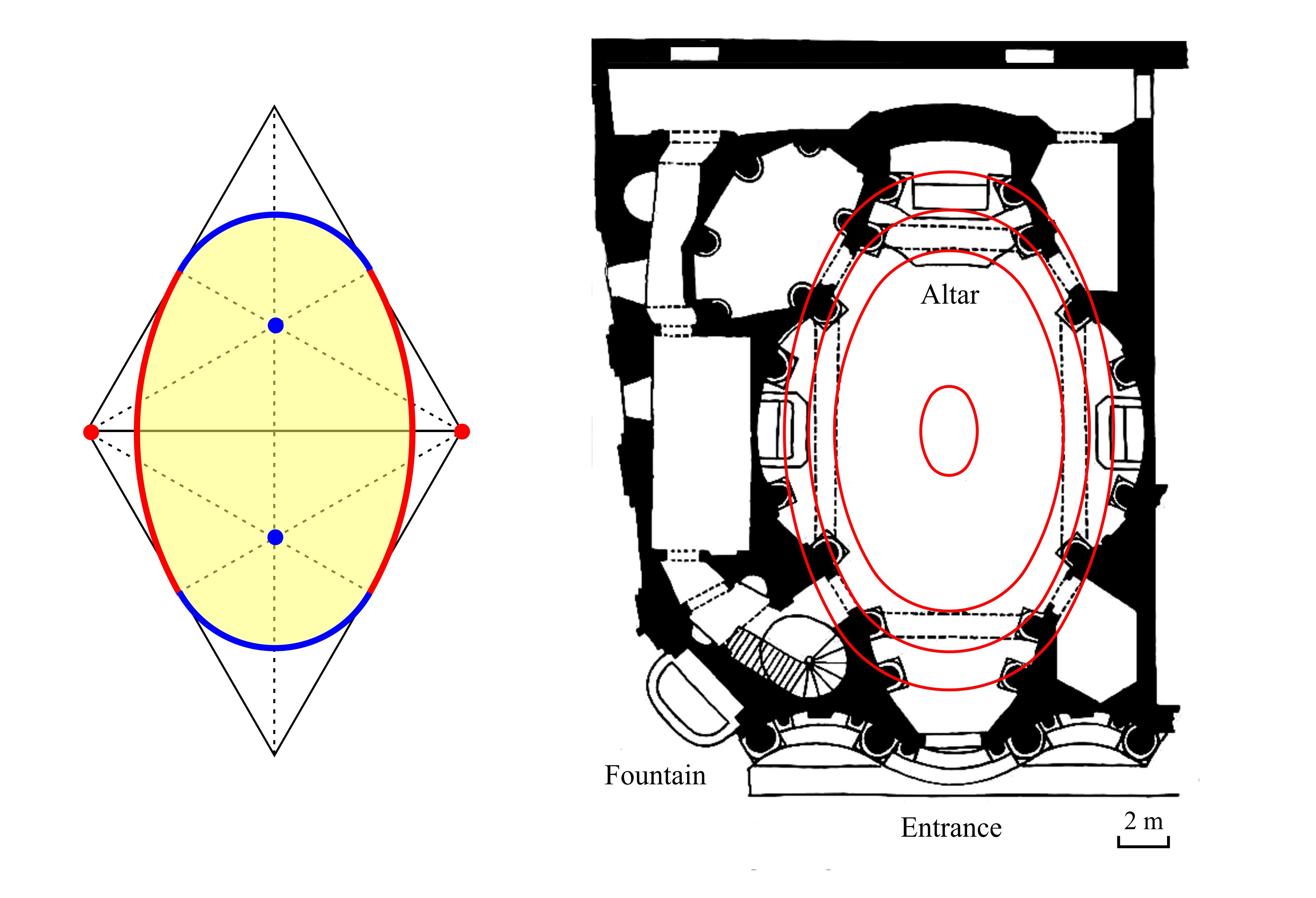
Borromini’s first independent commission (1638-41) was to construct a small church, fittingly dedicated to San Carlo Borromeo. This Trinitarian church was located on a small space at the southern corner of an intersection with four fountains. Borromini’s design was based on an oval, geometrically constructed using two adjacent equilateral triangles, symbolic of the trinity. The long circular curves of the oval (red) were drawn using centers (red dots) at each end of the triangles’ adjacent sides. The short curves (blue) were drawn using centers (blue dots) located at each triangle’s centroid. The following figure shows the construction of the oval and the ground plan of the church.

san carlo geometry

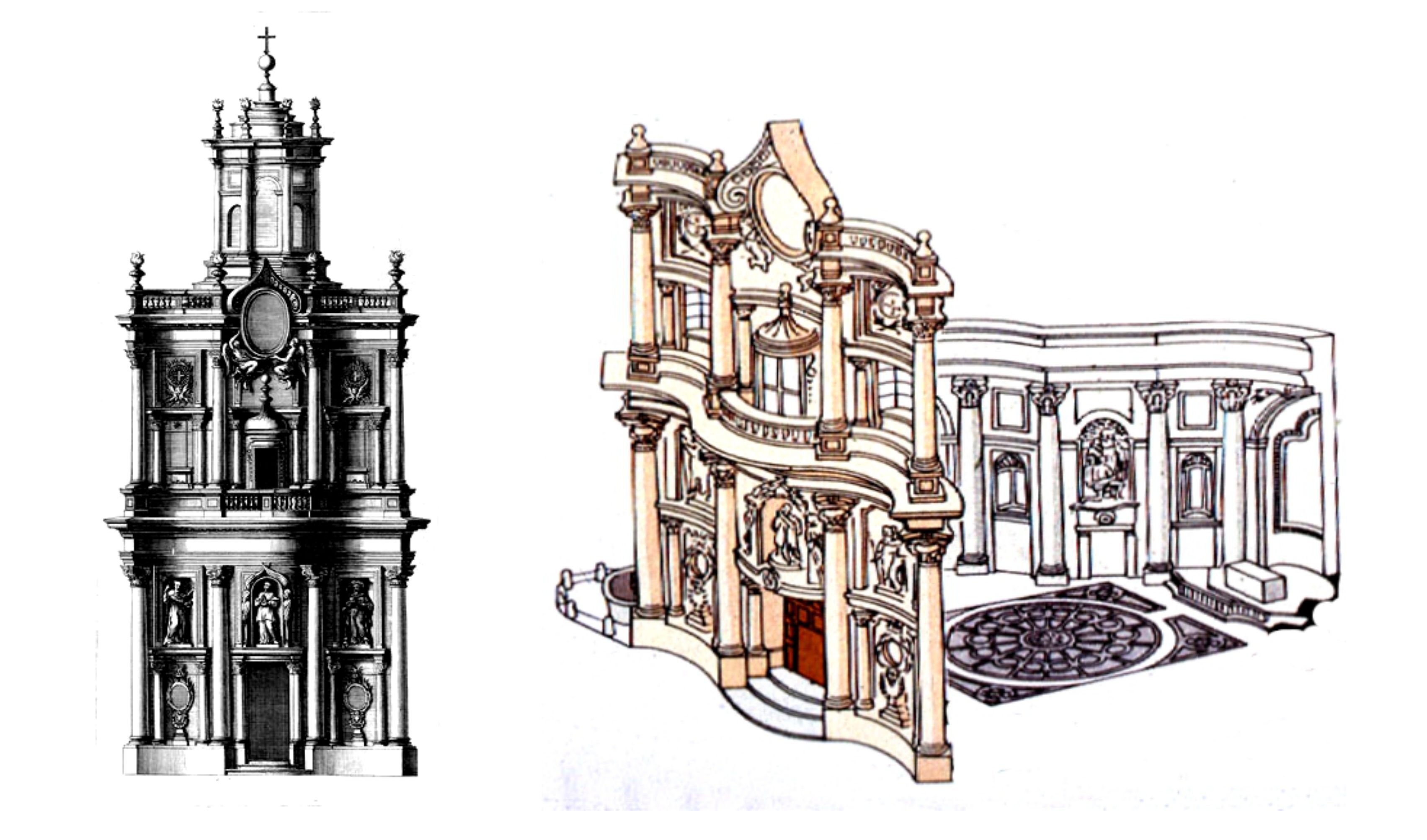
The façade is shown in the following figure, together with a cutaway perspective drawing. One of the innovations of Baroque Architecture was the use of curves in the façade (discussed in Blunt, 1979, p. 76). Because of funding difficulties, the façade of San Carlo was not finally finished until 1665, but Borromini’s early sketches clearly define its subtle curves.

carlino 2

The oval dome of the church ascends to a cupola that contains the symbol of the trinity – a dove within a triangle within a flaming circle. Light enters the dome through lateral windows and through the cupola. A high resolution version of the following figure can be obtained in Wikipedia:

carlo dome

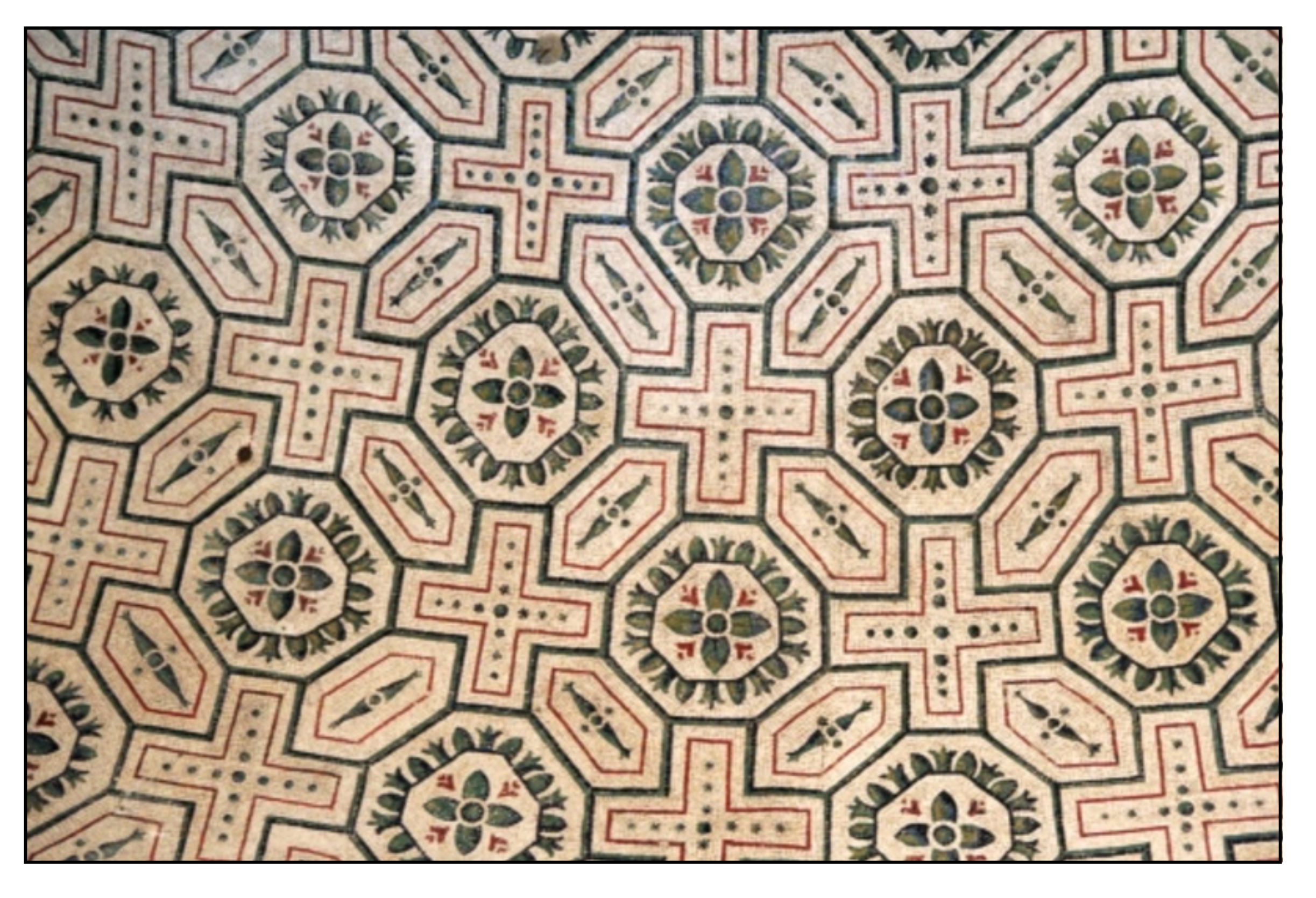
The coffered decoration of the dome is an intricate geometric mesh of octagons hexagons, and crosses. The design is based on the mosaic ceiling of the north ambulatory in the Mausoleum of Santa Costanza just outside the walls of Rome (see figure on the right). This was built in the 4th Century to house the remains Constantia, the daughter of Emperor Constantine I. Borromini not only adapted the design to a dome but also adapted it to give the dome an illusion of greater height.

san costanza mosaic

Sant’Ivo alla Sapienza

In 1641-1660, Borromini designed and built a church for the University of Rome dedicated to Sant’Ivo, the patron saint of jurists. This was commissioned by Urban VIII (formerly Cardinal Barberini), under whose papacy Galileo had been sentenced to house arrest in 1633. Connors (2007) has suggested that the geometrical purity of its design may have provided a way for the papacy to heal its breech with science. Galileo died in 1642 soon after the church was begun. Urban VIII died in 1644, and the funding for the church fell away. It was only completed in 1660. The breech was difficult to heal.

The church is located at one end of the arcaded courtyard of the Palazzo della Sapienza, built by Giacomo della Porta (1533-1602). The following figure shows the floor plan of the palazzo and the church, together with a photograph from Adrian Fletcher’s Paradox Place.

sapienza plan and photo

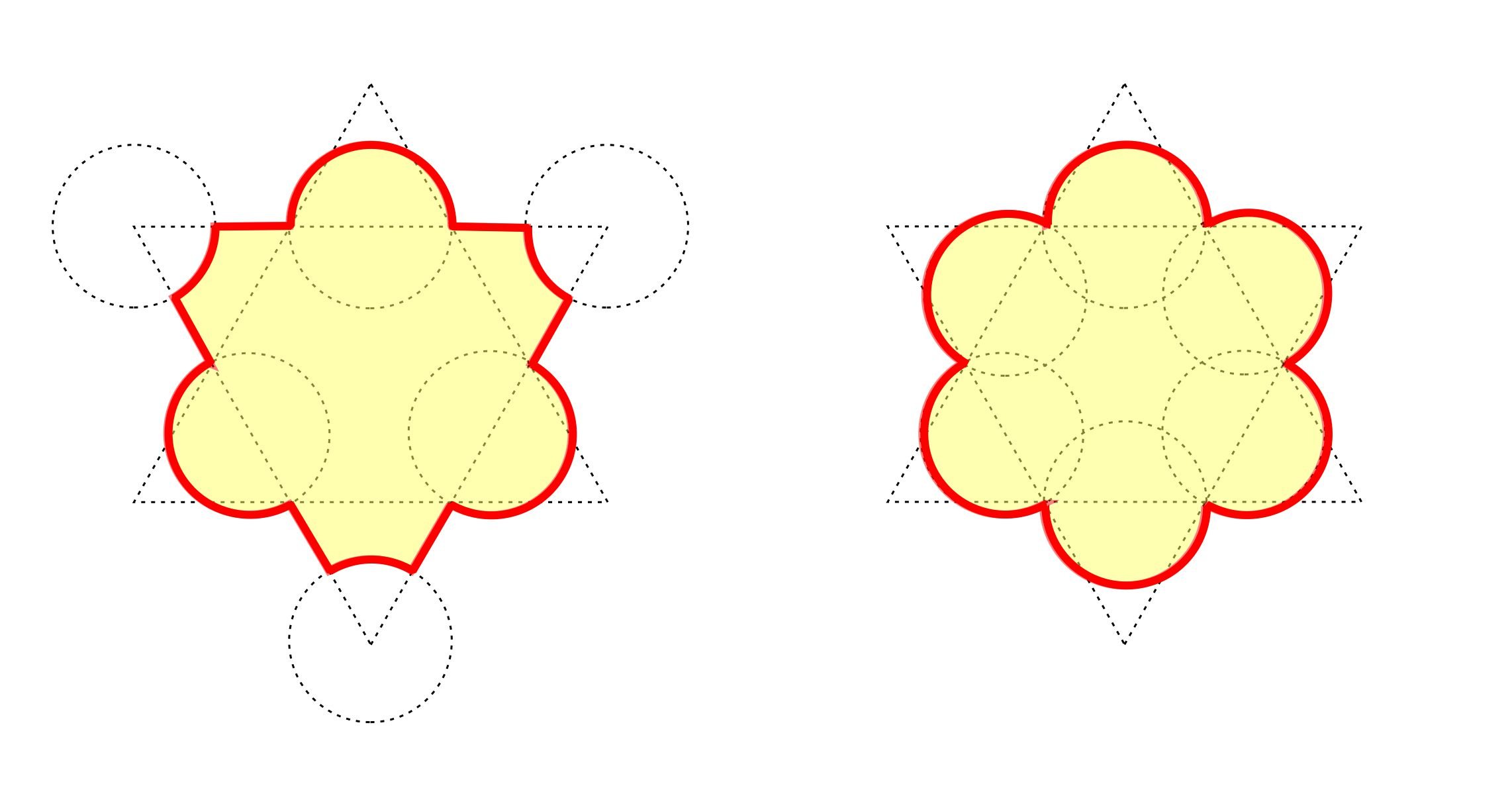
Borromini based his church on two equilateral triangles overlapped to form a Star of David. This was also known as the Star of Solomon and thus was a symbol of wisdom. By locating circles at the apices of the triangles or at the midpoints of their sides two basic outlines could be obtained:

sapienza geometry

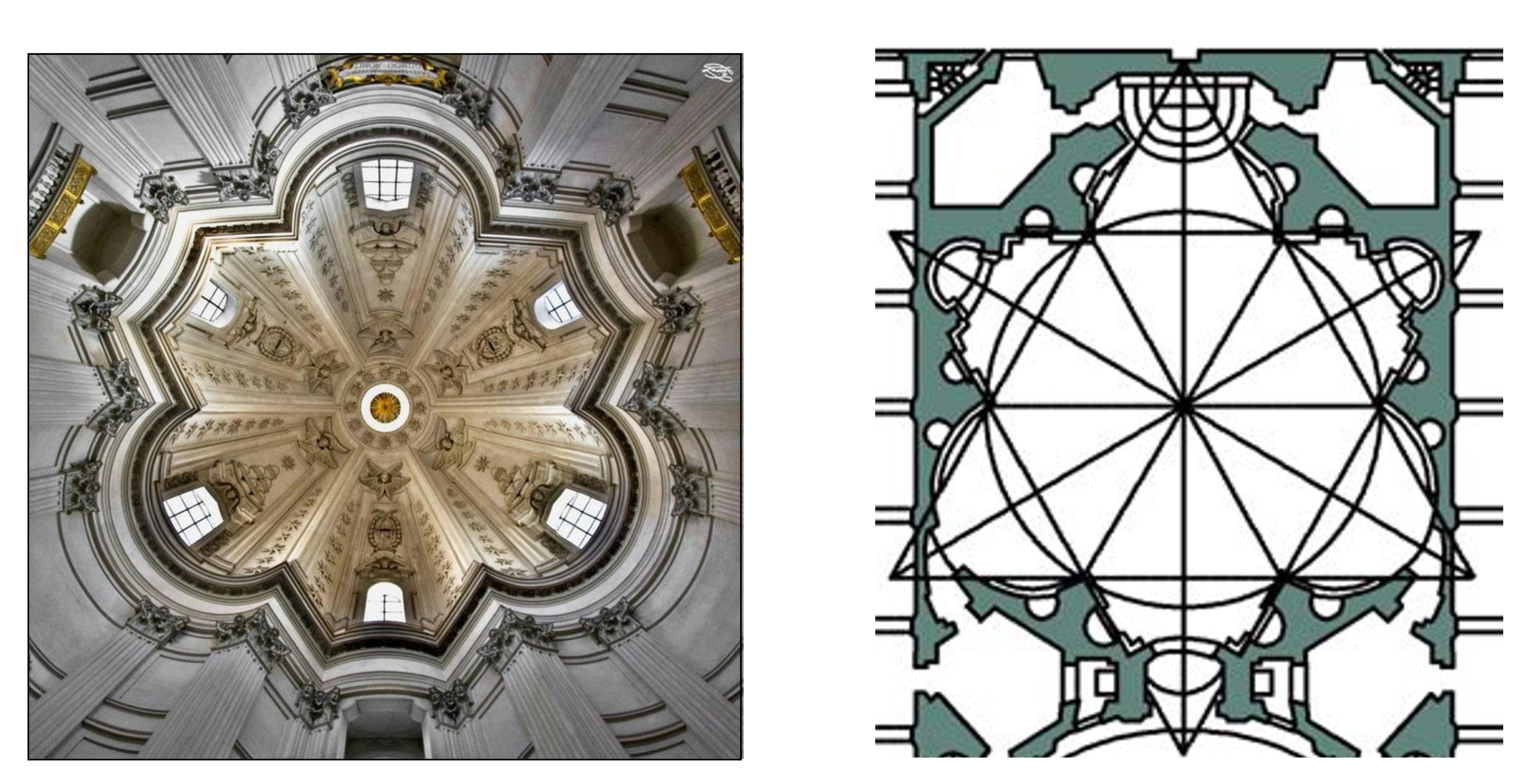
These two different outlines are evident in the dome and in the floor plan:

santivo dome and floorx

santivo spiral

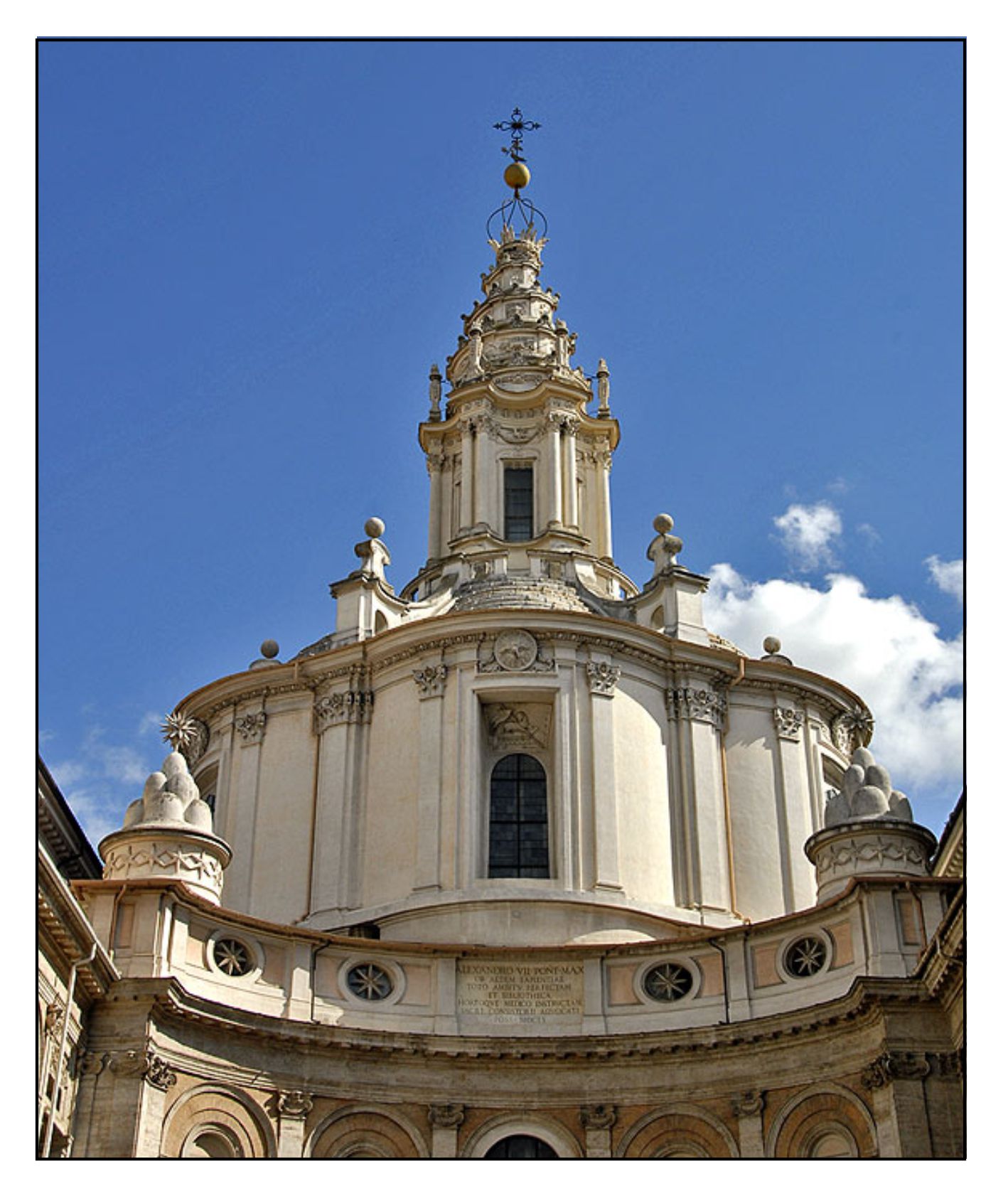
On top of the dome, Borromini placed a lantern, and upon that he built a striking spiral staircase that leads to a flaming emblem (Connors, 1996). What this virtuosic construction means has been subject to great debate: Tower of Babel, Lighthouse of Alexandria, beehive (for the Barberini bees) or papal tiara? In essence, the spiral likely indicates the ascent toward wisdom. In the past it was one of the great climbs for the adventurous tourist in Rome.

Endings

Geometry did not bring Borromini serenity. Plagued by funding difficulties, paranoid that others might be stealing his ideas, lonely and embittered, Borromini entered old age. In 1667, he committed suicide. He wounded himself with his sword and died a day later, after having written down his own account of his death:

Last night the idea came to me of making my will and writing it out with my own hand, and I began to write it about an hour after supper and I went on writing with a pencil till about three in the morning. Messer Francesco Massari my young servant … who sleeps in the room next door to look after me and had already gone to bed, seeing that I was still writing and had not put out the light, called to me, ‘Signor Cavaliere, you ought to put out the light and go to sleep because it is late and the doctor wants you to sleep.’ I replied that I should have to light the lamp again when I woke up and he answered: ‘Put it out because I’ll light it again when you wake up’; and so I stopped writing, put away the paper on which I had written a little and the pencil with which I was writing, put out the light and went to sleep. About five or six I woke up and called to Francesco and told him to light the lamp, and he answered: ‘Signor, no’. And hearing this reply I suddenly became impatient and began to wonder how I could do myself some bodily harm, as Francesco had refused to give me a light; and I remained in that state till about half past eight, when I remembered that I had a sword in the room at the head of the bed, hanging among the consecrated candles, and, my impatience at not having a light growing greater, in despair I took the sword and pulling it out of the scabbard leant the hilt on the bed and put the point to my side and then fell on it with such force that it ran into my body, from one side to the other, and in falling on the sword I fell on to the floor with the sword run through my body and because of my wound I began to scream, and so Francesco ran in and opened the window, through which light was coming, and found me lying on the floor, and he with others whom he had called pulled the sword out of my side and put me on the bed; and this is how I came to be wounded.(Blunt, 1971, pp. 208-209.)

The violent passions of the dark gave way to an amazingly cool rationality during the light. At his request, Borromini was buried in the tomb of Carlo Maderno in San Giovanni dei Fiorentini. The will enjoined his heir and nephew Bernardo to marry the granddaughter of his mentor Maderno.

The 17th Century was a time of great changes in how we conceived of the universe and its creator. The heavenly spheres were no longer. The planets moved around the sun and not around the earth. Geometry became a guiding principle for understanding the universe. The circular orbits of Copernicus ceded to the ellipses of Kepler. Kepler used the geometry of perfect solids to explain the different radii of the planetary orbits (Hatch, 2002). And in 1687 all was explained by Newton’s Law of Universal Gravitation. Science was explaining the universe with geometry. God was perhaps a mathematician. Baroque art, and Borromini in particular, sought for God in the geometrical interplay of curve and light.

References

Beny, R., & Gunn, P. (1981). The churches of Rome. New York: Simon and Schuster.

Blunt, A. (1979). Borromini. Cambridge, Mass: Harvard University Press (Belknap).

Connors, J. (1996). Borromini’s S. Ivo alla Sapienza: the spiral. The Burlington Magazine, 138, 668-82.

Connors, J. (1999). Francesco Borromini. La vita (1599–1667). In R. Bösel, C. L. Frommel. (eds.) Borromini e l’universo barocco. (pp. 7–21) Milan, Electa.

Connors, J. (2007). The cultural moment at the beginning of work on S. Ivo alla Sapienza. In L. Mochi Onori, S. Schütze & F. Solinas (Eds.) I Barberini e la cultura europea del Seicento. (pp. 581-86). Rome: De Luca.

Green, E. (2015) La Sapienza (DVD). New York, NY: Kino Lorber.

Hatch, J. G. (2002). The science behind Francesco Borromini’s divine geometry. In K. Williams and J. F. Rodrigues (Eds). Nexus IV: Architecture and Mathematics. (pp. 127-139). Fucecchio (Florence): Kim Williams Books.

Hibbard, H. (1965/1990). Bernini. London: Penguin.

Hopkins, A. (2002). Italian architecture: From Michelangelo to Borromini. London: Thames & Hudson.

Davies, P. M., & Maggini Quartet. (2007). Naxos quartets nos. 7 and 8. (Sound recording). Hong Kong: Naxos Records.

Morrissey, J. P. (2005). The genius in the design: Bernini, Borromini, and the rivalry that transformed Rome. New York: W. Morrow.

Wittkower, R., (1997, photographs by Guidolotti, P.). Bernini: The sculptor of the Roman Baroque. London: Phaidon Press.


Euthanasia

We cannot choose the moment of our birth. And death usually comes in its own time, not ours. Sometimes, however, we can decide to end our life. The reasons for suicide are various. Most common is the desire to end intractable suffering. Faced with the prospect of a prolonged period of pain and suffering at the end of life, most rational people would prefer euthanasia – a “good death.” This term first came into English in Francis Bacon’s Advancement of Learning (Book II, X.7). Bacon was encouraging physicians to assuage the pains and agonies of death: to practice what we now call palliative care.

Over the course of time “euthanasia” became differentiated from palliative care, and now generally means the inducement of death so as to prevent intolerable pain and suffering in patients with incurable disease (Young, 2012; Sumner 2011). Euthanasia may be voluntary or involuntary, based on whether the patient provides consent or not. Involuntary euthanasia, where the patient does not provide consent although capable of so doing, is sometimes distinguished from non-voluntary euthanasia (“mercy killing”), where the patient is unable to either object or consent. Some would consider both involuntary and non-voluntary euthanasia as equivalent to murder and limit the term euthanasia to cases wherein consent is explicit. Euthanasia may be active or passive, based on whether death is induced by the administration of a lethal medication or by the withdrawal of life-sustaining treatment, nutrition or hydration. Active euthanasia may be initiated by the patient, in which case it is essentially suicide, or by someone else (a physician or a nurse acting under the direction of a physician), in which case it can be described as assisted suicide or assisted dying. Sometimes voluntary euthanasia, where the lethal medication is administered to the patient, is distinguished from assisted suicide, where the patient takes the drug, but this distinction appears unnecessary. When the word is unmodified, euthanasia generally means physician-assisted suicide performed at the request of the patient.

Historical Backgound

Our attitudes to euthanasia have changed over the centuries (Dowbiggin, 2005). Developments in religion, law, and medicine have all contributed to these changes. Over the past century or so medicine has increased its ability to treat disease and manage pain. We are now more able to make end-of-life decisions than we have ever been. Nevertheless, the decisions remain extremely difficult, since they involve our cherished belief in the sanctity of human life and our ancient laws against killing (Pappas, 2012). Any proposal for euthanasia must address our general prohibition of suicide.

In the Eastern religions, suicide was not forbidden. In India, a wife could cast herself on the funeral pyre of her husband in the process of sati. Elderly yogis with no remaining responsibilities could seek death by starvation – prayopavesa. In Japan, suicide by means of seppuku could preserve one’s honor. Since one of the goals of Buddhism is to relinquish any attachment to the world, suicide might even be considered as a means to this release, though this should only come after enlightenment has been attained (Attwood, 2004). However, some Chinese and Japanese Buddhist monks sought enlightenment through a process of sokushinbutsu or self-mummification, accomplished by slow starvation and self-suffocation.

In the Abrahamic religions, however, suicide was considered an unpardonable sin, tantamount to murder (Cholbi, 2012). Suicide was contrary to the commandment “Thou shalt not kill” (Exodus 20:13). The main scriptures, however, do not specifically prohibit killing oneself. The Bible provides various examples of suicide (Samson, Saul, Judas) without ever stating that this is prohibited. However, the scriptures convey a general sense that one should not interfere with divine providence: “My times are in thy hand” (Psalm 31:15). One verse of the Qur’an (4:29) is sometimes translated as “Do not kill yourselves,” though it is more usually rendered as “Do not kill each other.”

Through most of its history, the Christian Church has adamantly condemned suicide. The body of a suicide was denied burial in consecrated ground and the soul denied access to salvation. In recent years, the churches have relaxed their condemnation, though suicide is still considered a mortal sin. Until recently, suicide was illegal in almost all European countries, and the property of the suicide was confiscated by the state. Part of the reason why Christian societies have been so severe in their condemnation of suicide may have been the attractiveness of heaven. Without severe sanctions, believers might easily choose the happiness of an after-life to the suffering of a present life.

During the Renaissance and Enlightenment, thinkers began to question the Church’s stance. When one is coming to the end of life and faced with unrelenting pain, one should be able to choose a quick and painless death rather than undergo prolonged and unnecessary suffering

In Thomas More’s Utopia

…when any is taken with a torturing and lingering pain, so that there is no hope either of recovery or ease, the priests and magistrates come and exhort them, that, since they are now unable to go on with the business of life, are become a burden to themselves and to all about them, and they have really out-lived themselves, they should no longer nourish such a rooted distemper, but choose rather to die since they cannot live but in much misery; being assured that if they thus deliver themselves from torture, or are willing that others should do it, they shall be happy after death: since, by their acting thus, they lose none of the pleasures, but only the troubles of life, they think they behave not only reasonably but in a manner consistent with religion and piety; because they follow the advice given them by their priests, who are the expounders of the will of God. Such as are wrought on by these persuasions either starve themselves of their own accord, or take opium, and by that means die without pain. (More, 1516, pp 140-141).

One cannot be sure whether More was advocating euthanasia or just presenting the policy for discussion. The title of his book means “nowhere” – only later did it assume the additional connotation of eutopia or “good place.” As a devout Roman Catholic, More likely supported his church’s opposition to euthanasia. Death should come when God wills, not when we want.

In an essay that was only published posthumously, David Hume provided a rational view of suicide. He proposed that it is no more contrary to divine providence than building houses to protect ourselves from the weather or cultivating the earth to prevent ourselves from starving. Furthermore, when we become old and infirm suicide is no longer contrary to our duties to society, since we may have become more of a burden than a benefit to our fellows. Thus

both prudence and courage should engage us to rid ourselves at once of existence, when it becomes a burthen. ’Tis the only way, that we can then be useful to society, by setting an example, which, if imitated, would preserve to every one his chance for happiness in life, and would effectually free him from all danger of misery. (Hume, 1777)

In the concluding note to his essay, Hume quoted Pliny the Elder who described suicide as an advantage that man possesses over God.

Deus non sibi potest mortem consciscere, si velit, quod homini dedit optimum in tantis vitæ poenis. [God cannot put himself to death even if he wanted to, since among the many ills of life he gave away this best of boons to man]. (Pliny, 79, Book II Chapter V)

The modern interpretation of euthanasia can probably be traced to the much-discussed essay on the subject by Samuel D. Williams published in 1870 (Kemp, 2002). He proposed

That in all cases of hopeless and painful illness it should be the recognized duty of the medical attendant, whenever so desired by the patient, to administer chloroform, or such other anæsthetic as may by-and-by supersede chloroform, so as to destroy consciousness at once, and put the sufferer at once to a quick and painless death; all needful precautions being adopted to prevent any possible abuse of such duty and means being taken to establish, beyond the possibility of doubt or question, that the remedy was applied at the express wish of the patient. (Williams, 1870, p 212).

In the decades subsequent to this essay, many groups in England, Europe and North America began to advocate the legalization of euthanasia.

Unworthy Lives

In the 20th Century euthanasia became entrammeled with another idea that promoted the good of society – “eugenics.” Unfortunately, joining the “good death” with the “good birth” led to actions of great evil.

Darwin’s Theory of Evolution had proposed that humanity’s current success derives from the selection of the fittest for survival and propagation. Followers of Darwin warned that we should not alter the course of evolution by social policies to protect the weak and vulnerable. Rather we should encourage our best and brightest to have more offspring, and we should prevent the feeble-minded, criminal and insane from multiplying. These ideas formed the basis of eugenics.

In the first few decades of the 20th Century several jurisdictions in North America and Europe enacted eugenic laws enforcing the sterilization of the mentally defective and the insane. The most efficient of such programs was brought in by the German Nazi government when it came to power in1933 (Proctor, 1988, Chapter 4; Pichot, 2001, Chapter 10). The Law for the Prevention of Genetically Diseased Offspring required the sterilization of patients suffering from feeble mindedness, schizophrenia, manic-depression, Huntington’s chorea and alcoholism. While the program was in operation between 1933 and 1939, about 400,000 patients were sterilized (compared to about 30,000 patients over a much longer period in the USA).

A more effective eugenics program would not only prevent offspring but also remove from society the costs involved in the long-term care of feeble-minded and mentally ill patients. The possibility of the involuntary euthanasia of patients who were a burden to society had been thoroughly evaluated in the 1920 book Permitting the Destruction of Unworthy Life by Karl Binding, a legal scholar, and Alfred Hoche, a physician. They considered the question

Is there human life which has so utterly forfeited its claim to worth that its continuation has forever lost all value both for the bearer of that life and for society?

They answered affirmatively, and proposed that society was justified in putting patients with incurable disease to death.

In 1939 the war began and the German sterilization program ceased. In its place a secret program called Operation T4 was instituted to provide a mercy death (Gnadentod) for the incurably sick and mentally ill. Patients were killed either in specially constructed gas chambers or by such other means as were found expedient. The number of patients euthanized by the time the war ended was probably around 400,000 (Proctor, 1988, Chapter 7; Pichot, 2001, Chapter 11). The techniques developed in the early stages of this program were then used when the Nazi government decided to murder Jews, homosexuals, communists, Gypsies, Slavs and prisoners of war.

The history of euthanasia in Germany is a horrifying example of the “slippery slope.” By accepting that some people have more of a right to life than others or that a doctor may agree to a patient’s request for death, we slide slowly and inexorably toward complete immorality. Leo Alexander, a medical expert at the Nuremberg trials, stated the problem of the “small beginnings:”

Whatever proportions these crimes finally assumed, it became evident to all who investigated them that they had started from small beginnings. The beginnings at first were merely a subtle shift in emphasis in the basic attitude of the physicians. It started with the acceptance of the attitude, basic in the euthanasia movement, that there is such a thing as a life not worthy to be lived. This attitude in its early stages concerned itself merely with the severely and chronically sick. Gradually the sphere of those to be included in this category was enlarged to encompass the socially unproductive, the ideologically unwanted, the racially unwanted and finally all non-Germans (Alexander, 1949).

Double Effects

For many years after the war, the ethics of active euthanasia were not discussed. We became more concerned with the relief of pain. New protocols were developed to facilitate analgesia, the speciality of palliative care became a medical specialty, and hospices became available to provide a peaceful and pain-free death to patients with terminal illness.

Sometimes, when medication dosages were increased to levels sufficient to relieve severe and unrelenting pain, death also resulted. Such protocols invoked the principle of “double effect:” that an action intended to bring about a morally desirable effect (the relief of pain) is not wrong if it also leads to a morally reprehensible effect (death) even when this second effect is foreseen. This state of affairs is both morally and medically confusing (McIntyre, 2001). Who is to say what is intended and what is just foreseen? The increased pain medication probably does not in itself bring about the death of the patient. Death results from a combination of causes: limiting the patient’s nutrition and hydration adds to the effects of sedation and the ongoing disease. “Terminal sedation” should probably not be considered as an example of double effect, but simply treated as a type of euthanasia.

End-of-Life Decisions

In the second half of the 20th Century, medicine developed techniques for cardiopulmonary resuscitation and mechanical ventilation. Although these procedures often prevented unnecessary death, they sometimes resulted in unresponsive patients being maintained alive without any reasonable hope for the return of normal consciousness.

These developments led to the principle that life need not be artificially continued if recovery is futile. A patient may decide to forego resuscitation or mechanical ventilation in such situations. This decision may be made by means of an advance directive or “living will.” In cases without such directives, the decision can be made by the patient’s family and caregivers. Accepting these protocols has been a long a complicated process that is outside of the main topic of this posting (see discussion in Pappas, 2012, Chapter 4). Issues remain for patients who have no advance directives and when the family and physicians disagree on whether to maintain life support. Nevertheless we have come to general terms with the idea of passive euthanasia when a patient is unresponsive and the prognosis is futile. Outside of a few jurisdictions, however, active euthanasia remains illegal.

Legalization of Voluntary Euthanasia

Voluntary euthanasia has been legal in Oregon since 1997 (Lindsay, 2009; Lee, 2014), in Switzerland at least since 1998, and in the Netherlands (Onwuteaka-Philipsen et al., 2012) and Belgium (Cohen-Almagor, 2009) since 2002. Each of these jurisdictions requires a formal application from a patient judged competent to understand the nature of their suffering and the consequences of their request (Lewis & Black, 2013).

The incidence of voluntary euthanasia is low but varies greatly among the jurisdictions. In Oregon the incidence is 0.2% of all deaths, but in Belgium and the Netherlands the incidence is between 1.5 and 3 % (the incidence in Switzerland is not accurately known). The incidence would be significantly higher if cases of euthanasia without consent, and cases of terminal sedation were included together with those of voluntary euthanasia.

Investigations of patients undergoing voluntary euthanasia indicate no clear evidence that vulnerable populations are unfairly targeted, or that coercion plays a significant role in the patients’ decisions. In Oregon most patients requesting euthanasia were white, well-educated, and medically insured (Lindsay, 2009). Furthermore, euthanasia does not substitute for adequate palliative care, since most patients ultimately seeking euthanasia have already tried palliative care or been admitted to a hospice.

Nevertheless, two significant issues remain unanswered. The first is the incidence of euthanasia without explicit consent. Although this is not reported in Oregon, it has been documented in Belgium and the Netherlands. When faced with an incurable patient in severe pain who is not able to provide consent, a compassionate physician may nevertheless proceed with euthanasia. The incidence of this is extremely difficult to assess, particularly if one includes “terminal sedation.” The incidence of euthanasia without consent probably equals the incidence with consent (Cohen-Almagor, 2009; Lewis &Black, 2013; Meussen et al., 2010, Onwuteaka-Philipsen et al., 2012).

The second issue concerns the euthanasia of patients with psychiatric disorders. This has become particularly frequent in Belgium (Thienpont et al., 2015; Aviv, 2015). By arguing that mental anguish can cause as much suffering as physical pain, one can make a philosophical case for euthanasia to relieve “existential suffering” (Varelius, 2014). However, we usually believe that psychiatric disorders can be treated, and that even without treatment depression will alleviate with the passage of time. Psychiatric patients are certainly vulnerable and often may have difficulty providing fully informed consent. Thienpont et al. (2015) report that the female/male ratio was 3.3 for psychiatric patients requesting euthanasia and 2.9 for those patients who were ultimately euthanized. They suggest that this is in keeping with the increased incidence of psychiatric disease in women, but the ratio is nevertheless disconcerting.

Objections to Euthanasia

Euthanasia has engendered much public debate (Andorno & Baffone, 2014; Materstvedt et al., 2003; New England Journal of Medicine, 2013; Quill & Greenlaw, 2008; Somerville, 1993, 2014; Smith, 2006; Sumner, 2011, Young, 2012). The main reason for making euthanasia legal is that individuals have a right to decide that a rapid painless assisted death is preferable to one that is prolonged and painful, and to have medical assistance in bringing this about. The main objections are

(i) Euthanasia is unnecessary if there is adequate palliative care. A variant of this argument is that if euthanasia becomes legal, patients and physicians will prefer euthanasia to palliative care. Palliative and hospice care can render the end of life peaceful and pain-free in most patients. Nevertheless, pain medication must sometimes be brought to such levels that the treatment of pain becomes essentially the same as euthanasia.

(ii) Patients may not be able to provide proper informed consent. A state of state of severe pain and distress may preclude proper consent – the patient may agree to anything to stop the pain. This objection could be countered if the patient simply confirmed a previous decision made before the terminal period.

(iii) Patients near the end of life may be very vulnerable to coercion. Opponents of euthanasia suggest that families and caretakers may improperly convince disabled or elderly patients to accept euthanasia. Their ulterior motive might be to be relieved of the expense and effort involved in the care of their elderly relative or to free up an inheritance.

(iv) Allowing voluntary euthanasia is a “slippery slope” that will ultimately lead to killing all individuals whose lives are considered “unworthy.” If we become used to letting people die, we may become inured to killing and allow the old, the disabled and the mentally defective to be euthanized without consent. The story of Jack Kevorkian (Pappas, 2012, Chapter 5) represents the horrors of the slippery slope. Though there may have been some support for his early actions, ultimately he was killing patients who were obviously unable to give consent. Refutations of the slippery-slope argument hinge on strong safeguards to guarantee proper consent and strict sanctions against euthanasia outside of the legal guidelines (Stingl, 2010). The slope may be slippery but we can construct barriers to prevent us from falling into the abyss.

Public Opinion

Despite the objections, the great majority of people in North America support the legalization of voluntary euthanasia. Gallup polls (McCarthy, 2014) show that about 70% of respondents in the USA answer yes to the question

When a person has a disease that cannot be cured, do you think doctors should be allowed by law to end the patient’s life by some painless means if the patient and his or her family request it?

Support varies with the wording of the question (Saad, 2010). Only 51% agree if the question is worded:

When a person has a disease that cannot be cure and is living in severe pain, do you think that doctors should or should not be allowed by law to assist the patient to commit suicide if the patient requests it?

Both Somerville (1993) and Callahan (2008) have remarked how easily public opinion on euthanasia may be swayed by the choice of words.

In a Canadian poll taken in 2013 at the behest of an anti-euthanasia group the key findings were that

Canadians are about twice as likely to support (63%) as to oppose (32%) a law allowing physician-assisted suicide in Canada. Support is slightly lower for legalizing euthanasia (55% vs. 40% who oppose it), which is likely due in part to providing respondents with information about the rate of euthanasia deaths occurring without patient consent in Belgium. (Environics, 2013).

A year later, an Ipsos-Reid poll performed for a pro-euthanasia group showed 84% of Canadian respondents in favor of physician-assisted suicide. (Ramsay, 2015).

A final survey worth noting is one conducted by the Canadian Medical Association (2011). They found in a survey of their members that

only 20% of respondents would be willing to participate if euthanasia is legalized in Canada, while twice as many (42%) would refuse to do so. Almost a quarter of respondents (23%) are not sure how they would respond, while 15% did not answer.

The Hippocratic Oath asserts

I will neither give a deadly drug to anybody who asks for it, nor will I make a suggestion to this effect. Similarly I will not give to a woman an abortive remedy.

Most present day physicians do not swear to this oath, but the idea that a physician should not bring about death has merit. When one is sick and in pain, a physician who will not kill is preferable to one who might be willing to do so. Even if ultimately one could choose suicide.

Canadian Law

In Canada active euthanasia is a crime though suicide is not. The Canadian Supreme Courts has examined the issues of euthanasia in three cases: Rodriguez vs British Columbia (1993), R vs Latimer (2001), and Carter vs Canada (2015).

In 2001 Sue Rodriguez, suffering from amyotrophic lateral sclerosis, wished to be allowed to die by means of assisted suicide when she became totally incapacitated. She wanted to live life to its fullest, and therefore did not wish to take her life before becoming unable to do so. She proposed that the law prohibiting physician-assisted suicide was discriminatory

since it prevents persons physically unable to end their lives unassisted from choosing suicide when that option is in principle available to other members of the public without contravening the law.

The judgment of the court was that the blanket prohibition of assisted suicide was justified since its purpose was to protect life. The court expressed concerns about the possible abuse of assisted suicide were it to be legalized, the difficulties in creating appropriate safeguards against such abuse, and the need to protect those members of society who might be vulnerable to such abuse. The court therefore decided against her request. Sue Rodriguez committed suicide with the assistance of an anonymous physician in 1994.

In 1993, Robert Latimer brought about the death of his 12-year old daughter Tracy by means of carbon monoxide poisoning. Tracy suffered from severe cerebral palsy, epilepsy and mental retardation. She had undergone numerous operations to relieve her spastic and painful state. Faced with further surgery for her constantly dislocating hip, her father decided that dying would be preferable to continuing a life of pain and torture. Latimer was convicted of second degree murder and given the minimum 10-year sentence allowed for this crime. The case went through several appeals. In 2001, the Supreme Court considered a request to reduce the sentence, but affirmed both the conviction and the sentence. They found no justification for non-voluntary euthanasia. Robert Latimer began serving his sentence in 2001 and was release in 2010.

The Supreme Court of Canada re-considered the law prohibiting physician-assisted suicide in its judgment of Carter vs Canada. The case was instigated by Lee Carter, who had been forced to take her mother, suffering from an incurable neurodegenerative disease, to Switzerland for assisted suicide, since this was not legally available in Canada. The court summarized the reasoning of the 1993 Rodriguez judgment:

The object of the prohibition is not, broadly, to preserve life whatever the circumstances, but more specifically to protect vulnerable persons from being induced to commit suicide at a time of weakness.

However, the court acknowledged that since that 1993 judgment assisted suicide had been legalized in several jurisdictions and that safeguards against abuse have been effective. The court agreed that some people may wish to end their lives but not have the ability to do so without the assistance of a physician. The law prohibiting such assistance thus discriminates against these individuals:

An individual’s response to a grievous and irremediable medical condition is a matter critical to their dignity and autonomy. The prohibition denies people in this situation the right to make decisions concerning their bodily integrity and medical care and thus trenches on their liberty. And by leaving them to endure intolerable suffering, it impinges on their security of the person.

The court therefore temporarily invalidated the law prohibiting physician-assisted dying and called upon the federal government to provide new legislation more consistent with the Canadian Bill of Rights. However, the present government seems loath to address the issue, despite the weight of public opinion (Ramsay, 2015). The government of the Province of Quebec has voted to allow euthanasia, although this decision may be legally contested by the federal government.

Where Do I Stand?

Euthanasia should be legal when a patient with an incurable illness is suffering pain that cannot be adequately relieved by analgesic medication. The diagnosis and prognosis should be confirmed by at least two physicians. Modern palliative care should have been provided and demonstrated to be inadequate. Euthanasia should only be allowed at the patient’s request and only after his physicians have ensured that the request is freely made.

Terminally ill patients who are in obvious pain but unable to consent to euthanasia pose a significant problem for both medicine and the law. We need to develop guidelines and safeguards to allow consent to euthanasia from the family and caretakers in these cases. Otherwise non-voluntary euthanasia may occur and go unreported.

In the absence of unrelenting pain, euthanasia of the elderly, the demented, and the mentally defective should continue to be prohibited.

At the present time there is no adequate justification for assisted suicide for existential suffering. Euthanasia in psychiatric patients is far too susceptible to abuse to be allowed.

Physicians should not be forced to provide euthanasia. Nevertheless, any patient requesting euthanasia should be referred to other physicians who can evaluate the request, judge its validity and conduct the euthanasia. Such referrals should be readily available.


References

Alexander, L. (1949). Medical science under dictatorship. New England Journal of Medicine, 241, 39-47.

Andorno, R., & Baffone, C. (2014). Human rights and the moral obligation to alleviate suffering. In R. M. Green & N. J. Palpant (Eds.) Suffering and Bioethics. (pp. 184-199). New York; Oxford University Press.

Attwood, M. (2004) Suicide as a response to suffering. Western Buddhist Review, 4

Aviv, R. (2015). The Death Treatment. New Yorker, June 22, 2015, pp. 56-65.

Bacon, F. (1605, translated by D. Price, 1893). The advancement of learning. London: Casell.

Binding, K., & Hoche, A., (1920, translated by W.E. Wright, P. Deer, & R. Salomon, 1992). Permitting the destruction of unworthy life: its extent and form. Leipzig: Felix Meiner. Translation published in Issues in Law and Medicine, 8, 231-265.

Callahan, D. (2008).  Organized obfuscation: Advocacy for Physician-Assisted Suicide. Hastings Center Report, 38(5), 30-32

Canadian Medical Association (2011). Physician views on end-of-life issues vary widely: CMA survey

Carter v. Canada (Attorney General), 2015 Supreme Court of Canada 5, [2015] 1 S.C.R. 331. Case 35591.

Cholbi, M. (2012). Suicide. Stanford Encyclopedia of Philosophy.

Cohen-Almagor R. (2009). Belgian euthanasia law: a critical analysis. Journal of Medical Ethics 35, 436–439.

Dowbiggin, I. R. (2005). A concise history of euthanasia: Life, death, God, and medicine. Lanham, MD: Rowman & Littlefield.

Environics (2013). Canadians’ Attitudes towards End-of-life Issues. Ottawa: Environics.

Hume, D. (1777). Of suicide.

Kemp, N. D. A. (2002). Merciful release: The history of the British euthanasia movement. Manchester, UK: Manchester University Press.

Lee, B. C. (2014). Oregon’s experience with aid in dying: findings from the death with dignity laboratory. Annals of the New York Academy of Sciences, 1330, 94–100.

Lewis, P., & Black, I. (2013). Adherence to the request criterion in jurisdictions where assisted dying is lawful? A review of the criteria and evidence in the Netherlands, Belgium, Oregon, and Switzerland. Journal of Law, Medicine and Ethics, 41, 885-898.

Lindsay, R. A. (2009). Oregon’s experience: evaluating the record. American Journal of Bioethics, 9, 19–27.

Materstvedt, L., Clark, J. D., Ellershaw, J., Førde, R., Boeck Gravgaard, A.-M., Müller-Busch, H. C., Josep Porta i Sales, J., & Rapin C.-H. (2003). Euthanasia and physician-assisted suicide: a view from an EAPC Ethics Task Force. Palliative Medicine, 17, 97-101

McCarthy, J. (2014). Seven in 10 Americans back euthanasia: Support strong for past two decades.

Meeussen, K., Van den Block, L., Bossuyt, N., Echteld, M., Bilsen, J., & Deliens, L. (2010) Physician reports of medication use with explicit intention of hastening the end of life in the absence of explicit patient request in general practice in Belgium. BMC Public Health, 10, 186

More, T. (1516/edited by S. Duncombe, 2012) Utopia. Brooklyn, NY: Autonomedia.

New England Medical Journal (2013) Clinical decisions: Physician-assisted suicide. With commentary by Boudreau, J. D., & Somerville, M. A. (Physician-assisted suicide should not be permitted) and by Biller-Andorno, N. (Physician-assisted suicide should be permitted). New England Medical Journal, 368, 1450-1452.

Onwuteaka-Philipsen, B.D., Brinkman-Stoppelenburg, A., Penning, C., Jong-Krul, G.J., van Delden, J.J., & van der Heide, A. (2012) Trends in end-of-life practices before and after the enactment of the euthanasia law in The Netherlands from 1990-2010: A repeated cross-sectional survey. Lancet, 380, 908–915.

Pappas, D. (2012). The euthanasia/assisted suicide debate. Santa Barbara, CA: Greenwood (ABC-CLIO).

Pliny the Elder (79 CE, translated by Bostock, J. & Riley, T. H., 1855) Natural History.  Perseus Digital Library

Pichot, A. (2001, translated by Fernbach, D., 2009).The pure society: From Darwin to Hitler. London: Verso.

Proctor, R. (1988). Racial hygiene: Medicine under the Nazis. Cambridge, Mass: Harvard University Press.

Quill, T. E., & Greenlaw, J. (2008). Physician-assisted death. In M. Crowley (Ed.) From Birth to death and bench to clinic: the Hastings center bioethics briefing book for journalists, policymakers, and campaigns. (pp. 137-142).Garrison, NY: Hastings Center.

R vs Latimer (2001). Supreme Court of Canada [2001] 1 SCR 3 1 Case number 26980

Ramsay, B. (2015). On assisted suicide, Ottawa isn’t listening. Toronto Star, July 27, 2015.

Rodriguez vs British Columbia (1993). Supreme Court of Canada [1993] 3 SCR 519 Case number 23476.

Saad, L. (2013). U.S. Support for Euthanasia hinges on how it’s described: Support is at low ebb on the basis of wording that mentions “suicide.”

Somerville, M. A. (1993). The song of death: the lyrics of euthanasia. Journal of Contemporary Health Law and Policy, 9, 1-76.

Somerville, M. A. (2014). Exploring interactions between pain, suffering, and the law. In R. M. Green & N. J. Palpant (Eds.) Suffering and Bioethics. (pp. 201-229). New York; Oxford University Press.

Smith, W. J. (2006). Forced exit: Euthanasia, assisted suicide, and the new duty to die. New York: Encounter Books.

Stingl, M. (2010). Voluntary and nonvoluntary euthanasia: is there really a slippery slope? In M. Stingl (Ed.) The price of compassion: Assisted suicide and euthanasia. (pp. 141-158). Peterborough, ON, Canada: Broadview Press.

Thienpont, L., Verhofstadt, M., Van Loon, T., Distelmans, W., Audenaert, K., & De Deyn. P.P. (2015). Euthanasia requests, procedures and outcomes for 100 Belgian patients suffering from psychiatric disorders: a retrospective, descriptive study. BMJ Open 5, e007454.

Varelius J. (2014) Medical expertise, existential suffering and ending life. Journal of Medical Ethics, 40, 104–107.

Williams, S. D Jr. (1870) Euthanasia. In Essays by Members of the Birmingham Speculative Club. (pp. 210-237). London: Williams & Norgate.

Young, R. (2012). Voluntary euthanasia. Stanford Encyclopedia of Philosophy.