Robert Desnos: Contrée

Robert Desnos (both ‘s’ pronounced, 1900-1945) was a Surrealist French poet. During World War II, after initially serving in the French army, Desnos became an active member of La Résistance. The illustration shows a photograph taken in 1943. On 22 February 1944, Desnos was arrested by the Gestapo and deported to Auschwitz. From there he was transferred to the Flōha labor campe, and finally, in April 1945, to Theresienstadt in Czechoslovakia. Though Theresienstadt was liberated on 8 May, Desnos died there of typhus on 8 June. Contrée (“Against the Grain”), a book of 25 poems celebrating the land of France and its resistance to oppression, was published in 1944.

Rrose Sélavy

In 1921, the young poet Robert Desnos met André Breton (1896-1966) and became an enthusiastic participant in the automatic writing sessions of the Surrealist Movement. During this time, he also became smitten with Rrose Sélavy, the altera ego of Marcel Duchamp (1887-1968). The name is a pun for Eros, c’est la vie (“love is life”), or arroser la vie (“give a toast to life”). In 1922, Desnos published under the title Rrose Sélavy multiple brief wordplays, puns and spoonerisms, supposedly dictated to him by Rrose while the poet slept (Conley, 2002, pp 15-44). Breton described them as “words making love” (les mots font l’amour) (Desnos, 1999, p 159).

The following are three of the wordplays: 

Rrose Sélavy voudrait bien savoir si l’amour, cette colle à couches, rend plus durs les molles couches [Rrose Sélavy would like to know if love is the fly-paper that hardens the soft foundation.]

La solution d’un sage est la pollution d’un page. [The solution of a sage is the pollution of a page. (page in the sense of both book-page and page-boy)]

Est-ce que la caresse des putains excuse la paresse des culs teints? [Does the whore’s caress excuse the laziness of dyed buttocks?]

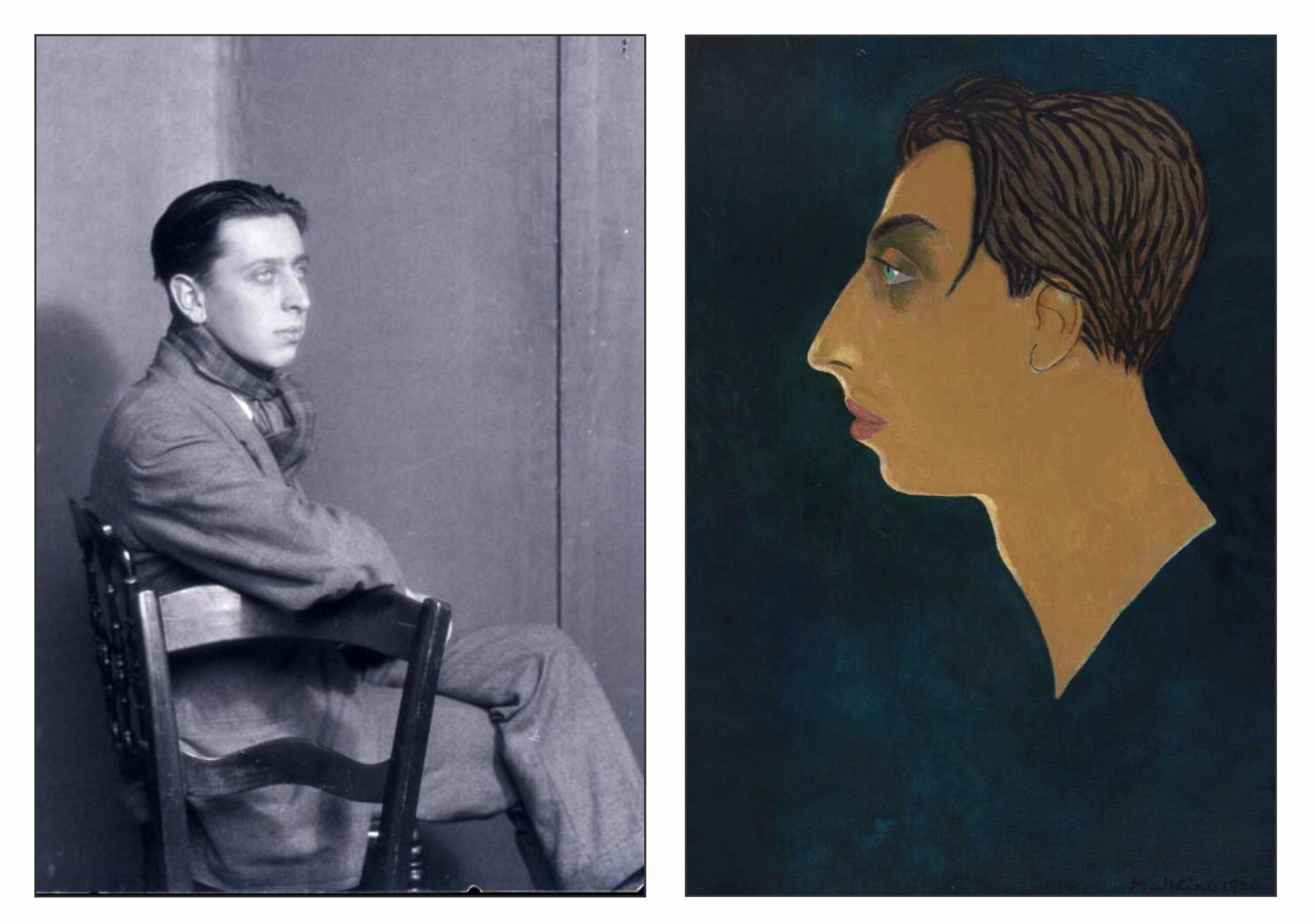
The following illustration shows a photograph of Desnos by Man Ray (1925) and a painting by Georges Malkine (1928).
 

Desnos and Breton denounced each other in 1929. Desnos continued to write poetry though his days of automatic sleep-writing were over. During the 1930s many of his works were dedicated to the love of his life Youki (Lucie Badoud), who had been the muse and model for the Japanese artist Tsuguharu Fujita. Her nickname was the Japanese word for “snow.”
World War II

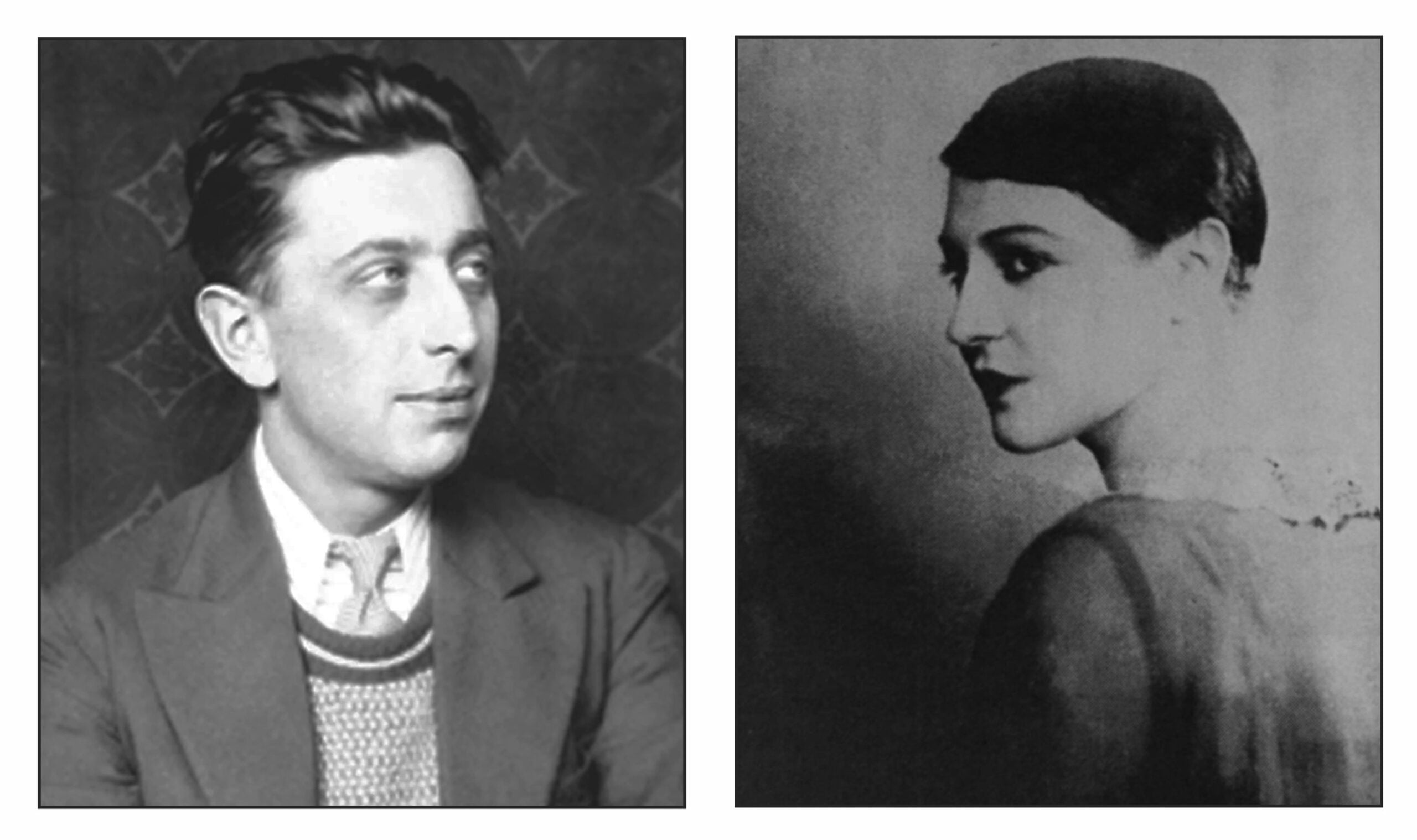
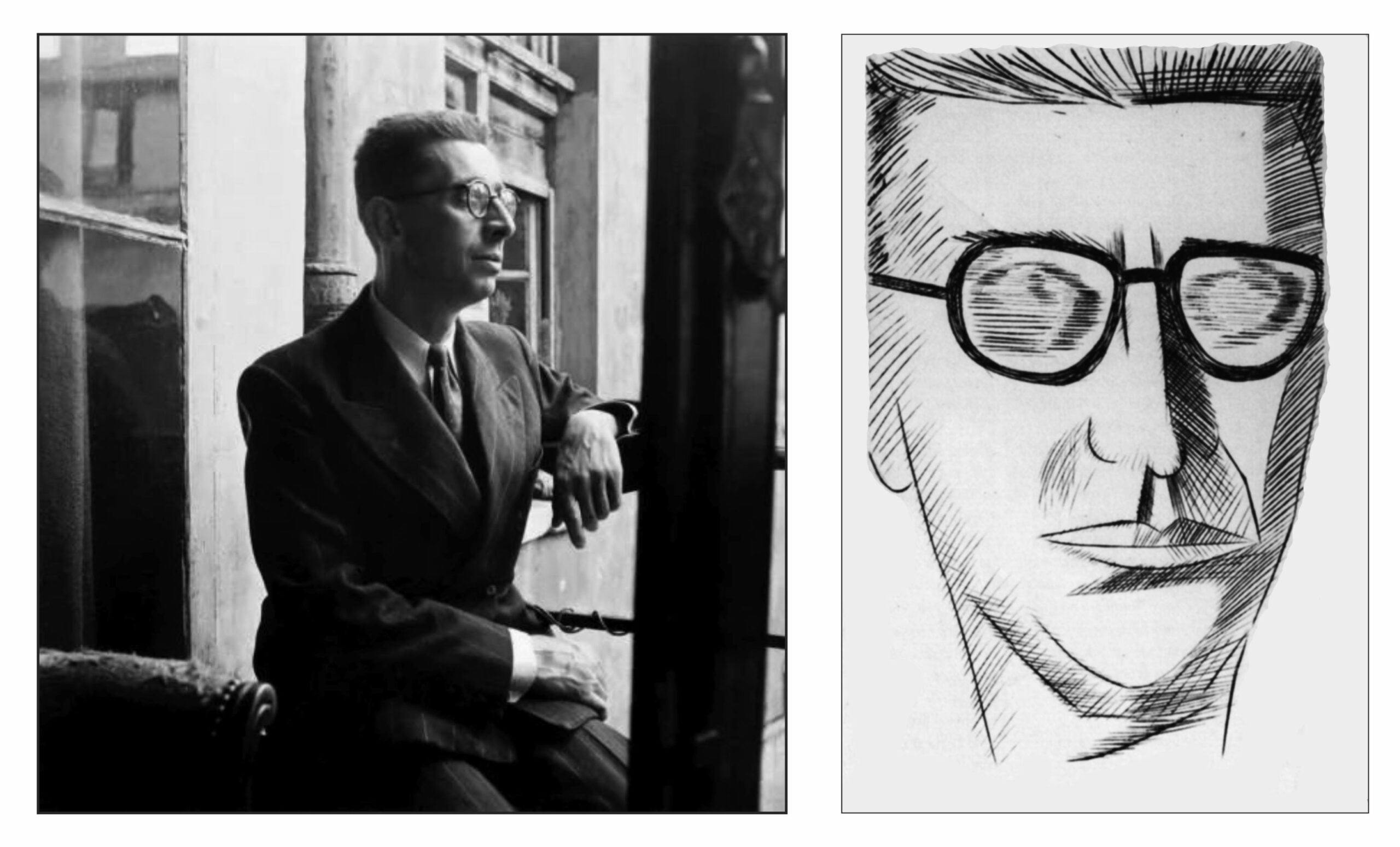
During the initial period of the war when very little happened – la drôle de guerre (phoney war) – Desnos enlisted in the army. When Germany invaded France in May 1940, he was captured, released, and then demobilised. He became a journalist at the newspaper Aujourd’hui, but continued to write poetry. Those poems that were more overtly anti-fascist were published clandestinely using pseudonyms. He participated in La Résistance by providing them with information secretly available to the newspaper, and arranging counterfeit papers for Jews and others sought by the occupying Germans. In February 1944, he was apparently betrayed by someone he had offended, and deported. The following illustration shows a photograph by Dora Maar taken in 1943, and an engraving portrait by Gaston Roux that was used for the volume État de veille (State of Alert) published by Robert Godet in 1943.
 

Contrée

Robert Godet published Contrée after Desnos was deported. The meaning of the title is complex. Both the French “contrée” and the English “country” derive from the Latin (terra) contrata which means “(the land) spread out before one.” In both languages the words came to mean the land around a town or city: rural rather than urban. In English, “country” was also used to denote the political entity that governs a defined region, a meaning that in French was taken by “pays.” The word “contrée” can also be the feminine past participle of the verb “contrer” meaning “act against” or “counter.” Adès (2017) translates this as “against the grain.” For Desnos “(la terre) contrée” suggests both the enduring land, and its rebellion against the current government.

The following illustration shows the etching of Dora Maar by Picasso that was included in the book, the title page, and then the first poem (La cascade). The etching shows a woman seated with her legs crossed on a chair made of books (Swan, 2017). The woman appears to be seen from both front and back; some have suggested that this double perspective might represent an embracing couple. Youki thought that the etching represented “a knight leaning on a stack of books” (Swan 2017, p 5). Picasso arranged for parts of the etching to be printed with each of the poems in the book. This may represent the desecration of the body of France by the Germans.
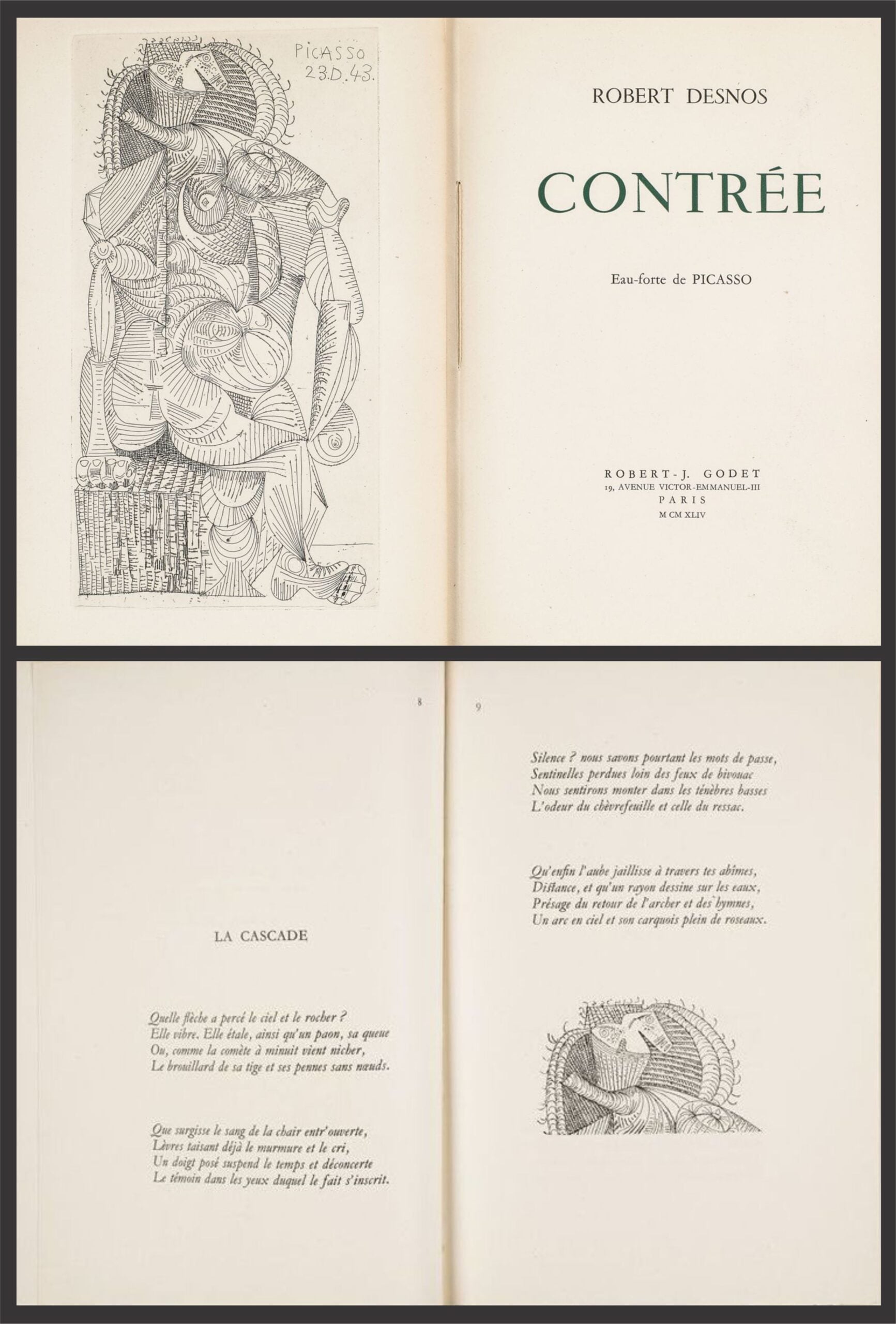
According to Conley (2003, p 124), Contrée contains one poem for every hour of the day and concludes with an epitaph. Although some of the poems are in free verse, most are formal in structure: nine poems are sonnets. Translations are difficult since one must find some compromise between form and meaning. Kulik (Desnos, 1984, 2004) uses free verse and finds exact meanings; Adès (2017) uses rhymes when Desnos does, albeit not always in the same order. The following sections present five of the poems from the book in the original French (Desnos, 1999; also Rimes website), and in the English translation of Timothy Adès (2017). Each poem is recited by Yvon Jean.  


La cascade

Quelle flèche a percé le ciel et le rocher?
Elle vibre. Elle étale, ainsi qu’un paon, sa queue
Ou, comme la comète à minuit vient nicher,
Le brouillard de sa tige et ses pennes sans noeuds.

Que surgisse le sang de la chair entr’ouverte,
Lèvres taisant déjà le murmure et le cri,
Un doigt posé suspend le temps et déconcerte
Le témoin dans les yeux duquel le fait s’inscrit.

Silence ? nous savons pourtant les mots de passe,
Sentinelles perdues loin des feux de bivouac
Nous sentirons monter dans les ténèbres basses
L’odeur du chèvrefeuille et celle du ressac.

Qu’enfin l’aube jaillisse à travers tes abîmes,
Distance, et rayon dessine sur les eaux,
Présage du retour de l’archer et des hymnes,
Un arc-en-ciel et son carquois plein de roseaux.

The following is a reading by Yvon Jean


The Waterfall

What arrow split the sky and pierced the rock?
Vibrant, it spreads its peacock tail and flaunts
Its blurry shaft and sleek unblemished flights,
The way the midnight comet finds its mark.

The flesh is opened. For the blood to rise,
While lips suppress the murmurs and the cries,
A finger bids time stop, pre-occupies
The witness who records it with his eyes.

Silence? And yet we know the passwords well.
We strayed from our camp-fires, we sentinels:
Drifting from shady corners we can smell
Salt surf aromas, honeysuckle smells.

Dawn bursts on far-off depths; a sunbeam limns
Upon the waves, at last, a sketch that leads
Back the returning archer and his hymns:
A rainbow, with its quiver full of reeds.

This poem, the first in the collection, seems on the surface to be like the love poems of the French Renaissance, wherein the lover sought to capture his beloved with the arrows of desire. However, the poem describes “the political pursuit of armed Resistance fighters hidden in the landscape of France” (Conley, 2003, p 131). Near a waterfall someone has been wounded, blood flows, passwords are given, and eventually the maquisards returns to their hideout and dawn arrives. The imagery for the waterfall is striking: the waterfall is likened to the tale of a peacock or a comet. Because of Desnos’ love of wordplay, one must wonder whether the word paon should recall païen meaning “pagan” – one who does not follow the established faith.


Le paysage

J’avais rêvé d’aimer. J’aime encor mais l’amour
Ce n’est plus ce bouquet de lilas et de roses
Chargeant de leurs parfums la forêt où repose
Une flamme à l’issue de sentiers sans détour.

J’avais rêvé d’aimer. J’aime encor mais l’amour
Ce n’est plus cet orage où l’éclair superpose
Ses bûchers aux châteaux, déroute, décompose,
Illumine en fuyant l’adieu au carrefour.

C’est le silex en feu sous mon pas dans la nuit,
Le mot qu’aucun lexique au monde n’a traduit
L’écume sur la mer, dans le ciel ce nuage.

À vieillir tout devient rigide et lumineux,
Des boulevards sans noms et des cordes sans noeuds.
Je me sens me roidir avec le paysage.

The following is a reading by Yvon Jean


The Countryside

I dreamed of loving. Still I love, but now
Love is no more that rose and lilac spray
Whose perfume filled the woods where each pathway
Led on directly to the blazing glow

I dreamed of loving. Still I love, but now
Love’s not that storm whose lightning kindled high
Towers, unhorsed, unhinged, and fleetingly
Would set the parting of the ways aglow.

Love is the flint my footstep sparks at night,
The word no lexicon can render right,
Foam of the sea, the cloud across the sky.

Old age makes all things fixed and luminous:
Knots are unravelled, streets anonymous;
Set in our ways, the countryside and I.

The countryside of Contrée stands in ironic contrast to that espoused by Vichy propaganda. Conley (200 3, p 1260 remarks

Under Pétain liberty, equality, and fraternity became outmoded concepts replaced with the moralizing, hierarchical values of work, family, and the notion of a mythical homeland led by the patriarchal Marshal.

Desnos remembers the springtime of his life when love blossomed, and the stormy time that followed when the war began. Now the country has hardened into resistance. Love still exists but it is now the flint that attempts to ignite rebellion.


La peste

Dans la rue un pas retentit. La cloche n’a qu’un seul
battant. Où va-t-il le promeneur qui se rapproche
lentement et s’arrête par instant? Le voici devant
la maison. J’entends son souffle derrière la porte.

Je vois le ciel à travers la vitre. Je vois le ciel où les
astres roulent sur l’arête des toits. C’est la grande
Ourse ou Bételgeuse, c’est Vénus au ventre blanc, c’est
Diane qui dégrafe sa tunique près d’une fontaine de lumière.

Jamais lunes ni soleils ne roulèrent si loin de la
terre, jamais l’air de nuit ne fut si opaque et si
lourd. Je pèse sur ma porte qui résiste…

Elle s’ouvre enfin, son battant claque contre le
mur. Et tandis que le pas s’éloigne je déchiffre
sur une affiche jaune les lettres noires du mot « Peste ».

The following is a reading by Yvon Jean:

The Plague

In the road a footstep echoes. The bell has only one
clapper. Where’s he going, the walker, coming
slowly nearer and briefly stopping? Now he’s outside
the house. I hear him breathing behind the door.

I see the sky through the glass. I see the sky where the
stars run on the rooftops. It’s the great
Bear or Betelgeuse, it’s Venus the white-bellied,
it’s Diana unfastening her tunic near a fountain of light.

Never did moons or suns run so far from the
earth, never was the night air so dense and so
heavy. I lean on my door which resists…

It opens at last, it swings and knocks against the
wall. And while the footstep moves away I decipher
on a yellow poster the word in black letters, “Plague”

The poem is written in free verse with the line-endings arbitrarily placed between article and noun, adverb and adjective. The world is out of joint. Never were the heavens so far from the earth. An unseen walker labels the house wherein we live in terror as infested by the plague. The label is ambiguous. Does it represent the oppression of the occupiers or the paralyzing fear of the oppressed? On another level the yellow poster recalls the yellow star that French Jews were required to wear.


La voix

Une voix, une voix qui vient de si loin
Qu’elle ne fait plus tinter les oreilles,
Une voix, comme un tambour, voilée
Parvient pourtant, distinctement, jusqu’à nous.
Bien qu’elle semble sortir d’un tombeau
Elle ne parle que d’été et de printemps,
Elle emplit le corps de joie,
Elle allume aux lèvres le sourire.

Je l’écoute. Ce n’est qu’une voix humaine
Qui traverse les fracas de la vie et des batailles,
L’écroulement du tonnerre et le murmure des bavardages.

Et vous ? Ne l’entendez-vous pas?
Elle dit « La peine sera de courte durée »
Elle dit « La belle saison est proche ».

Ne l’entendez-vous pas?

The following is a reading by Yvon Jean


The Voice

A voice, a voice coming from so far away
That it no longer rings in the ears,
A voice, like a drumbeat, muffled
Reaches us even so, distinctly.
Though it seems to issue from a tomb
It speaks only of summer and spring,
It fills the body with joy,
It kindles a smile on the lips.

I’m listening. It’s only a human voice
Coming across the din of life and of battles,
The crash of thunder and the babble of talk.

What about you? Don’t you hear it?
It says “The pain will be short-lived”
It says “The beautiful season is near”.

Don’t you hear it?

This poem is a poem of hope. In the noise of battle and the babble of talk, a voice promises that beauty will return. The voice is not loud, it is like the “still small voice” of God who promised Elijah that Israel would be delivered from its oppressors (1 Kings 19: 12).


L’épitaphe

J’ai vécu dans ces temps et depuis mille années
Je suis mort. Je vivais, non déchu mais traqué.
Toute noblesse humaine étant emprisonnée
J’étais libre parmi les esclaves masqués.

J’ai vécu dans ces temps et pourtant j’étais libre.
Je regardais le fleuve et la terre et le ciel
Tourner autour de moi, garder leur équilibre
Et les saisons fournir leurs oiseaux et leur miel.

Vous qui vivez qu’avez-vous fait de ces fortunes ?
Regrettez-vous les temps où je me débattais ?
Avez-vous cultivé pour des moissons communes ?
Avez-vous enrichi la ville où j’habitais ?

Vivants, ne craignez rien de moi, car je suis mort.
Rien ne survit de mon esprit ni de mon corps.

The following is a reading by Yvon Jean:


The Epitaph

I’ve lived today, and since antiquity
Been dead. I lived intact, but I was prey.
Man’s nobler side was jailed and put away;
Among the slaves in face-masks, I was free.

I’ve lived today, and nonetheless been free.
I watched the river and the earth and sky
Turn round me, and they kept their harmony;
Honey and birds, a seasonal supply.

How did you use these gifts, you there alive?
Did you misuse the days I spent in toil?
Did you make common cause and till the soil
To harvest? Did you make my city thrive?

Don’t fear me, you who live: I’m dead and gone:
Not soul nor body, nothing lingers on.

The sense of the poem stems from the ideas of mortality of the Greek philosopher Epicurus (341–270 BC), epitomized in the Latin epitaph used by many of his followers:

Non fui, fui, non sum, non curo (I was not; I was; I am not; I do not care).

Desnos agrees that today he lives, that before that was dead, and that after he dies nothing will remain. He cares not for before or after but concentrates on today. Despite the awfulness of the time into which he was born, he strives to remain free and to live in harmony with the world. He asks his readers if they using their talents for the common good or resigning themselves to servitude. The meaning of the poem is encapsulated in the line

J’ai vécu dans ces temps et pourtant j’étais libre


Imprisonment and Death

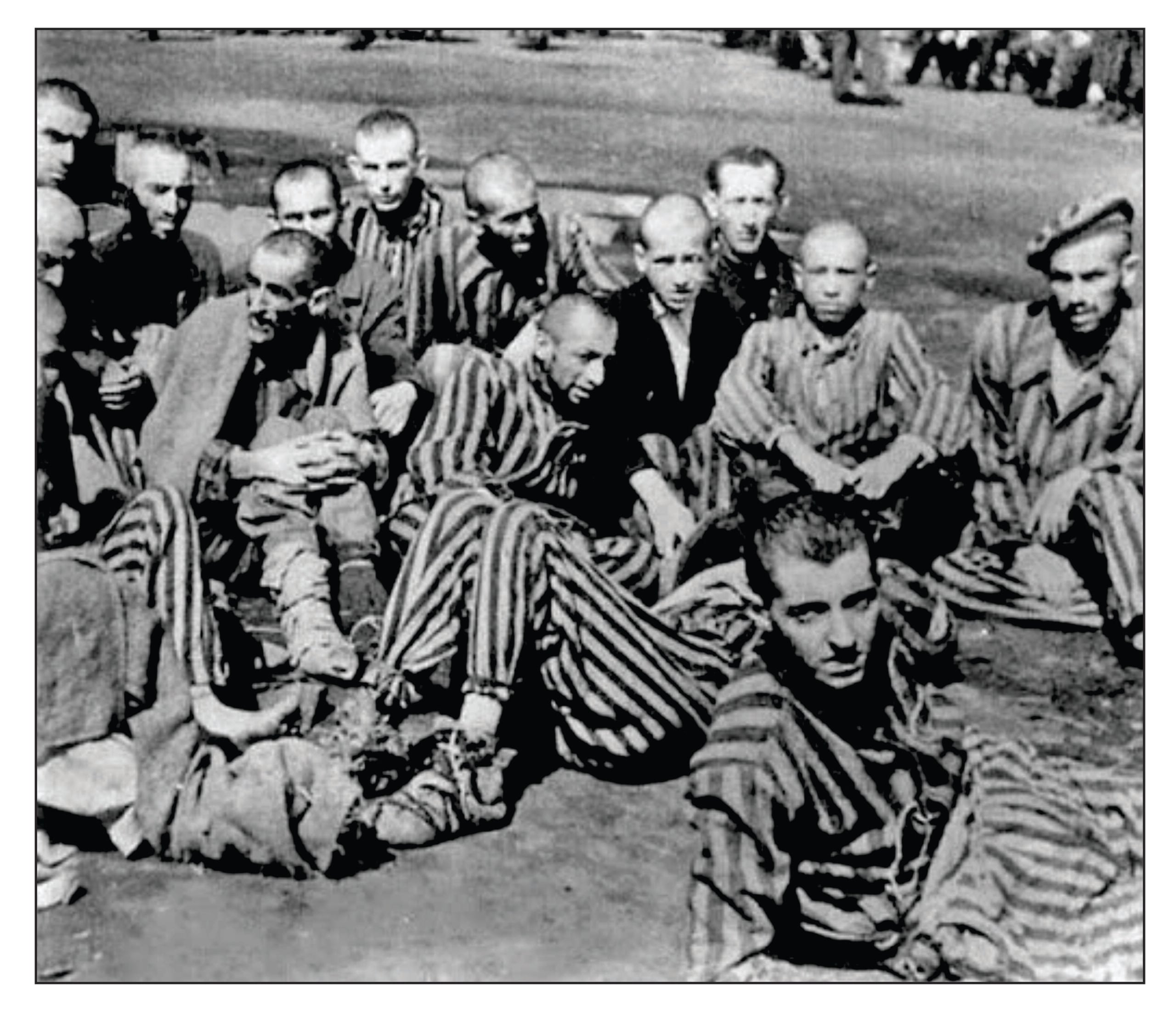
After his arrest and interrogation by the Gestapo in February, 1943, Desnos was sent to the transit camp in Compiègne. Youki visited him there and provided him with a care package. However, in April, Desnos and 1700 other prisoners were sent on to Auschwitz. From there, he was transferred to Buchenwald and then in May to the Flossenbūrg  concentration camp in Bavaria. Soon after his arrival Desnos was transferred to the Flōha sub-camp for where he worked for 11 months (Humphreys, 2002). During his stay there he wrote a few last poems usually at the request of his co-prisoners. On 14 April 1945, as the Allied Forces advanced into Germany, SS leader Heinrich Himmler ordered all concentration camps to be closed. After a forced march, Desnos arrived in Theresienstadt (Terezin) in Czechoslvakia on May 7. Germany surrendered on May 8, and all the guards left the camp at Theresienstadt. A period of chaos and starvation ensued. On June 4 a French-speaking Czech medical student Josef Stuna, assigned to help at the camp recognized Desnos. They talked about poetry, but Desnos was terribly sick with typhus, and died on June 8. The following photograph shows Desnos in a group of prisoners at Theresienstadt. He is in the center, leaning on the shoulder of a companion dressed in a black coat.
 

Mémorial des Martyrs de la Déportation

In 1962 a memorial to the 200,000 people who died in concentration camps after being deported from France during World War II was constructed behind the Cathédrale Notre-Dame de Paris on the eastern tip of Île de la Cité. The memorial, designed by Georges-Henri Pingusson, has an entrance is marked by two concrete blocks. Inside is the tomb of an unknown deportee. Along both walls of a narrow chamber leading underground are 200,000 crystals meant to symbolize each of the deportees who died in the concentration camps. The actual numbers were less than 200,000.  Among those deported were 75,000 Jews; of these only about 2,500 survived. Of the 88,000 deported on political rather than racial grounds, about 53,000 survived (Wieviorka, 2016, p 417). On the walls inside the memorial are brief quotations from several French writers: Paul Élard, Jean-Paul Sartre, Antoine de Saint-Exupéry, and Robert Desnos. The following illustration shows the memorial and the two quotations from Desnos:
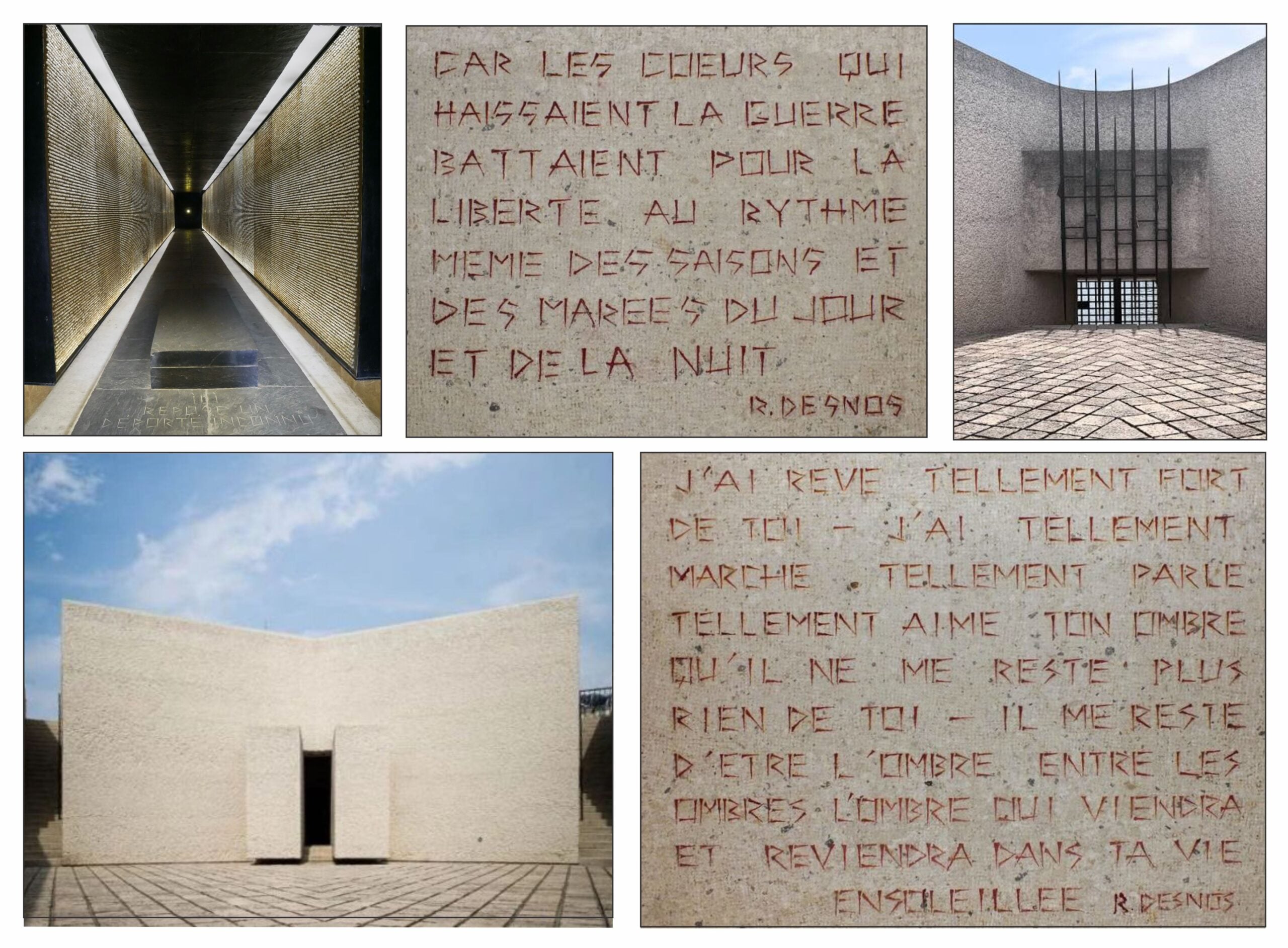
The first quotation is from the ending of a poem published in 1944:

Car ces cœurs qui haïssaient la guerre battaient pour la liberté au rythme même des saisons et des marées, du jour et de la nuit.

For these hearts that hated war were beating for liberty to the very rhythm of the seasons, the tides, day and night.  (Adès translation).

The second quotation came from what was incorrectly assumed to be his last poem (Conley, 2003, pp 203-207; Desnos/Adès, 2017, p 93). This was quoted in Czech in a brief article in a Czech newspaper on 1 July 1945 that announced the death of the French poet at Theresienstadt. Translated back into French the poem read

J’ai rêvé tellement fort de toi,
J’ai tellement marché, tellement parlé,
Tellement aimé ton ombre,
Qu’il ne me reste plus rien de toi.

Il me reste d’être l’ombre entre les ombres,
L’ombre qui viendra et reviendra
Dans ta vie ensoleillée.

The poem was thought to be addressed to France. However, the lines actually came from a 1926 prose poem that Desnos wrote for his love at the time: the singer Yvonne George

J’ai tant rêvé de toi, tant marché, parlé, couché avec ton fantôme qu’il ne me reste plus peut-être, et pourtant, qu’à être fantôme parmi les fantômes et plus ombre cent fois que l’ombre qui se promène et se promènera allégrement sur le cadran solaire de ta vie. 

I’ve dreamed of you so much, walked, talked, slept with your phantom so much that all that’s left to me perhaps, is to be a phantom among phantoms and a hundred times more shadowy than that shadow walking in joy, now and in time to come, across the sun-dial of your life. (Adès translation).


Springtime

Desnos’ real ‘last poem,’ written on 6 April 1944 in the Flossenbūrg camp (Desnos/Dumas, 1999, p 1259; Desnos/Adès, 2017, pp 512-513) was:

Printemps

Tu, Rrose Sélavy, hors de ces bornes erres
Dans un printemps en proie aux sueurs de l’amour,
Aux parfums de la rose éclose aux murs des tours,
à la fermentation des eaux et de la terre.

Sanglant, la rose au flanc, le danseur, corps de pierre
Paraît sur le théâtre au milieu des labours.
Un peuple de muets d’aveugles et de sourds
applaudira sa danse et sa mort printanière.

C’est dit. Mais la parole inscrite dans la suie
S’efface au gré des vents sous les doigts de la pluie
Pourtant nous l’entendons et lui obéissons.

Au lavoir où l’eau coule un nuage simule
À la fois le savon, la tempête et recule
l’instant où le soleil fleurira les buissons.

The following is a reading by Yvon Jean

Springtime

Rrose Sélavy, beyond these bounds you stray.
Meanwhile the waters and the earth ferment;
The rose on fortress-walls pours out its scent;
Love has its sweats and springtime is their prey.
 
The rose has torn the stone-limbed dancer’s side.
While others plough and sow, he treads the boards.
The public, blind and deaf and dumb, applauds
This rite of spring, when he has danced and died.
 
The word that’s writ in soot is wiped away
At the wind’s whim by fingers of the rain.
Nevertheless we hear it and obey.
 
Down at the wash-place where these waters run,
A cloud portrays both soap and hurricane,
Retreating when the thickets bloom in sun.
(Adès translation).

The poem hearkens back to the days of his youth when Desnos was in love with words and with Rrose Sélavy, and looks forward to the days when spring would dispel the darkness that was Europe during the Nazi era. Desnos was forever the optimist. He used to read the palms of his co-prisoners and he would always find happiness in their futures (Desnos/Caws, 2007, p 1280). An apocryphal story is that he read the palms of a group of prisoners slated for the gas chambers and that his description of their future lives so confused the guards that the prisoners were not executed.


References:

Poems and translations

Desnos, R. (translated by Forché, C., & Kulik, W. T., 1991). The selected poems of Robert Desnos. Ecco Press.

Desnos, R. (translated by Kulik, W, 1994). Contré = Country: twenty-five poems. Windhover Press (University of Iowa).

Desnos, R. (edited by Dumas, M.-C., 1999). Œuvres. Gallimard.

Desnos, R. (translated by Kulik, W, 2004). The voice of Robert Desnos: selected poems. Sheep Meadow Press.

Desnos, R. (edited by Caws, M. A., 2007) Essential poems and writings of Robert Desnos. Black Widow Press

Desnos, R. (translated by Adès, T., 2017). Robert Desnos: Surrealist, Lover, Resistant: collected poems. Arc Publications.

 Others

Conley, K. (2003). Robert Desnos, surrealism, and the marvelous in everyday life. University of Nebraska Press.

Humphreys, K. (2002). Robert Desnos. In Leroux, J.-F. (Ed.) Modern French poets. (Dictionary of Literary Biography Vol. 258). Gale

Kulik, W. (1990). On Desnos. The American Poetry Review, 19(3), 29-31.

Swan, R. (2019). Contrée: Picasso’s visual fragmented tailpieces emphasise the poetry of Robert Desnos. Knowledge Commons.

Wieviorka, O. (translated by J. M. Todd, 2016). The French Resistance. Harvard University Press.

Paul-Émile Borduas: Le Refus Global

Paul-Émile Borduas (1905-1960) was a Quebec artist who became world-famous in the 1950s for his striking abstract paintings. In the early 1940s he had founded Les Automatistes, a group of artists interested in Surrealism. In 1948, he and his colleague had published the Refus Global (Total Refusal), a manifesto urging his fellow Québécois to throw off the oppressive authority of the Union Nationale Party and the Catholic Church. His call to freedom antagonized those in power. After being fired from his teaching position, he left Canada to work in New York and Paris. Shortly after his death in February 1960, the Liberal Party defeated the Union Nationale in the Provincial Election in June, 1960, and La Révolution Tranquille (Quiet Revolution) began to modernize Quebec society.     

Apprentice

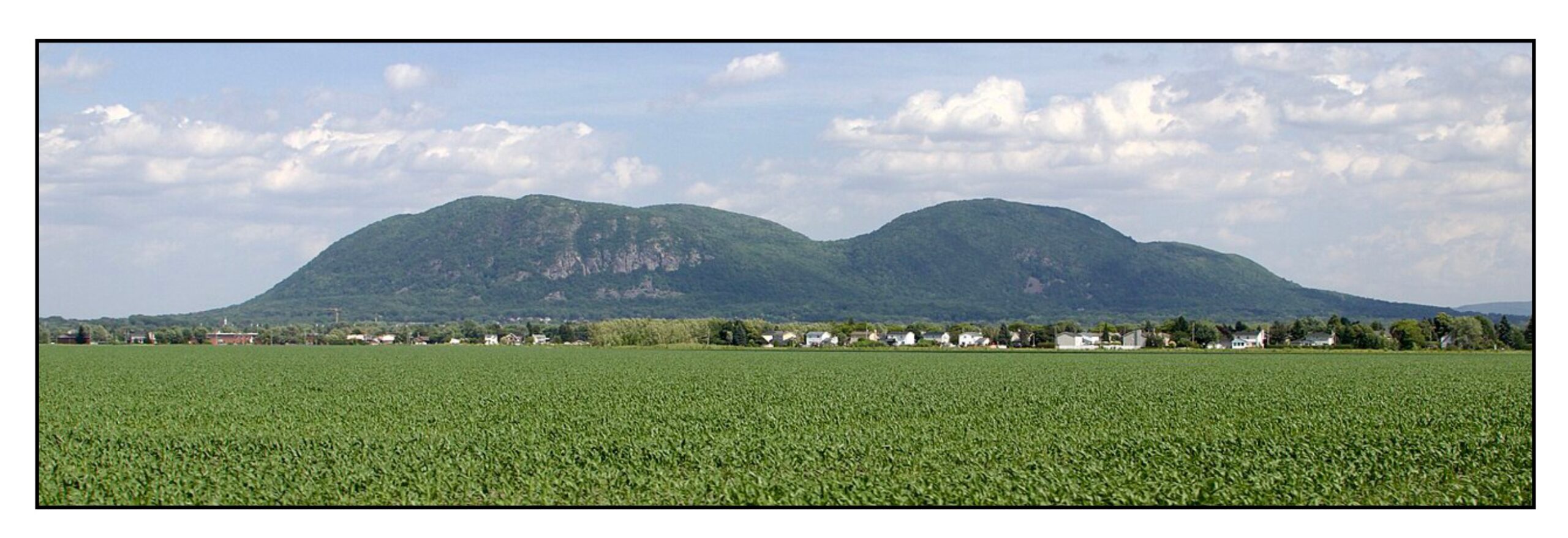
Borduas was born in Mont Saint Hilaire about 40 km east of Montreal in the valley of the Richelieu River which flows from Lake Champlain into the St Laurent River. The mountain arises abruptly from a surrounding plain famous for its apple orchards.

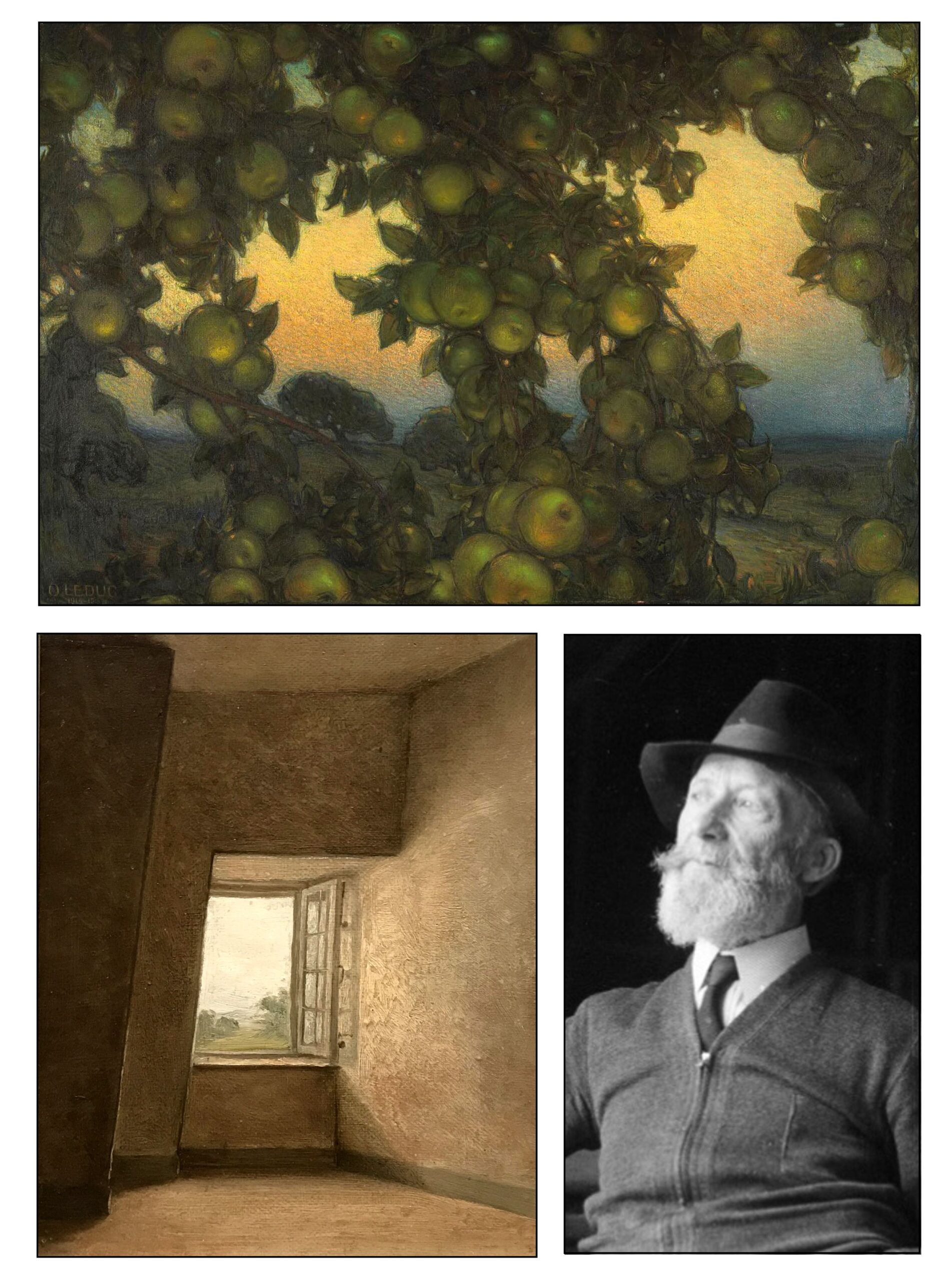
In his teens, Borduas became apprenticed to Ozias Leduc (1864-1955), a painter from the same region, and helped him at his work as a church decorator. Leduc was a talented representational artist with a modernist sensibility (Lacroix, 2019). The following illustration shows his Green Apples (1915), Open Window (1900), and a photograph from 1936.

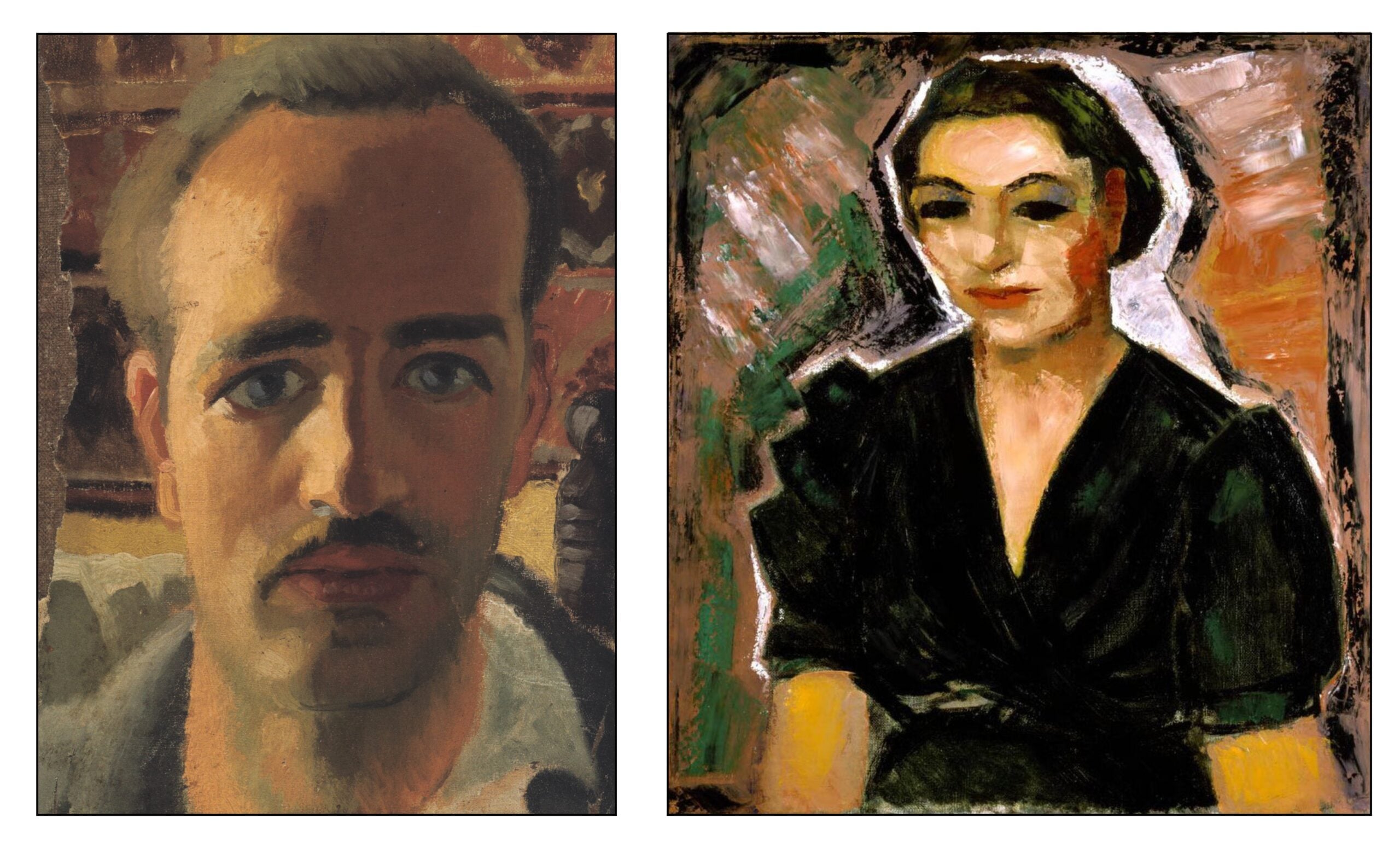
Leduc arranged for Borduas to have art lessons in Sherbrooke, and in 1923 supported his admission to the newly opened École des Beaux-Arts de Montréal. After he graduated Borduas spent a year of further study in Paris. On his return, he became an art teacher in the Catholic school system. In 1935, he married Gabrielle Goyette and settled down to family life in Mont Saint Hilaire. In 1937, he was appointed professor at the École du meuble de Montréal, which the government had just established to provide training for workers in the province’s furniture industry. The following illustration shows a Self-Portrait from 1928 and a Portrait of Madame Gagnon from 1941.


Les Automatistes

In the late 1930s Borduas became intrigued by ideas of André Breton and the Surrealists. He began to experiment in painting by instinct rather than by reason. Breton, in Le Manifeste du Surréalisme (1924), had defined surrealism as

Psychic automatism in its pure state, by which one proposes to express — verbally, by means of the written word, or in any other manner — the actual functioning of thought. Dictated by the thought, in the absence of any control exercised by reason, exempt from any aesthetic or moral concern.

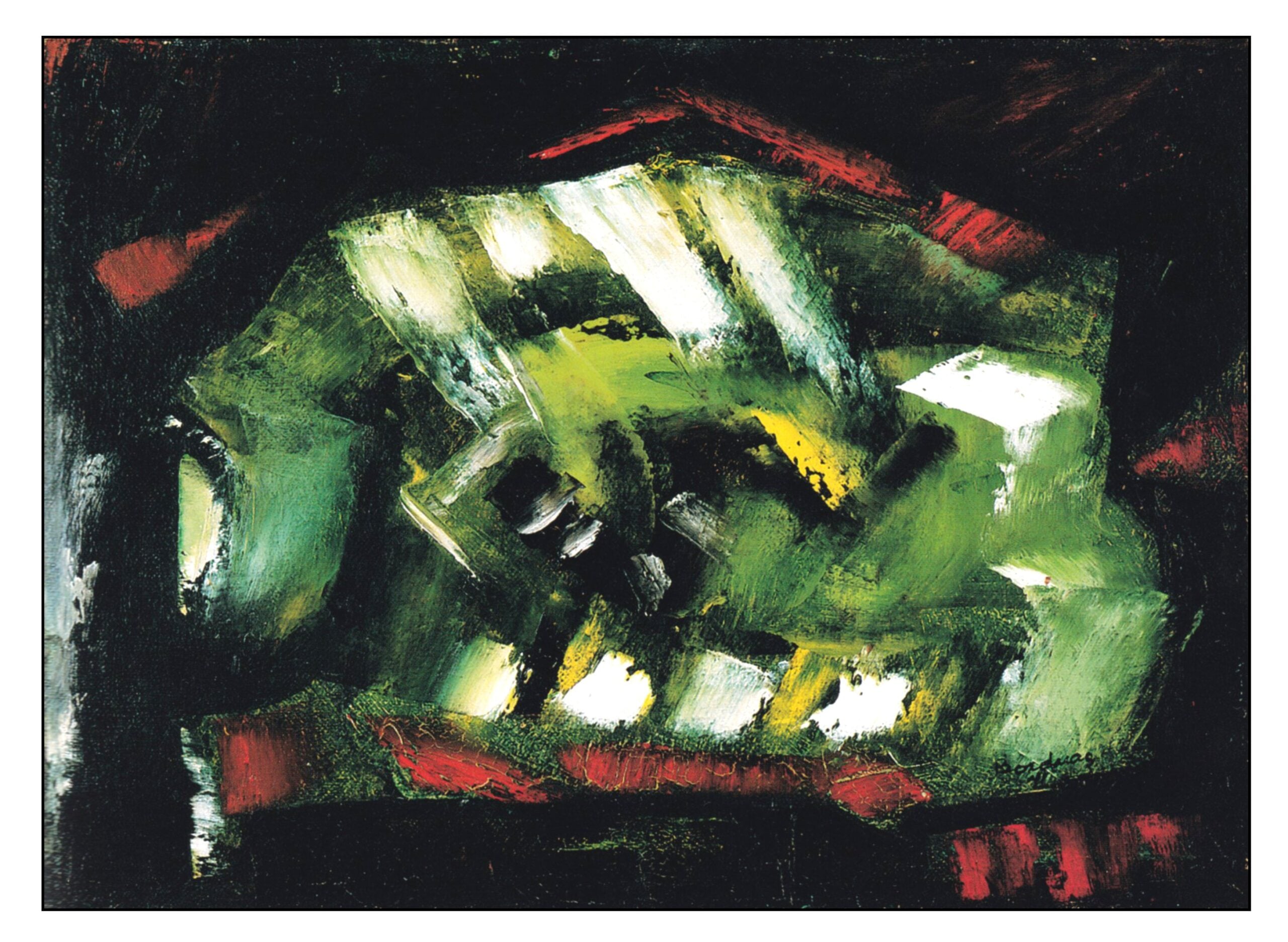
The following illustration shows one of Borduas’s early abstract paintings: Green Abstraction (1941). He described it as his “first totally non-preconceived painting” (Gagnon, 1988, p 166).  

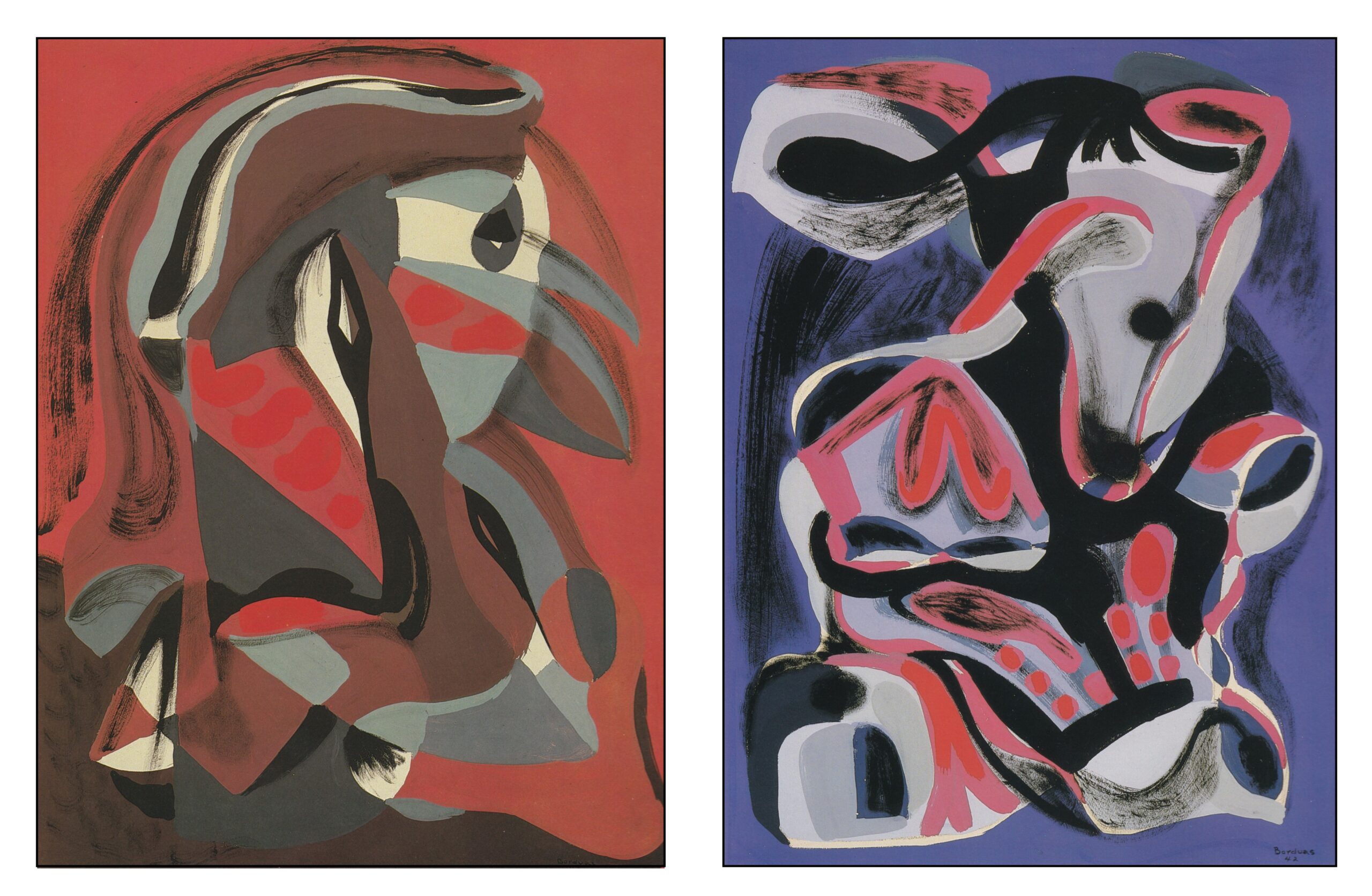
Borduas soon put together a set of 45 gouaches painted using the principles of surrealism for a solo exhibition in Montreal in 1942 (Gagnon, 2013, pp 117-135). At the time he described his artistic technique as follows;

I begin with no preconceived idea. Faced with the white sheet, my mind free of any literary ideas, I respond to my first impulse. If I feel like placing my charcoal in the middle of the page, or to one side, I do so with no questions asked, and then go on from there. Once the first line is drawn, the page has been divided and that division starts a whole series of thoughts which proceed automatically. When I use the word “thoughts” I mean painterly thoughts: thoughts having to do with movement, rhythm, volume and light, not literary ideas. Once the drawing has been completely worked out, the same steps are followed with colour. As with the drawing, if my first impulse is to use yellow, I don’t hesitate. And the first colour determines all the others. It’s at the stage of colour that the problems of light and volume present themselves. (quoted in Nasgaard & Ellenwood, 2009, p 12).

Two of the gouaches are illustrated below: Number 6 and Number 33. Some appeared to represent something – Number 6 soon became known as Le Chantecler (Rooster). Others, like Number 33, seemed completely abstract.  

Another important influence on Borduas was Marie-Alain Couturier (1897-1954). Between 1940 and 1944, the French Franciscan Father lived in North America in exile from occupied France. He spent some time in Quebec, encouraging artists to explore the new freedoms of modern art, and urging the church to support their new sense of beauty. Couturier had originally trained as a stained-glass artist, and went on to become an editor for the journal Art Sacré (Lion, 2010). Borduas had met him during his time in France, and the two interacted again when Couturier was a visiting lecturer at the École du meuble. The following is from one of Couturier’s essays published in Quebec:

It takes an effort of pure intuition to assure the birth and development of a work of art, a total abandonment to a certain obscure sense of the absolute. And, to tell the truth, there needs to be an absolute risk, which implies a state of constant insecurity for the artist. This is psychologically very difficult, often even anguishing, as it is entirely foreign to the stable order of certitudes that rule over and guarantee all other human activities. (Couturier, 1944, quoted in Warren, 2017, p 23).

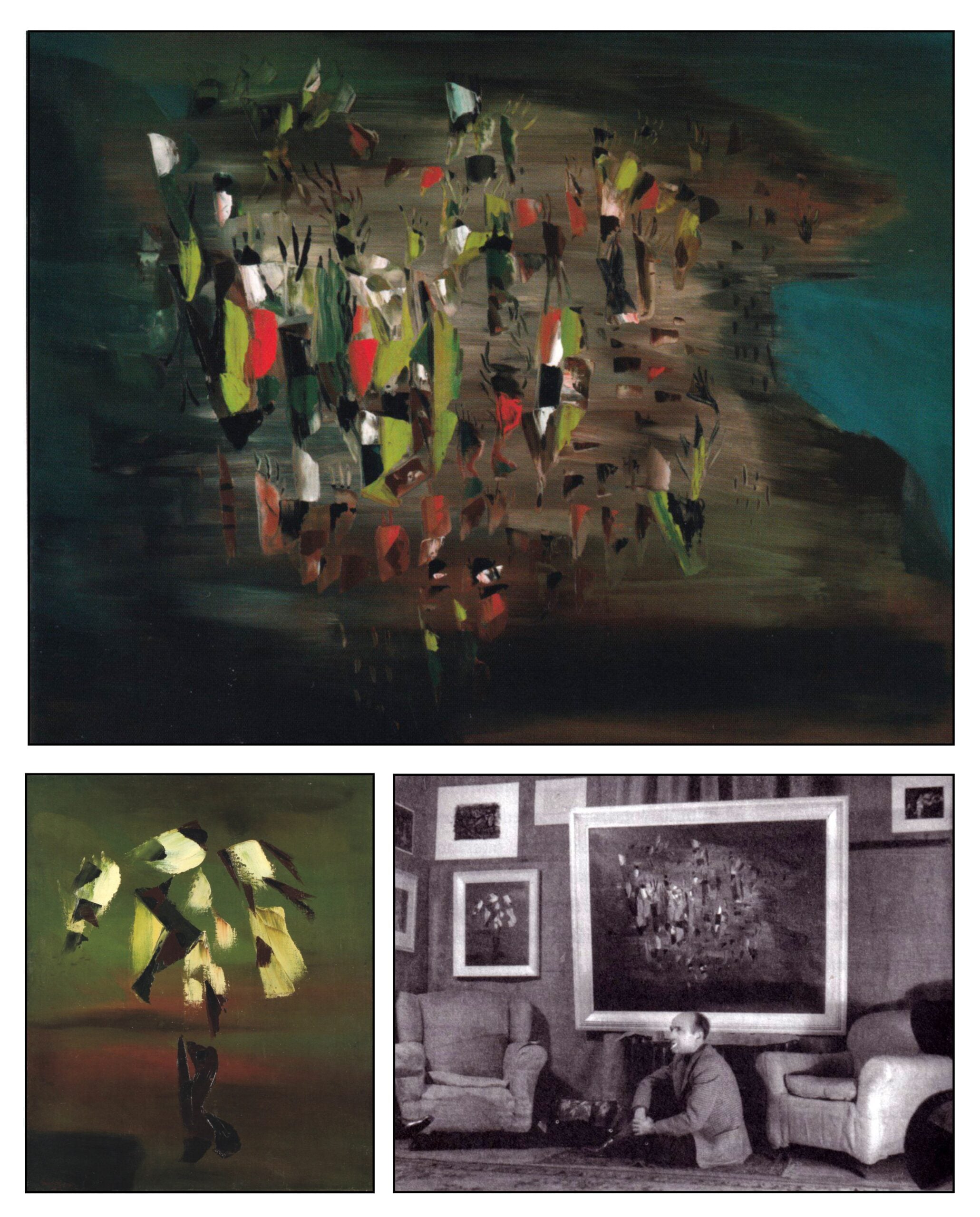
Over the next few years, Borduas assembled about him a group of talented young painters who were trying out the new modernist approaches to art. They had their first exhibition in 1947 at the house of his friend Claude Gauvreau, a poet and playwright, and brother of the painter Pierre Gauvreau. A journalist described the group as Les Automatistes from Borduas’s titles: for example, Automatisme 1.47 which later came to be known as Sous le vent de l’île (Leeward of the Island) (Nasgaard & Ellenwood, 2009; Gagnon, 2020). The following illustration shows Borduas at the exhibition in front of this painting and Automatisme 2.47 or Le Danseur.

The painting Sous le vent de l’île is impressive:

The canvas is cleanly divided into two registers. The first, consisting of broad horizontal brush strokes, corresponds to the background. A wide expanse beginning at the bottom of the picture and receding to infinity as the viewer’s gaze rises is flanked on the right by what could be interpreted as a sea meeting its shore. The space created in this way appears traversed “as if by a wind blowing from west to east:” On this background, without any apparent connection to it, a group of small red, green, black, and white blotches have been laid with a palette knife, like the pieces of a vertical veil blown about by the wind. The remarkable thing in this painting with respect to its predecessors is the extraordinary impression of depth it gives. The island, seen from above, at a height never before experienced in a Borduas work, takes on the dimensions of a continent and even the objects hanging in space remain at a certain distance from the viewer (they do not touch the edge of the canvas). (Gagnon, 2013, pp 192-193).


Le Refus Global

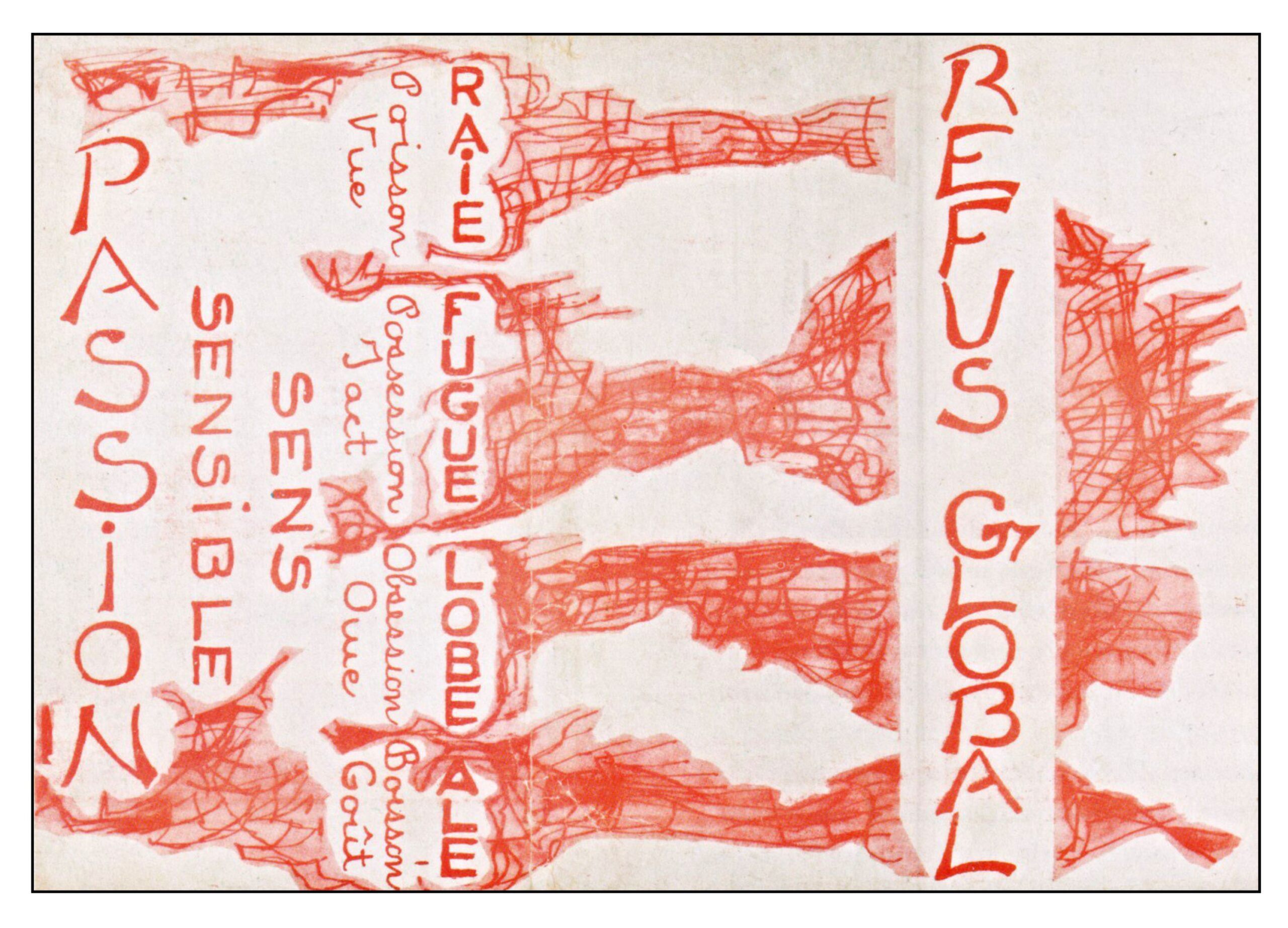
In 1948, Les Automatistes published a small manifesto entitled Le Refus Global (Total Refusal). Borduas was the lead author, and Jean-Paul Riopelle (1923-2001) designed the cover and frontispiece. Thirteen other artists also signed the manifesto, among them Marcelle Ferron (1924-2001), Claude Gauvreau (1925-1975), Fernand Leduc (1916-2014), and Françoise Sullivan (1923- ). Four hundred typescript copies were printed and only about half of these were sold (at a dollar apiece). Below is the frontispiece, which incorporates a poem by Claude Gauvreau about how information from the sensory world can be directly transformed into creative passion. The letters of the manifesto’s title are used to suggest the senses (raie for the light rays, fugue for tactile sensation, lobe for the earlobe, and ale for taste)

Borduas’s manifesto began with a rambling history of Quebec and its people and how they hade been exploited and kept in ignorance and by the Catholic Church:

Son exécrable exploitation, maintenue tant de siècles dans l’efficacité au prix desqualités les plus précieuses de la vie, se révélera enfin à la multitude de sesvictimes: dociles esclaves d’autant plus acharnés à la défendre qu’ils étaient plus misérables. L’écartèlement aura une fin. La décadence chrétienne aura entrainé dans sa chute tous les peuples, toutes les classes qu’elle aura touchées, dans l’ordre de la première à la dernière, de haut en bas.

[A loathsome exploitation, effectively maintained for centuries at the cost of the best things in life, will be exposed at last to a multitude of victims, docile slaves whose eagerness to defend their servitude has been in direct proportion to their wretchedness. The torture will end. Christian decadence in its collapse will drag down all the peoples and classes it has touched, from first to last, from top to bottom.] (translation of this and following passages by Ray Ellenwood, Borduas, 1985)

Borduas then called for a break with the past:

D’ici là notre devoir est simple. Rompre définitivement avec toutes les habitudes de la société, se désolidariser deson esprit utilitaire. Refus d’être sciemment au-dessous de nos possibilitéspsychiques. Refus de fermer les yeux sur les vices, les duperies perpétrées sous lecouvert du savoir, du service rendu, de la reconnaissance due. Refus d’uncantonnement dans la seule bourgade plastique, place fortifiée mais faciled’évitement. Refus de se taire — faites de nous ce qu’il vous plaira mais vousdevez nous entendre — refus de la gloire, des honneurs (le premier consenti): stigmates de la nuisance, de l’inconscience, de la servilité. Refus de servir, d’être utilisables pour de telles fins. Refus de toute intention, arme néfaste de la raison. À bas toutes deux, au second rang! Place à la magie! Place aux mystères objectifs! Place à l’amour! Place aux nécessités! Au refus global nous opposons la responsabilité entière.

[We must break with the conventions of society once and for all, and reject its utilitarian spirit. We must refuse to function knowingly at less than our physical and mental potential; refuse to close our eyes to vice and fraud perpetrated in the name of knowledge or favours or due respect. We refuse to be confined to the barracks of plastic arts — it’s a fortress, but easy enough to avoid. We refuse to keep silent. Do what you want with us, but you must hear us out. We will not accept your fame or attendant honours. They are the stigmata of shame, silliness and servility. We refuse to serve, or to be used for such purposes. We reject all forms of intention, the two-edged, perilous sword of reason. Down with both of them, back they go! Make way for magic! Make way for objective mysteries! Make way for love! Make way for necessities! Counterbalancing this total refusal is our complete responsibility]

And invited the reader to join in the new creative freedom:

Au terme imaginable, nous entrevoyons l’homme libéré de ses chaines inutiles, réaliser dans l’ordre imprévu, nécessaire de la spontanéité, dans l’anarchie resplendissante, la plénitude de ses dons individuels. D’ici là, sans repos ni halte, en communauté de sentiment avec les assoiffés d’un mieux-être, sans crainte des longues échéances, dans l’encouragement ou la persécution, nous poursuivrons dans la joie notre sauvage besoin de libération.

[Within a foreseeable future, men will cast off their useless chains. They will realize their full, individual potential according to the unpredictable, necessary order of spontaneity — in splendid anarchy. Until then, we will not rest or falter. Hand in hand with others thirsting for a better life, no matter how long it takes, regardless of support or persecution, we will joyfully respond to a savage need for liberation.]

The public paid little attention. However, the reaction of the church and government was swift. A month after the manifesto was published, Borduas was fired from his position at the École du meuble. The reason given in the official government letter was

*His writings and the manifestos he publishes, as well as his state of mind, make him unsuitable for the kind of teaching we wish for our students. (quoted by Ellenwood in his introduction to Borduas, 1985)

Borduas was devastated. He continued to paint and began to make abstract wooden sculptures, but he soon began to experience financial difficulties. His marriage came under great strain. In 1951 and Gabrielle finally took the children and left her husband. In 1953, Borduas abandoned Canada, moving for a few months to Provincetown on Cape Cod, and then on to New York.


New York

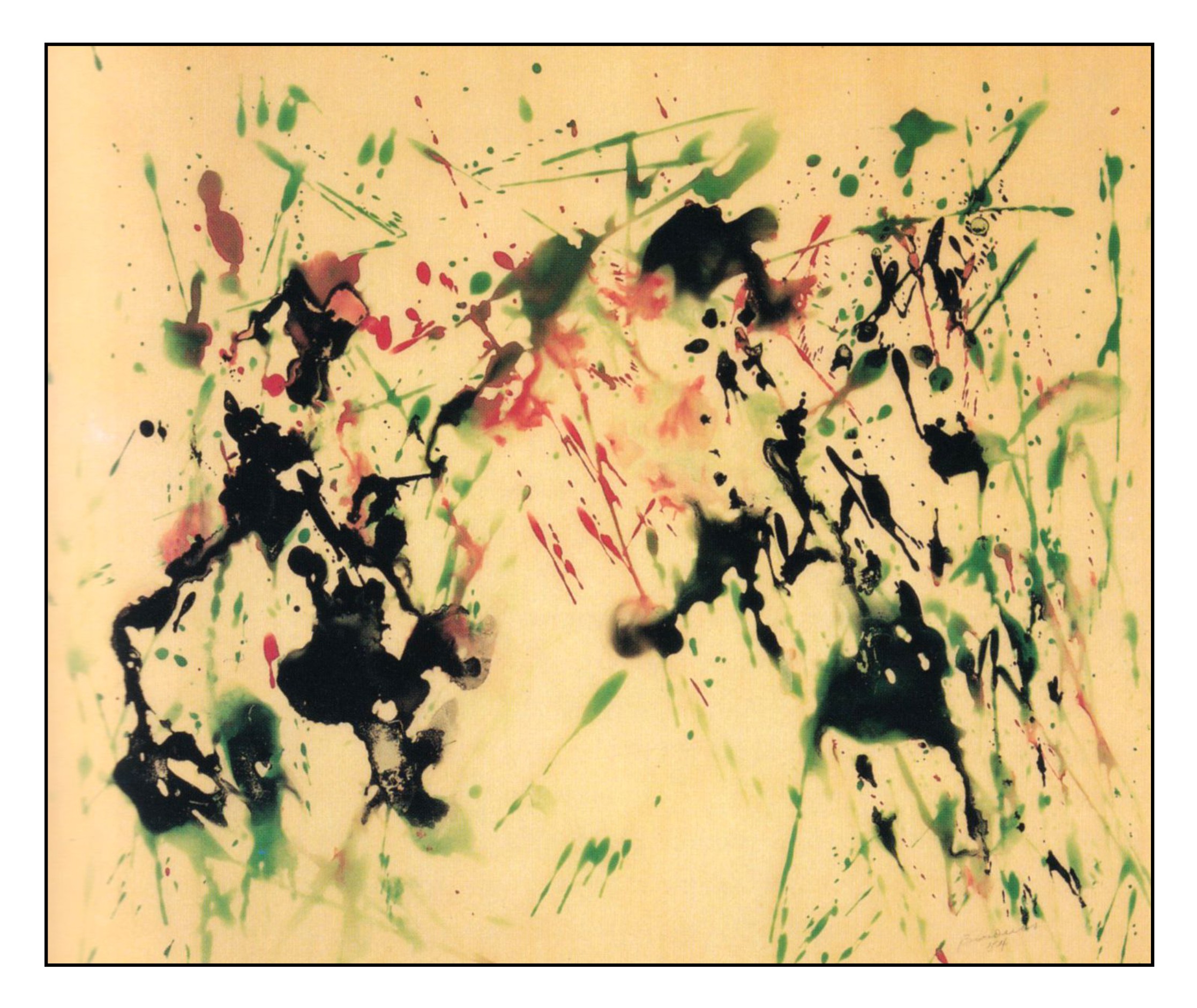
New York in 1953 was abuzz with the new Abstract Expressionism. Borduas was impressed with the “action painting” of Jackson Pollock, and created a series of his own drip paintings using watercolors. The following is Gerbes légères (Light Sheaves) from 1954:

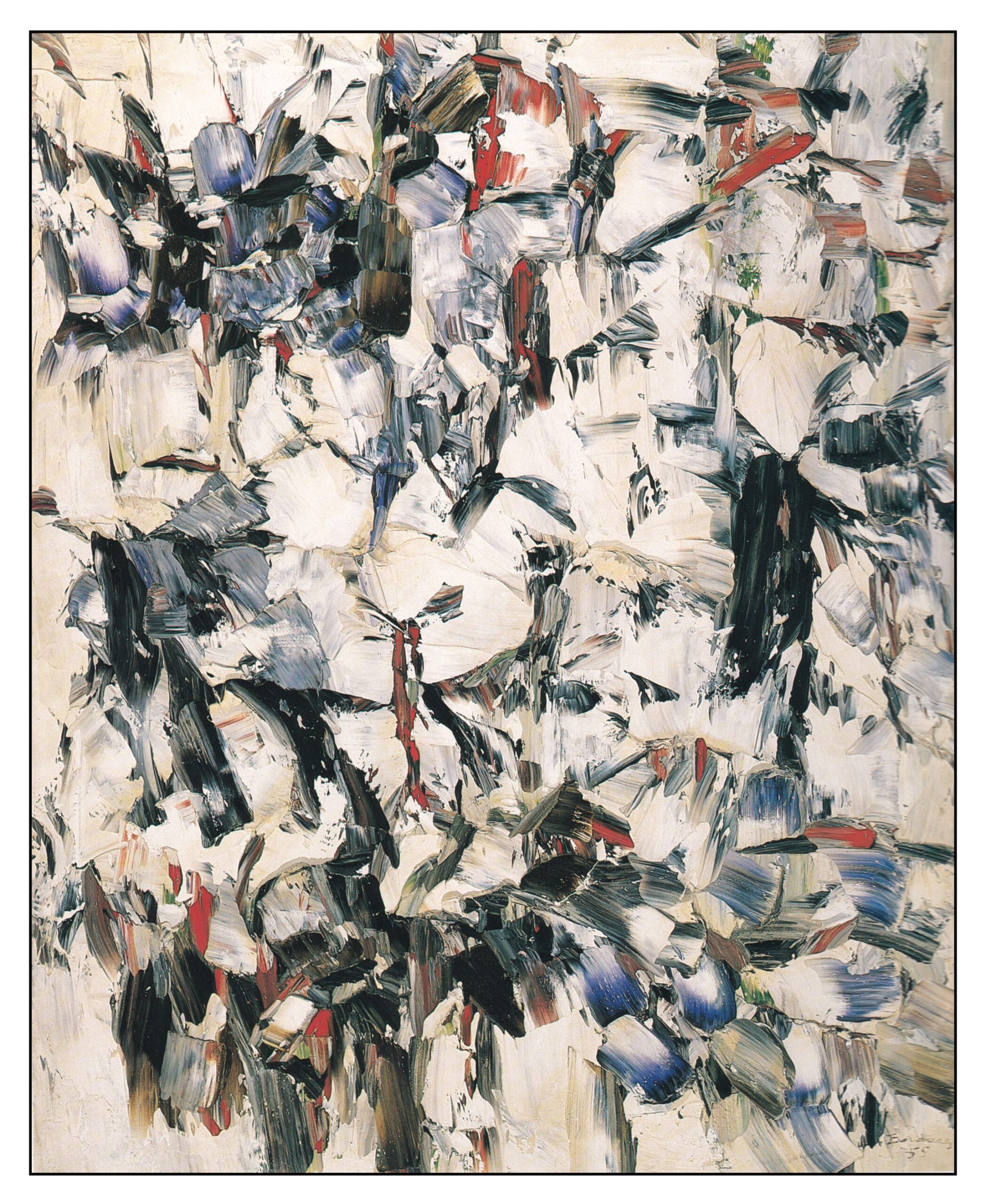
Borduas was also intrigued by the abstract calligraphy of Franz Kline, the monumental color fields of Clyfford Still, and the powerful simplicity of Robert Motherwell. He began to apply paint in broad strokes or taches using a palette knife. His painting suggested multicolored knots of color in a thick white fabric. A striking painting from this time was Blue Drops, 1955:   

Paris

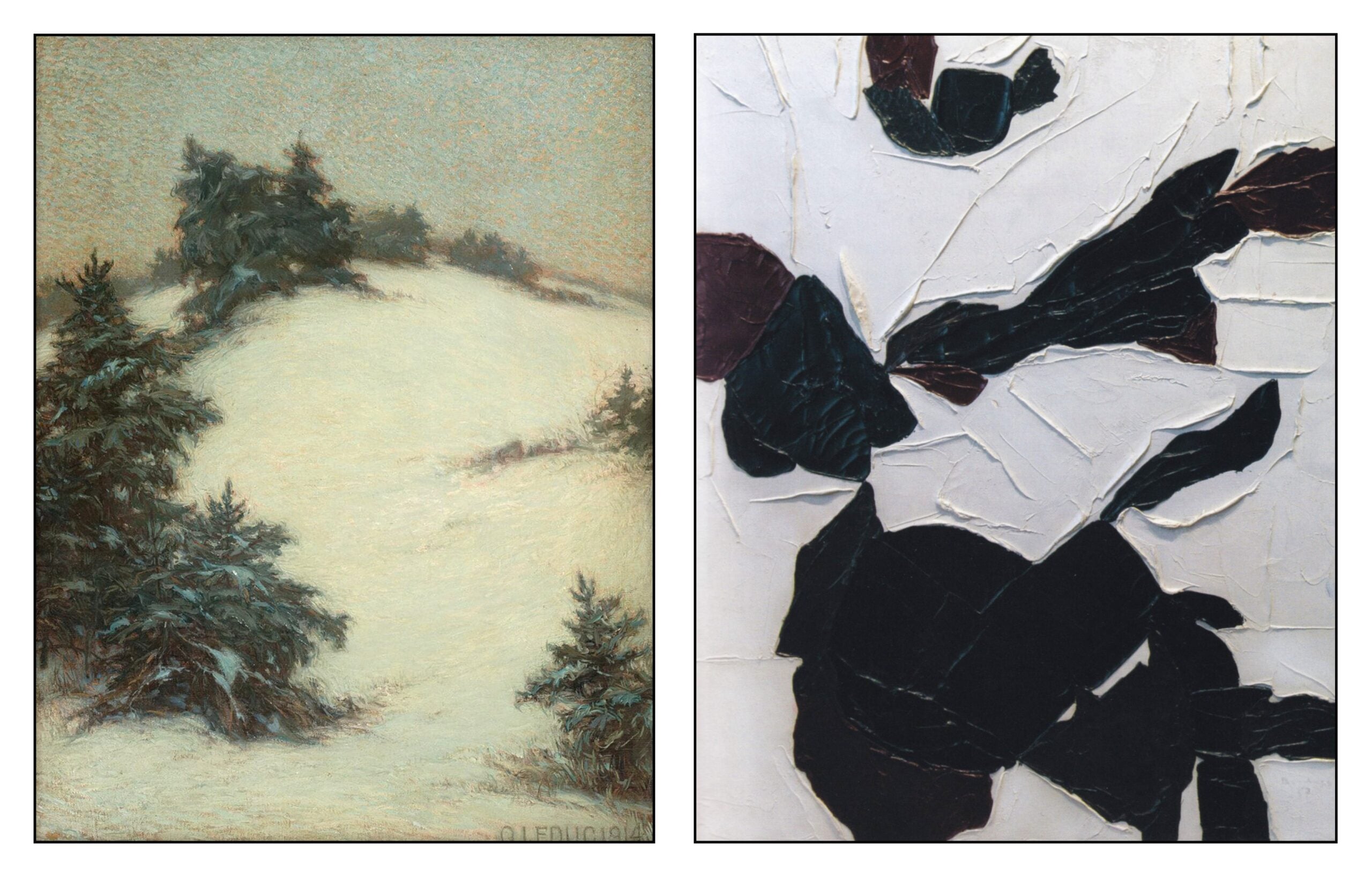
In 1955 Borduas moved to Paris. His palette became more restricted: paintings of black shapes on a white background became his iconic images. These paintings convey a deep sense of winter. They recall some of the paintings by his early master Ozias Leduc. The following illustration compares Leduc’s Grey Effect (Snow) from 1914 with Borduas’s Ardente from 1957:

The following is a quotation from Herta Wescher introducing an exhibition of his new abstract paintings in Paris in 1959:

his first burst of activity produced dynamic compositions swirling with movement in a range of shimmering tones. In later works, however, the elements were condensed and reduced in number, forming dark constellations within light grounds. White has become Borduas’ predominant colour, and he is capable of imbuing it with the most subtle of modulations. He covers his canvases with huge luminous expanses of white, at the edges of which very severe black shapes seem to terminate the space. Slowly, the jagged contours position and align themselves, and the internal structures of the compositions fall into place. Never, though, are the surfaces monotonous or schematic. Borduas applies the pigment with broad knives, and the movement of his hand leaves its mark both on the smooth areas and on those that are riddled with nervous streaks. (quoted by Gagnon 1988, p 399)


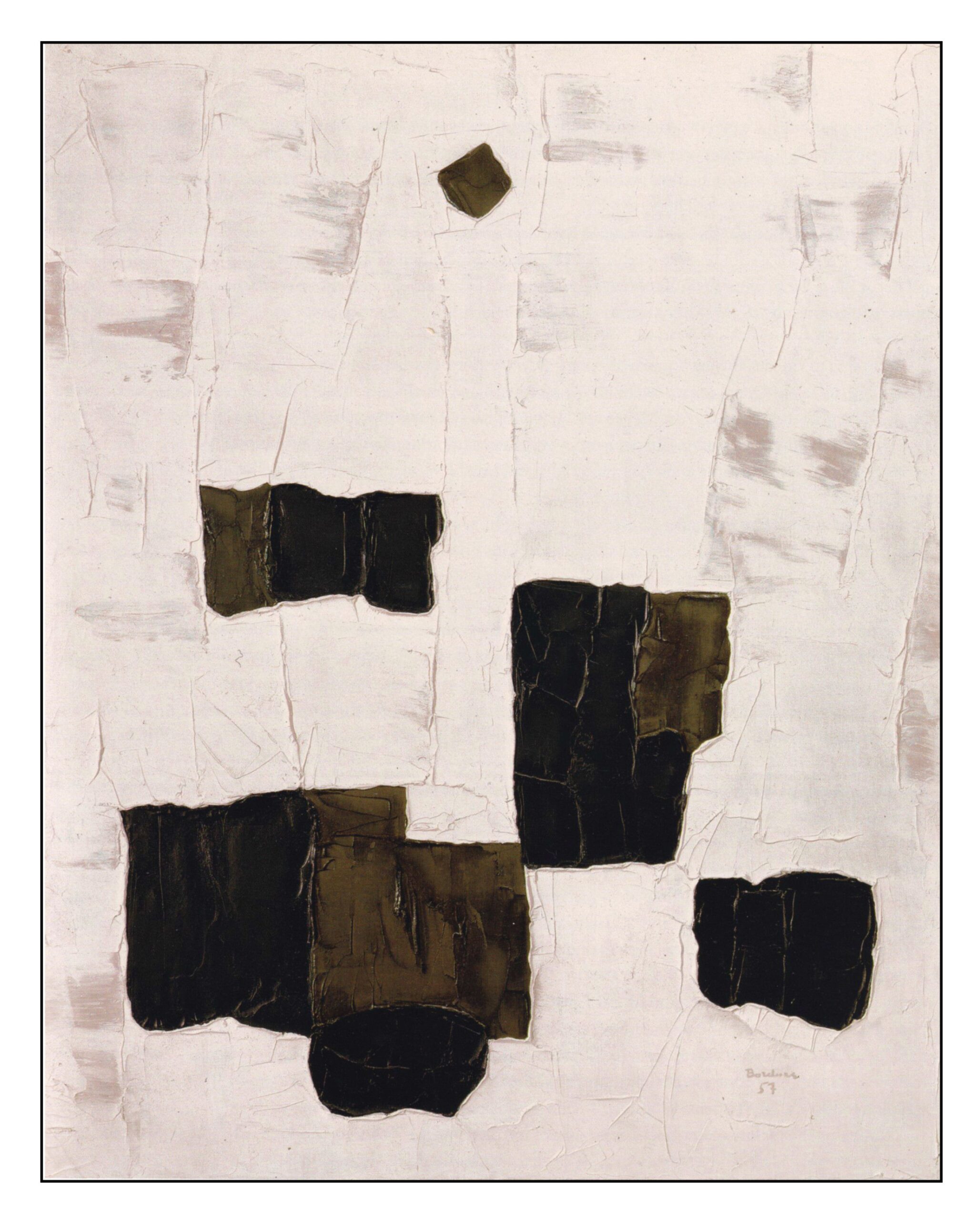
The following illustration shows Borduas’s most famous painting: L’Étoile Noire (Black Star) from 1957, now in the Montreal Museum of Fine Arts:

The painting is large – 1.62 meters high and 1.30 meters wide. Larger than anything he had painted before. It demands respect. 

The painting is very difficult to reproduce accurately. There are subtle shades of white, and patches of dark brown coalesce with the black. The edges of the taches are elevated forming lines of force throughout the image.

The following are comments on the painting by Gagnon (1988, p 202):

The use of dark brown in the three main spots towards the bottom adds considerably to the ambivalence of these dark areas. Where are we to place them? They appear both to be moving away towards infinity (black) and to be floating on the surface like blood coagulated on the skin (brown). The spots, on their own, thus encompass all positions in space, and the white is freed for other functions. It should be noted, in particular, how the white invariably covers the edges of all the dark spots with an over-lapping lip. It is thus not a background on which the spots stand out (which would be a Gestaltist reading). Might it not be a true colour field in which these black and brown spots are embedded? It is not really that either, for, as we have seen, the spots still keep their illusionistic power to evoke the abyss, the infinity of the cosmic night. In fact, the white acts as a screen. It serves to conceal some-thing from view and, like all screens, it is interesting to look at in itself If we follow the folds in the white, the edges that it forms around the spots, we will see that it encloses them in a network of lines as structured as those in a Mondrian painting. But what we have here is a Mondrian shot through with the tremor of life — in sharp contrast to the exclusively spiritual character sought by the great Dutch artist in his own works. In Borduas’ painting, the spirit is never divorced from the material; it reveals itself as much in the recesses of the paint as in the rigour of the composition.

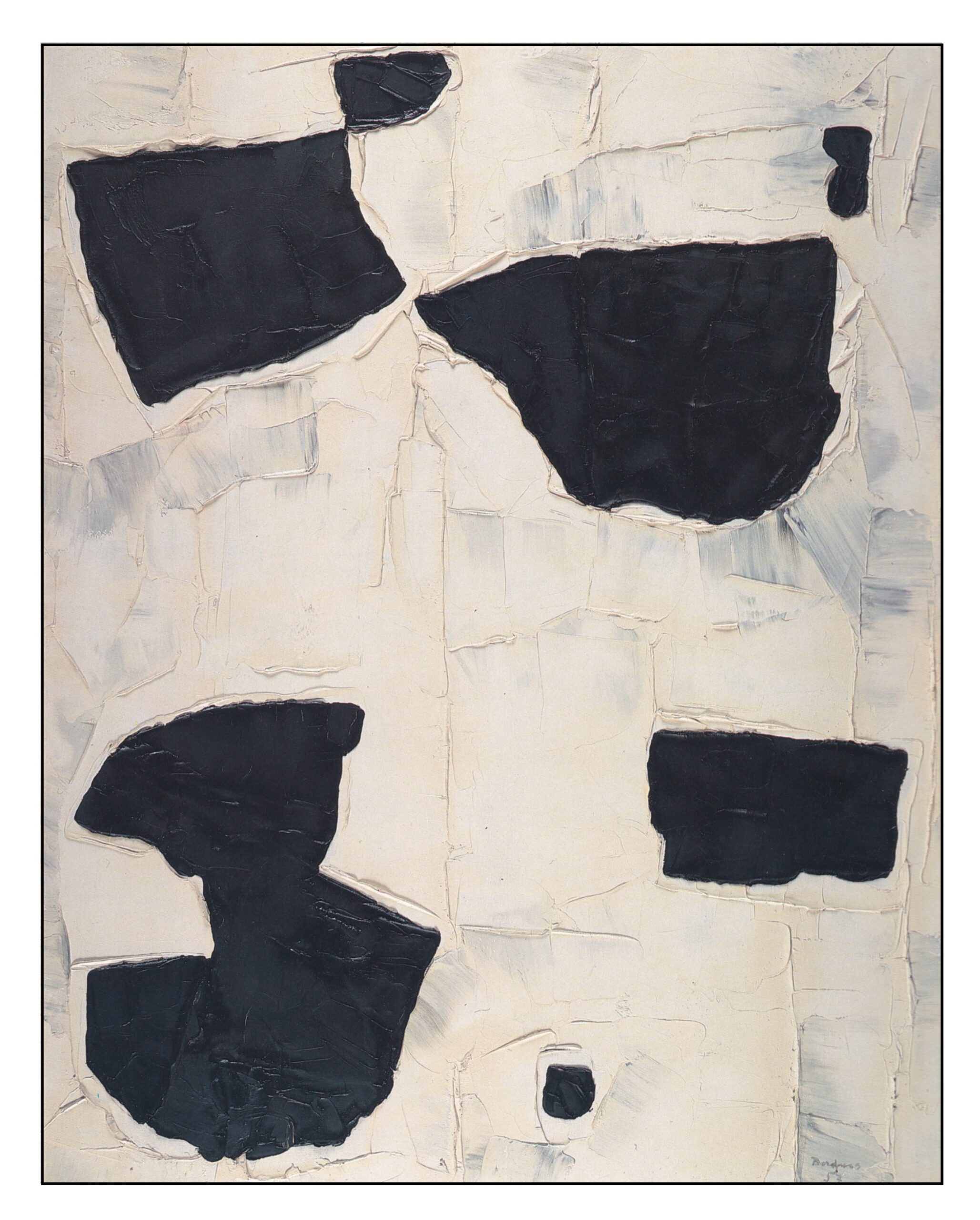
Another painting from this time is Magnetic Silence (1957). This has the same imposing size as Black Star. The black shapes at the top of the painting appear to be attracted toward each other, whereas those at the bottom appear to display repulsion. The white background on which the black shapes exist shows the energy with which Borduas created his image. The edges between the various color areas rise up with the force of their interaction. Tectonic plates come forcefully to mind.  

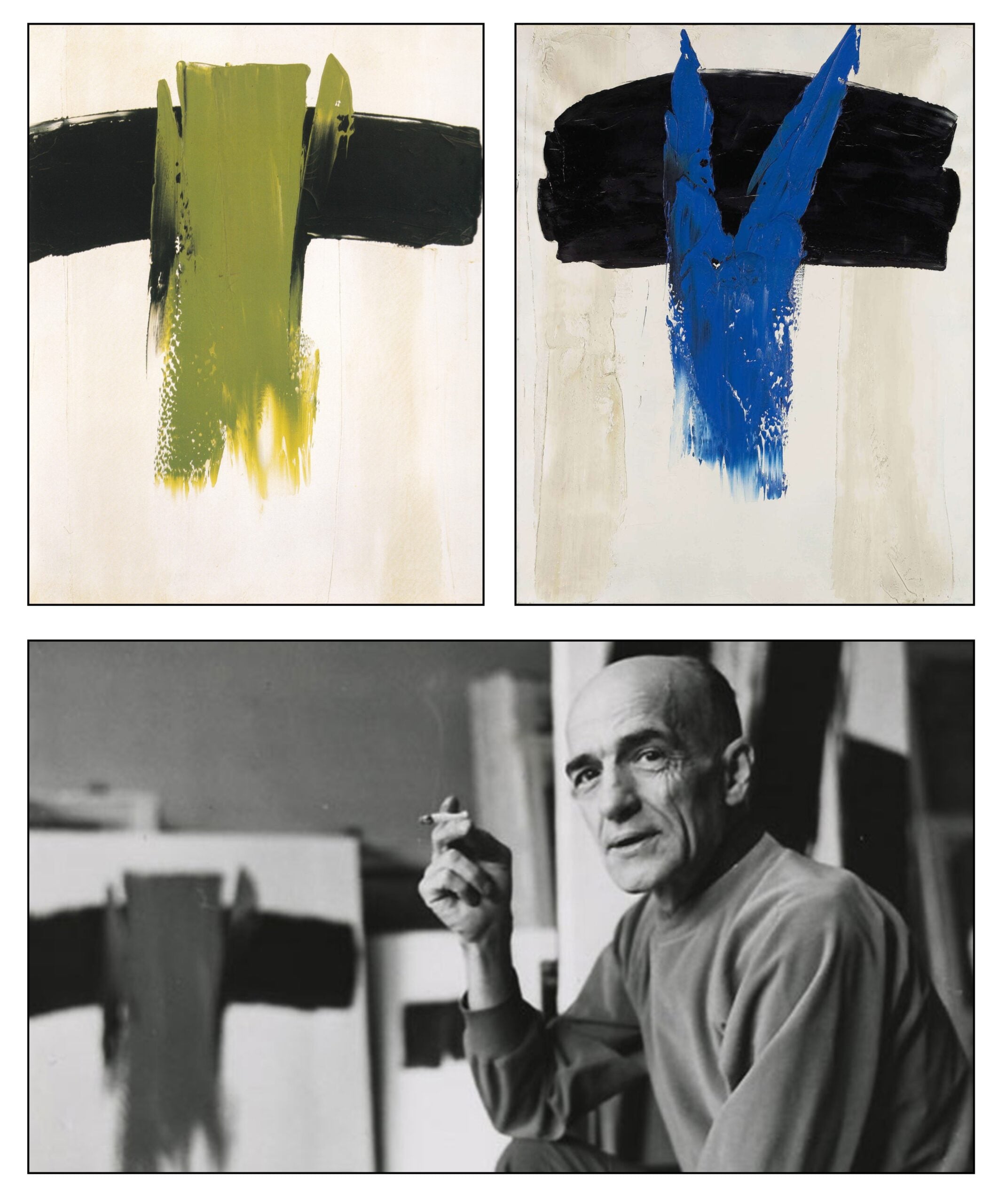
Another style that Borduas explored in Paris placed simple calligraphic shapes in black and in color on a white background. Perhaps an attempt to decode the infinite. The following illustration shows two of these paintings and a photograph from 1959:

Borduas was not well. He was depressed about his exile from Canada, and his heart was starting to fail. His mental and physical and stresses found their way into this painting:

Ma peinture deviant de plus en plus sévère, noir et blanc, simplifiée; je n’y plus rien; c’est ma “fatalité.” [My painting is becoming more and more severe, black and white, simplified; I have nothing left; it is my “fatality.”] (quoted by Lambert 2015, p 94)

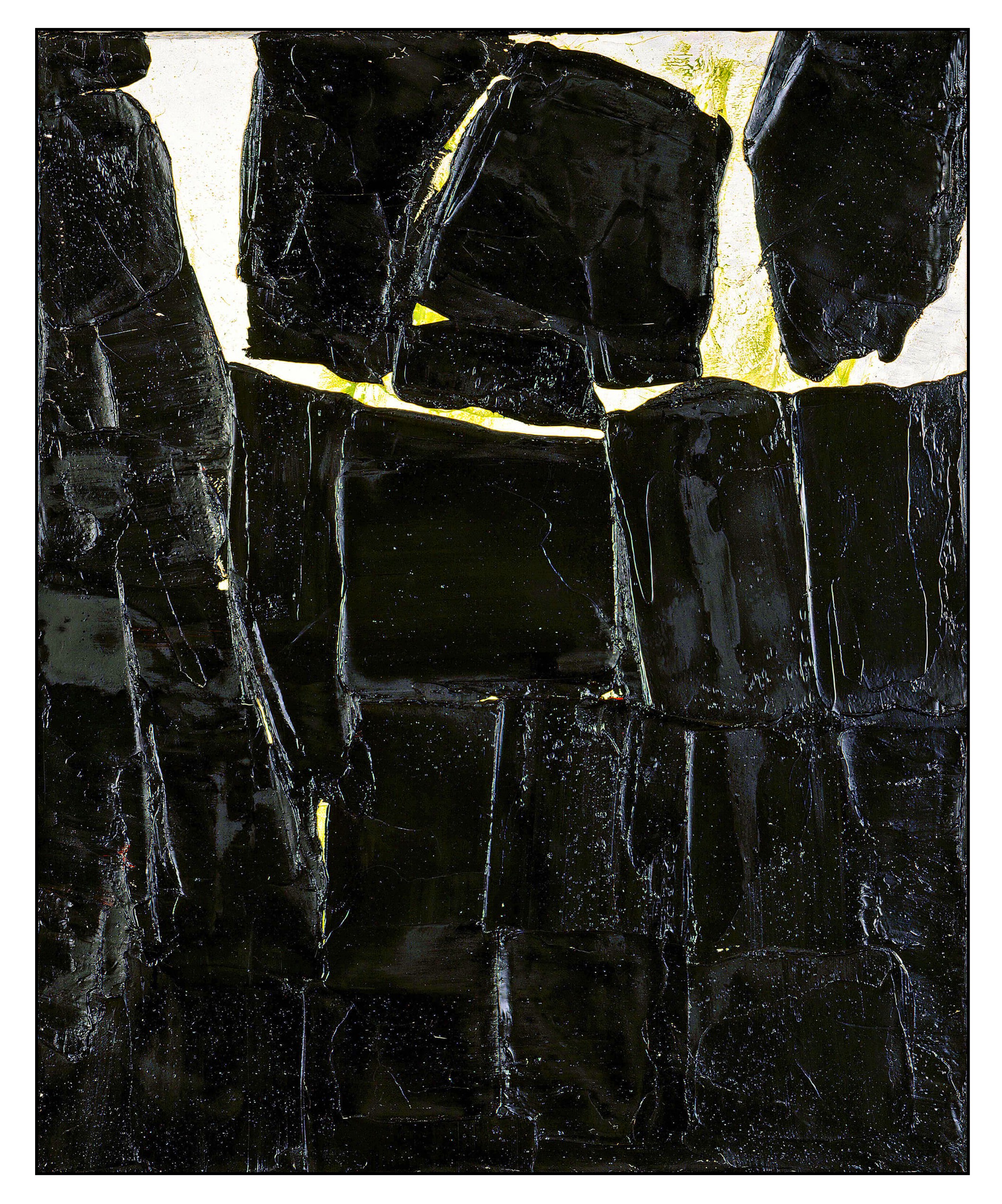
He died of a heart attack in February 1960. At his death, Borduas left on his easel a large black and white painting (later titled Composition 69):


His friend the poet Jean-Paul Filion described the painting

Une seule masse noire et immense couvrant la surface presque totale de la toile, avec, dans le haut, un mince horizon de blanc dans lequel baigne un soupçon de vert limpide et où le peintre a piqué deux petites formes noires rectangulaires, créant ainsi une perspective fascinante vers l’espace. Que viennent faire ces deux blocs, ces deux masques, ces deux fantômes comme des bouts de linceul, et qui persistent à prendre toute la place dans un espace réduit de lumière inaccessible, le tout placé comme en exergue au sommet d’un haut mur de charbon luisant? Ce qui m’entraîne à voir dans cette oeuvre limite l’illustration d’une sorte de désespoir vécu aux confins du cosmos. Ai-je tort d’imaginer cela? (quoted in Lambert, 2015, p 97).

[One immense black mass covering almost the entire surface of the canvas. At the top, a thin white horizon with a hint of limpid green, in which the painter has stuck two rectangular black shapes, thus creating a fascinating view out into space. What are they doing there, these two blocks, these two masks, these two ghosts like bits of shroud, stubbornly taking up all the room in a cramped space of inaccessible light, sitting like an epigraph atop a high wall of glistening coal? I am led to see this final work as the illustration of a sort of despair experienced at the limits of the cosmos. Am I wrong in imagining that?]


La Révolution Tranquille

While Borduas was in self-imposed exile, the political landscape of Quebec was beginning to change. Since 1936, the province had been governed by the conservative Union Nationale party led by Maurice Duplessis, except for a brief period during World War II when the Liberal Party had won an election by promising to prevent conscription. The Union Nationale had close ties to the Catholic Church, and had hung a crucifix over the speaker’s chair in the National Assembly when they first came to power in 1936. One of their recuring slogans was Le ciel est bleu; l’enfer est rouge (Heaven is blue and Hell is red, a play on the colors of the two parties – blue for the Union Nationale and red for the Liberals). The Union Nationale was vehemently anti-union, and provided little if any support for education or social security, which were controlled by the church. The government supported a strictly capitalist economy, wherein the natural resources of the province were exploited by rich foreigners.   

In late 1959, Duplessis died. In the election of June 1960, a brief four months after the death of Borduas, the Liberal Party under Jean Lesage were victorious. The Liberals instituted many reforms: the nationalization of the power companies to form Quebec Hydro, the establishment of a Quebec pension, increased support for education which now came under government rather than church control, and recognition of the unions even in the civil service. These came to be known as La Révolution Tranquille (Quiet Revolution), and the preceding period when the province was controlled by the Union Nationale came to be known as La Grande Noirceur (Great Darkness). These terms were those of the victors. In actuality, the Union Nationale period was not as dark as they believed, and the revolution turned out to be not as quiet as they wished (Bouchard, 2005).  

After 1960, there were tremendous changes in Quebec society. Most importantly, the birth rate and the frequency of attendance at church declined precipitously. It is tempting to attribute these changes to the Liberal election. However, both a declining birth rate and an increasingly secular society occurred at the same time in the rest of Canada and in Western Europe. Other more global factors were at play: the availability of contraceptive medication and a burgeoning economy. 

Whatever the actual causes, Borduas would have been pleased with the new Quebec. His Refus Global had called for these new freedoms and new responsibilities. Although his manifesto was rejected at the time it was published, the ideas that it promoted germinated and were finally acted upon. 


References

Borduas, P.-É. (1948). Refus global. Mithra-Mythe Éditeur. Text of Borduas article is available. English translation available.

Borduas, P.-É. (translated by R. Ellenwood, 1985). Total refusal. Exile Editions.

Bouchard, G. (2005). L’imaginaire de la grande noirceur et de la révolution tranquille: fictions identitaires et jeux de mémoire au Québec. Recherches Sociographiques, 46(3), 411–436.

Breton, A. (1924, translated by R. Seaver and H. R. Lane, 1969). Manifestoes of Surrealism. Ann Arbor Paperbacks (University of Michigan Press)

Gagnon, F. M. (1988). Paul-Émile Borduas. Montreal Museum of Fine Arts.

Gagnon, F. M. (2014). Paul-Émile Borduas life & work. Art Canada Institute

Gagnon, F. M. (2013). Paul-Émile Borduas: a critical biography. McGill-Queen’s University Press.

Gagnon, F. M. (trans. D. Winkler, 2020) Jean Paul Riopelle and the Automatiste Movement, McGill-Queen’s University Press.

Lacroix, L. (2019) Ozias Leduc: life and work. Art Canada Institute

Lambert, P. (2015). Borduas: le rebelle de Saint-Hilaire. Marcel Broquet, la nouvelle édition.

Lion, A. (2010). Art sacré et modernité en France: le rôle du P. Marie-Alain Couturier. Revue de l’histoire des religions, 1|2010, 109-126.

Nasgaard, R., & Ellenwood, R.  (2009). The Automatiste revolution: Montreal, 1941-1960. Douglas & McIntyre.

Warren, J.-P. (translated by S. Urquhart, 2017). Living art: individual and collective creativity: becoming Paul-Émile Borduas. Exil