Archive for Philosophy

image_pdfimage_print

Frost and Sun

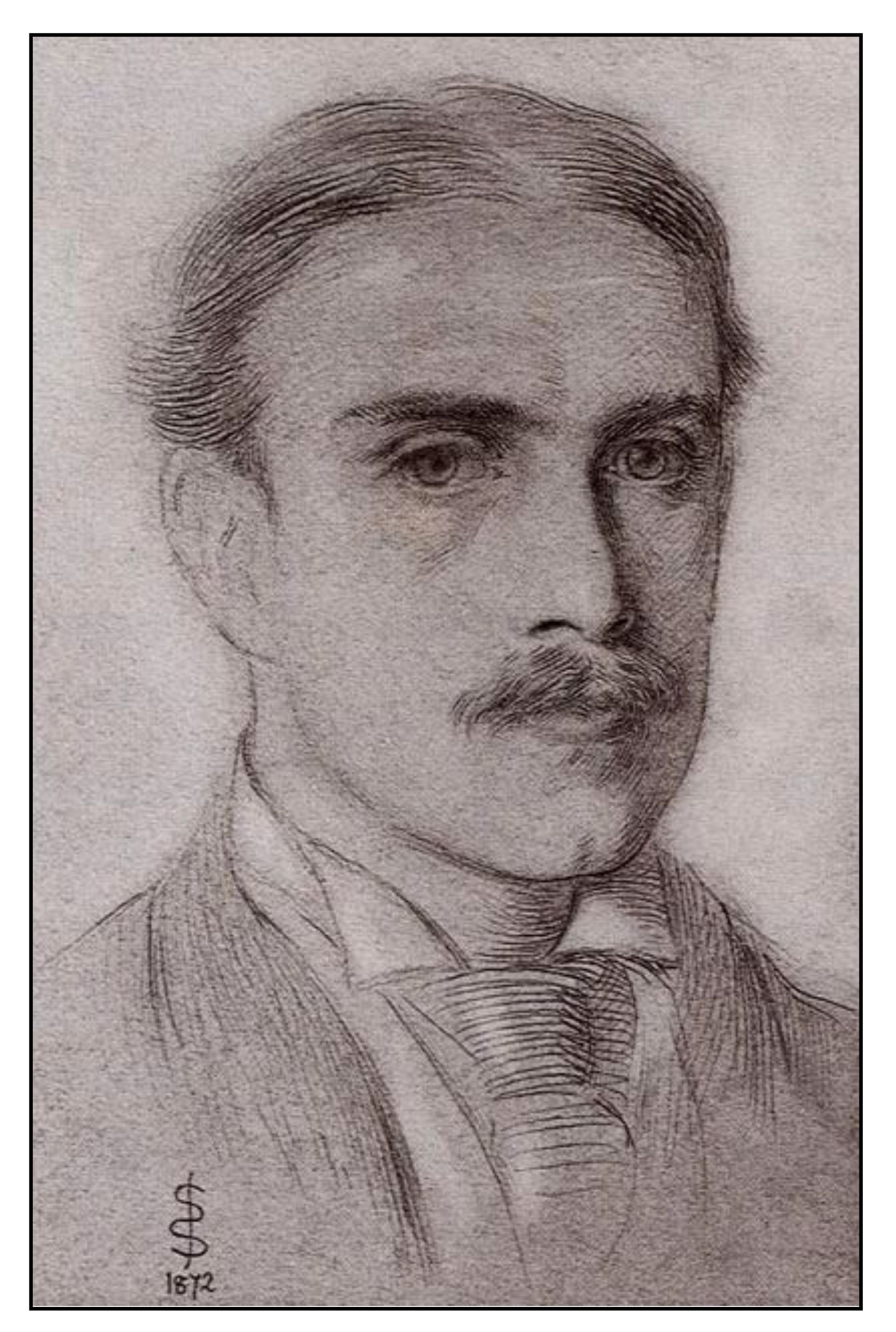
solomon pater 1872In 1873, Walter Pater, a fellow at Brasenose College in Oxford, published Studies in the History of the Renaissance. The book contained some previously published papers and several new essays on the poets, painters and philosophers of the Renaissance. The concluding chapter reworked some comments from an earlier paper on the poetry of William Morris to provide a summary of Pater’s aesthetic philosophy. This combined a skepticism about anything beyond our immediate sensations, an agnosia about any higher power or any life beyond our present mortal span, and a delight in the pleasure that comes from experiencing beauty. The goal in life was to enjoy each moment as fully as possible:

Every moment some form grows perfect in hand or face; some tone on the hills or the sea is choicer than the rest; some mood of passion or insight or intellectual excitement is irresistibly real and attractive to us, –for that moment only. Not the fruit of experience, but experience itself, is the end. A counted number of pulses only is given to us of a variegated, dramatic life. How may we see in them all that is to seen in them by the finest senses? How shall we pass most swiftly from point to point, and be present always at the focus where the greatest number of vital forces unite in their purest energy?

To burn always with this hard, gem-like flame, to maintain this ecstasy, is success in life. In a sense it might even be said that our failure is to form habits: for, after all, habit is relative to a stereotyped world, and meantime it is only the roughness of the eye that makes two persons, things, situations, seem alike. While all melts under our feet, we may well grasp at any exquisite passion, or any contribution to knowledge that seems by a lifted horizon to set the spirit free for a moment, or any stirring of the sense, strange dyes, strange colours, and curious odours, or work of the artist’s hands, or the face of one’s friend. Not to discriminate every moment some passionate attitude in those about us, and in the very brilliancy of their gifts some tragic dividing on their ways, is, on this short day of frost and sun, to sleep before evening. (Pater, 1893, pp. 188-189)

Read more

Late Spring

This year winter has stayed longer than usual. The seas are warmer, the Arctic vortex has shifted, and the currents of cold air have veered southward. Yet spring has finally arrived. The snow recedes. Gray and granular patches still remain, but they are not for long. Uncovered, the grass slowly turns from brown to green. Some of the trees, willows in particular, have gained a light green mistiness. Promise of leaves. The creeks are awash with runoff water. Wild waves now ride where once was stillness, ice and rocks. Red-winged blackbirds have returned to join the stay-at-home robins. Occasional cardinals flaunt their crimson. Mallards and geese find stretches of open water in the ice. A peregrine falcon circles slowly. Scattered snowdrops break the ground. Intermittent crocuses begin to show in pale purple and white, and an isolated daffodil braves the cold. The stores are full of cut flowers from countries where spring comes early or from greenhouses where summer is eternal.

Read more

Sense of Sin

Regret is an essentially human emotion. We make mistakes. If the mistake is without serious consequence we may just feel foolish; if it shows us as less than ideal we might feel shame; if it causes others to suffer we feel guilty; if it contradicts the law of god we feel a sense of sin. This is an overly simplistic taxonomy of what might be called the negative social sensations, in contrast to such positive sensations as friendship, compassion and love.

Social sensations provide the basis for religion. In the Eastern religions, our fate (karma) in this life and in later reincarnations is determined by how well we have followed the way of justice (dharma). In the monotheistic religions that come from Abraham, however, justice has a personal edge. Wrongdoing becomes a sin against God’s law and incurs his wrath.

Read more

Point of View

Point of view is an essential concept in both philosophy and art. In philosophy, point of view highlights the problem of conscious experience. To understand the consciousness of another individual we must be able to experience that individual’s point of view. This may be partially possible among individuals of the same species and culture. Yet, as Thomas Nagel (1974) points out, this becomes next to impossible when the individuals use different perceptual processes. Bats determine where things are in space by perceiving the echoes of their own ultrasonic sounds. We can track the sounds as they are emitted and received; we can record the response of the bat’s neurons to these sounds; yet we will never really understand what it is like to be a bat.

Read more