Archive for Medicine

image_pdfimage_print

Vincent Van Gogh: The Double-Square Paintings

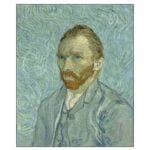
After a period of severe depression at the hospital at Saint-Rémy in the spring of 1890, Vincent Van Gogh (1853-1890) asked to be discharged. He left Saint-Rémy on May 16, 1890, and visited his brother Theo in Paris for a few days, before travelling to Auvers-sur-Oise, a small town about 30 km northwest of Paris, where Charles-François Daubigny had lived, and where several Impressionists, among them Camille Pissarro and Paul Cézanne, had painted. Auvers was also the home of Paul-Ferdinand Gachet, a kindly physician whom Theo had asked to accept his brother as a patient. Van Gogh arrived in Auvers on May 20, 1890. Over the next ten weeks he created 74 paintings. Among these, twelve used a “double-square” format: 100 by 50 cm. In these paintings, Van Gogh attempted to express his new vision of the world. Unfortunately, his depression persisted and on the evening of July 27, 1890, he shot himself with a revolver, dying from the injury two days later. The illustration shows his last self-portrait painted in Saint-Rémy in September, 1889.  

Read more

Mathis der Maler: the Isenheim Altarpiece

Very little is known about the life of Matthias Grünewald, a painter (German Maler) who worked in the early decades of the 16th Century in Germany. He is renowned for the pictures he created between 1512 and 1516 for the altarpiece of the Monastery of Saint Anthony in Isenheim in southern Alsace. The face of Saint Sebastian in one of these paintings (above) is considered to be a self-portrait. 

Read more

Looking at the Human Brain: from Vesalius to the Present

Andreas Vesalius (1514-1564) published his De Humani Corporis Fabrica (On the Fabric of the Human Body) in 1543 (O’Malley, 1964). This book, based on dissections of human cadavers, provided illustrations of the human brain that were both anatomically correct and esthetically pleasing. The scientists that followed Vesalius expanded on our knowledge, and produced their own representations of the human brain. This essay traces the evolution of these pictures.

Read more

Intimations of Mortality

We have been here before. The coronavirus pandemic has many precedents. Over the centuries various plagues have swept over our world. Many millions of people have died before their time. From 1347 to 1351 the Black Death killed about 30 million people in Medieval Europe: over a third of the population. From 1918 to 1920 the Great Influenza killed about 50 million people: about 2.5% of the world’s population. Each of these pandemics was as deadly as World War I (about 20 million) or World War II (about 70 million). Pandemics are more worrisome than wars: we cannot sue for peace with a virus. Most of us survived even the worst of past infections. Our systems of immunity will likely once again become victorious in this present pandemic. But just like after a war, we shall be severely chastened. How close we will have come to death will change the way we think. Everything will be seen through the mirror of our own mortality and the transience of our species. The nearness of an ending will distort our thinking. We shall have strange dreams and frightening visions.

Read more