Tag Archive for Humanism

image_pdfimage_print

Antonello da Messina: Sicilian Master

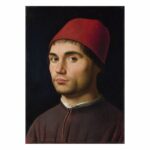
Antonello da Messina (~1430-1479) was born in Messina, Sicily. While studying in Naples, he became aware of a technique of painting using oil-based pigments that had originated in the Netherlands with Jan van Eyck (~1390-1441) and his followers. Antonello soon became a master of this new method. He was an expert portraitist able to capture his sitters’ distinct identities and depths of feeling. The illustration shows a painting from 1473, that was once thought to be a self-portrait, but there is no real evidence for this. Although many of Antonello’s works have been lost, three absolute masterpieces have survived: Saint Jerome in his Study, The Virgin Annunciate, both dated to around 1474, and Saint Sebastien from about 1478.  Read more
Robinson Jeffers

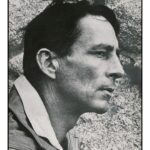
Robinson Jeffers (1887-1962) was an American poet who celebrated the beauty of California’s coast. In 1914 he and his wife Una settled in Carmel. In 1919 Jeffers and his family moved into Tor House, a home that he and a stone-mason had built on Carmel Point using rocks from the shore. From 1920 to 1924 he built by himself the adjacent Hawk Tower. Jeffers became famous soon after the publication of Tamar and Other Poems in 1924. This book and those that followed included both long narratives and shorter lyrics. His epics were bloody and tragic; his verse was free and passionate. Underlying his poems was an austere philosophy of “inhumanism.” This compared the transience of humanity to the persistence of the natural world, and proposed that we should detach ourselves from the passions of mankind and simply celebrate the beauty of the universe. Over the next decade, Jeffers published extensively and in 1932 his photograph graced the cover of Time. After World War II, his outrage at the death and destruction that occurred during the war and the severity of his inhumanist philosophy led to controversy and obscurity. In more recent years, the environmental movement has found inspiration in his love of the natural world and his anger about how humanity has despoiled it.  

Read more