Tag Archive for Duccio

image_pdfimage_print

Point of View: Renaissance Perspective

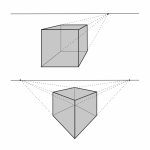
The ancients had only an intuitive grasp of how to represent three-dimensional reality on a two-dimensional surface. In about 1420, the Florentine architect Filippo Brunelleschi (1377-1446) demonstrated how he could accurately represent urban scenes using guidelines that converged to vanishing points on the horizon. Leon Battista Alberti (1404-1472) wrote down his ideas, and discussed their geometric principles in his 1436 book Della Pittura (On Painting). Brunelleschi’s techniques were quickly adopted by Italian painters and the concept of linear perspective developed in the Renaissance governed Western painting until the early years of the 20th Century when Modernism began to consider the world through multiple simultaneous points of view.

Read more

Late Byzantine

The Byzantine Empire began with the founding of the city of Constantinople by the Emperor Constantine the Great in 330 CE. By the 12th century Constantinople was the largest and richest city in Europe. Byzantium maintained its glory until the sacking of of the city by the forces of the Fourth Crusade in 1204 CE. After this the Byzantine Empire existed only in fragments. The Ottoman conquest of the Constantinople in 1453 CE ended the empire, replacing Eastern Christianity with Islam.

The art and architecture of the Byzantine Empire is justly famous. Buildings such as the Hagia Sophia taught the world the use of space; the mosaics of Ravenna, Venice and Palermo gave the Christian religion its iconography. This is the Byzantium of Yeats’ poem Sailing to Byzantium (1927)

O sages standing in God’s holy fire
As in the gold mosaic of a wall,
Come from the holy fire, perne in a gyre
And be the singing-masters of my soul.

Read more