Archive for Literature

image_pdfimage_print

Death Speaks

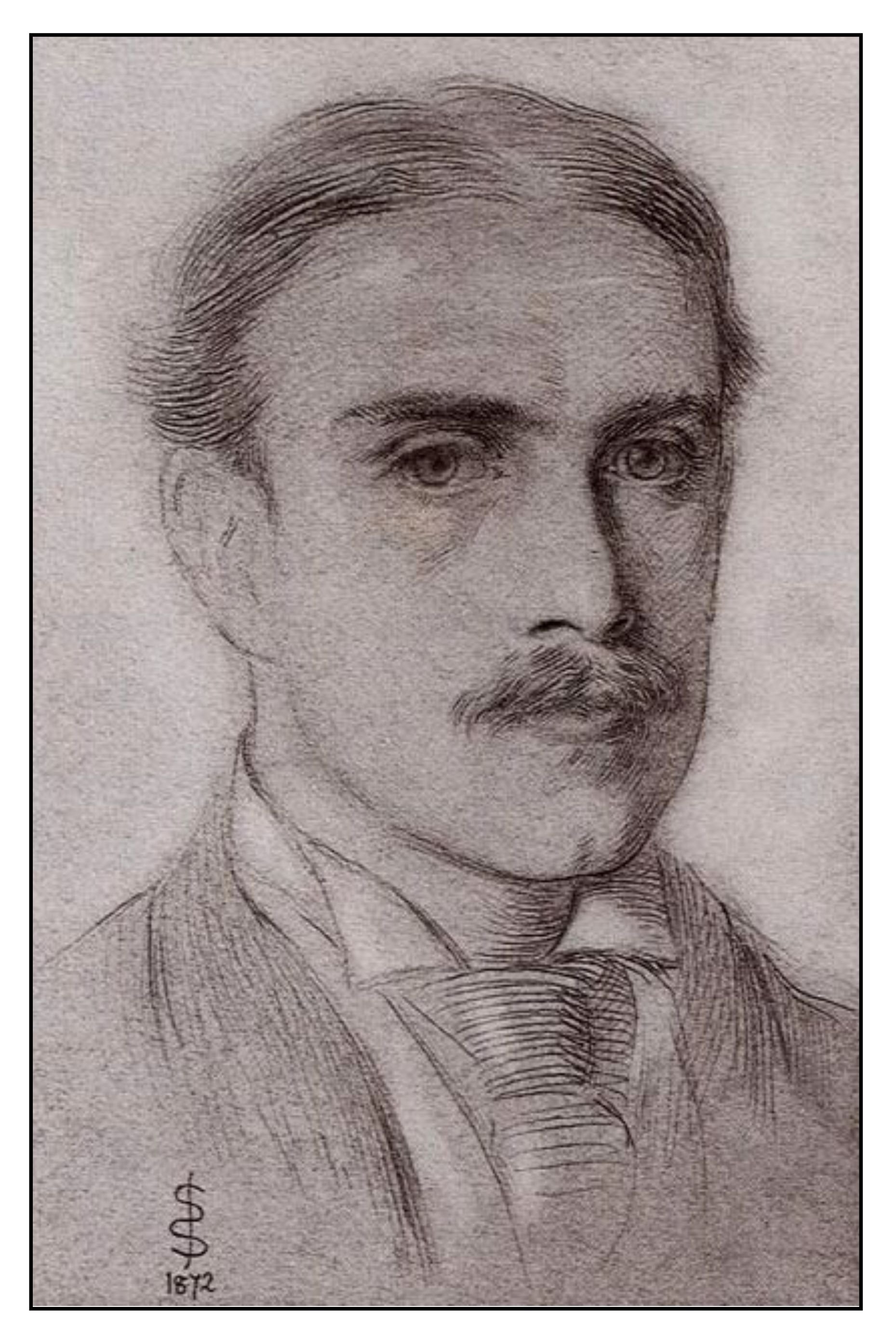
bernard perlin 1946 maugham

W. Somerset Maugham, silverpoint by Bernard Perlin, 1946

Somerset Maugham’s last play Sheppey (1933/1997) tells the story of a barber Joseph Miller, who was nicknamed Sheppey after his birthplace in Kent. Sheppey wins one of the Irish Sweepstakes prizes and decides to use the money to help the poor. He is quickly considered crazy. His doctor states:

It’s quite obvious that a sane man is not going to give all his money away to the poor. A sane man takes money away from the poor … The normal man is selfish, grasping, destructive, vain and sensual. What is generally termed morality is forced upon him by the herd, and the obligation that he is under to repress his natural instincts is undoubtedly the cause of many of the disorders of the mind.

The idea of the play hearkens back to one of Maugham’s early short stories, A Bad Example, published in 1899. Neither the story nor the play were very successful. However, one brief speech from the play has become one of the most renowned texts of 20th Century literature.

At the end of the play, Sheppey is visited by Death in female form. She will take him away before he is certified insane. Sheppey wonders whether he should have fulfilled one of his dreams and gone to a cottage on the Isle of Sheppey in Kent. Perhaps Death would not have thought of looking for him there. Death tells him it would not have mattered.

There was a merchant in Baghdad who sent his servant to market to buy provisions and in a little while the servant came back, white and trembling, and said, Master, just now when I was in the marketplace I was jostled by a woman in the crowd and when I turned I saw it was Death that jostled me. She looked at me and made a threatening gesture; now, lend me your horse, and I will ride away from this city and avoid my fate. I will go to Samarra and there Death will not find me. The merchant lent him his horse, and the servant mounted it, and he dug his spurs in its flanks and as fast as the horse could gallop he went. Then the merchant went down to the market-place and he saw me standing in the crowd and he came to me and said, Why did you make a threatening gesture to my servant when you saw him this morning? That was not a threatening gesture, I said, it was only a start of surprise. I was astonished to see him in Baghdad, for I had an appointment with him tonight in Samarra.

Read more

Winter Light

The coming of the winter twilight clarifies the mind. With the snow the light becomes more intense, the dark more evident, and the remaining colors more obvious. The heightened contrast forces us to think.

church olana 003xb

The 1871 painting Winter Twilight from Olana is by Frederic Edwin Church (1826-1900). He was a successful member of the Hudson River School, and at the time of the painting lived on the Olana estate overlooking the river. This small painting (10 by 13 inches) is a vivid representation of winter.

This posting considers the light of winter through four different poems. Read more

Fakes

The human mind creates pictures, tells stories, and invents explanations. Sometimes these activities are closely linked to a real world, sometimes they rise freely from the imagination. Nevertheless they are usually attuned in some way to truth. Science creates testable hypotheses for what might happen. Art is much less closely tied to the real world but still helps us to understand it.

For various reasons human beings also create false things. The intention is to deceive. The motives are various. Sometimes the fraudster is looking for personal gain. Sometimes she wishes to make others look like fools. Sometimes he just does it because it is possible. This post considers three famous fakes.

Read more

Destroy the Old!

destroy the oldChina’s Great Proletarian Cultural Revolution (无产阶级文化大革命 pinyin: Wúchǎnjiējí Wénhuà Dàgémìng) was one of the most terrifying periods in modern Chinese history. The revolution turned upon itself in a fury of denunciation and violence. The goal was to root out those who opposed the revolution. The result was a rampage of destruction. Everything old was to be done away with to make way for the new. Those associated with the old culture were punished or executed. The poster on the right (from Wikipedia) shows the Red Guard in action against symbols of religion, capitalism and culture. The slogan reads “Destroy the old world! Establish the new!” (打破旧世界 dǎ pò jiù shì jiè 创立新世界 chuàng lì xīn shì jiè ). The Cultural Revolution began in 1966, and did not really end until the death of Mao Zedong in 1976. Much of the old was destroyed; nothing new was created.

Read more

States of Surveillance

snowdenIn June of 2013, TV screens were filled with the image of an articulate young man in a hotel room in Hong Kong. He was telling us that the US government was monitoring what we did on the phone and on the internet. The National Security Agency (NSA), he said (transcript),

targets the communications of everyone. It ingests them by default. It collects them in its system and it filters them and it analyses them and it measures them and it stores them for periods of time simply because that’s the easiest, most efficient, and most valuable way to achieve these ends.


Read more

Frost and Sun

solomon pater 1872In 1873, Walter Pater, a fellow at Brasenose College in Oxford, published Studies in the History of the Renaissance. The book contained some previously published papers and several new essays on the poets, painters and philosophers of the Renaissance. The concluding chapter reworked some comments from an earlier paper on the poetry of William Morris to provide a summary of Pater’s aesthetic philosophy. This combined a skepticism about anything beyond our immediate sensations, an agnosia about any higher power or any life beyond our present mortal span, and a delight in the pleasure that comes from experiencing beauty. The goal in life was to enjoy each moment as fully as possible:

Every moment some form grows perfect in hand or face; some tone on the hills or the sea is choicer than the rest; some mood of passion or insight or intellectual excitement is irresistibly real and attractive to us, –for that moment only. Not the fruit of experience, but experience itself, is the end. A counted number of pulses only is given to us of a variegated, dramatic life. How may we see in them all that is to seen in them by the finest senses? How shall we pass most swiftly from point to point, and be present always at the focus where the greatest number of vital forces unite in their purest energy?

To burn always with this hard, gem-like flame, to maintain this ecstasy, is success in life. In a sense it might even be said that our failure is to form habits: for, after all, habit is relative to a stereotyped world, and meantime it is only the roughness of the eye that makes two persons, things, situations, seem alike. While all melts under our feet, we may well grasp at any exquisite passion, or any contribution to knowledge that seems by a lifted horizon to set the spirit free for a moment, or any stirring of the sense, strange dyes, strange colours, and curious odours, or work of the artist’s hands, or the face of one’s friend. Not to discriminate every moment some passionate attitude in those about us, and in the very brilliancy of their gifts some tragic dividing on their ways, is, on this short day of frost and sun, to sleep before evening. (Pater, 1893, pp. 188-189)

Read more