

 Charlie Hebdo
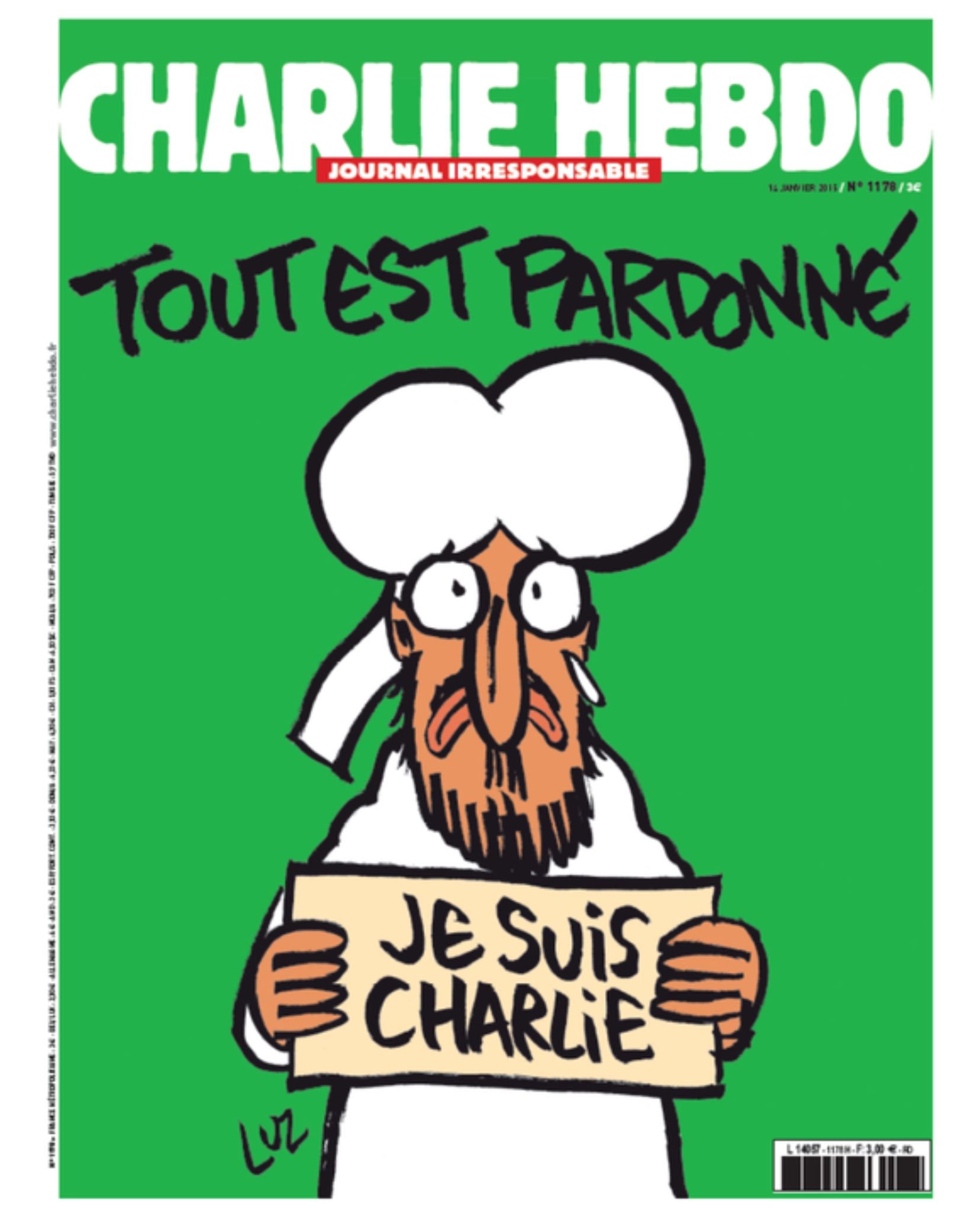
A great outpouring of sympathy and solidarity followed the assassination of the editorial staff at Charlie Hebdo. A million people gathered in Paris in silent protest. The motto Je suis Charlie was promoted across the world. The magazine refused to restrain its irreverence. The cover of its first issue after the attack showed the Prophet forgiving the blasphemy against him (Tout est pardonné) and supporting Je suis Charlie.
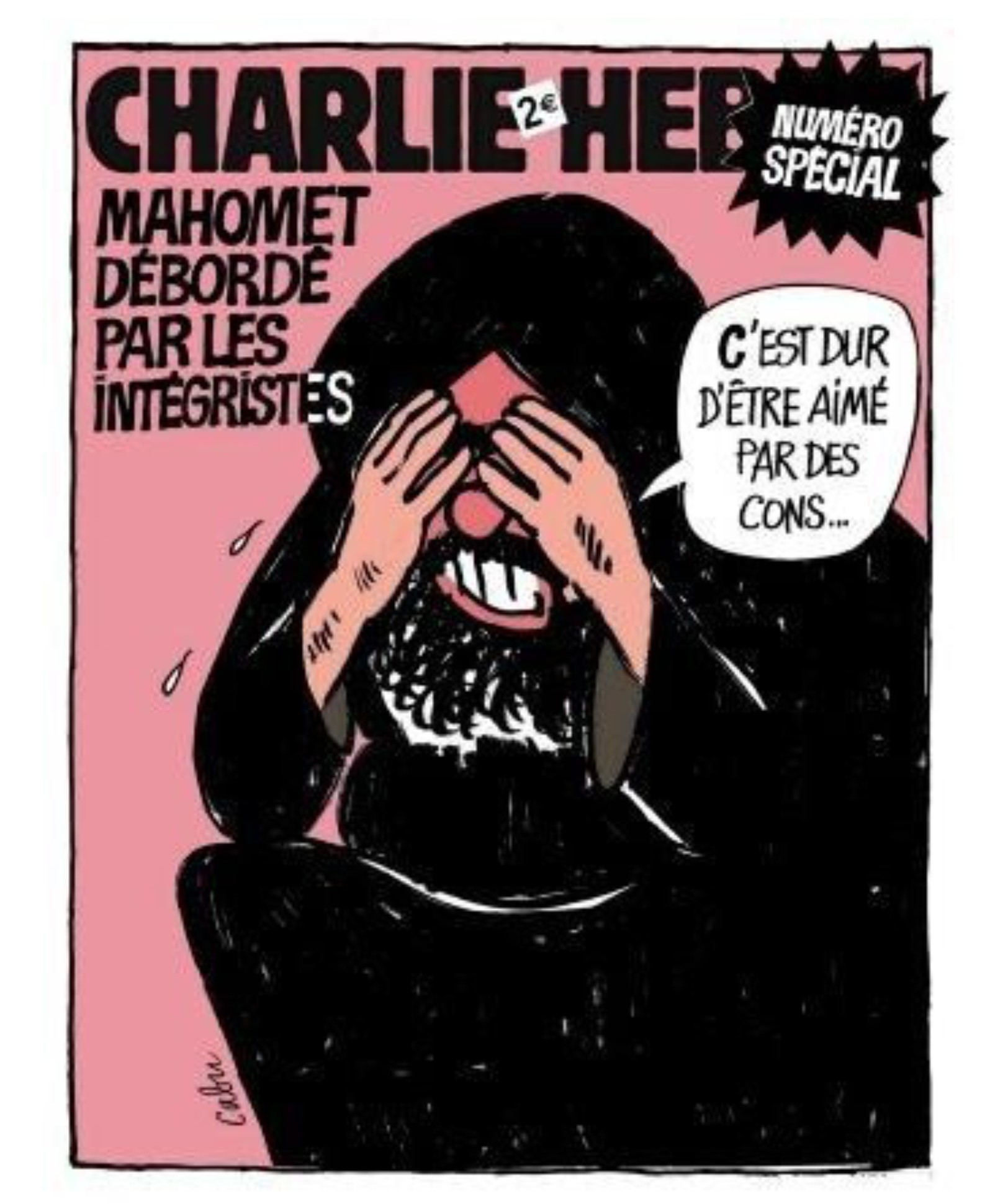
Nevertheless, most Western newspapers did not reprint either this cover or the earlier cartoons that had precipitated the assassinations. Their rationale was that these would unnecessarily offend those who believe that any depiction of the Prophet is sacrilegious. For example, despite the opposition of some of its own journalists, the Toronto Star decided not to publish the cartoons:
We could run the Charlie Hebdo cartoons. There is a strong news rationale for doing so. But there are important reasons of principle not to do it. Just as we would not publish racist or pornographic images, we will exercise our judgment not to print the cartoons.
We will not print them because we have too much respect for fellow Canadians of Muslim background. We will not send a message that their way of being Canadian is less acceptable or less valuable than that of any other citizen. (Cruikshank, 2015).
The opposing viewpoint is that the act of terrorism itself justifies the further publication of the offending material. Otherwise we would be submitting to censorship by intimidation rather than by principle:
If a large enough group of someones is willing to kill you for saying something, then it’s something that almost certainly needs to be said, because otherwise the violent have veto power over liberal civilization, and when that scenario obtains it isn’t really a liberal civilization any more. (Douthat, 2015)
As the weeks passed, there has also been some acknowledgment of the offence (e.g. Tariq Ali, 2015). Not that this could in any way justify the violence. Just that in a civil society one should respect the beliefs of others. Not to do so, particularly when the others are in a minority, is to demean them. It is far better to mock those in power than those without.
Furthermore, the vaunted freedom to satirize the beliefs and actions of Muslims is clearly out of balance with the strict limitations placed on any criticism of Jewish beliefs or history. It is far easier to defame that Prophet than to deny the Holocaust.