
Archive for Ethics

image_pdfimage_print

Zoroaster: Struggles between Good and Evil

Zoroaster, a legendary prophet who probably lived toward the end of the 2nd Millennium BCE, proclaimed a new religion based on a belief in a supreme god Ahura Mazda (Lord of Wisdom) who fights for truth and order (asha) against the forces of deceit and chaos (druj) led by Angra Mainyu (Evil Spirit). Since fire is the symbol of asha, Zoroastrian temples contain an eternal sacred flame, which represents the presence of Ahura Mazda. Zoroastrianism is one of the oldest organized religions of the world and one of the smallest, with only about 120,000 adherents in the world today.

  Read more

T. S. Eliot: The Cocktail Party


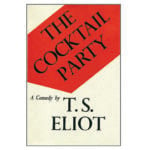
T. S. Eliot (1888-1965) wrote The Cocktail Party in 1948. The play begins with people making foolish conversation at a cocktail party but soon proceeds to a discussion of what it means to be married to another person, and what is required to become a saint. It was initially performed at the Edinburgh Festival in 1949 with Alec Guiness as the Unidentified Guest and Irene Worth as Celia, the prospective saint, and then moved to Broadway in 1950, where it received a Tony Award for Best Play. Critical reviews were mixed, but audiences were more enthusiastic. The play was revived briefly in 1968 with Guinness as both director and actor.

Read more

Wu Wei: Effortless Action

One of the central ideas in the Daodjing of Laozi is the idea of wu wei (無為, simplified 无为; wúwéi). This has been translated in many ways: “non-action,” “actionlessness,” “effortless action,” and “doing nothing.” The 37th chapter of the Daodjing considers wu wei an attribute of the eternal Dao. The 48th chapter promotes wu wei as a human virtue. The illustration shows wu wei in regular script (left) and in cursive (right).

Read more

Laurence Cossé: Le Coin du Voile

Laurence Cossé’s 1996 novel Le coin du voile (A corner of the veil) describes the effects of a new and irrefutable proof for the existence of God. A priest who had resigned his calling to spend months in prayer and abstinence submits the proof for publication in Outlooks, the lay journal of the French Casuists. All those who read it are completely convinced. On seeing its effects, the Provincial of the Casuists decides to keep the proof secret until its effects can be more clearly understood. Finally, the Secretary of State at the Vatican arranges for all those who had read the proof to retire from any contact with the public and for the proof to be kept hidden. The proof becomes a pontifical secret – “a piece of information the Holy Father must not learn under any circumstance.”  

Read more

Robert Davidson: Serigraphs

Robert Davidson, one of Canada’s greatest artists, is one of the Haida people, whose ancestral territories are in the Haida Gwaii archipelago off the coast of British Columbia and the southern half of Prince of Wales Island in Alaska. His Haida name is G̲uud San Glans, which means “Eagle of the Dawn.” Davidson is a talented carver of argillite, jewelry and totem poles, a creator of striking masks, and a master of silkscreen printing (serigraphy).    

Read more

Knowledge of Good and Evil

According to the book of Genesis, Yahweh created Adam and Eve to live in the Garden of Eden. He commanded them on pain of death not to eat the fruit of the Tree of Knowledge of Good and Evil. However, Eve was convinced by the Serpent to eat of the tree, and she in turn convinced Adam to do the same. For their disobedience, Adam and Eve were expelled from Eden. The interpretation of this myth has led to the Christian idea that humanity is forever tainted by “Original Sin,” and that our only hope for immortality is through the sacrifice of Christ which offers redemption from sin and entry into eternity to those who believe in him. The concept of Original Sin has become dangerously ingrained in Christian thinking, and needs reworking,   

Read more

History, Myth and Fiction

This post describes some of the events that occurred in Ronda, a town in southern Spain, during the summer of 1936. After the Spanish Civil War broke out, Anarchists quickly took control of the town, and murdered many supporters of the Nationalist cause. Two months later, advancing Nationalist forces captured Ronda, and drove most of its people from their homes. Those that refused to leave suffered bloody reprisals. These events quickly became mythic rather than historic. In one story, the Anarchists had murdered the town’s Falangists by having them beaten to death in the town’s plaza and then thrown into the canyon that cuts through the center of the town. Ernest Hemingway recounted this version in his 1940 novel For Whom the Bell Tolls. However, most historians now agree that this never happened.  

Read more

Gauguin

Gauguin

In 1891, Paul Gauguin (1848-1903) left his wife and five children and sailed for Tahiti, where he hoped

to immerse myself in virgin nature, to see no one but savages, live their life, with no other thought in mind but to render, the way a child would, the concepts formed in my brain and to do this with the aid of nothing but the primitive means of art, the only means that are good and true (letter quoted in Eisenman, 1997, p 77).

His decision to desert his family and follow his art has been considered by philosophers as a case study in ethics. Was his hope of artistic success adequate justification for his behavior? As luck would have it, Gauguin did become a famous artist, albeit posthumously. Can this retrospectively vindicate his flight to Tahiti? These issues are complex – both in the abstract and in terms of Gauguin’s actual life.

Read more

The Ethics of Belief

In the 19th-Century religious belief came under scientific scrutiny. In 1877, William Kingdon Clifford, an English mathematician and philosopher, proposed that

it is wrong always, everywhere and for any one, to believe anything upon insufficient evidence.

Without good supporting evidence, one should refrain from believing: it is wrong to take anything on faith. This proposal was disputed by the American philosopher and psychologist William James in an 1896 lecture entitled The Will to Believe. James argued that under certain conditions we must form beliefs and act on them, even though the evidence is insufficient. The main requirements were that the believer must choose between two “genuine” possibilities, and that the choice must be sufficiently “momentous” that not choosing would entail significant risk. The latter condition hearkens back to the “wager” of Blaise Pascal, wherein a person decides what to believe based on the consequences of these beliefs rather than the evidence for them.  

Read more

The Cathars

The Cathars

From the 12th to 15th Centuries groups of people called the Cathars lived quietly in various regions of Western Europe – Northern Italy, the Rhineland and, most especially, Southern France. They followed the moral teachings of Jesus, forsaking worldly goods and loving one another, but they did not believe in the basic theology of Christianity. They considered that the world was evil, that human beings were spirits imprisoned in the flesh, and that the soul could only be set free at death if one had lived a life of purity. The Catholic Church considered these beliefs heretical, and in 1208 Pope Innocent III called for a crusade to eradicate the heresy. Named after the inhabitants of the city of Albi which had a flourishing Cathar population, the Albigensian Crusade lasted from 1209 until 1229. After years of terrible violence and cruelty, most of those who professed Cathar beliefs were dead. All that now remains of these peaceful people are the ruins of the hilltop castles in which they sought refuge.      

Read more