
Tag Archive for Roman Empire

image_pdfimage_print

Silk Roads: Paths for the Faithful

The Silk Roads were overland routes connecting China to the Mediterranean Sea, which allowed the trading of silk, paper, gold, jewels, horses, and other goods. These began during the 2nd Century BCE at the time of the Roman Empire in the West and the Han Dynasty in the East. The Silk Roads remained active until the 15th Century CE, when they were largely replaced by maritime trading routes. At present they are mainly used for archeological research and tourism. The illustration shows a modern camel caravan in the desert near Dunhuang. As well as trade goods, the Silk Roads facilitated the movement of religious ideas. Judaism, Zoroastrianism, Buddhism, Manichaeism, Christianity, and Islam followed the Silk Roads into China. Mithraism, Manichaeism and Islam spread into Europe.   
Read more

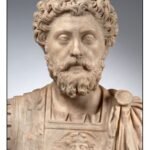
Marcus Aurelius

Marcus Aurelius (121-180 CE) is one of the most famous of the Roman Emperors. Some of his renown is related to the many representations of the Emperor that have persisted to the present day: the Aurelian Column documenting the Marcomannic Wars he waged on the Northern frontiers of the Empire; the bas-reliefs that were initially mounted on a triumphal arch in Rome, and later preserved when the arch was destroyed; and the equestrian statue that, from the Renaissance, was displayed in Rome’s Piazza de Campidoglio on a pedestal designed by Michelangelo. Most of Marcus’ fame, however, derives from the book that he wrote during the many years when he campaigned against the Germanic Tribes who threatened to cross the Danube and invade the Empire. This book, which has come to be known as the Meditations, presents a philosophy that derives from Greek Stoicism: to live each day as if it were one’s last, to act in accord with nature, not to become upset by whatever happens, and to help others as best one can.

Read more