Tag Archive for Daoism

image_pdfimage_print

Laozi: the Nature of the Dao

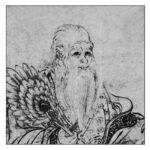
Laozi (老子, lǎozǐ, “the old master”) was a legendary character from the 6th Century BCE who put together a collection of philosophical and ethical sayings that has come to be known as the Dàodéjing (道德經 simplified:道德经; or Tao Te Ching in the Wade-Giles romanization, “The Book of the Way and of Virtue”) or Laozi after the name of the author. The illustration shows a depiction of Laozi from a scroll by Sheng Mao. Following the discovery of early versions of the text written on silk and bamboo slips dating to the 2nd Century BCE (Chan, 2016, 2025), several new translations and annotated editions have been published. This essay presents a close reading of the first chapter.   
Read more

Du Fu: Poet, Sage, Historian

Du Fu: Poet, Sage, Historian

Du Fu (712-770 CE) was a poet during a time of great political upheaval in China. He was born near Luoyang and spent much of his young adulthood in the Yanzhou region, finally settling down to a minor official position in Chang’an, the imperial capital. In 755 CE, An Lushan, a disgruntled general, led a rebellion against the Tang dynasty. The emperor was forced to flee Chang’an (modern Xian), and chaos reigned for the next eight years. For more than a year Du Fu was held captive in Chang’an by the rebels. After escaping, he made his way south, living for a time in a thatched cottage in Chengdu, and later at various places along the Yangtze River. His poetry is characterized by an intense love of nature, by elements of Chan Buddhism, and by a deep compassion for all those caught up in the turmoil of history. This is a longer post than usual. I have become fascinated by Du Fu.

Read more

Searching for the Dao

This post presents some ideas about the Dào (“Way”) as described in the Dàodéjīng (“Book of the Way and its Virtue”), that legend claims was composed by Lǎozī in the 5th Century BCE. The Dào cannot be explained in words. But that has never stopped anyone from writing about it.

Read more