Archive for Poetry

image_pdfimage_print

Paul Klee: Color and Music

The paintings of Paul Klee (1879-1940) gave us a new way to look at the world, allowing us to go beyond our immediate perceptions and see the underlying forms. 

Kunst gibt nicht das Sichtbare wieder, sondern macht sichtbar.
Art does not reproduce the visible; rather, it makes visible.
(Klee, Creative Confession, 1920/2013, part I).

Color and music were the two great principles underlying his art. The tonal relations between colors and the rhythms of their spatial presentation combine to give us understanding. Many composers have sought to express Klee’s paintings in their music, to complement his colors with their notes. This essay presents some of these compositions. On the right is a portrait of Paul Klee by Hugo Erfurth in 1922

Read more

Ely Cathedral: The Ship of the Fens

Ely Cathedral was originally situated on a low island in the middle of the Fens, a region of marshland in eastern England lying inland of the Wash. Because of the flatness of the surrounding land the cathedral could be seen from great distances, appearing as the “Ship of the Fens.” The marshes were drained in the 17th Century, but it is still easy to imagine the building floating above the waters: the embodiment of Auden’s image of the English cathedrals:

Luxury liners laden with souls,
Holding to the east their hulls of stone.
(Auden, 1936, p 43; also McDiarmid, 1978, p 292)

Read more

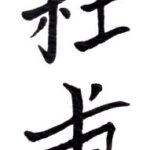
Du Fu: Poet, Sage, Historian

Du Fu: Poet, Sage, Historian

Du Fu (712-770 CE) was a poet during a time of great political upheaval in China. He was born near Luoyang and spent much of his young adulthood in the Yanzhou region, finally settling down to a minor official position in Chang’an, the imperial capital. In 755 CE, An Lushan, a disgruntled general, led a rebellion against the Tang dynasty. The emperor was forced to flee Chang’an (modern Xian), and chaos reigned for the next eight years. For more than a year Du Fu was held captive in Chang’an by the rebels. After escaping, he made his way south, living for a time in a thatched cottage in Chengdu, and later at various places along the Yangtze River. His poetry is characterized by an intense love of nature, by elements of Chan Buddhism, and by a deep compassion for all those caught up in the turmoil of history. This is a longer post than usual. I have become fascinated by Du Fu.

Read more

History, Myth and Fiction

This post describes some of the events that occurred in Ronda, a town in southern Spain, during the summer of 1936. After the Spanish Civil War broke out, Anarchists quickly took control of the town, and murdered many supporters of the Nationalist cause. Two months later, advancing Nationalist forces captured Ronda, and drove most of its people from their homes. Those that refused to leave suffered bloody reprisals. These events quickly became mythic rather than historic. In one story, the Anarchists had murdered the town’s Falangists by having them beaten to death in the town’s plaza and then thrown into the canyon that cuts through the center of the town. Ernest Hemingway recounted this version in his 1940 novel For Whom the Bell Tolls. However, most historians now agree that this never happened.  

Read more

Madness and Poetry

Robert Lowell (1917-1977) was one of the most important American poets of the mid-20th-Century. He was famous both for his contribution to poetry and for his recurrent attacks of mania. This post reviews his life, comments on some of his poems, and considers the relations between creativity and mood disorders. Madness sometimes goes hand-in-hand with poetry:

Lovers and madmen have such seething brains,
Such shaping fantasies, that apprehend
More than cool reason ever comprehends
The lunatic, the lover and the poet
Are of imagination all compact
(Shakespeare, A Midsummer Night’s Dream, V, 1, 5-9)

Read more

Basho’s Journey to the North

Matsuo Basho (1644-1694), one of the most famous poets of Japan, was a master of the haiku, a poetic form in which an abundance of meaning is concentrated into a paucity of syllables. Basho travelled widely in Japan, writing about t his experiences in a fascinating mixture of prose and poetry. In 1689 he undertook his longest journey: from Edo into the far north of Japan, a region known as Oku. His record of that journey is known as Oku no Hosomichi (The Narrow Road to the North).

Read more

Zeno of Elea

Zeno of Elea

Zeno of Elea was a Greek philosopher who lived in the 5th Century BCE. He described a set of paradoxes to prove that space and time are continuous and cannot be divided into discrete parts. The most famous of these are the Paradox of Achilles and the Tortoise, which purportedly shows that Achilles could never catch up with the much slower Tortoise, and the Paradox of the Arrow, which shows that an arrow in flight is always stationary.   

Read more

Gauguin

Gauguin

In 1891, Paul Gauguin (1848-1903) left his wife and five children and sailed for Tahiti, where he hoped

to immerse myself in virgin nature, to see no one but savages, live their life, with no other thought in mind but to render, the way a child would, the concepts formed in my brain and to do this with the aid of nothing but the primitive means of art, the only means that are good and true (letter quoted in Eisenman, 1997, p 77).

His decision to desert his family and follow his art has been considered by philosophers as a case study in ethics. Was his hope of artistic success adequate justification for his behavior? As luck would have it, Gauguin did become a famous artist, albeit posthumously. Can this retrospectively vindicate his flight to Tahiti? These issues are complex – both in the abstract and in terms of Gauguin’s actual life.

Read more
Robinson Jeffers

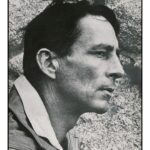
Robinson Jeffers (1887-1962) was an American poet who celebrated the beauty of California’s coast. In 1914 he and his wife Una settled in Carmel. In 1919 Jeffers and his family moved into Tor House, a home that he and a stone-mason had built on Carmel Point using rocks from the shore. From 1920 to 1924 he built by himself the adjacent Hawk Tower. Jeffers became famous soon after the publication of Tamar and Other Poems in 1924. This book and those that followed included both long narratives and shorter lyrics. His epics were bloody and tragic; his verse was free and passionate. Underlying his poems was an austere philosophy of “inhumanism.” This compared the transience of humanity to the persistence of the natural world, and proposed that we should detach ourselves from the passions of mankind and simply celebrate the beauty of the universe. Over the next decade, Jeffers published extensively and in 1932 his photograph graced the cover of Time. After World War II, his outrage at the death and destruction that occurred during the war and the severity of his inhumanist philosophy led to controversy and obscurity. In more recent years, the environmental movement has found inspiration in his love of the natural world and his anger about how humanity has despoiled it.  

Read more

Edward Hopper

Edward Hopper (1882-1967) painted the independence and the loneliness of 20th-Century America. He was a realist in the days when most painters tended toward the abstract. Yet his paintings incite the imagination far more than the works of any abstract expressionist. His enigmatic images force the viewer to wonder what is going on:

Hopper was neither an illustrator nor a narrative painter. His paintings don’t tell stories. What they do is suggest—powerfully, irresistibly—that there are stories within them, waiting to be told. He shows us a moment in time, arrayed on a canvas; there’s clearly a past and a future, but it’s our task to find it for ourselves. (Block, 2016, p viii).

More than any other painter, Hopper has inspired writers to find the stories and meanings behind his paintings. This post summarizes his life, describes his working methods, and presents some of his pictures together with the writings they have stimulated. 

Read more