Cosmos Mariner

image_pdfimage_print

The poet Conrad Aiken was born in 1889 in Savannah, Georgia. When Aiken was 11 years old, his father, a respected surgeon, shot his wife and then committed suicide. Trying to distance himself from the experience in the third person, Conrad later recounted his discovery of the bodies:

[A]fter the desultory early morning quarrel, came the half stifled scream, and then the sound of his father’s voice counting three, and the two loud pistol-shots; and he had tiptoed into the dark room, where the two bodies lay motionless and apart, and, finding them dead, found himself possessed of them forever. (Aiken, 1952, p 302).

Aiken was taken into the care of his aunt, Jane Delano Kempton, in New Bedford, Massachusetts, and later lived with an uncle, William Tillinghast, a college librarian at Harvard. After graduating from Middlesex Preparatory School in Concord, Aiken was admitted to Harvard University in 1907, where he became a friend of T. S. Eliot.
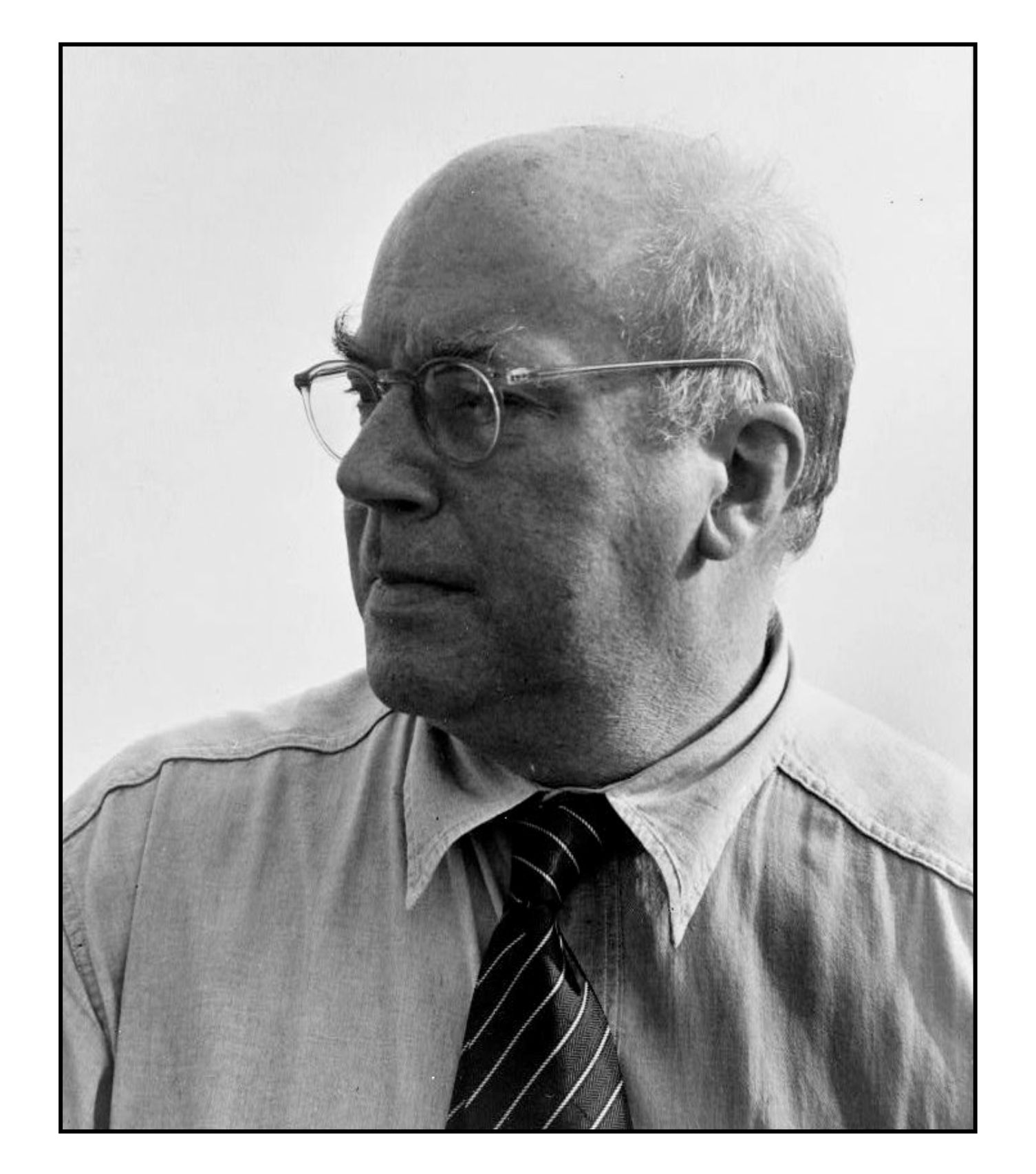
aikenxxAfter leaving Harvard in 1912, Aiken decided to devote his life to poetry. Though much more prolific than Eliot, Aiken never achieved his colleague’s popularity. Many of Aiken’s poems are long and discursive. They might perhaps have benefited from an editor like Ezra Pound, who was so effective in separating out the gold in Eliot’s verse (Eliot, 1922/1971). Aiken published more than 30 volumes of poetry, several novels, many short stories and two autobiographical memoirs. Despite receiving the Pulitzer Prize for poetry, and serving as the Consultant in Poetry for the Library of Congress, Aiken became “one of the country’s best-known and least-read poets and men of letters” (Butscher, 1988, p xvii).

Read more
Destroy the Old!

image_pdfimage_print

destroy the oldChina’s Great Proletarian Cultural Revolution (无产阶级文化大革命 pinyin: Wúchǎnjiējí Wénhuà Dàgémìng) was one of the most terrifying periods in modern Chinese history. The revolution turned upon itself in a fury of denunciation and violence. The goal was to root out those who opposed the revolution. The result was a rampage of destruction. Everything old was to be done away with to make way for the new. Those associated with the old culture were punished or executed. The poster on the right (from Wikipedia) shows the Red Guard in action against symbols of religion, capitalism and culture. The slogan reads “Destroy the old world! Establish the new!” (打破旧世界 dǎ pò jiù shì jiè 创立新世界 chuàng lì xīn shì jiè ). The Cultural Revolution began in 1966, and did not really end until the death of Mao Zedong in 1976. Much of the old was destroyed; nothing new was created.

Read more

Newcomb’s Problem

image_pdfimage_print

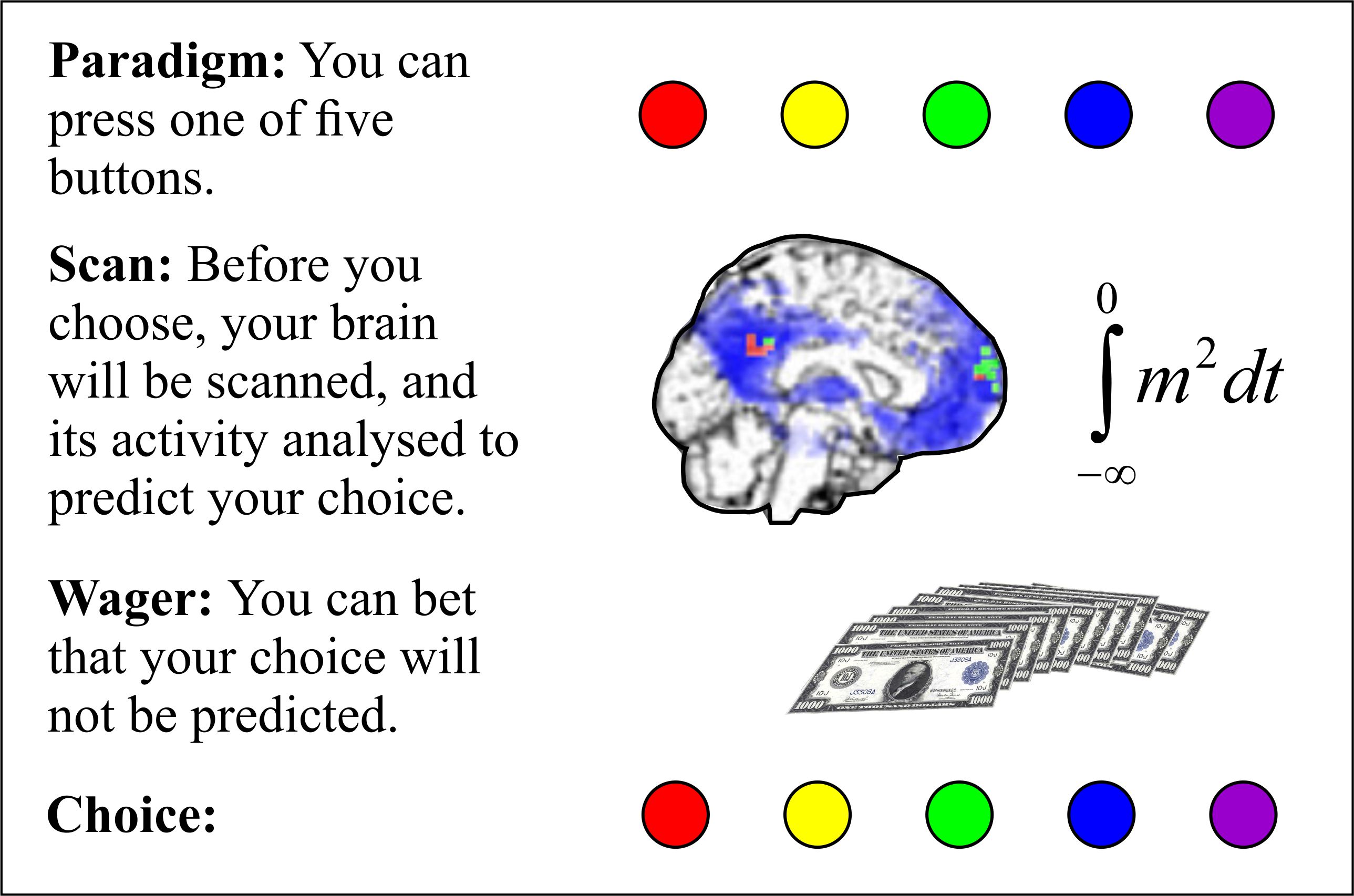
The concepts of determinism and freedom are nicely illustrated in a philosophical problem originally invented by William Newcomb, a California physicist. The philosopher Robert Nozick published an analysis of the problem in 1969, and since then it has been widely discussed (Nozick, 1969; Gardner, 1973, 1974, 2001; Drescher, 2005, Chapters 5 and 6; Mark in Malaysia, 2009, summarizes the issues on his webpage).

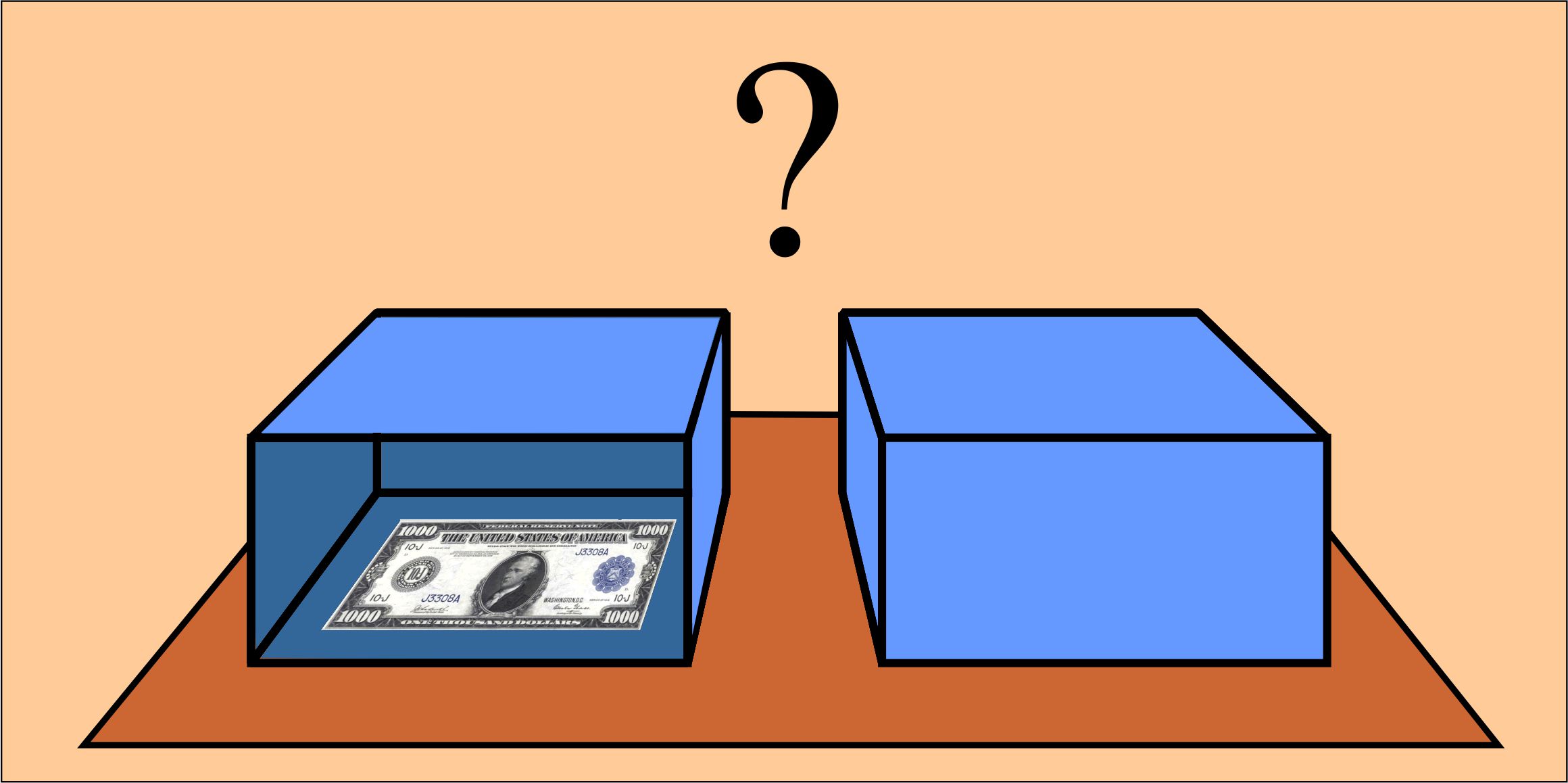
The basic problem is to decide how to act in the following situation. There are two boxes. The first contains $1000. You can see inside this box: the money is certainly there. The second contains either $1,000,000 or nothing. You cannot see inside this box. You can choose (i) to take both boxes or (ii) to refuse the first box and just take the second. A superior being predicts how you will choose and, before you do so, places in the second box either $1,000,000 if it predicts that you will refuse the first box, or nothing if it predicts that you will take both. The choice must be deliberate: it cannot be made on the basis of some random event such as a coin toss. How do you choose – one box or two?

boxes

Read more

Here I stand

image_pdfimage_print

The Diet of Worms was an assembly of the lords of the Holy Roman Empire called together by Emperor Charles V in 1521. One of the duties of the Diet was to consider whether the writings of Martin Luther were heretical. The Diet marked the point-of-no-return for the Protestant Reformation. Luther’s ringing statement “Here I stand” reclaimed the spiritual freedom of the individual. Henceforth each person could choose to interpret scripture and to commune with God without the necessary intervention of the church. However, Luther’s actual concept of freedom was far more complicated than this.

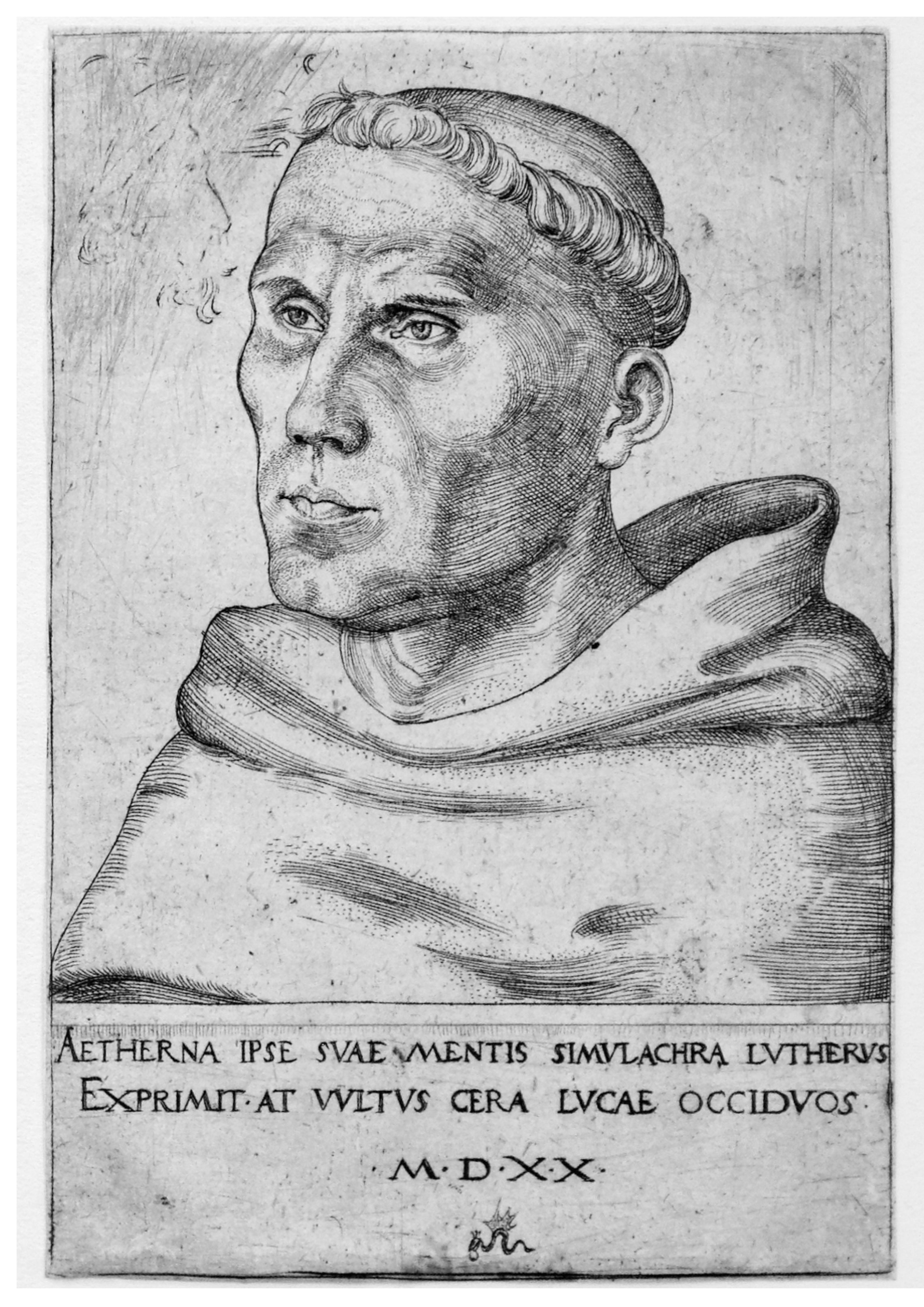
luther 1520Martin Luther was an Augustinian monk who studied, taught and preached at the University of Wittenberg in Saxony, one of the states of the Holy Roman Empire. The engraving on the right by Lucas Cranach the Elder shows Luther in his monk’s attire. Cranach was the court painter for the Elector of Saxony. He knew Luther well and made several portraits of him. This engraving was used as a frontispiece for several of Luther’s early books. The Latin beneath the portrait states that Luther’s depiction of his thinking was eternal but Cranach’s portrait of his features only transient. At the bottom is a device used by Cranach as his signature – a winged serpent with a crown upon his head and a ruby ring in his mouth.

Read more

States of Surveillance

image_pdfimage_print

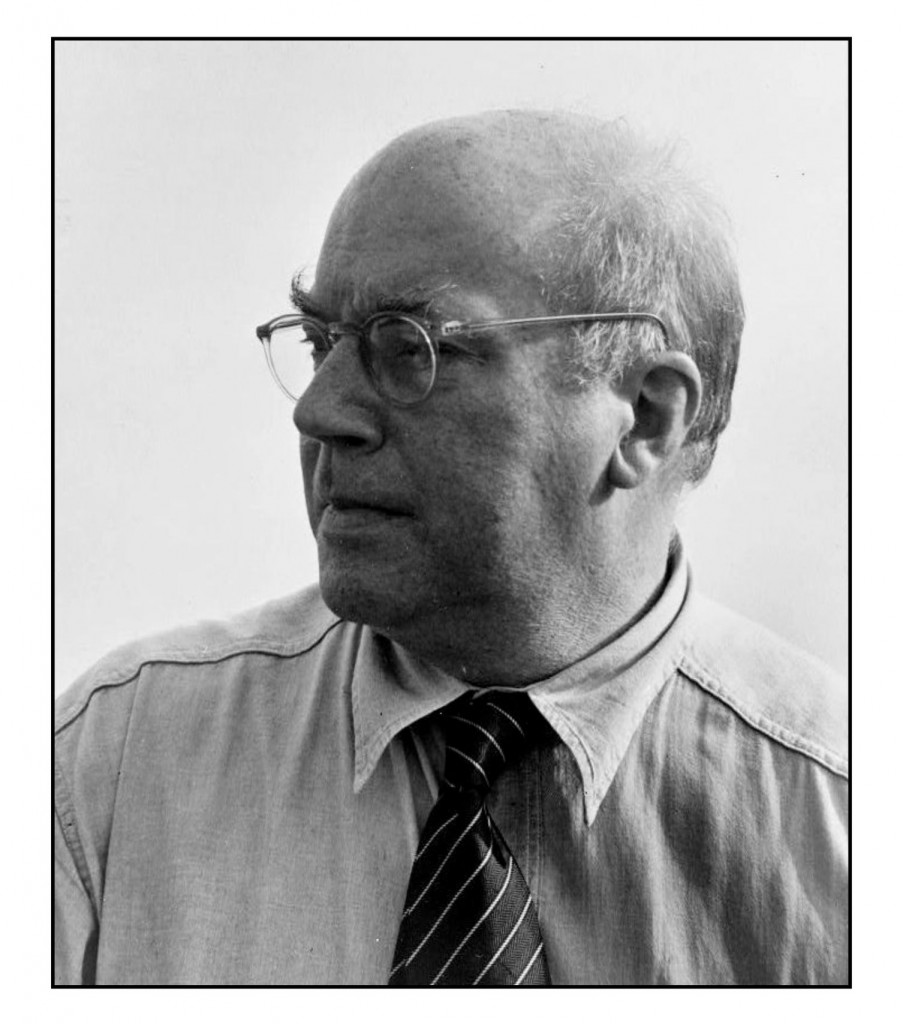
snowdenIn June of 2013, TV screens were filled with the image of an articulate young man in a hotel room in Hong Kong. He was telling us that the US government was monitoring what we did on the phone and on the internet. The National Security Agency (NSA), he said (transcript),

targets the communications of everyone. It ingests them by default. It collects them in its system and it filters them and it analyses them and it measures them and it stores them for periods of time simply because that’s the easiest, most efficient, and most valuable way to achieve these ends.


Read more

Sub Regno Cynarae

image_pdfimage_print
Sketch of Ernest Dowson by William Rothentstein in early 1890s

Sketch of Ernest Dowson by William Rothenstein in early 1890s


Ernest Dowson was born in 1867 into a prosperous family in London. His father owned a dock, but had more interest in literature than in business. Ernest spent two and a half years at Oxford, but he did not take a degree, leaving in 1888. The dock fell into debt, and the family became poor. His father took his own life in 1894, his mother following suit a few months later. Ernest Dowson became a homeless, alcoholic poet. He consorted with prostitutes. His most famous poem recalls the shadow of an earlier love:


Read more

Frost and Sun

image_pdfimage_print

solomon pater 1872In 1873, Walter Pater, a fellow at Brasenose College in Oxford, published Studies in the History of the Renaissance. The book contained some previously published papers and several new essays on the poets, painters and philosophers of the Renaissance. The concluding chapter reworked some comments from an earlier paper on the poetry of William Morris to provide a summary of Pater’s aesthetic philosophy. This combined a skepticism about anything beyond our immediate sensations, an agnosia about any higher power or any life beyond our present mortal span, and a delight in the pleasure that comes from experiencing beauty. The goal in life was to enjoy each moment as fully as possible:

Every moment some form grows perfect in hand or face; some tone on the hills or the sea is choicer than the rest; some mood of passion or insight or intellectual excitement is irresistibly real and attractive to us, –for that moment only. Not the fruit of experience, but experience itself, is the end. A counted number of pulses only is given to us of a variegated, dramatic life. How may we see in them all that is to seen in them by the finest senses? How shall we pass most swiftly from point to point, and be present always at the focus where the greatest number of vital forces unite in their purest energy?

To burn always with this hard, gem-like flame, to maintain this ecstasy, is success in life. In a sense it might even be said that our failure is to form habits: for, after all, habit is relative to a stereotyped world, and meantime it is only the roughness of the eye that makes two persons, things, situations, seem alike. While all melts under our feet, we may well grasp at any exquisite passion, or any contribution to knowledge that seems by a lifted horizon to set the spirit free for a moment, or any stirring of the sense, strange dyes, strange colours, and curious odours, or work of the artist’s hands, or the face of one’s friend. Not to discriminate every moment some passionate attitude in those about us, and in the very brilliancy of their gifts some tragic dividing on their ways, is, on this short day of frost and sun, to sleep before evening. (Pater, 1893, pp. 188-189)

Read more

Numinous Experience

image_pdfimage_print

This post considers the nature of the human experience of the “numinous:” the sensation that one is the in the presence of something beyond comprehension or control. The term is difficult to define. Other words that overlap in meaning are “sublime,” “sacred” and “transcendent” when referring to the source of the experience, and “awe,” “reverence” and “ecstasy” when describing the state of mind induced.

tao te ching 71 borderThe numinous is an essential component of religion. However, the scriptures warn that understanding the numinous may not come easily. Verse 71 from the Tao Te Ching (dào dé jīng,The Book of the Way of Virtue) by Lao Tzu claims that

zhī bù zhī shàng
bù zhī zhī bìng

The Chinese characters go from top to bottom and from right to left. Red Pine (2009) provides a direct translation:

To understand yet not understand
is transcendence
Not to understand yet understand
is affliction

Perhaps the words mean that we should try to understand what we do not know because not to do so leads to suffering. However, I may miss the sense as much as I mar the pronunciation when I try to speak the words. Read more

Subversive Poetry

image_pdfimage_print
frost 1913 x

Robert Frost, 1913

Many poems of Robert Frost (1874-1963) are remembered for something completely different from what the poet actually wrote. Frost’s meaning is often either opposite or orthogonal to what is initially understood.

One of Frost’s early poems is Wall Mending, published in 1914 as the first poem in North of Boston. Many remember the poem as claiming that “Good fences make good neighbors.” Walls serve to keep livestock away from crops. However, Frost points out to his neighbor that there is no need of the particular wall that they are mending:

There where it is we do not need the wall:
He is all pine and I am apple orchard.
My apple trees will never get across
And eat the cones under his pines, I tell him.

Read more

Freudian Legacies

image_pdfimage_print

Sigmund Freud made significant contributions to our understanding of how the human mind works (Gay, 1988). Recently, however, his ideas have come under intense criticism. Eysenck (1985), MacMillan (1991), Fisher and Greenberg (1995), Webster (1995), Andrews and Brewin (2000) and Gomez (2005) review the issues (with different degrees of politeness and different conclusions). This post comments on some of Freud’s contributions.

cerny freud

The photograph shows the Czech sculptor David Černý’s Hanging Man (1997) in its original location high above Husova Street in Prague. Copies have since been exhibited in various other cities. It is a life-size sculpture of Sigmund Freud, hanging from his right hand which grasps a beam projecting over the street. He seems unconcerned by his precarious position, his left hand remaining insouciantly in his pocket. Like most artists, Černý is noncommittal about the meaning of his art. According to some, the sculpture may represent the role of the intellectual in modern society. Freud goes often unattended, but when noticed he tends to shock. He considers ideas that are not grounded in the normal world; yet he is comfortable in his own thinking.


Read more