A Way of Writing: The Art of Chinese Calligraphy

image_pdfimage_print

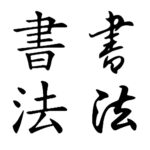
Chinese calligraphy (書法, simplified 书法, shūfǎ, literally ‘way of writing’) is the art of writing Chinese characters (漢字, simplified 汉字, hànzì) with a brush. Together with poetry and painting, calligraphy is considered one of the “Three Perfections” (三絕 sānjué) of Chinese art. This essay reviews the development of calligraphy and provides some examples of its beauty. The illustration shows the calligraphy of the characters of shūfǎ in regular and semi-cursive styles.

Read more

Wang Wei: the Wheel River Poems

image_pdfimage_print

Wang Wei (王维; traditional 王維; pinyin, Wáng Wéi; 699–761) was a Chinese musician, painter, and poet during the Tang Dynasty (618 to 907). He was a devout Buddhist and used the courtesy name Wang Weimojie in homage to the early Buddhist teacher and boddhisattva Vimalakirti (Chinese name 維摩詰 Wéimójí). Vimalakirti taught the practice of sunyata (Sanskrit, emptiness; Chinese 空性 Kōng xìng), a meditative state wherein the mind is emptied of the self and becomes one with the universe. After a tumultuous life, Wang Wei retired to his villa on the Wang River about 40 km southeast of the imperial capital Chang’an (present day Xi’an). There he composed the Wǎngchuān jí (辋川集 The Wheel River Collection): a set of twenty quatrains describing various locations near his villa. Each quatrain was accompanied by a reply from his protégé Pei Di (裴迪 pinyin, Péi Dí, 714-?).

Read more

Laurence Cossé: Le Coin du Voile

image_pdfimage_print

Laurence Cossé’s 1996 novel Le coin du voile (A corner of the veil) describes the effects of a new and irrefutable proof for the existence of God. A priest who had resigned his calling to spend months in prayer and abstinence submits the proof for publication in Outlooks, the lay journal of the French Casuists. All those who read it are completely convinced. On seeing its effects, the Provincial of the Casuists decides to keep the proof secret until its effects can be more clearly understood. Finally, the Secretary of State at the Vatican arranges for all those who had read the proof to retire from any contact with the public and for the proof to be kept hidden. The proof becomes a pontifical secret – “a piece of information the Holy Father must not learn under any circumstance.”  

Read more

Paul-Émile Borduas: Le Refus Global

image_pdfimage_print

Paul-Émile Borduas (1905-1960) was a Quebec artist who became world-famous in the 1950s for his striking abstract paintings. In the early 1940s he had founded Les Automatistes, a group of artists interested in Surrealism. In 1948, he and his colleague had published the Refus Global (Total Refusal), a manifesto urging his fellow Québécois to throw off the oppressive authority of the Union Nationale Party and the Catholic Church. His call to freedom antagonized those in power. After being fired from his teaching position, he left Canada to work in New York and Paris. Shortly after his death in February 1960, the Liberal Party defeated the Union Nationale in the Provincial Election in June, 1960, and La Révolution Tranquille (Quiet Revolution) began to modernize Quebec society.     

Read more

W. H. Auden: September 1, 1939

image_pdfimage_print

Wystan Hugh Auden (1907-1973) and Christopher Isherwood (1904-1986) arrived in the United States of America on January 26, 1939. The ostensible reason for their visit was to write a book on the United States, to be published by the Hogarth Press with the title Address Not Known. The two writers had just completed a book on China, Journey to a War, which was to come out in March. However, other reasons played a larger role in their decision to emigrate. Both writers were tired of the hypocrisy, complacency and insularity of British literary life. Auden claimed, “An artist ought either to live where he has live roots or where he has no roots at all.” (Davenport-Hines, 1995, p 180). In New York City they took lodging in the George Washington Hotel at Lexington and 23rd St., had their photographs taken by Carl van Vechten, visited with Thomas Mann and his family in Princeton, wrote reviews for American magazines, and gave readings of their work. At one of these readings in April, Auden met the 18-year-old Chester Kallman (1921-1975), and fell deeply in love. The two were to remain together for the rest of Auden’s life. In June, Auden and Kallman departed on a two-month trip by Greyhound Bus across the United States, that served as their honeymoon. They visited New Orleans, stayed for a while with Frieda Lawrence in Taos, and ended up in Laguna Beach in California. On August 28, 1939, they arrived back in Manhattan.

  Read more
Wallace Stevens: Toward a Supreme Fiction

image_pdfimage_print

Wallace Stevens (1879-1955) was an American modernist poet. Born in Reading, Pennsylvania, and educated at Harvard and the New York Law School, he worked as an executive for The Hartford Insurance Company in Connecticut. The photograph by Sylvia Salmi was taken in the 1940s, at which time he was vice-president of the company. In his free time Stevens wrote poems, publishing his first book Harmonium in 1923. Throughout his life he considered poetry as the “supreme fiction,” something that could replace religion in human life, and provide us with a more complete understanding than that provided by science or philosophy. In 1942 he published a set of poems entitled Notes toward a Supreme Fiction, to illustrate the nature and power of poetry.

Read more

Black Square: The Russian Avant-Garde

image_pdfimage_print

At the Last Futurist Exhibition of Paintings 0,10 in Petrograd in 1915, Kazimir Severinovich Malevich (1879-1935) presented a set of Suprematist paintings. Among them was a small (80 cm square) canvas showing a black square on a white background. The painting was the final step in the rebellion against representational art: pure form without content. Black Square became emblematic of the Russian Avant-Garde, a modernist movement in Russian art, which predated the Russian Revolution, and then enthusiastically celebrated the new world brought forth by that revolution. However, the new politics did not embrace the new art. In the 1920s, the Avant-Garde was criticized as “formalist,” and replaced by the more politically amenable art of Socialist Realism.

Read more

Sakura Hanami: Cherry Blossom Viewing

image_pdfimage_print

Sakura Hanami (桜 花見, cherry blossom viewing), an age-old tradition in Japan, derived from the Chinese practice of enjoying wine and poetry beneath plum blossoms. In Japan cherry trees were more common and by the Heian period (794–1185) Japanese emperors held sakura hanami parties for the court. The custom soon spread to the samurai, and later to the common people. In the early 18th Century, the shogun Tokugawa Yoshimune planted cherry trees in Asukayama park in the northern reaches of Tokyo, and opened up the park to its citizens. Nowadays thousands of people visit this and other parks to enjoy the blossoms, drink sake and feast on dumplings and cakes. In many places, temporary paper lanterns are hung to allow yozakura (夜桜, night sakura). Read more

Robert Davidson: Serigraphs

image_pdfimage_print

Robert Davidson, one of Canada’s greatest artists, is one of the Haida people, whose ancestral territories are in the Haida Gwaii archipelago off the coast of British Columbia and the southern half of Prince of Wales Island in Alaska. His Haida name is G̲uud San Glans, which means “Eagle of the Dawn.” Davidson is a talented carver of argillite, jewelry and totem poles, a creator of striking masks, and a master of silkscreen printing (serigraphy).    

Read more

Rembrandt: Self-Portraits

image_pdfimage_print

Rembrandt Harmenszoon van Rijn (1606-1669) was one of the greatest painters of the Dutch Golden Age, that century following the establishment of the Dutch Republic free of Spanish rule. Among his many works were about 80 self-portraits – about 40 paintings, 30 etchings and 7 drawings – far more than any other painter before him. These works were created for several purposes: to provide examples of his art for prospective buyers, to work out techniques for visually representing emotions and ideas, and to record the passage of his own life. The illustration shows a small self-portrait from 1630, painted on copper: the discerning gaze.

Read more