Archive for History

image_pdfimage_print

Mary Cassatt: the Color Prints

In 1891 Mary Cassatt (1844-1926) exhibited a set of ten color prints at the Durand-Ruel Gallery in Paris. These prints had been made using new aquatint procedures that allowed the artist to print solid blocks of color. The colors and patterns owed much to the Japanese woodblock prints which had recently been exhibited at the Ecole des Beaux Arts. Another source of the imagery was the work of Edgar Degas (1834-1917), with whom Cassatt had previously worked on black and white etchings and aquatints. Though printed in a small edition size of 25, Cassatt’s 1891 prints did not sell well, perhaps because they were too innovative for the market. Now they are appreciated as key contributions to the art of the modern print.  
Read more

The Cathars

The Cathars

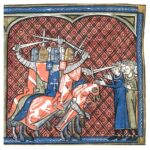
From the 12th to 15th Centuries groups of people called the Cathars lived quietly in various regions of Western Europe – Northern Italy, the Rhineland and, most especially, Southern France. They followed the moral teachings of Jesus, forsaking worldly goods and loving one another, but they did not believe in the basic theology of Christianity. They considered that the world was evil, that human beings were spirits imprisoned in the flesh, and that the soul could only be set free at death if one had lived a life of purity. The Catholic Church considered these beliefs heretical, and in 1208 Pope Innocent III called for a crusade to eradicate the heresy. Named after the inhabitants of the city of Albi which had a flourishing Cathar population, the Albigensian Crusade lasted from 1209 until 1229. After years of terrible violence and cruelty, most of those who professed Cathar beliefs were dead. All that now remains of these peaceful people are the ruins of the hilltop castles in which they sought refuge.      

Read more

Cézanne

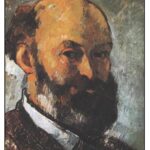
Paul Cézanne (1839-1906) learned to experience nature with the vividness of the Impressionists but evolved his own individual style of painting. How he perceived the world was as important as the way it appeared. For most of his life he lived and painted in Aix-en-Provence. He had no students and his work became recognized only toward the end of his life. Nevertheless, many of the proponents of the modernist movement that began in the first decade of the 20th Century acknowledged Cézanne as their artistic father (Hook, 2021). This post comments on some of his paintings.

Read more

Belief and Heresy

Religious belief differs from everyday belief. Since it cannot be tested or independently confirmed, religious belief must be accepted on faith. Religious belief generally starts with a few powerful and attractive ideas. For example: would it not be wonderful if we did not have to die? As time passes these foundational principles are elaborated and bolstered by other equally untestable beliefs to form a relatively coherent set of teachings. These “doctrines” can then organize communities of the faithful, govern the behavior of believers, and attract new converts. Some believers may choose to interpret the foundational ideas of a faith differently from the system of beliefs that are considered “orthodox” (Greek: ortho straight, correct + doxa, opinion). Beliefs that differ from the orthodox are termed heretical (Greek: hairesis, choice). Heresies are usually considered dangerous since they can easily disrupt the accepted doctrine and question the power of those who promote orthodoxy. Heresy occurs in the history of all the world’s religions (Henderson, 1988) This post limits itself to the early Christian beliefs and heresies about the nature of God, particularly those concerning the Trinity. 

Read more

The White Monks

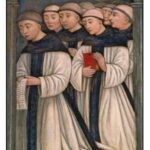
In 1098 a small group of monks left the Benedictine monastery of Molesme in Burgundy to live in the forest of Cîteaux (Latin Cistercium) just south of Dijon. They considered their original home too lax and luxurious, and wished to return to the austere life of solitude, chastity, poverty and manual labor that St Benedict had originally proposed in the 6th Century. They distinguished themselves from the Benedictines by wearing undyed white robes rather than black. Over the next hundred and fifty years, the small monastery founded by these “white monks” at Cîteaux became the center of the Cistercian Order, which linked together over 500 abbeys in Europe, extending from Portugal to Estonia and from Sicily to Norway. The Cistercians were noted for the proficiency of their agriculture, the fervor of their scholarship, and the beauty of their buildings. This post comments on their achievements. 

Read more

Searching for the Dao

This post presents some ideas about the Dào (“Way”) as described in the Dàodéjīng (“Book of the Way and its Virtue”), that legend claims was composed by Lǎozī in the 5th Century BCE. The Dào cannot be explained in words. But that has never stopped anyone from writing about it.

Read more

Thoughts on the Kaballah

The Kabbalah is a body of Jewish thought based on mystical insight into the nature of God and an imaginative interpretation of the Torah. The word itself means “received.” According to legend this special knowledge was imparted by God either to Adam in Eden or to Moses on Sinai, and handed down thereafter from generation to generation to an enlightened few, who preserved the received wisdom and taught it to their students. This post presents some thoughts about the Kabbalah from someone who, though neither Jewish nor fluent in Hebrew, is fascinated by the intricacy of its ideas. 

Read more

Marcus Aurelius

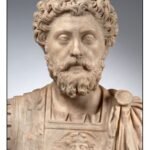
Marcus Aurelius (121-180 CE) is one of the most famous of the Roman Emperors. Some of his renown is related to the many representations of the Emperor that have persisted to the present day: the Aurelian Column documenting the Marcomannic Wars he waged on the Northern frontiers of the Empire; the bas-reliefs that were initially mounted on a triumphal arch in Rome, and later preserved when the arch was destroyed; and the equestrian statue that, from the Renaissance, was displayed in Rome’s Piazza de Campidoglio on a pedestal designed by Michelangelo. Most of Marcus’ fame, however, derives from the book that he wrote during the many years when he campaigned against the Germanic Tribes who threatened to cross the Danube and invade the Empire. This book, which has come to be known as the Meditations, presents a philosophy that derives from Greek Stoicism: to live each day as if it were one’s last, to act in accord with nature, not to become upset by whatever happens, and to help others as best one can.

Read more

Condemned to be Free

When Paris was liberated in August, 1944, everything was possible. A new world needed to be created to protect their  regained freedom. The philosophy that epitomized this desire for freedom was “existentialism.” The term, originally used in a derogatory sense to characterize those who followed the philosophical concept of the primacy of “being,” was grudgingly accepted by Jean-Paul Sartre and Simone de Beauvoir as a description of their thinking. Existentialism fitted easily with the idea of the absurd proposed by Albert Camus. These concepts became the main focus of both art and philosophy in the decade that followed the end of World War II.

Read more

The Axial Age

In his 1949 book Vom Ursprung und Ziel des Geschichte (translated in 1953 as The Origin and Goal of History), Karl Jaspers proposed that the millennium before the time of Christ (or more specifically 800-200 BCE) could be considered an Achsenzeit or “Axial Age.” During this period, in five isolated regions of the world (China, India, Persia, Israel/Palestine, and Greece), human society and thought changed radically and irreversibly. A world that had until then been understood in terms of legends (mythos) was now examined in the light of reason (logos). During this time, “hitherto unconsciously accepted ideas, customs and conditions were subjected to examination, questioned and liquidated.” A multiplicity of gods and demons ceded their power to one universal god or life force. Sages, prophets and philosophers proposed rules for how we should behave. Though the axial age passed long ago, we still return to these teachings for moral guidance.

Read more